 © Bernie WongCC BY 4.0 · iNaturalist
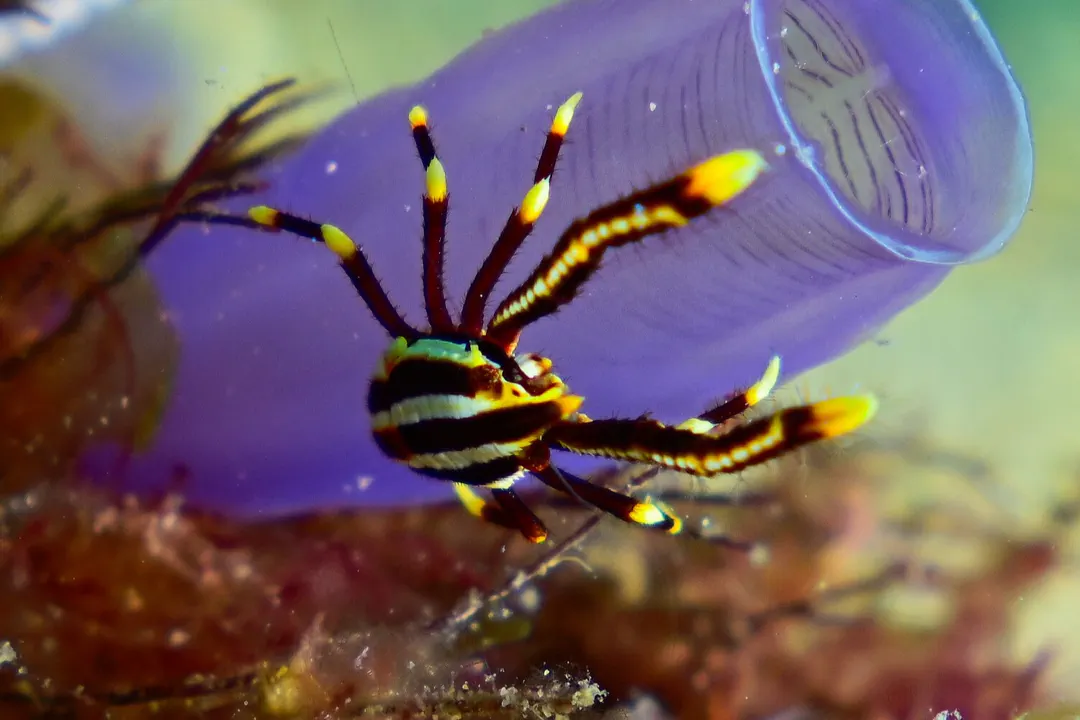
Elegant Squat Lobster
Allogalathea elegans
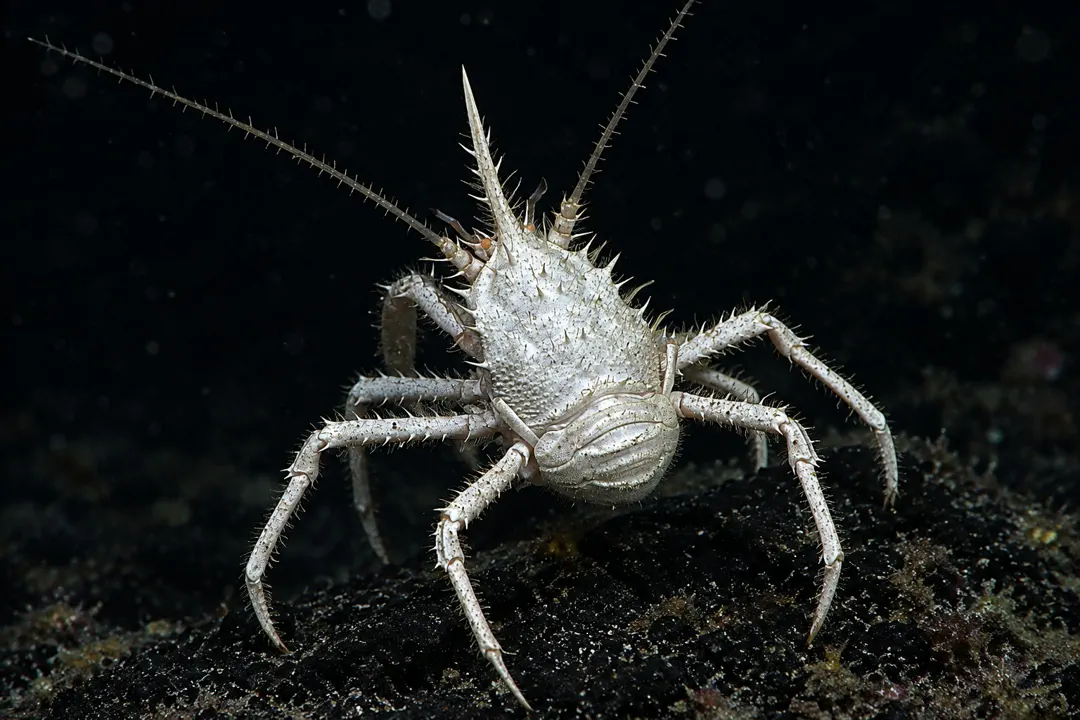
Munidopsis bairdii, known as the deep-sea squat lobster, belongs to the family Munidopsidae and has a broad, cosmopolitan deep-sea distribution across the Atlantic and Pacific oceans.
Munidopsis bairdii was first described by Sidney Irving Smith in 1884 under the original name Galacantha bairdii. The holotype was collected by the U.S. steamer Albatross off the eastern United States. Smith later reassigned the species to Munidopsis, yielding Munidopsis bairdii (Smith, 1884). The genus name Munidopsis is a feminine diminutive based on Munida, with the suffix -opsis meaning 'appearance' or 'resemblance', thus conveying 'resembling Munida'. The species epithet bairdii is a genitive dedication to Spencer Fullerton Baird, a prominent U.S. naturalist and administrator. The species was originally placed in Galacantha and subsequently transferred to Munidopsis, with a redescription provided by Smith in 1886. Munidopsis chacei was later synonymized with M. bairdii.
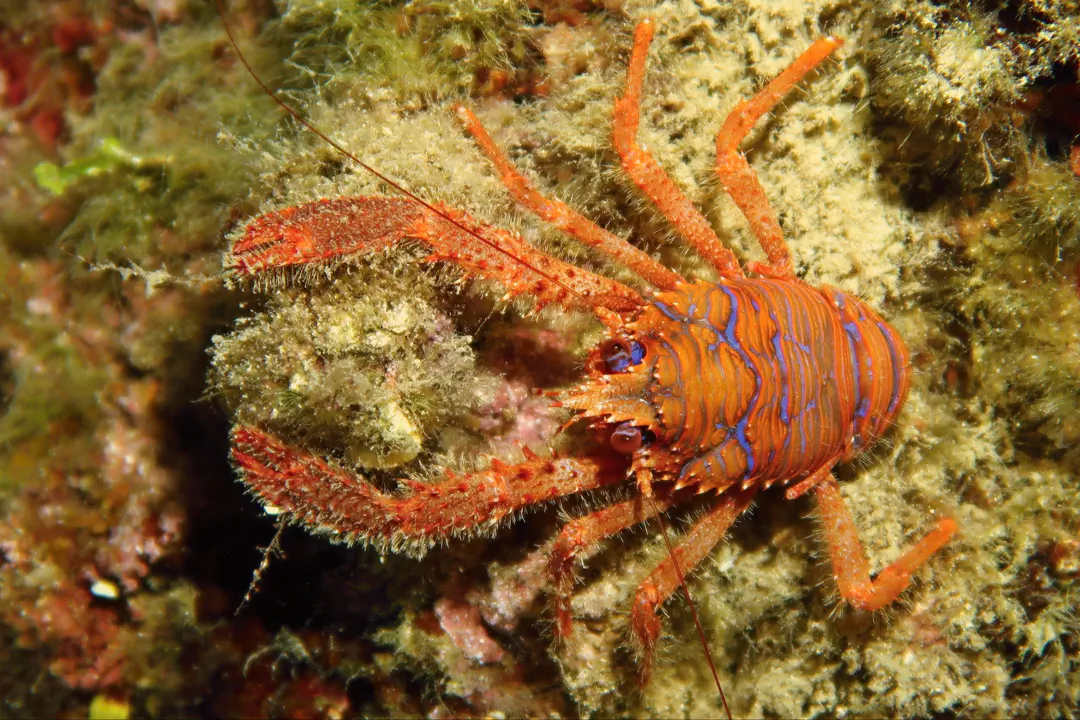
The species exhibits a compact, flattened body with a short abdomen folded beneath the thorax and relatively large chelipeds. The rostrum of Munidopsis bairdii features lateral spines, with the type reportedly having six lateral spines. Identification can be aided by the count and arrangement of dorsal spines, with M. bairdii possessing three paired gastric-spine groups: epigastric, protogastric, and mesogastric. The eye-spine of M. bairdii points straight forward, distinguishing it from M. tiburon, which has anterolaterally pointing eye-spines and lacks the mesogastric spine pair. Carapace-spine counts can help differentiate M. bairdii from M. columbiana, which has seven carapace spines, although there is some overlap and variation in counts. A practical method for underwater identification involves photographing the animal from above and from the side to capture key features such as the rostrum, eye-spines, gastric region, carapace margins, chelae, and abdomen.
The deep-sea squat lobster is not a reef-associated species and occurs in bathyal to abyssal settings, including deep continental-basin environments. It is generally associated with soft or unconsolidated deep-sea sediment, although it has been observed hanging on corals or sponges, indicating occasional association with deep-water structures. Published records indicate a depth range from approximately 950 to 2,940 m, with specific records from the Cascadia Basin at 2,377–2,940 m. The species has been recorded in the North Atlantic and North Pacific, including areas from Cape Sable to Cape May and Cape Hatteras to Nantucket, off Panama, and off Oregon and Washington in the North Pacific, as well as off South Africa’s Cape Peninsula.
Munidopsis bairdii likely feeds opportunistically on organic material and small food items collected from the seafloor, including detritus, microbial films, carrion, and possibly small benthic invertebrates. The species probably uses its setose mouthparts—especially the maxillipeds—to sweep or gather particles from sediment and other surfaces. Deep-sea squat lobsters may also scavenge or capture small crustaceans, although this behavior has not been specifically demonstrated for M. bairdii. M. bairdii has been observed on or near corals and sponges, but this does not establish that it eats those organisms.
Munidopsis bairdii is not a documented commercial seafood species, and no species-specific fishery, harvest quota, or commercial landings were identified. The depth and small size of Munidopsis bairdii make ordinary coastal fisheries unlikely to target it. No reliable records of Munidopsis bairdii being collected or sold in the aquarium trade were identified due to its specialized pressure, temperature, and feeding requirements. No authoritative source documents Munidopsis bairdii as eaten or commercially marketed, making its edibility unknown. There is no documented venom, toxin, aggressive behavior, or human injury associated with Munidopsis bairdii, indicating that the direct risk to people is expected to be negligible. Handling any unfamiliar crustacean, including Munidopsis bairdii, can cause minor injuries from spines or claws. A species-specific IUCN Red List assessment or other formal global conservation category for Munidopsis bairdii was not located, leading to its conservation status being reported as not formally assessed or unknown.
© Bernie WongCC BY 4.0 · iNaturalist  © seabook.appAll rights reserved
 © seabook.appAll rights reserved
 © seabook.appAll rights reserved
 © seabook.appAll rights reserved
 © Daniel BenákCC BY 4.0 · iNaturalist
Munidopsis bairdii has no known danger to humans. However, always observe marine life responsibly.
Download Seabook free for iOS and Android.