 © Darren ObbardCC BY 4.0 · iNaturalist
Blackeye Rabbitfish
Siganus puelloides
Siganus guttatus
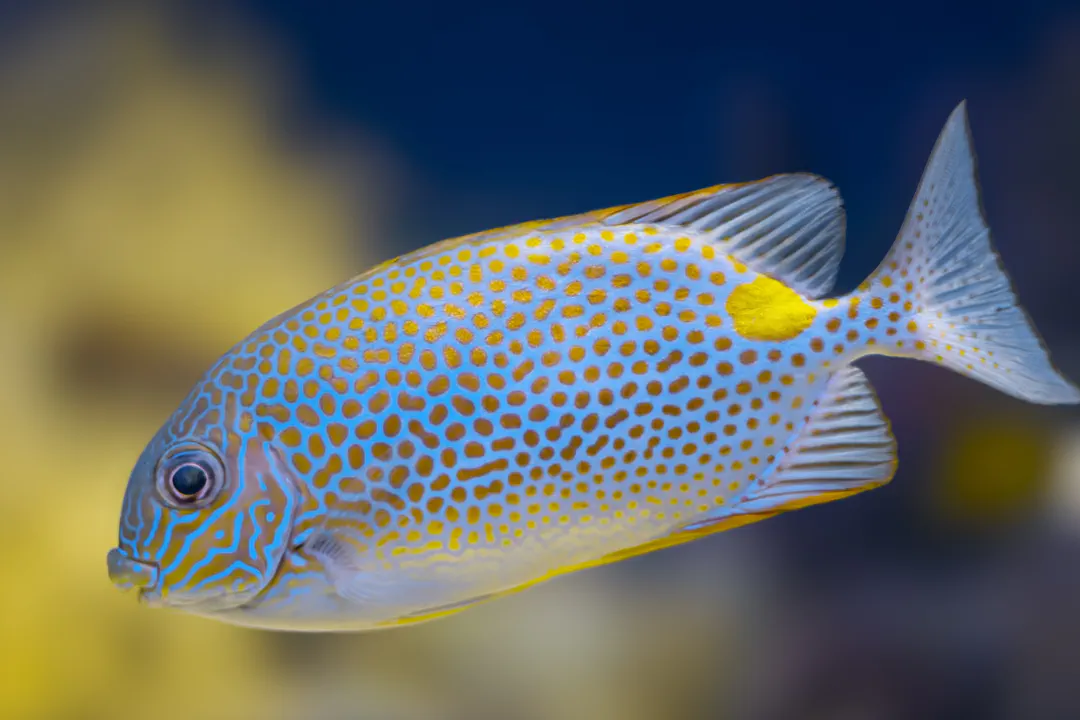
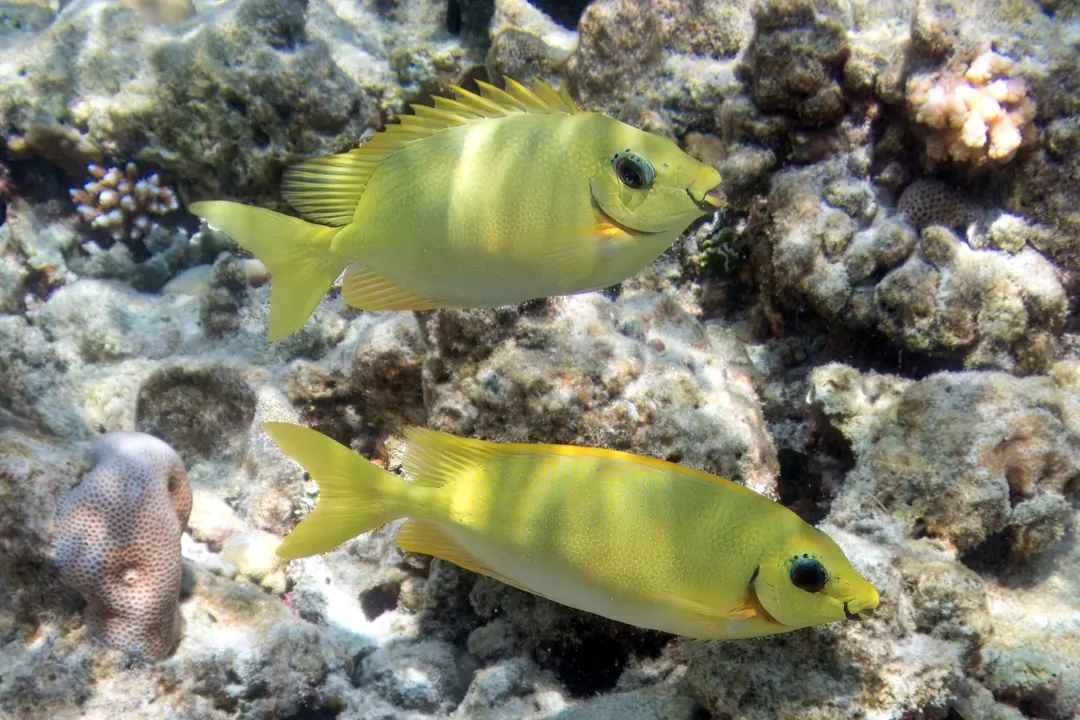
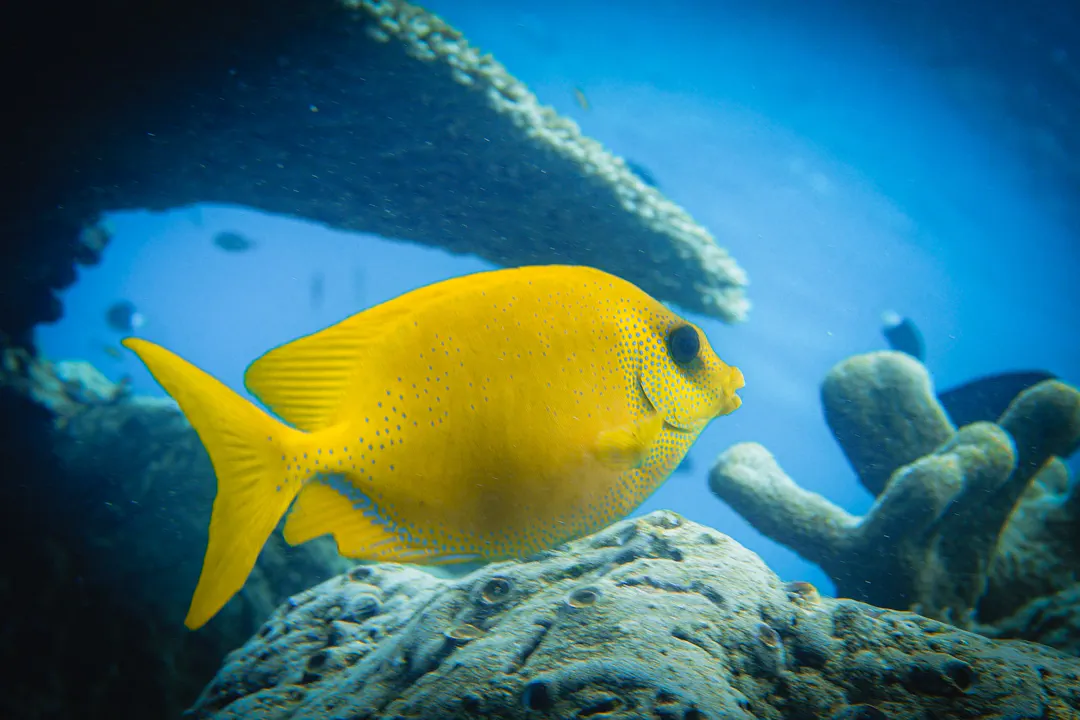
Siganus guttatus is a species of ray-finned fish in the family Siganidae. It occasionally makes its way into the aquarium trade. It grows to 42 cm in length, common length is 25 cm. Other names: Orange-spotted Spinefoot.
Body color is dusky blue dorsally and silvery below with a bright yellow spot adjacent to last few rays of dorsal fin. Head is with lines and spots. Preopercular angle 91°-102°. Strong scales are fully cover the cheeks. Midline of thorax is scaled, not the pelvic ridges. Anterior nostril is with extremely low rim, slightly expanded posteriorly. Spines are stout, pungent, venomous. Dorsal spines (total): 13; Dorsal soft rays (total): 10; Anal spines: 7; Anal soft rays: 9; Vertebrae: 13.
Eastern Indian Ocean and Western Pacific: Andaman Islands, Thailand, Malaysia, Singapore, Indonesia (including Irian Jaya), Viet Nam, Ryukyus, southern and eastern China, Taiwan, South China Sea, Philippines, and Palau. Replaced by Siganus lineatus to the west, south and east of the region described by the said localities.
Inhabits turbid inshore reefs among mangroves; tolerates or even prefers low salinities. Fry settles in seagrass beds around river mouths and adults enter and leave rivers with the tide, but also found on the drop-offs of inshore fringing reefs down to 6 m. Schools throughout life; school size for adults around 10 or 15. Feeds on benthic algae. Unlike other siganids, this species is reported to be active at night.
© Darren ObbardCC BY 4.0 · iNaturalist 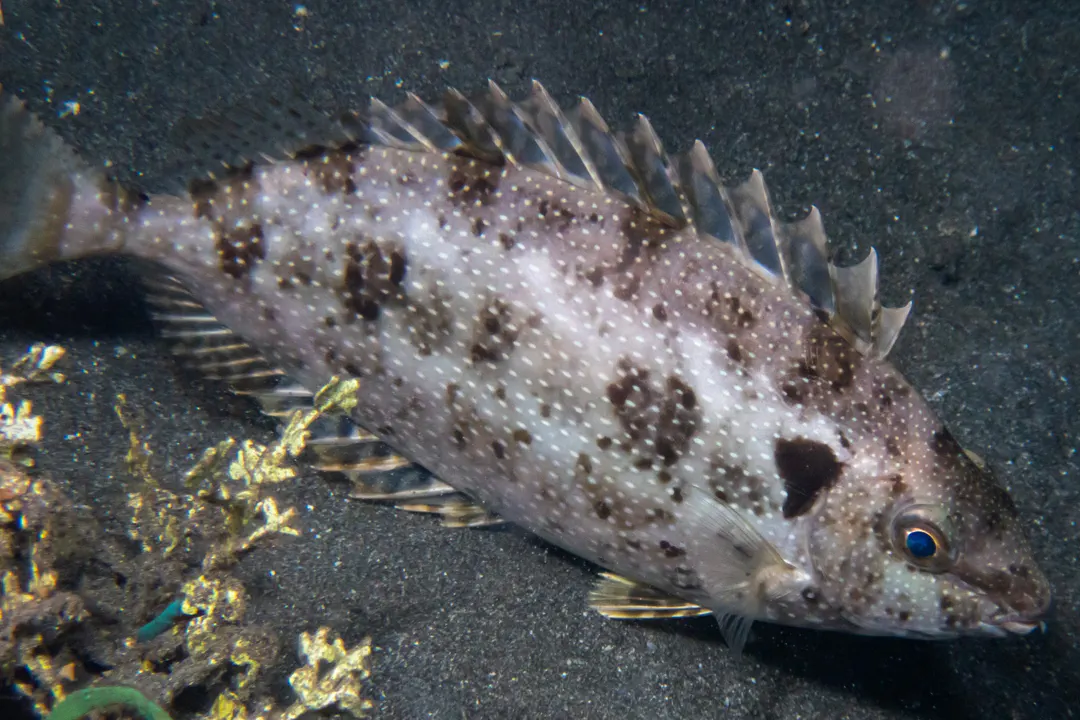 © portioidCC BY 4.0 · iNaturalist
  © Olka KuryanAll rights reserved
 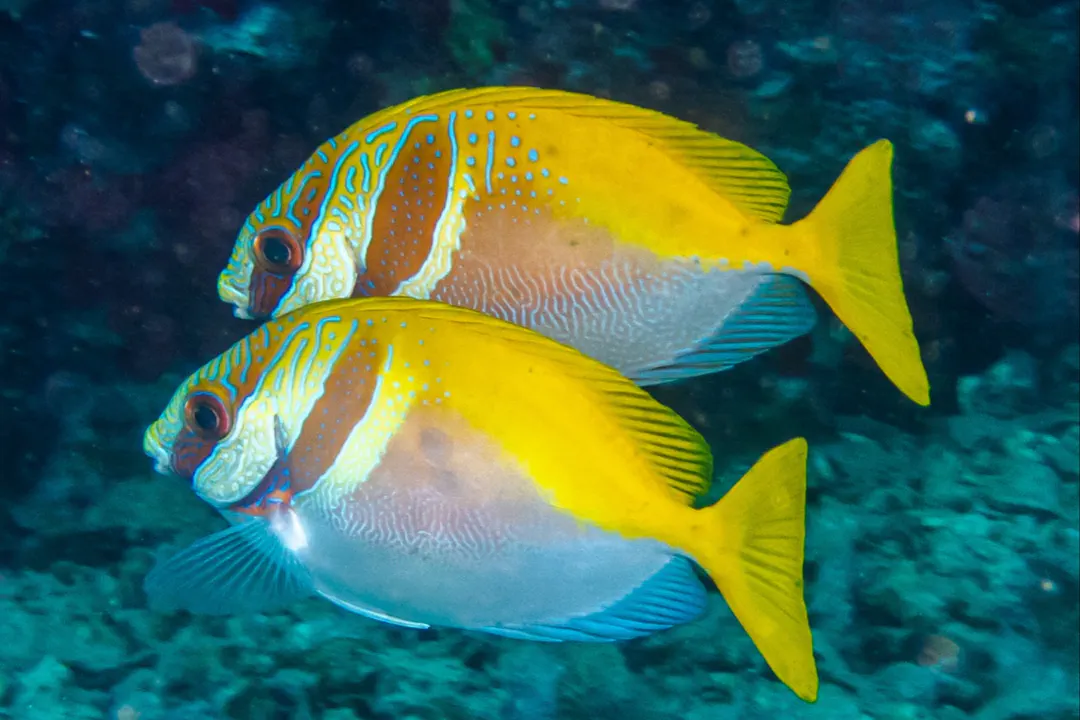 © portioidCC BY 4.0 · iNaturalist
 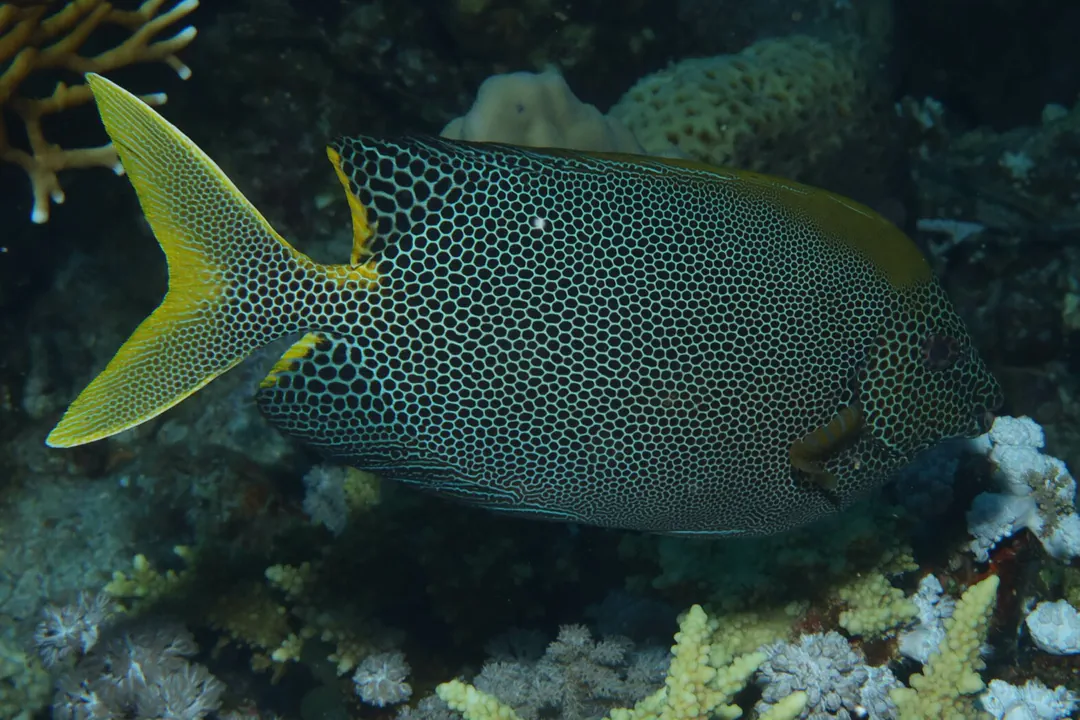 © Julien RenoultCC BY 4.0 · iNaturalist
 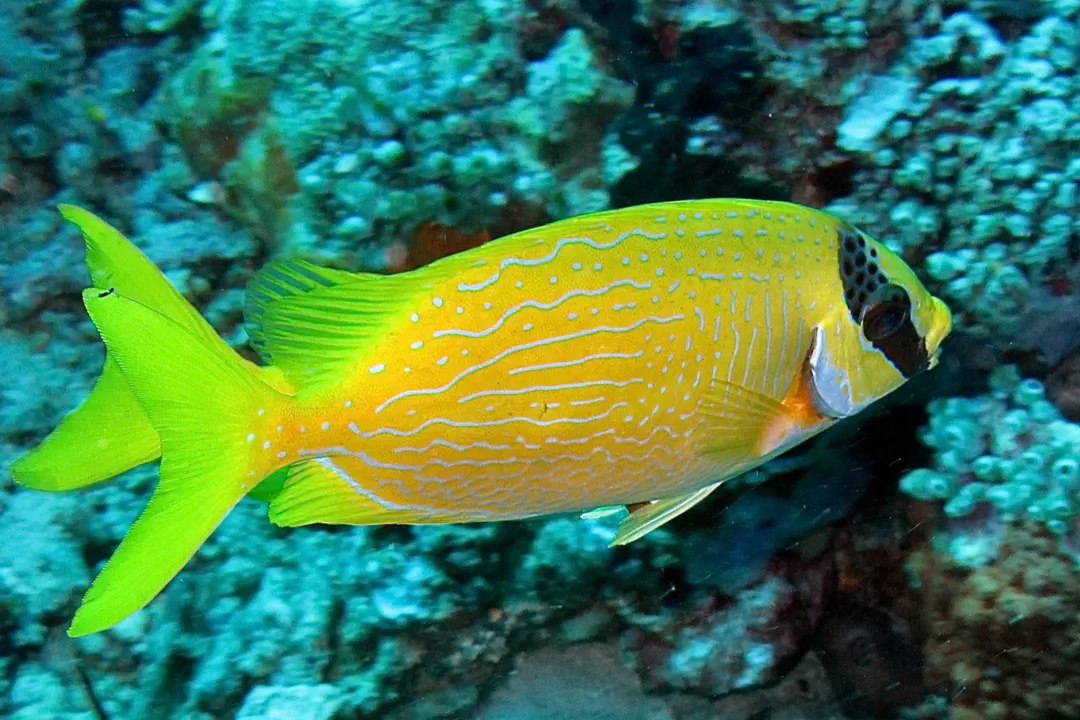 © Bernard DUPONTCC BY 4.0 · iNaturalist
 Gold-saddle Rabbitfish is classified as venomous, dangerous to humans. Always exercise caution and keep a safe distance.
Gold-saddle Rabbitfish can be found at depths of up to 25 meters.
Download Seabook free for iOS and Android.