 © Roger RittmasterCC BY 4.0 · iNaturalist
Bicolour Goatfish
Parupeneus barberinoides
Parupeneus macronemus
Parupeneus macronemus is a species of goatfishes native to the Indian and Pacific oceans.
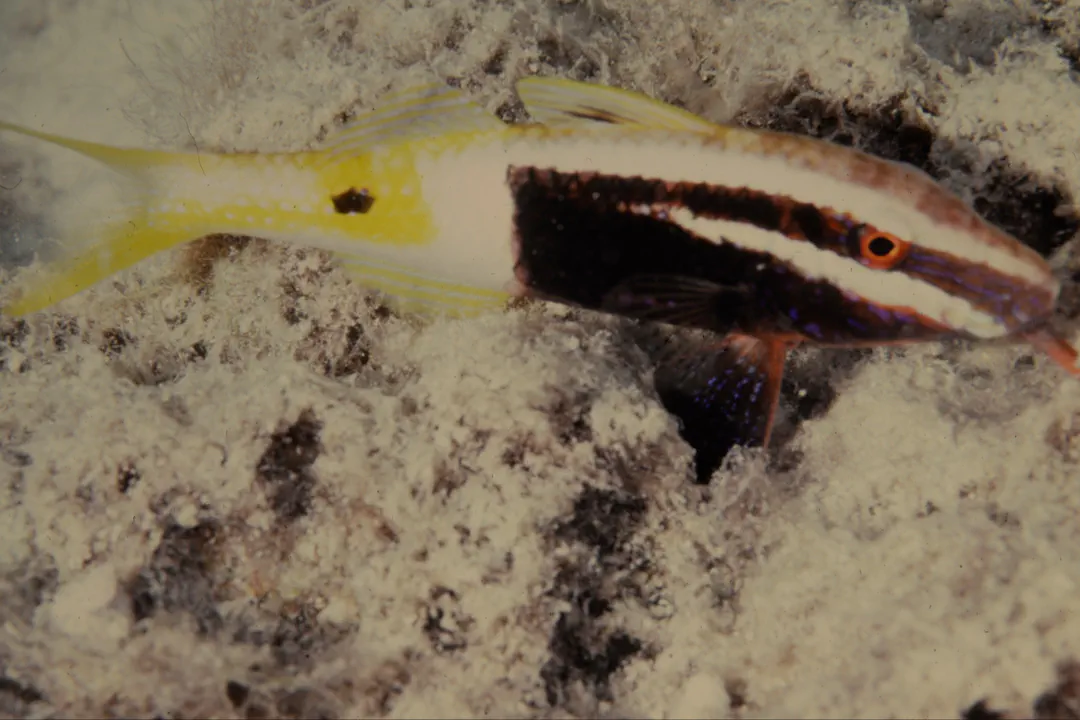
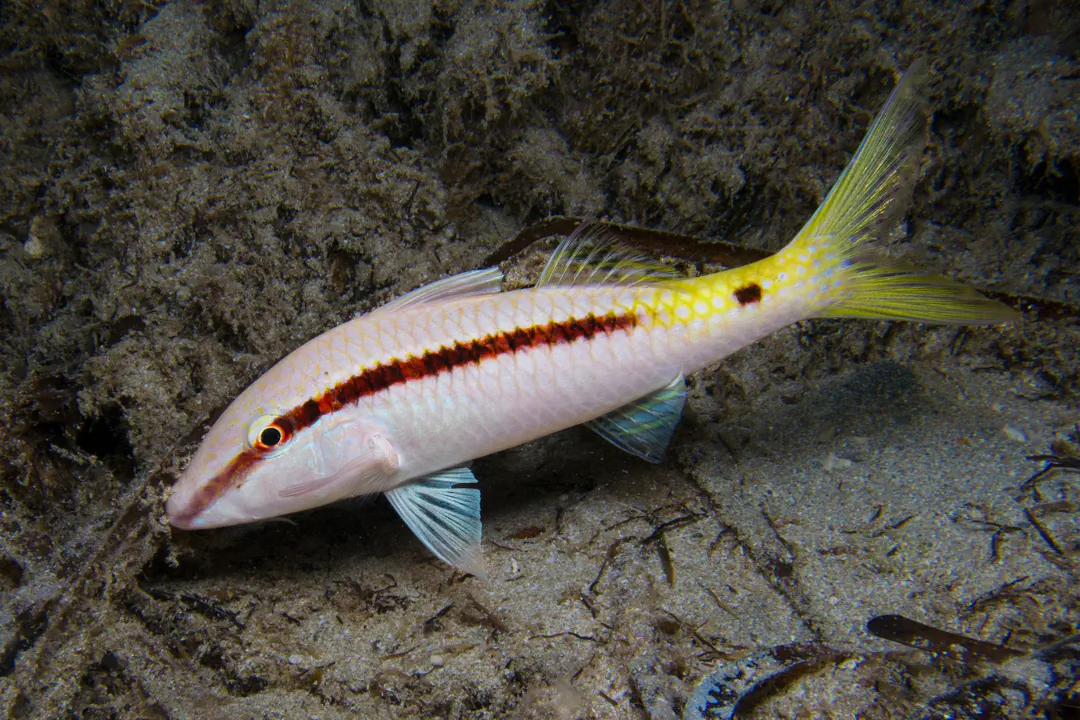
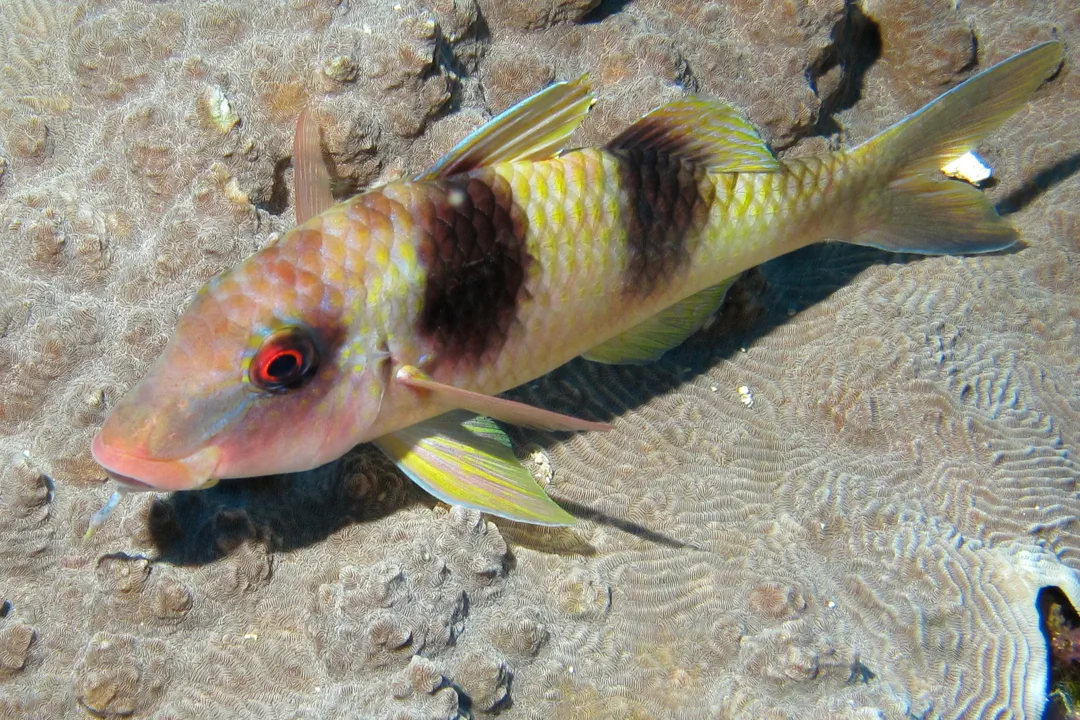
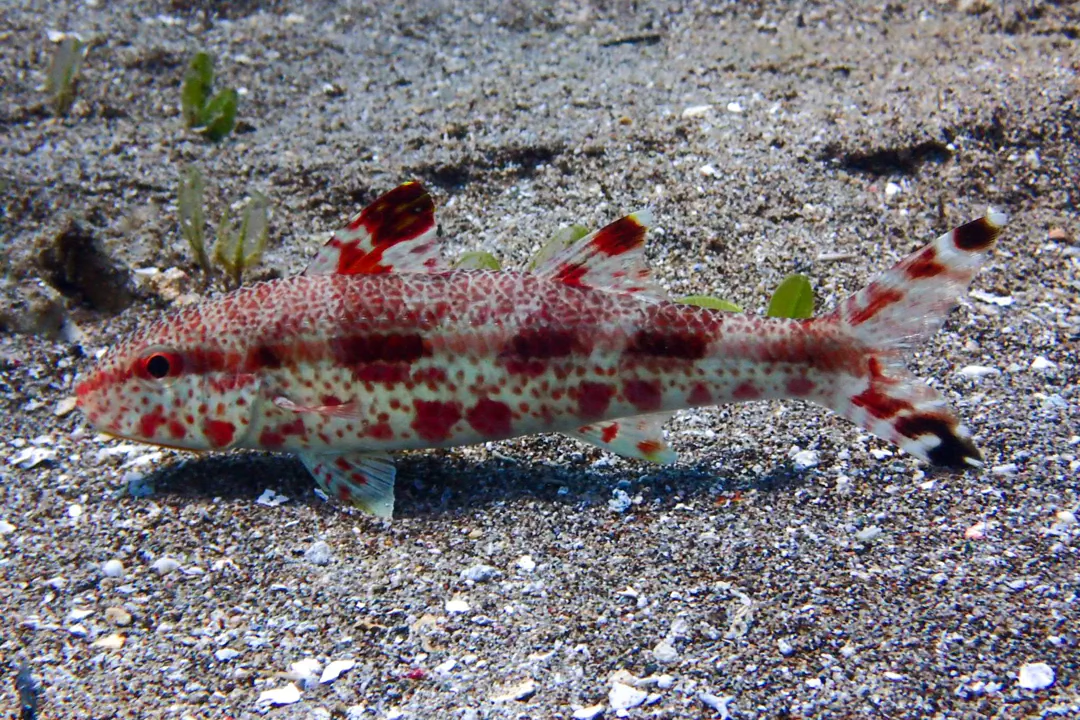
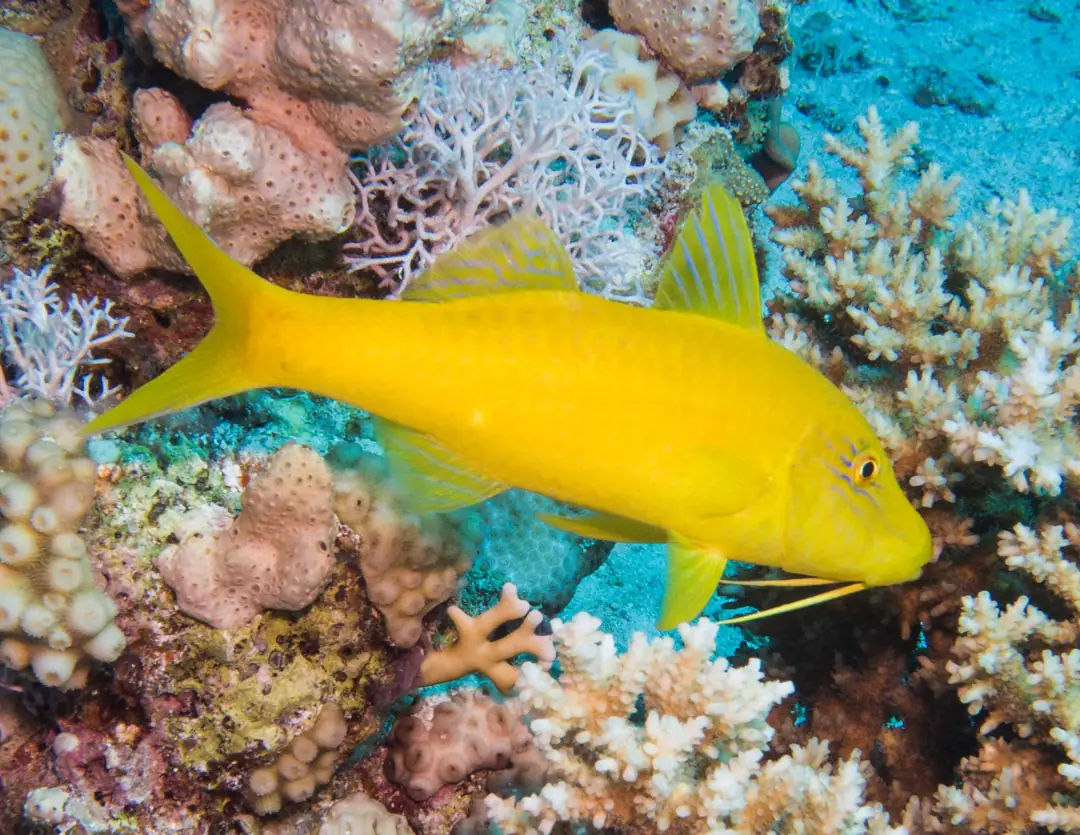
Body is gray to grayish red dorsally, whitish to pink ventrally, with a black stripe from eye along lateral line to anterior part of caudal peduncle. A roundish black spot larger than eye is on side of peduncle about two-thirds above lateral line. A broad white zone is extending anterior to peduncular spot to below posterior part of second dorsal fin. A vertical pale blue line or spot is often present on scales below black stripe. A dusky band often present on snout from eye to side of upper lip. Barbels are white. First dorsal and caudal fins are reddish gray. Basal one-third to one-half of second dorsal fin are black, the dark pigment continuing to end of last ray and adjacent membrane. Outer part of fin is with narrow pale blue and yellow stripes. Anal fin is dusky yellow with faint narrow pale blue stripes. Pale area is at end of black stripe and dusky basal stripe in second dorsal fin distinguished it from the similar P. barberinus. Dorsal spines (total): 8; Dorsal soft rays (total): 9; Anal spines: 1; Anal soft rays: 7. Pectoral rays 15-17 (usually 16). Gill rakers 7-9 + 27-30 (total 34-39). Body moderately elongate, the depth 3.3-3.7 in SL; head length (HL) 2.8-3.2 in SL; snout length 1.7-1.9 in HL; barbels long, their length 1.1-1.25 in HL; longest dorsal spine 1.45-1.75 in HL; penultimate ray of second dorsal fin of adults 1.25-1.6 in last dorsal ray, the last ray relatively longer with growth; pectoral fins 1.3-1.5 in HL; pelvic fins 1.2-1.45 in HL. Max length is 40 cm, common length is 20 cm.
Indo-West Pacific: Red Sea and Persian Gulf south to Natal, South Africa extending east to Indonesia and the Philippines.
It inhabits lagoon and seaward reefs to over 25 m. It is found on sandy or weedy bottoms; rarely at depths of more than 40 meters. Usually seen solitary but often several individuals nearby. It feeds mainly on crustaceans and worms.
© Roger RittmasterCC BY 4.0 · iNaturalist 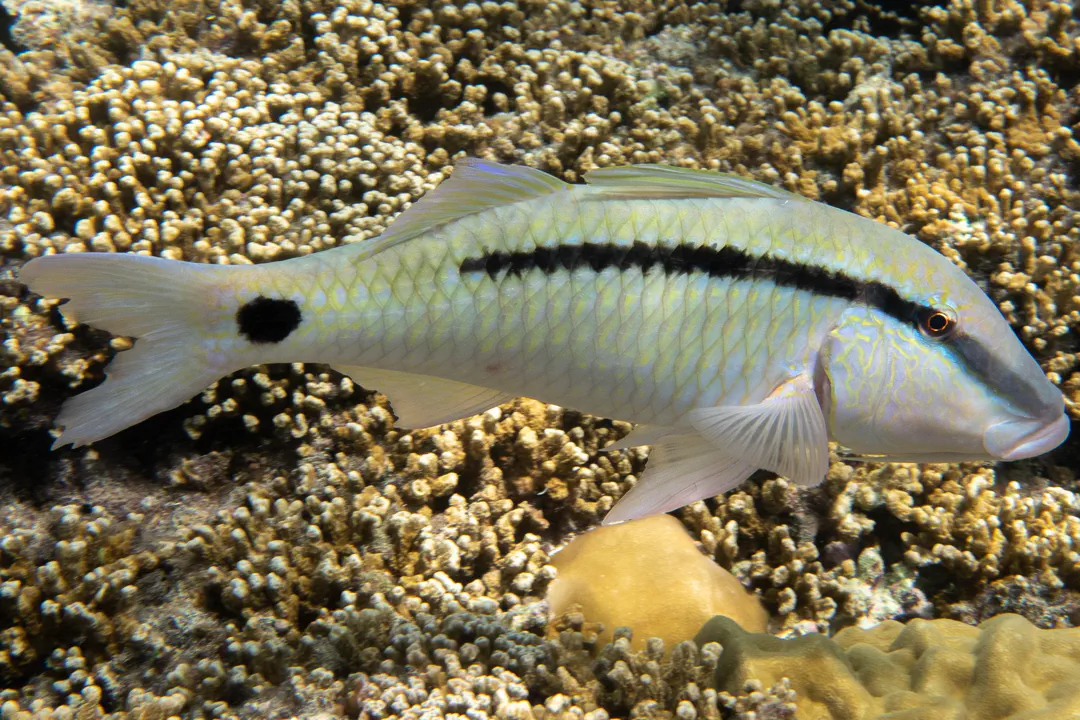 © Storm MartinCC BY 4.0 · iNaturalist
  © seabook.appAll rights reserved
  © Bernard DUPONTCC BY 4.0 · iNaturalist
  © Dan SchofieldCC BY 4.0 · iNaturalist
  © Lesley ClementsAll rights reserved
 Longbarbel Goatfish has no known danger to humans. However, always observe marine life responsibly.
Longbarbel Goatfish can be found at depths of up to 40 meters.
Download Seabook free for iOS and Android.