 © Michael BommererCC BY 4.0 · iNaturalist
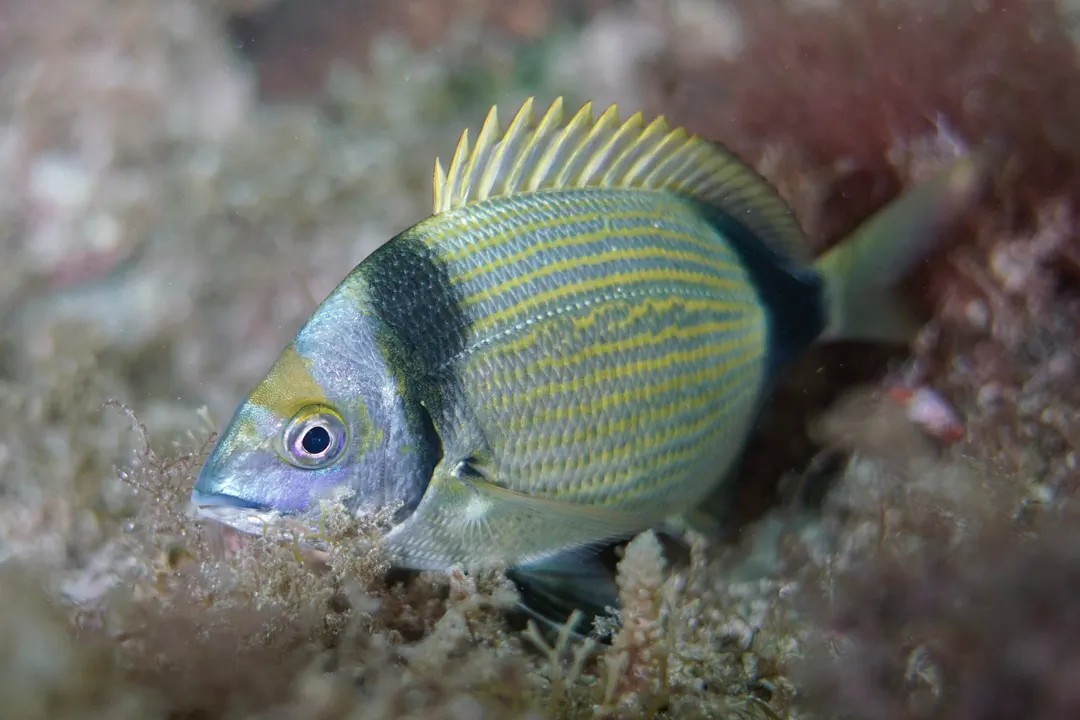
Common Two-banded Seabream
Diplodus vulgaris
Sarpa salpa
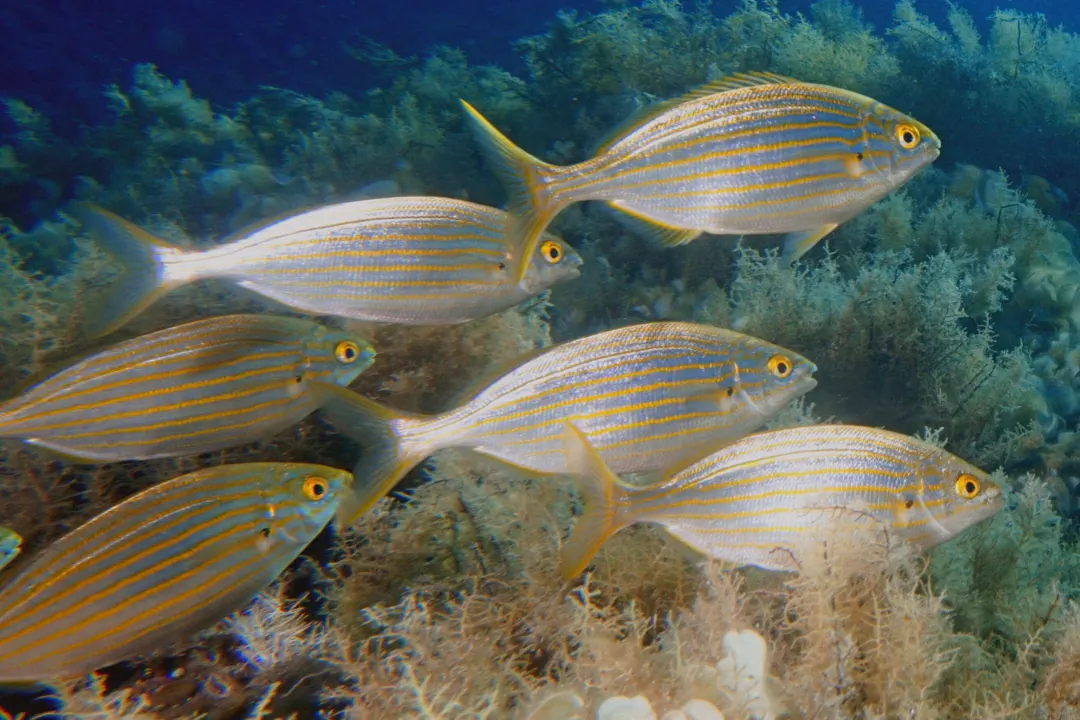
Sarpa salpa is a species of sea bream. It is found in the East Atlantic, as well as the Mediterranean, where ranging from the Bay of Biscay to South Africa. It has occasionally been found as far north as Great Britain.
It is recognisable by the golden stripes that run down the length of its body. It has an oblong body, short head, obtuse snout, subterminal and small mouth. It's upper jaw is slightly prominent. Scales are on cheek and opercle. In both jaws incisors are uniserial, upper ones notched, lower ones depressed on their outer face and ending in a single triangular point; all incisors with well visible roots inside of mouth. Colour: grey-bluish with 10-11 fine longitudinal golden lines along rows of scales. The eyes are yellow. It has very dark lateral line. It has black spot at upper pectoral base. Caudal fin is dark grey, other fins are light. Males are typically 15 to 30 cm (6–12 in) in length, while females are usually 31 to 45 cm (12–18 in). The maximum size is 51 cm (20 in).
It can cause hallucinations when eaten.
Eastern Atlantic: Bay of Biscay and Strait of Gibraltar to Sierra Leone, including Madeira, the Canary Islands, and Cape Verde; Congo to South Africa. Also present in the Mediterranean.
It is generally common and found from near the surface to a depth of 70 m (230 ft). Found over rocky substrates and sandy area with algal growth. Gregarious, sometimes forming sizeable schools. Young mainly carnivorous on crustaceans, adults almost exclusively herbivorous, feed on seaweeds. Protandric hermaphrodite. Tasty when fresh, but easily softens and is not much esteemed.
Sarpa salpa became widely known for its psychoactivity following widely publicized articles in 2006, when two men ingested it at a Mediterranean restaurant and began to experience many auditory and visual hallucinogenic effects. These hallucinations, described as frightening, were reported to have occurred minutes after the fish was ingested and had a total duration of 36 hours.
Ichthyoallyeinotoxism, or hallucinogenic fish poisoning, is common in other species of fish but not in Sarpa salpa, which is not normally psychoactive. It is, in fact, often served as a dish at seafood restaurants in the Mediterranean area. It is believed that the fish ingests a particular algae or phytoplankton which renders it hallucinogenic. The effects described are similar to those of indole tryptamine psychedelics.
© Michael BommererCC BY 4.0 · iNaturalist  © seabook.appAll rights reserved
  © seabook.appAll rights reserved
 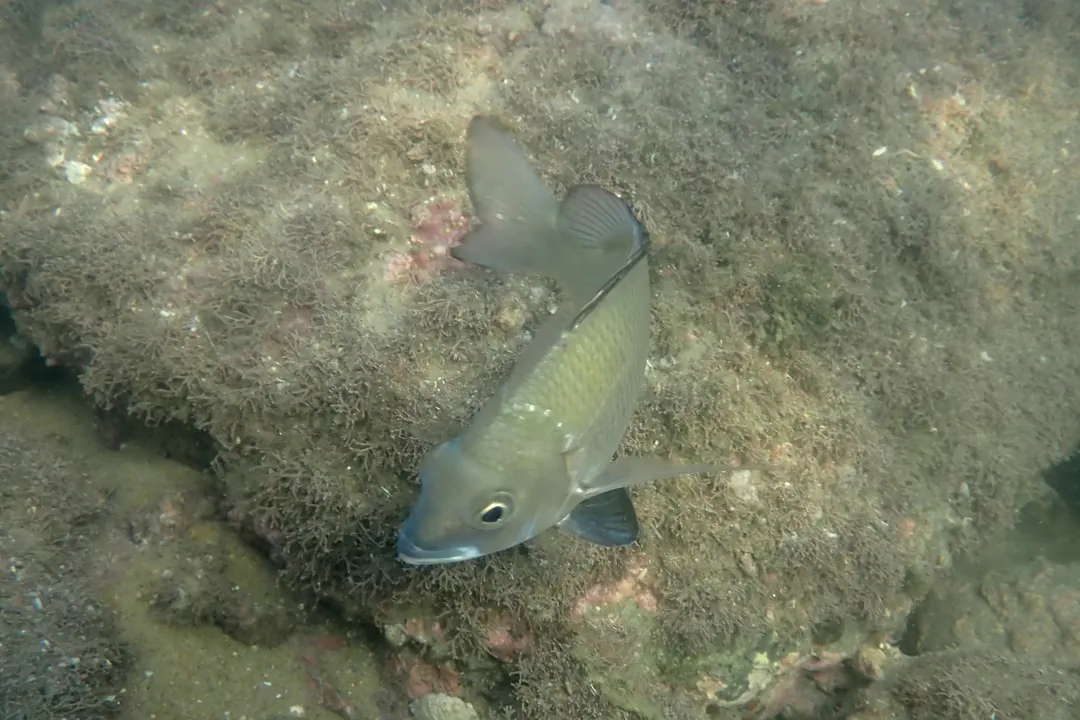 © Srichakra Pranav TamarapalliCC BY-SA 4.0 · iNaturalist
 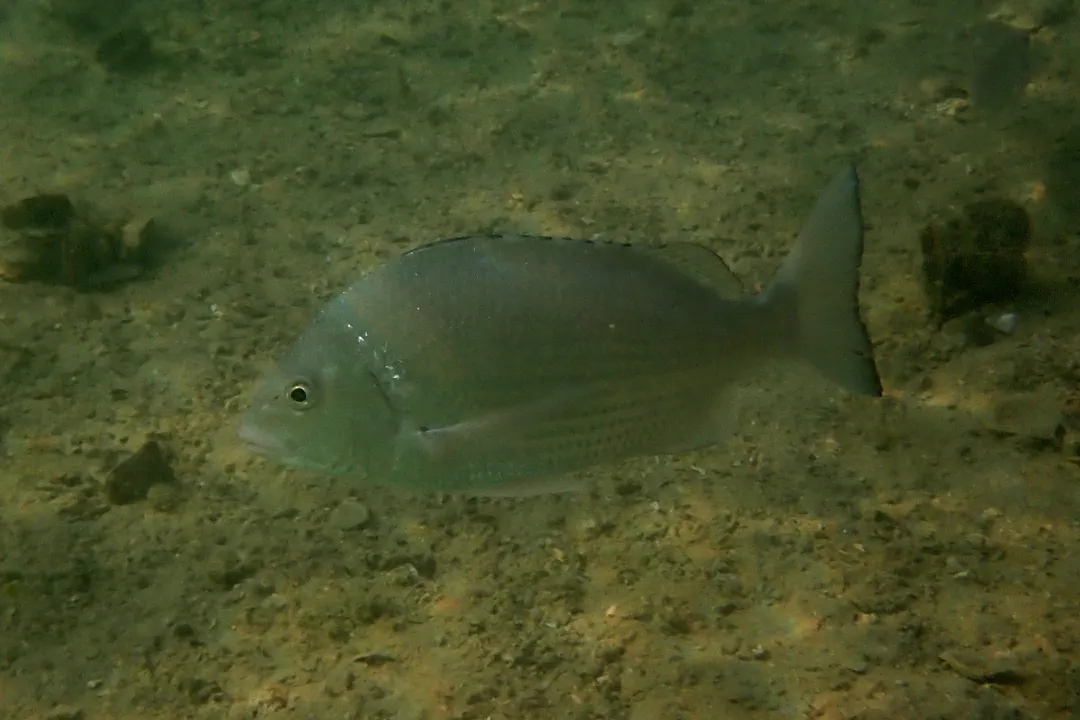 © Ben JobsonCC BY 4.0 · iNaturalist
 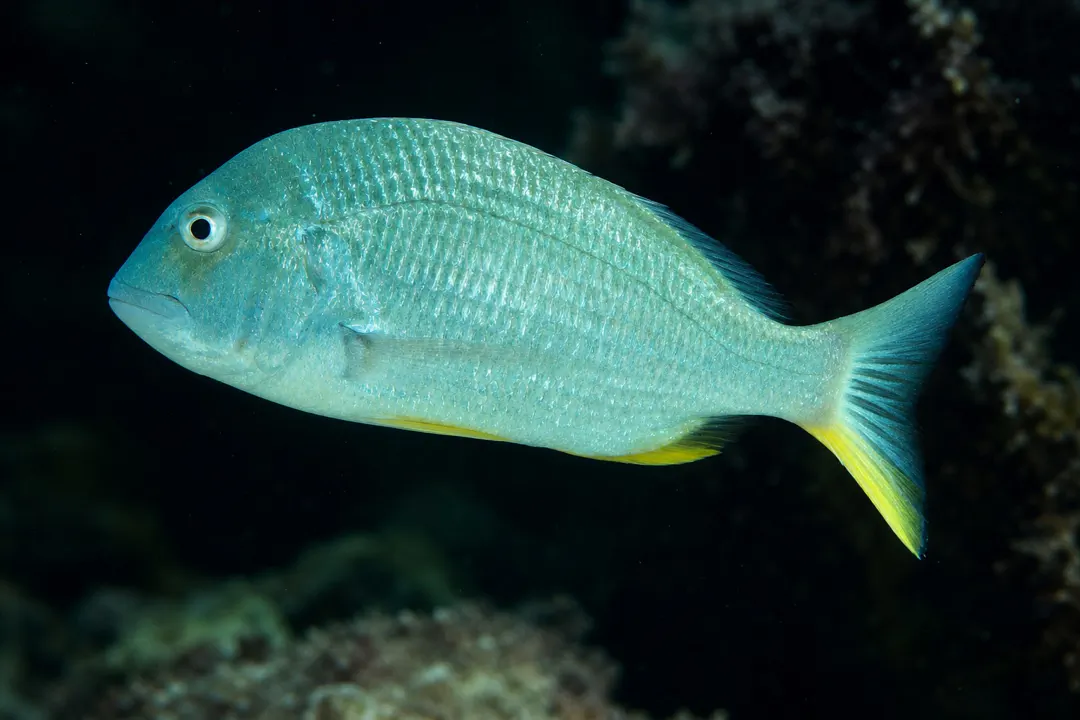 © seabook.appAll rights reserved
 Salema Porgy has no known danger to humans. However, always observe marine life responsibly.
Salema Porgy can be found at depths of up to 70 meters.
Download Seabook free for iOS and Android.