 © seabook.appAll rights reserved
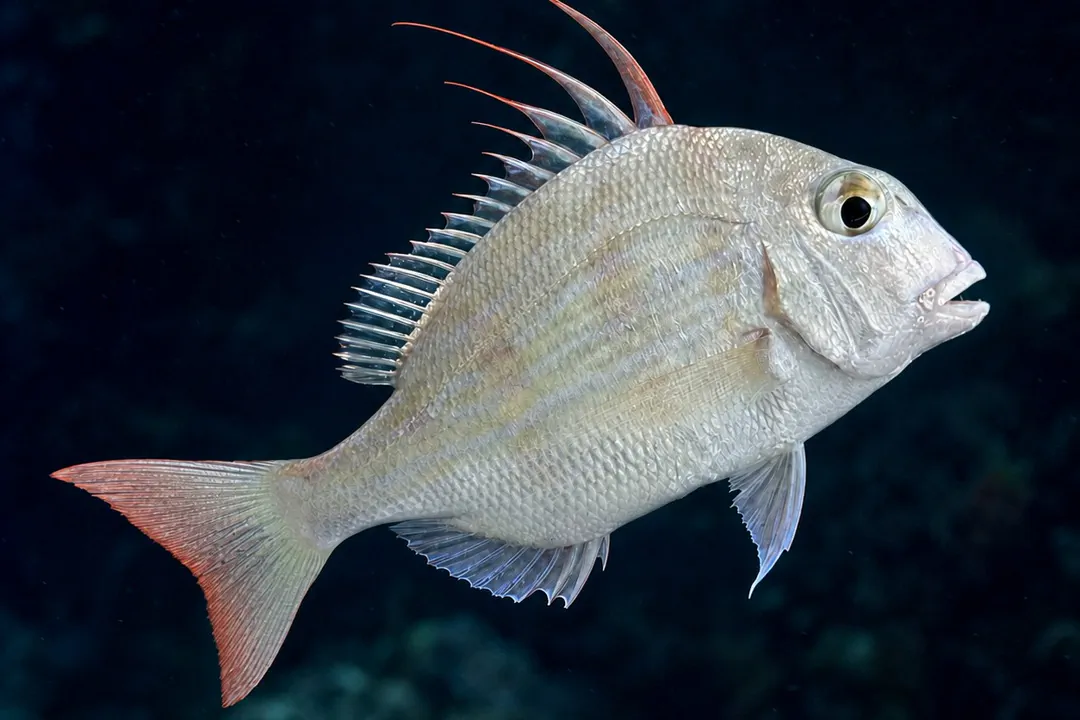
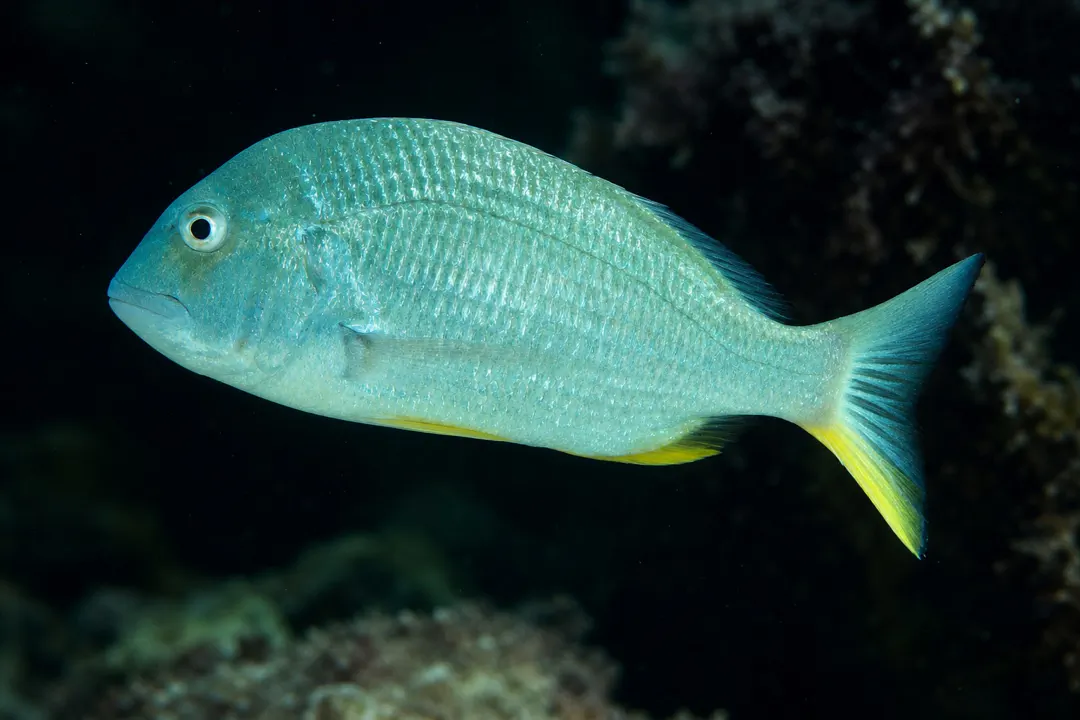
Frypan Bream
Argyrops spinifer
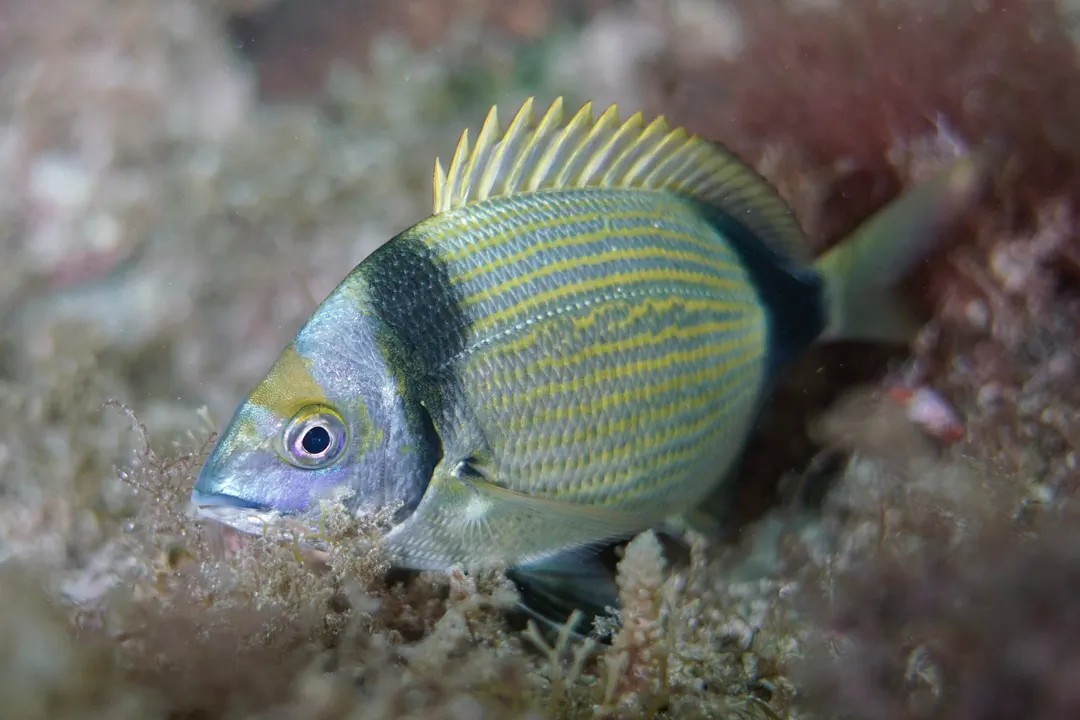
Diplodus vulgaris
Diplodus vulgaris is a species of seabream belonging to the family Sparidae.
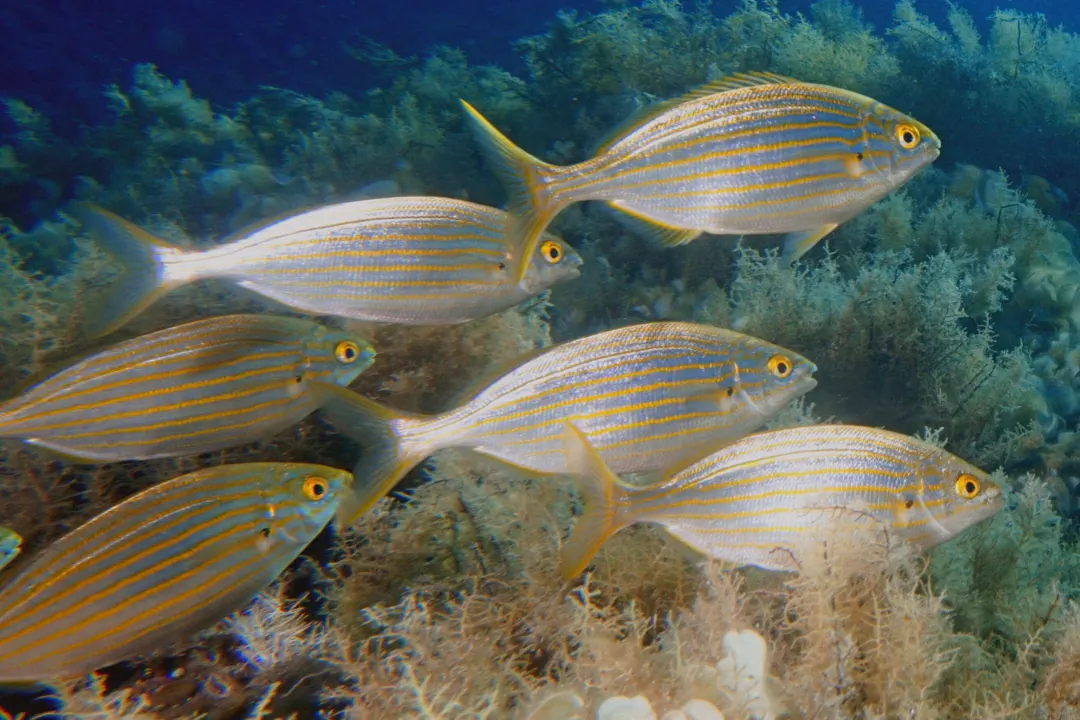
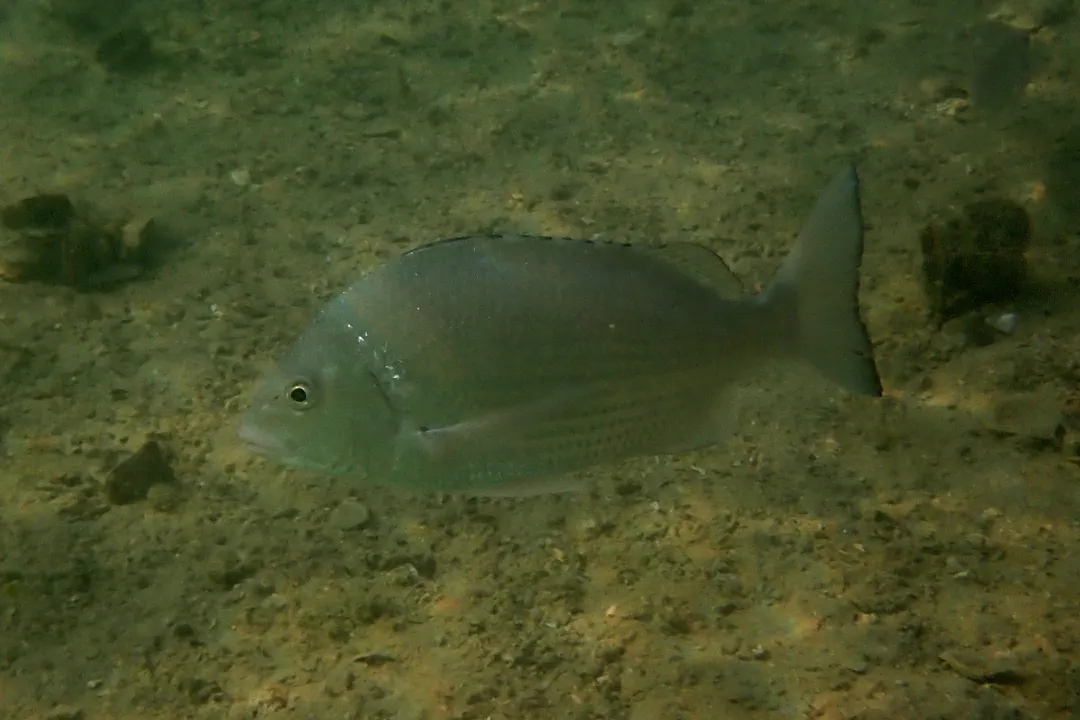
Diplodus vulgaris can reach a length of about 45 centimetres (18 in) with maximum recorded weight of 1.3 kilograms (2.9 lb). Body is generally grey-silver, with two well-defined vertical black bands, one close to the gills and one in the rear of the body, just before the base of the caudal fin. Another black stripe, less pronounced, is present near the eyes. There are golden lines along the body, typically on the back.
Lips are rather thick. In each jaw, there are 8 narrow, light-brownish incisors. In the western Mediterranean, it reproduces in October and November and in the eastern Mediterranean in December and January.
This species is widespread in the Mediterranean Sea, in the Black Sea and in the Eastern Atlantic Ocean, at depths of 0 to 160 m, more commonly between 0 and 30 m.
It inhabits rocky, sandy bottoms and seagrass beds. On sandy bottoms, it can be often found following species that dig the sand and trying to steal their food. It is a gregarious species, sometimes forming groups composed even by many specimens. In the shallows, it often creates smaller groups even with other similar species. Adults feed on benthic invertebrates, crustaceans, worms and mollusks. It is considered an important food fish.
It is often caught in various nets, fish traps and light longlines. Locally, it is very important catch for artisanal fishermen and can be often found fresh in local fish markets.
In sport fishing, it is often caught from shore or from boat on rod and real or handline and in shallow waters often on rigs with floats. It is not very picky about its bait and will grab hooks baited with small chunks of fish, various worms, small prawns, mussels, various pastes, bread, cheese and similar. Sometimes it can be caught while trolling from shore on European Seabass or Common Dentex using live prawns as bait.
Larger specimens are often caught with a speargun.
It is one of the best tasting fish, especially larger specimen. Barbequed with some olive oil, garlic, parsley and few drops of lemon is a delicacy. In mixed fish stew, especially when there is some fatty fish like Eels, it also has great taste and aroma.
It can be used for fish soups, or even pan fried, especially smaller specimens.
© seabook.appAll rights reserved 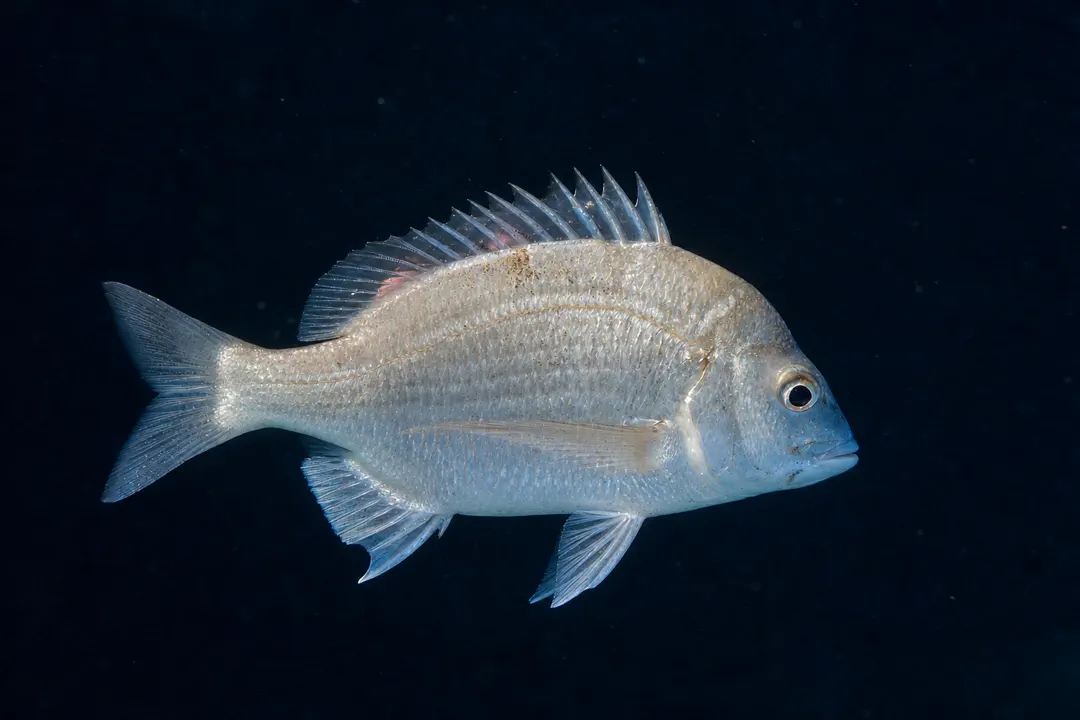 © seabook.appAll rights reserved
  © Srichakra Pranav TamarapalliCC BY-SA 4.0 · iNaturalist
  © Guido and Carrara familyCC BY 4.0 · iNaturalist
  © Ben JobsonCC BY 4.0 · iNaturalist
  © seabook.appAll rights reserved
 Common Two-banded Seabream has no known danger to humans. However, always observe marine life responsibly.
Common Two-banded Seabream can be found at depths of up to 160 meters.
Download Seabook free for iOS and Android.