
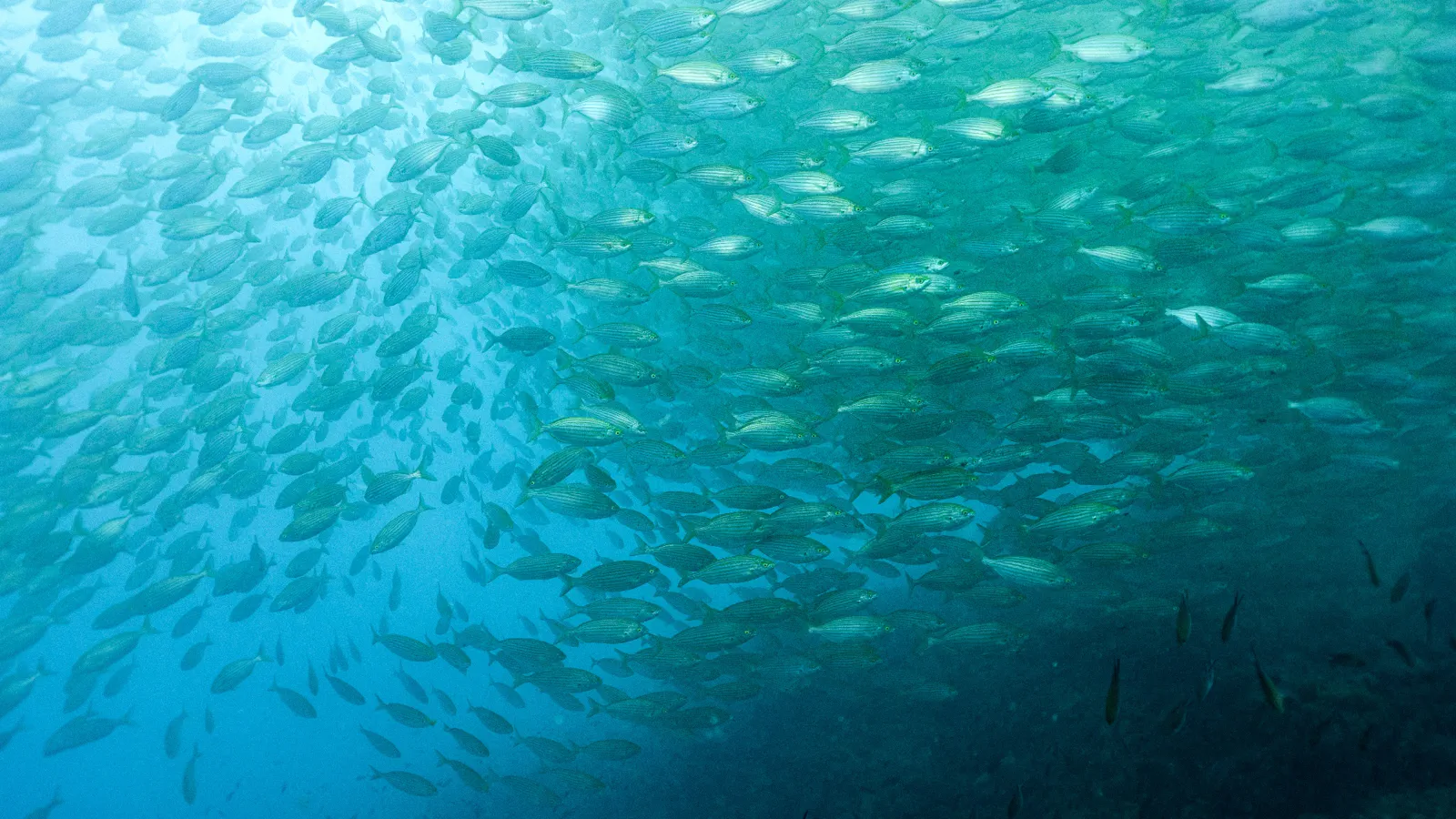
At a depth of 22 metres off El Gran Carall in the Medes Islands, a 15-kilogram dusky grouper rests suspended inside a shadowed limestone overhang. Surrounding the cave entrance, thousands of dark damselfish flutter against the current like burnt leaves, while golden gorgonians spread their lace-like branches across the vertical wall. Sunlight cuts through the calm blue surface, illuminating small wrasses picking parasites from the grouper's copper-flecked flanks.
Exploring Mediterranean sea life offers divers an encounter with a distinct temperate ocean realm shaped by geological isolation and currents from the Atlantic and Red Sea. The prime diving season across the basin runs from June through October, when surface water temperatures reach between 21°C and 27°C, though sharp thermoclines frequently drop temperatures to 15°C below 20 metres. Under calm atmospheric conditions, underwater visibility across coastal reefs routinely ranges from 15 to 30 metres.
Key dive hubs such as the Medes Islands in Spain, Port-Cros National Park in France, Gozo in Malta, and Kaş in Türkiye showcase signature residents including territorial groupers, moray eels, noble pen shells, and loggerhead sea turtles. Shallow, sheltered bays provide gentle conditions for novice divers and snorkellers, while dramatic limestone drop-offs and deep caverns challenge advanced divers seeking open-water pelagics.
What Makes Mediterranean Sea Life Unique?
The Mediterranean Basin operates as a semi-enclosed sea connected to the Atlantic Ocean only by the narrow, 14-kilometre Strait of Gibraltar and to the Red Sea via the man-made Suez Canal. This geographic arrangement has created distinct physical conditions, with higher salinity and lower nutrient levels than adjacent ocean waters. Cold deep water stays isolated from surface currents, producing distinct micro-climates across the western and eastern basins.
A systematic inventory published by Coll et al. in PLOS ONE (2010) estimated approximately 17,000 Mediterranean marine species, calculating an average endemism rate of 20.2% across the basin. According to the UNEP/Mediterranean Action Plan biological-diversity factsheet, between 20% and 30% of all recorded Mediterranean species exist nowhere else on Earth. Materials from the UNEP Mediterranean Action Plan and Barcelona Convention note that the Mediterranean contributes between 4% and 18% of total global marine biodiversity despite covering less than 1% of the world's ocean surface area.
In recent decades, the opening of the Suez Canal alongside rising water temperatures has allowed over 1,000 non-indigenous species to enter the eastern Mediterranean. These Lessepsian migrants, including rabbitfish and cardinalfish, now live alongside native temperate organisms on shallow rocky reefs. Divers travelling east from the Balearic Islands to the Aegean Sea observe a dramatic transition from classic Atlantic-influenced communities to subtropical habitats.
Iconic Fish and Reef Residents of the Mediterranean
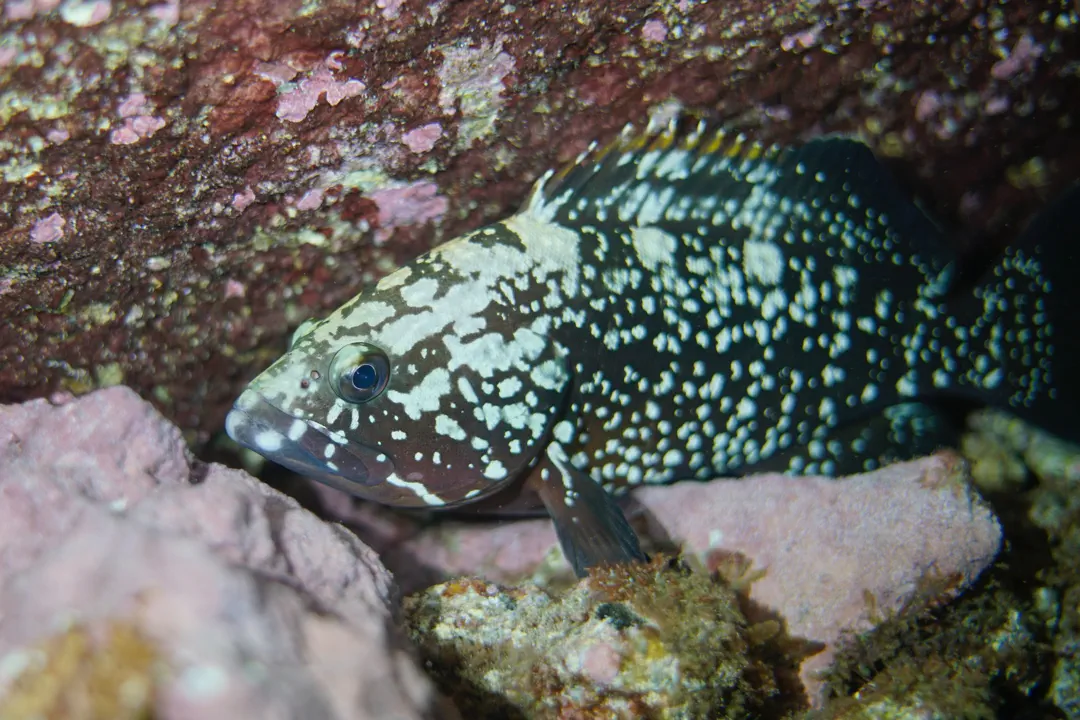
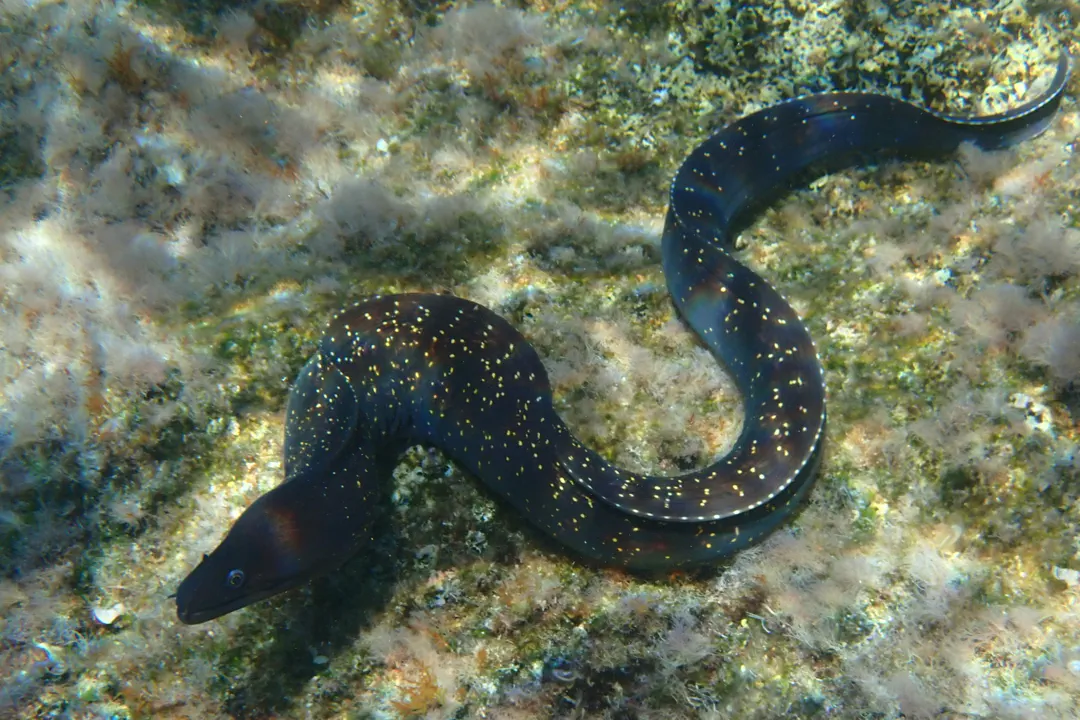
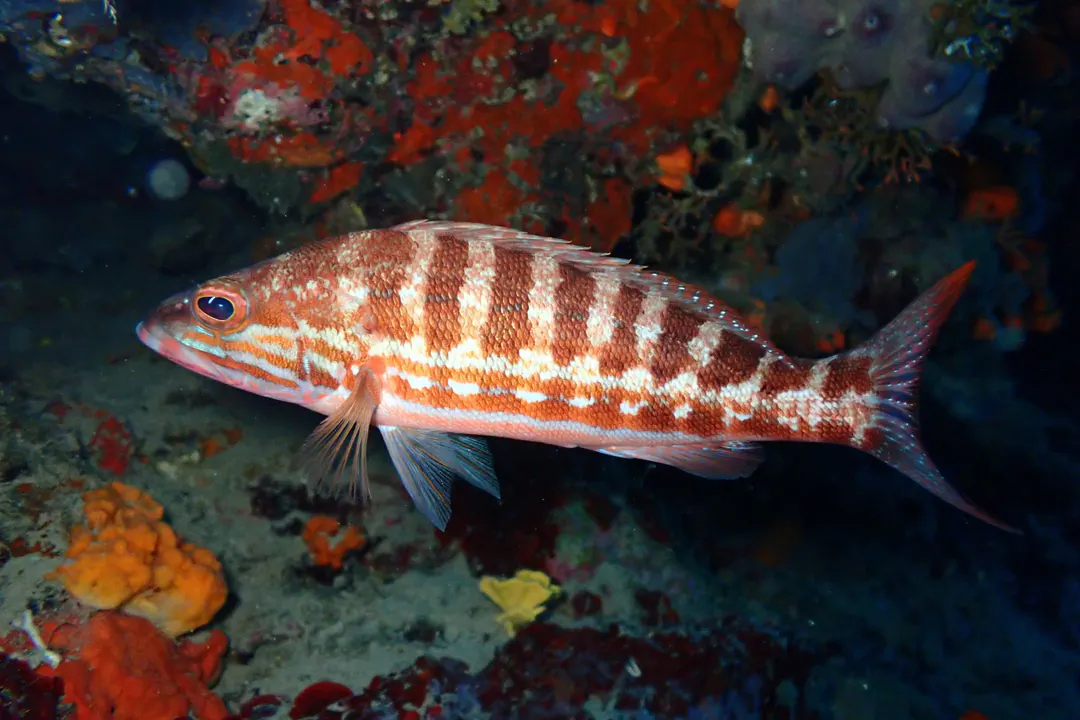
Rocky limestone ledges and coralligenous walls serve as the primary hunting grounds for territorial teleost fish throughout the basin. The dusky grouper (Epinephelus marginatus) remains the undisputed monarch of these boulder fields, often occupying the same cave for years and reaching lengths over 1 metre. Nearby, Mediterranean moray eels (Muraena helena) extend their yellow-mottled heads from narrow fissures, pumping water over their gills to scent prey.
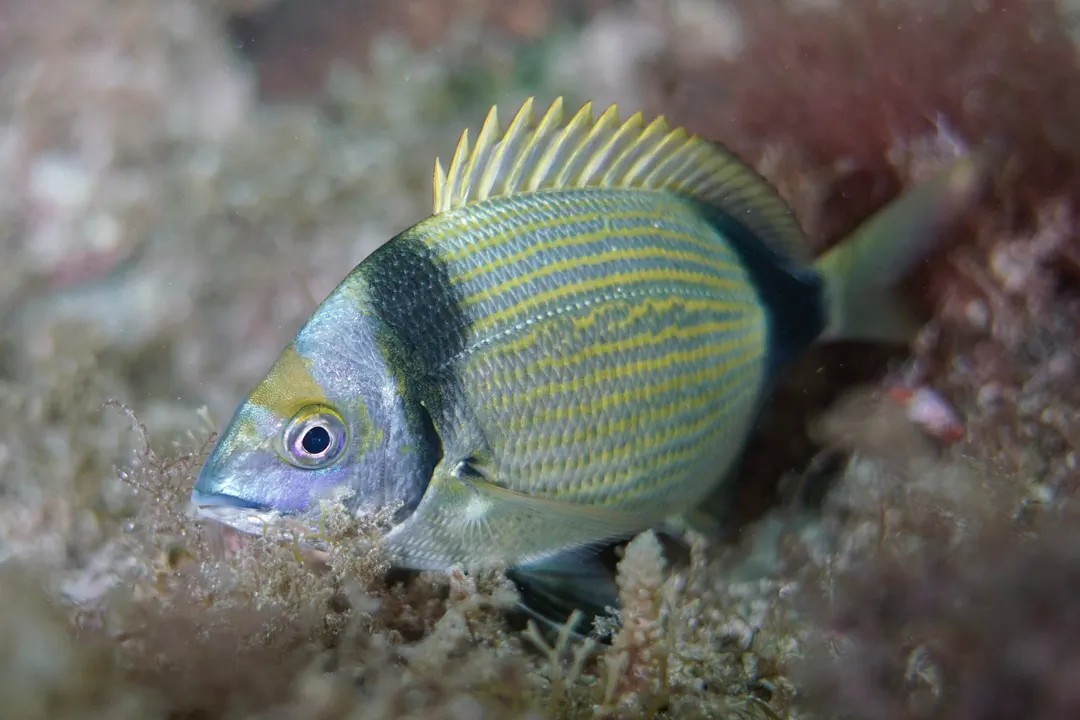
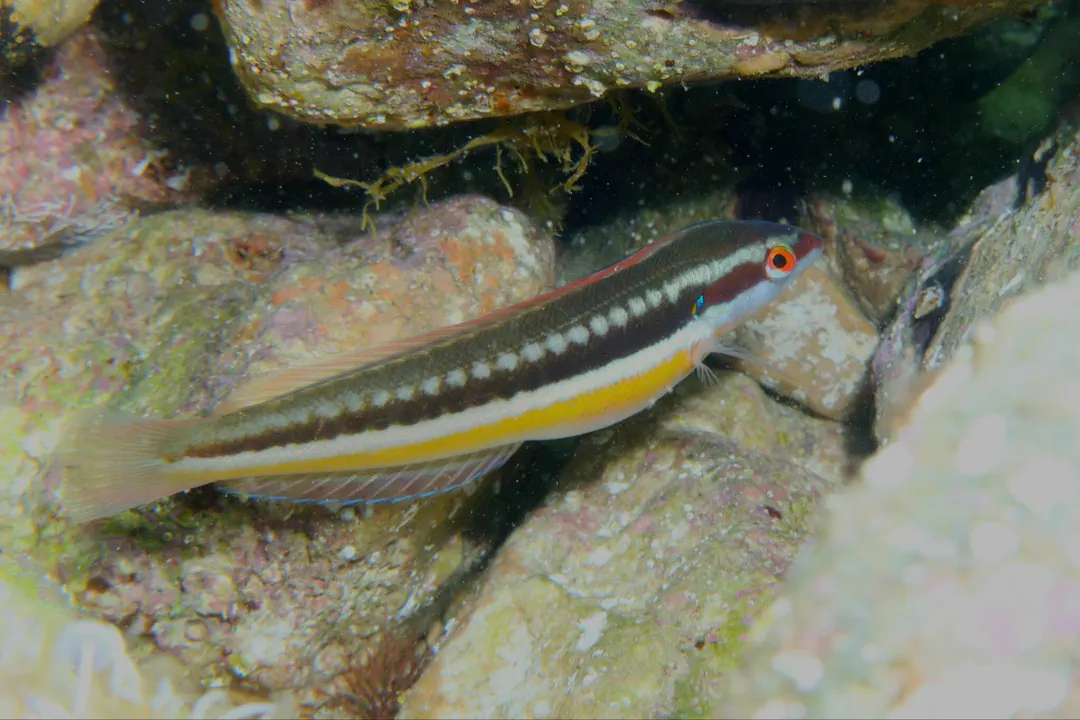
Grazing fish continuously groom the algae-covered substrate, maintaining the balance of the rocky reef ecosystem. Mediterranean parrotfish (Sparisoma cretense) use fused beak-like teeth to scrape turf algae off sunny rock faces at depths of 3 to 15 metres. Above them, clouds of black damselfish (Chromis chromis) feed on floating plankton, while colorful rainbow wrasses (Coris julis) and two-banded seabream (Diplodus vulgaris) pick small crustaceans from crevices.
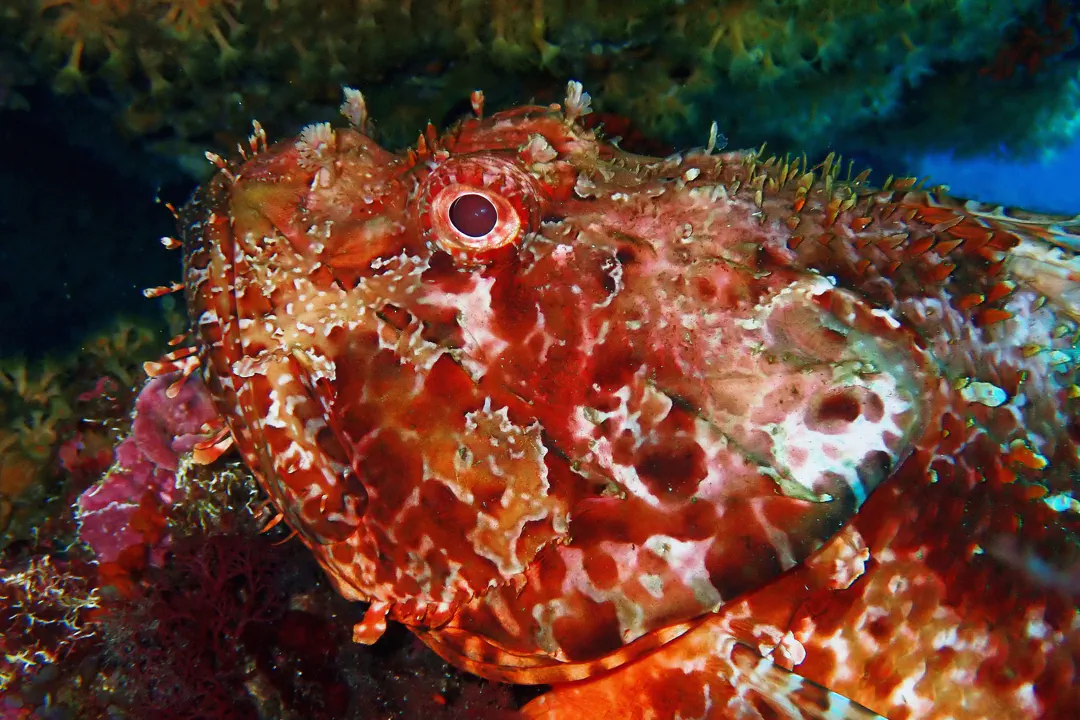
Camouflage serves as the main line of defense for bottom-dwelling predators hiding among the boulders. The red scorpionfish (Scorpaena scrofa) sits perfectly motionless on sponge-encrusted rocks, relying on skin flaps and mottled red pigment to ambush unwary combers (Serranus cabrilla). Because scorpionfish possess venomous dorsal spines capable of inflicting severe pain, divers must maintain careful buoyancy control above the reef.
 © Michael BommererCC BY 4.0 · iNaturalist
  © Juraj AhelCC BY 4.0 · iNaturalist
  © Michael BommererCC BY 4.0 · iNaturalist
  © Donald DavesneCC BY 4.0 · iNaturalist
  © Julien RenoultCC BY 4.0 · iNaturalist
  © Sarah FaulwetterCC BY 4.0 · iNaturalist
 Mediterranean Invertebrates and Benthic Organisms
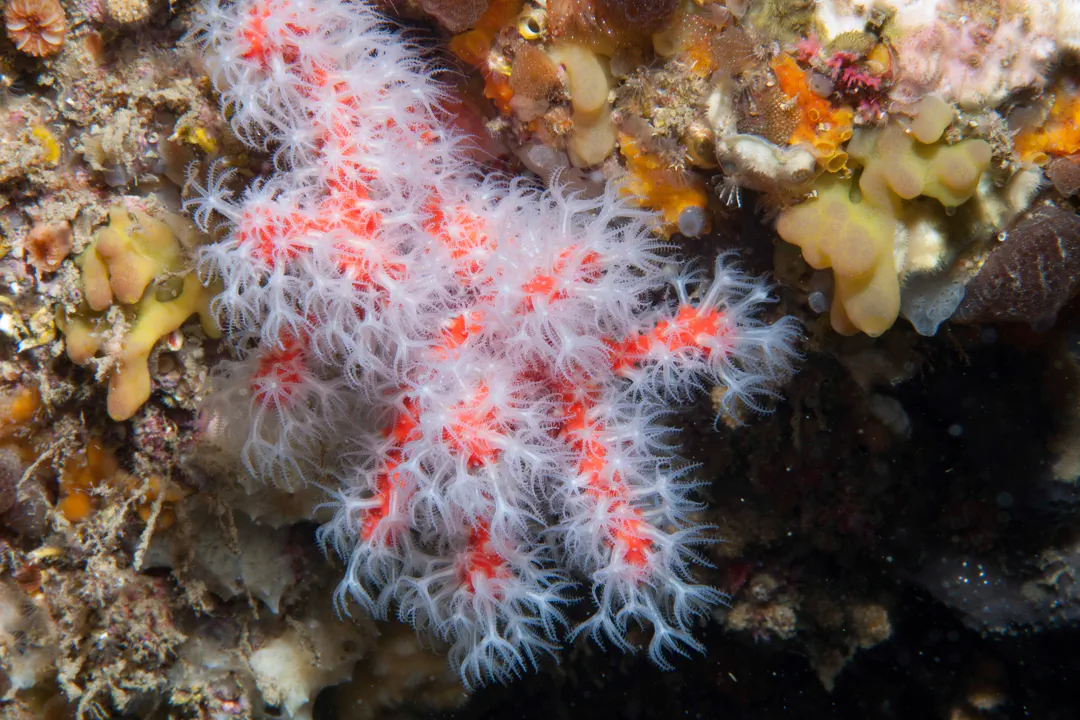
Coralligenous reef walls drop into deep water, clad in a living tapestry of encrusting sponges, tunicates, and soft corals that thrive in low-light environments. Colonial yellow zoanthids (Parazoanthus axinellae) carpet shaded overhangs, expanding their delicate tentacles to capture drifting organic matter. Branching colonies of red coral (Corallium rubrum) cling to the roofs of dark caverns at depths between 15 and 40 metres, growing just a few millimetres each year.
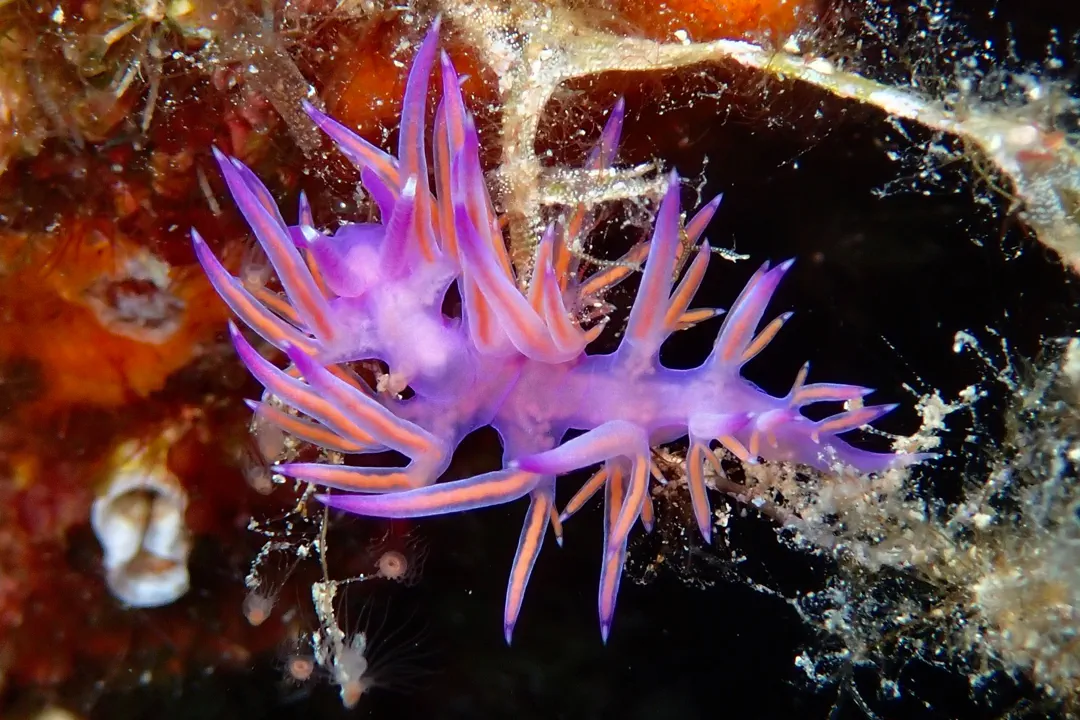
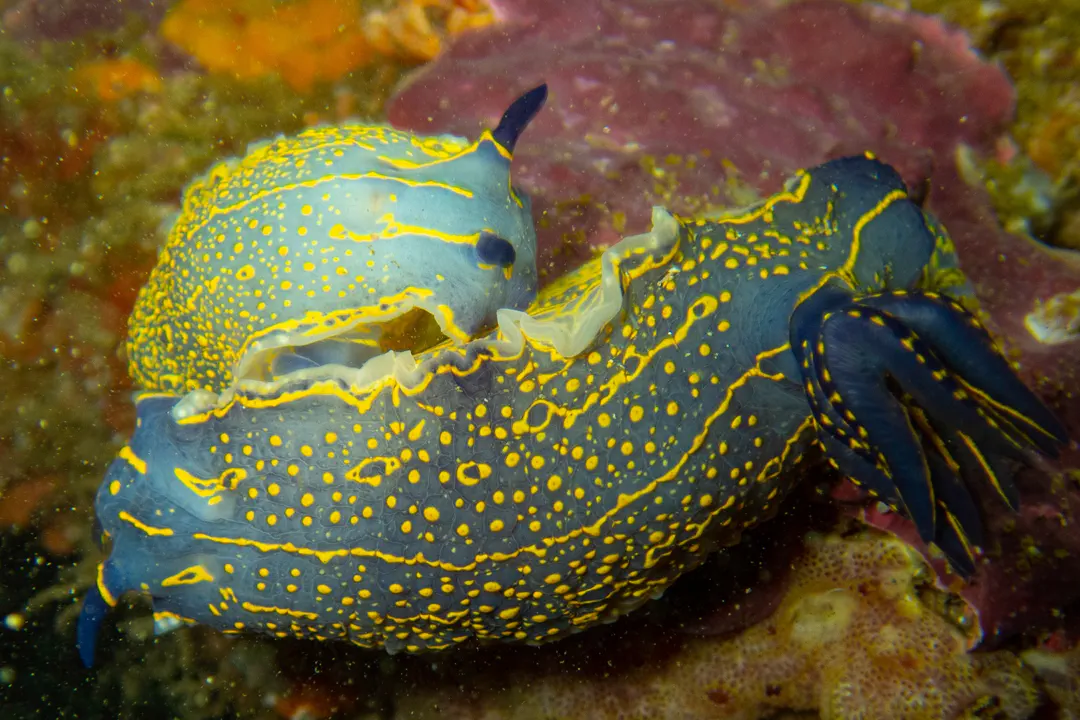
Molluscs and echinoderms add surprising splashes of colour and complex behavior to the benthic landscape. Bright purple and orange dorid nudibranchs, including Flabellina affinis and Felimare picta, crawl over hydroid colonies in search of food. Divers using the Seabook app can quickly identify these delicate sea slugs and log their sightings along the wall, noting differences between regional color variations.
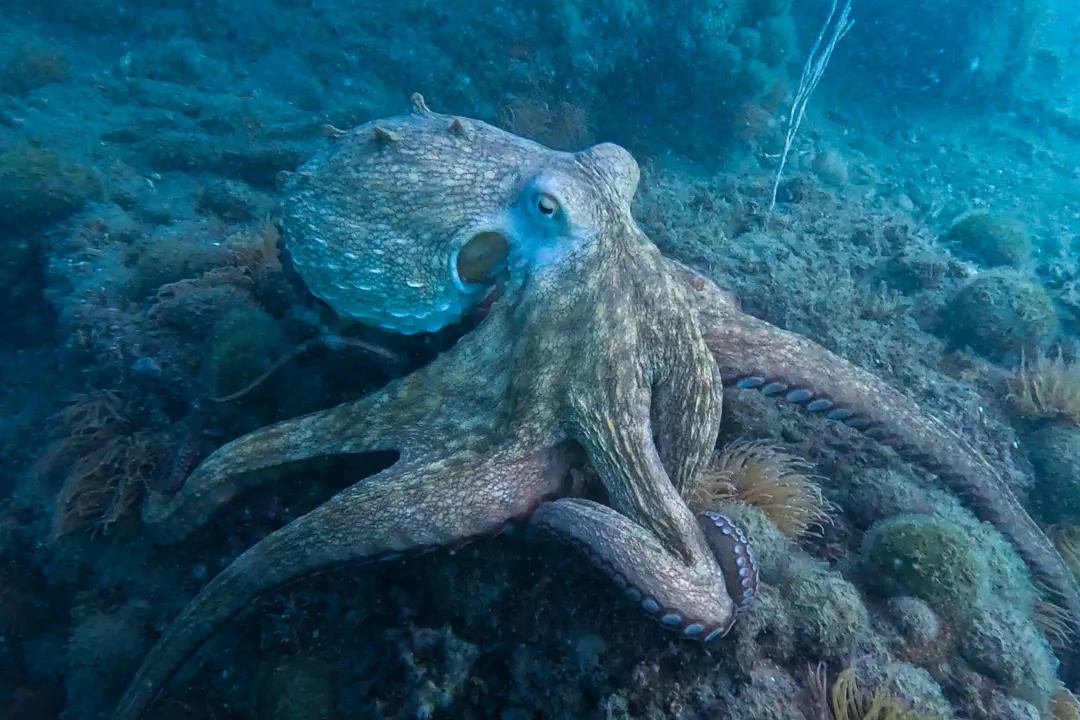
On flat sandy patches and inside seagrass beds, larger invertebrates carve out specialized ecological niches. The common octopus (Octopus vulgaris) constructs hidden dens using discarded shells and stones, venturing out at dusk to hunt crabs. Red comb stars (Echinaster sepositus) stand out vividly against dark green Posidonia blades, while large sea hares (Aplysia depilans) graze slowly along shallow algae-covered rocks.
 Justin PhilboisCC0 · iNaturalist
  © Bernard PictonCC BY 4.0 · iNaturalist
  © Vsevolod RudyiCC BY 4.0 · iNaturalist
  © Bernard PictonCC BY 4.0 · iNaturalist
 Sharks, Rays and Pelagic Marine Life in the Mediterranean
Open waters beyond the coastal shelf support impressive pelagic animals that migrate through deep marine trenches. An IUCN Mediterranean Red List assessment of sharks, rays and chimaeras recorded 77 species, with 73 assessed after excluding vagrant or probable-vagrant records, and highlighted the region as a major extinction-risk hotspot. Giant devil rays (Mobula mobular) glide through offshore currents with wingspans exceeding 2 metres, feeding on swarms of pelagic krill.
Submerged pinnacles and deep drop-offs occasionally attract solitary ocean sunfish (Mola mola) rising from the depths to visit shallow cleaning stations. Small-spotted catsharks (Scyliorhinus canicula) rest on sandy bottoms at depths below 20 metres, while pelagic blue sharks (Prionace glauca) swim through open water miles off the coast. Although smooth hammerhead sharks (Sphyrna zygaena) inhabit Mediterranean waters, encounters along coastal dive sites remain extraordinarily rare.
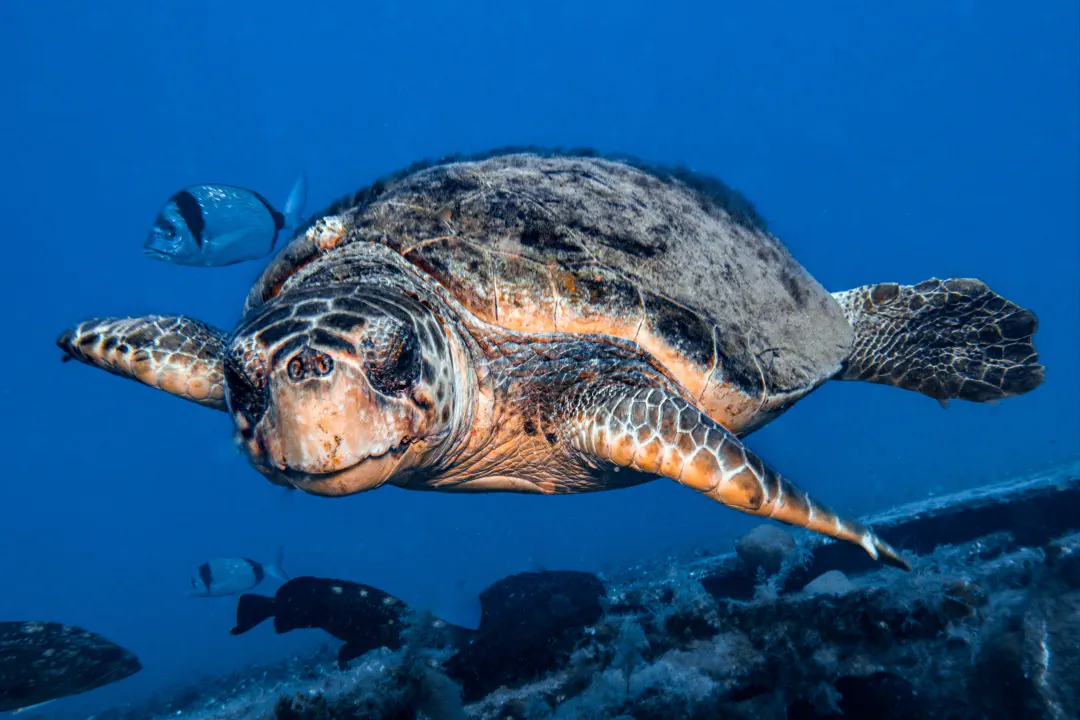
Reptiles and marine mammals also rely heavily on Mediterranean waters for feeding and breeding grounds. Loggerhead sea turtles (Caretta caretta) forage extensively over seagrass meadows and frequently surface near coastal limestone reefs in Greece, Türkiye, and Cyprus. In deeper channels, pods of Risso's dolphins (Grampus griseus) hunt squid near steep underwater drop-offs, while Atlantic bluefin tuna (Thunnus thynnus) patrol offshore banks.
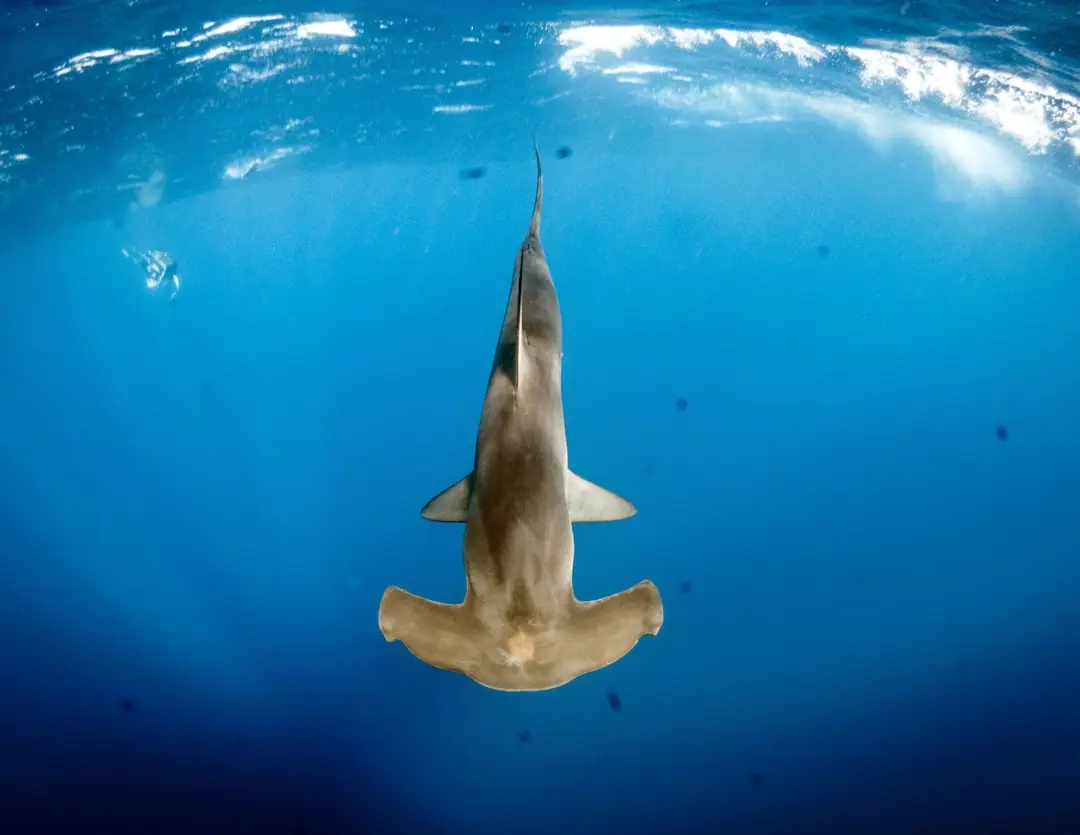 © Jay ClueAll rights reserved
 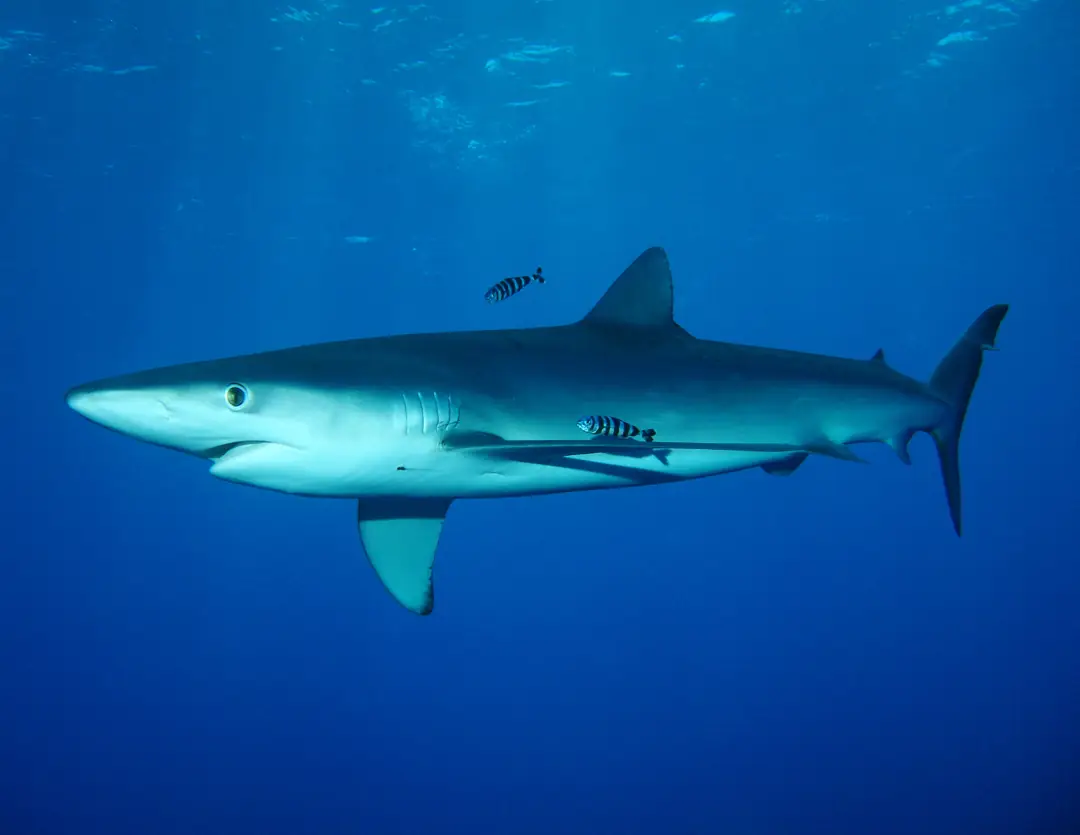 © Patrick DollCC BY-SA 4.0
 Mediterranean Water Temperature by Month
Water temperatures across the Mediterranean fluctuate significantly throughout the year, demanding different thermal protection depending on season and depth. Winter surface temperatures drop to 13°C in northern regions like France and northern Spain, whereas southern and eastern areas maintain slightly warmer winter baselines around 16°C. During these colder months from December through April, divers require a 7mm wetsuit with a hood or a drysuit.
By July and August, intense solar heating raises surface temperatures to between 24°C and 28°C across most dive destinations. However, warm surface layers mask a sharp thermocline that usually sits between 12 and 25 metres deep. Crossing this boundary drops the water temperature instantly down to 15°C or 16°C, making a 5mm suit or 7mm two-piece wetsuit essential for dives below 20 metres.
Autumn months from September to November offer some of the most comfortable diving conditions across the basin. The summer thermocline sinks deeper or breaks up, creating a uniform water temperature of 20°C to 23°C throughout the top 30 metres of the water column. Spring months bring rising surface temperatures around 18°C, along with plankton blooms that attract active juvenile fish to shallow habitats.
Water temperature
Mediterranean, monthly average
Average sea surface temperatures for central Mediterranean (reference: Malta/central basin). Typical diving depth range: 5-40m. Values represent typical conditions; local variations occur based on specific location, depth, and seasonal currents.
Where Are the Best Places to See Mediterranean Marine Life?
Medes Islands Marine Reserve, Spain
Located less than a mile off the coast of L'Estartit in Catalonia, the Medes Islands archipelago forms one of the oldest protected marine reserves in the western Mediterranean. Decades of strict no-take enforcement have allowed fish populations to recover dramatically across its seven limestone islets. Large dusky groupers swim openly at depths of 10 to 25 metres without showing fear toward visiting divers.
The underwater topography features dramatic vertical walls, tunnels, and light-filled caverns covered in yellow gorgonians and sponges. Shoals of two-banded seabream, white seabream, and barracudas circle the shallow plateaus, while moray eels and octopus occupy every rocky crevice. Sunlight filtering through swim-throughs creates exceptional lighting for viewing territorial reef species up close.
Local reserve authorities regulate daily diver numbers to prevent habitat degradation, making advance dive bookings necessary during peak summer months. Strong surface currents occasionally sweep past the outer islets, making buoy lines helpful during descents and ascents. Visibility regularly reaches 20 to 25 metres during calm weather periods from June through September.
Depth: 5-40 m. Access: boat, 10 minutes from L'Estartit. Level: Open Water to Advanced. Best months: June-October.
Port-Cros National Park, France
Situated off the French Riviera near Hyères, Port-Cros National Park was established in 1963 as Europe's first coastal marine park. The island's underwater perimeter features protected granite drop-offs, shallow rocky reefs, and extensive meadows of Posidonia seagrass. Dense schools of brown wrasse, salema, and damselfish graze undisturbed along the upper reef edge.
Diver pathways like the La Palud underwater trail allow snorkellers and divers to explore shallow marine habitats directly from shore. Deeper sites, such as La Gabinière rock, feature vertical walls dropping past 30 metres where large groupers, brown morays, and schools of yellowmouth barracuda congregate in open currents. Red coral colonies thrive inside dark overhangs shielded from direct sunlight.
Park regulations prohibit spearfishing, anchoring, and feeding marine life throughout the reserve's waters. Boat transfers run regularly from Le Lavandou and Hyères, landing divers directly at the island harbour. Summer water temperatures reach 24°C at the surface, though thermoclines beneath 18 metres drop temperatures to 16°C.
Depth: 3-35 m. Access: boat, 30 minutes from Le Lavandou. Level: Beginner to Advanced. Best months: May-October.
Kaş Marine Protected Area, Türkiye
The coastal waters surrounding Kaş in southwestern Türkiye offer some of the clearest conditions and most varied underwater topography in the eastern Mediterranean. Limestone arches, deep drop-offs, underwater caves, and historical wrecks sit scattered across the archipelago. Underwater visibility regularly exceeds 30 metres during the dry summer season, revealing stark underwater rock formations.
Marine life in Kaş includes a fascinating combination of native Mediterranean fauna and Lessepsian migrants from the Red Sea. Loggerhead sea turtles frequently feed over seagrass beds at depths of 8 to 15 metres, while dusky groupers and noble pen shells inhabit deeper rocky ledges. Sightings of marble rays, flying gurnards, and small nursehound sharks occur regularly along sandy channels.
Dive operators run short daily boat trips from Kaş harbour out to over thirty distinct dive sites within fifteen minutes of port. Calm surface conditions make the inner bays perfect for training dives, while outer sites feature deeper walls and current-swept pinnacles. Water temperatures peak at 28°C in August and remain warm through late October.
Depth: 5-40 m. Access: boat, 15 minutes from Kaş harbour. Level: All levels. Best months: May-November.
Gozo and Comino, Malta
The Maltese islands of Gozo and Comino are world-renowned for underwater visibility, dramatic limestone caves, drop-offs, and light-filled swim-throughs. Gozo's northern coast features steep cliffs that plunge directly beneath the surface into abyssal blue water. The famous Blue Hole site at Dwejra drops from a shallow inland pool down through an archway into the open ocean at 15 metres.
Marine life thrives along the shaded walls and cavern entrances, where octopus, slipper lobsters, and cardinalfish hide from daylight. Shoals of amberjacks and dentex hunt small baitfish along outer reef drop-offs, while damselfish and parrotfish swarm across shallow boulder fields. Clear water allows daylight to penetrate deep into caverns, illuminating pink encrusting algae and sponges.
Shore diving forms a major part of the Gozo experience, with carved stone ladders and entry points providing direct access to deep water. Boat charters reach the crystal-clear shallow lagoons of Comino in less than fifteen minutes from Gozo's Mgarr harbour. Water temperatures range from 16°C in May up to 26°C in August, with visibility consistently reaching 30 metres.
Depth: 6-40 m. Access: shore and boat, 10-20 minutes from harbour. Level: Beginner to Technical. Best months: May-October.
Is the Mediterranean Good for Snorkellers and Beginners?
Sheltered Mediterranean coves, rocky inlets, and shallow seagrass beds provide ideal conditions for novice divers and snorkellers. Minimal tides and gentle currents across protected bays allow beginners to practice basic mask clearing and buoyancy skills in calm water. Entry points off gravel beaches and stone piers give direct access to shallow reefs teeming with marine life within 3 metres of the surface.
Snorkellers exploring shallow rocky shores frequently encounter ornate wrasses, painted combers, sea urchins, and juvenile seabream grazing over algae-covered stones. Common octopuses can often be spotted in less than 2 metres of water, artfully camouflaged against cobble substrates. Wearing a thin 3mm shorty wetsuit adds necessary thermal insulation and helpful buoyancy while protecting skin from accidental scrapes against rocks or sea urchin spines.
Beginners should select established marine reserves or sheltered bays with dedicated swimming zones to avoid motorized boat traffic. Using a brightly colored surface marker buoy is mandatory in open water areas outside designated swim zones. Under calm summer skies, underwater visibility in shallow coves regularly exceeds 20 metres, offering clear views of sandy bottoms and underwater rock ledges.
Conservation and Protected Marine Areas
The Mediterranean Basin faces severe ecological pressures from intense coastal development, marine plastic pollution, destructive anchoring, and historic overfishing. Posidonia oceanica seagrass beds are particularly vulnerable to mechanical anchor damage and coastal runoff; because this endemic plant grows at a rate of less than 1 centimetre per year, destroyed meadows can take centuries to recover. Climate change is also driving water temperatures higher, causing localized die-offs of cold-adapted invertebrates.
Marine Protected Areas (MPAs) have proven highly effective at restoring depleted fish stocks and protecting fragile benthic communities when strictly enforced. In well-managed reserves like Medes Islands and Port-Cros, fish biomass is up to five times higher than in adjacent unprotected waters, with dusky groupers growing to record sizes. Fully protected no-take zones allow long-lived predatory fish to mature and spawn, replenishing surrounding fishing grounds.
Divers play a direct role in protecting Mediterranean sea life by observing strict environmental guidelines during every dive. Maintaining neutral buoyancy prevents accidental fin strikes against slow-growing red coral and gorgonians on vertical walls. Choosing eco-friendly mooring buoys rather than dropping anchors, refusing souvenirs made from sea shells or red coral, and reporting illegal fishing activity help ensure these historical marine ecosystems survive for future generations.
Questions
Are there sharks in the Mediterranean?
Yes. Regional assessments record 77 shark, ray, and chimaera species, with 73 native or established species after excluding vagrant records. Small-spotted catsharks and pelagic blue sharks are regularly encountered, while hammerheads occur but are rare sightings for recreational divers.
Is it dangerous to swim with Mediterranean marine life?
No, serious incidents are rare and Mediterranean marine life is safe for humans who maintain respectful distances. Swimmers and divers should avoid touching scorpionfish, sea urchins, or stingrays, as venomous spines can inflict painful puncture wounds.
What is the best time of year to see sea life in the Mediterranean?
The prime diving period runs from June through October, when water temperatures peak between 21°C and 27°C and visibility frequently exceeds 20 metres. Spring and autumn offer clearer water, active nudibranchs, and fewer crowds across major marine reserves.
Can you see sea turtles while diving in the Mediterranean?
Yes, loggerhead sea turtles (Caretta caretta) forage extensively across seagrass beds and nest along sandy beaches in Greece, Türkiye, and Cyprus. Green turtles also occur in eastern areas, though encounters are less frequent than with loggerheads.
What exposure suit do I need for diving in the Mediterranean?
A 5mm wetsuit works well from June through October, though dives below 20 metres cross a 15°C thermocline where a 7mm suit or hood is recommended. During winter and early spring, a 7mm wetsuit with hood or a drysuit is necessary.
Why is Posidonia oceanica so important for Mediterranean sea life?
Posidonia oceanica is an endemic flowering seagrass that creates essential shelter, breeding grounds, and nursery habitat for hundreds of fish species. The meadows produce significant oxygen, stabilize seabed sediment, and capture carbon dioxide.
Sources
- Biological diversity in the Mediterranean · 2021-04-01
- The Biodiversity of the Mediterranean Sea: Estimates, Patterns, and ... · 2010-08-02
- The Conservation Status of · 2026-10-02
- Mediterranean Action Plan (MAP) - Barcelona Convention · 2025-04-11