African Blue Swimming Crab
Portunus segnis
Goniosupradens acutifrons, known as the spine-fronted swimming crab, belongs to the family Portunidae and is found in the marine Indo-West Pacific region.
Johan Gerard de Man first described the species in 1879 under the name Goniosoma acutifrons. The original publication of the species was in De Man’s work titled 'On some new or imperfectly known Podophthalmous Crustacea of the Leyden Museum,' published in Notes from the Leyden Museum 1(2): 53–73. The type locality of the species is Mauritius, historically referred to as 'l’Île-de-France.' The name acutifrons is Latin for 'sharp-fronted' or 'pointed-fronted,' describing the crab’s pointed frontal margin. The genus name Goniosupradens combines Greek-derived gonio- ('angle' or 'corner') with Latin supra ('above') and dens ('tooth'), likely referring to the arrangement of teeth on the crab’s front or carapace. Goniosupradens was originally established as a subgenus of Charybdis by Leene in 1938, and it was later elevated to genus rank, resulting in the current combination. The World Register of Marine Species recognizes Goniosupradens acutifrons as the accepted name, while NCBI currently displays Charybdis acutifrons as its taxonomic name, indicating some inconsistency in nomenclatural databases.
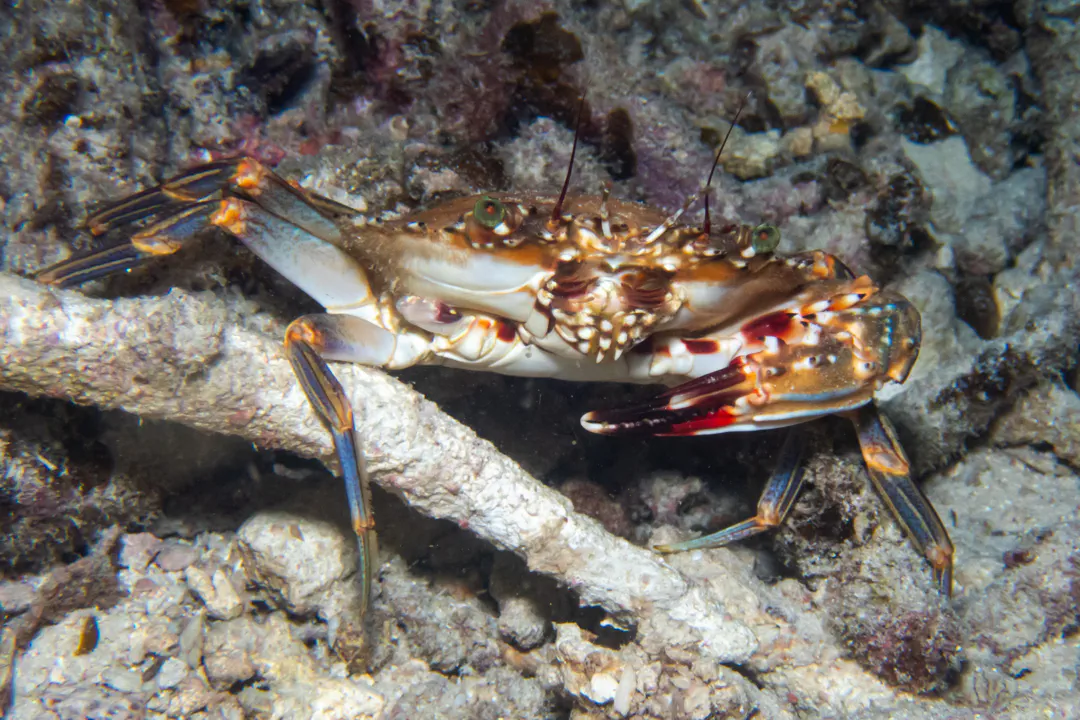
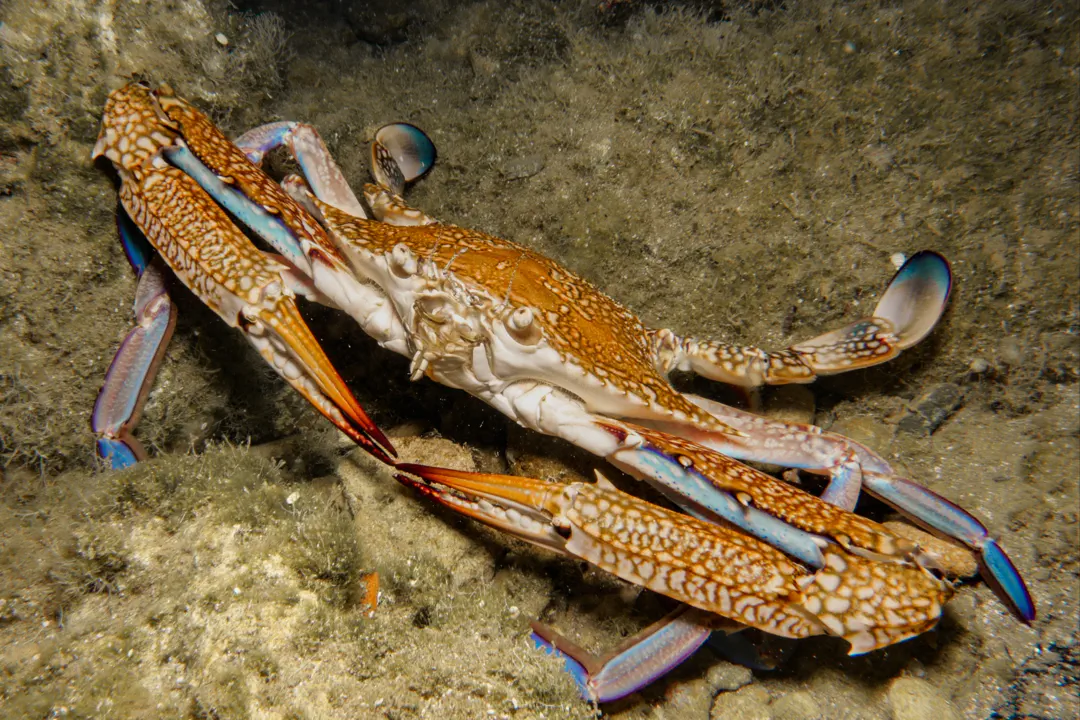
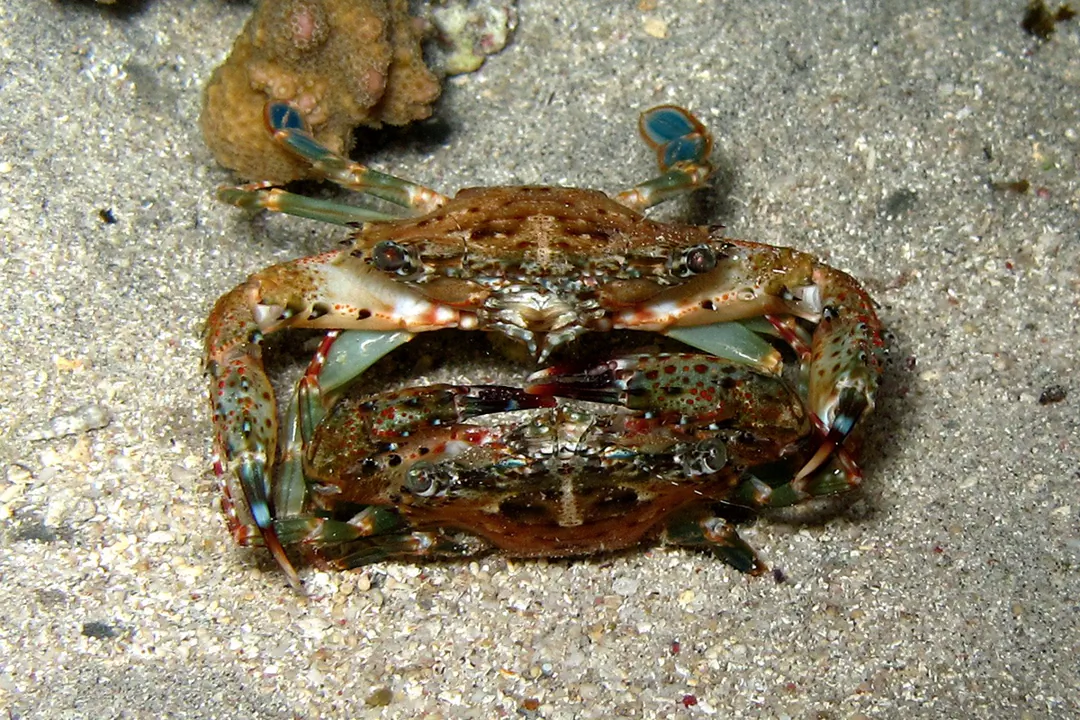
The species has a sharply pointed front of the carapace, which is a key structural clue for identification. The anterior carapace margin features pronounced sharp teeth or spines, which are distinguishing features of the species. The legs of the spine-fronted swimming crab are blue and yellow, with a distinctive claw colour pattern that aids in identification. Colouration can vary due to lighting, habitat, moult stage, and preservation, so it should not be used in isolation for identification. Reliable underwater identification requires assessment of multiple characters, including the claw coloration and the shape of the carapace, rather than relying solely on colour. There is insufficient detailed description of dorsal-carapace markings for reliable identification, making visual comparison with similar species challenging. A species-level field identification necessitates a regional taxonomic key or clear dorsal and frontal photographs, as colour alone is insufficient for distinguishing it from similar species.
The spine-fronted swimming crab primarily inhabits shallow rocky and coral-reef habitats, including the sublittoral zone. Records from Japan also document its occurrence in intertidal rocky reef areas. The species is associated with rocky and coral substrates, with one specimen found beneath a loose stone on a sandy-muddy bottom. A verified record from Japan indicates that the species can be found at a depth of 3 m, although a complete species-wide depth range has not been established. Geographically, the spine-fronted swimming crab has been reported from Japan, Indonesia, Bangladesh, and eastern Australia, including southeastern Queensland and northern New South Wales. In Japan, specific records include Sagami Bay, the Kii Peninsula, Kagoshima, and Okinawa.
No authoritative source documents a distinct commercial or subsistence fishery targeting the spine-fronted swimming crab. The species may occur incidentally in coastal crab catches, but species-specific catch data are not established. No reliable evidence was found of a significant aquarium trade for the spine-fronted swimming crab. Species-specific information confirming that the spine-fronted swimming crab is routinely eaten is unavailable. It should not be assumed to be an established food crab merely because it is a portunid. No authoritative record indicates that the spine-fronted swimming crab is venomous or medically dangerous. Like other swimming crabs, it can inflict a painful pinch if handled, and normal precautions are appropriate. A formal IUCN Red List assessment for the spine-fronted swimming crab was not found in the available authoritative records, resulting in its global conservation status being unknown/not assessed.
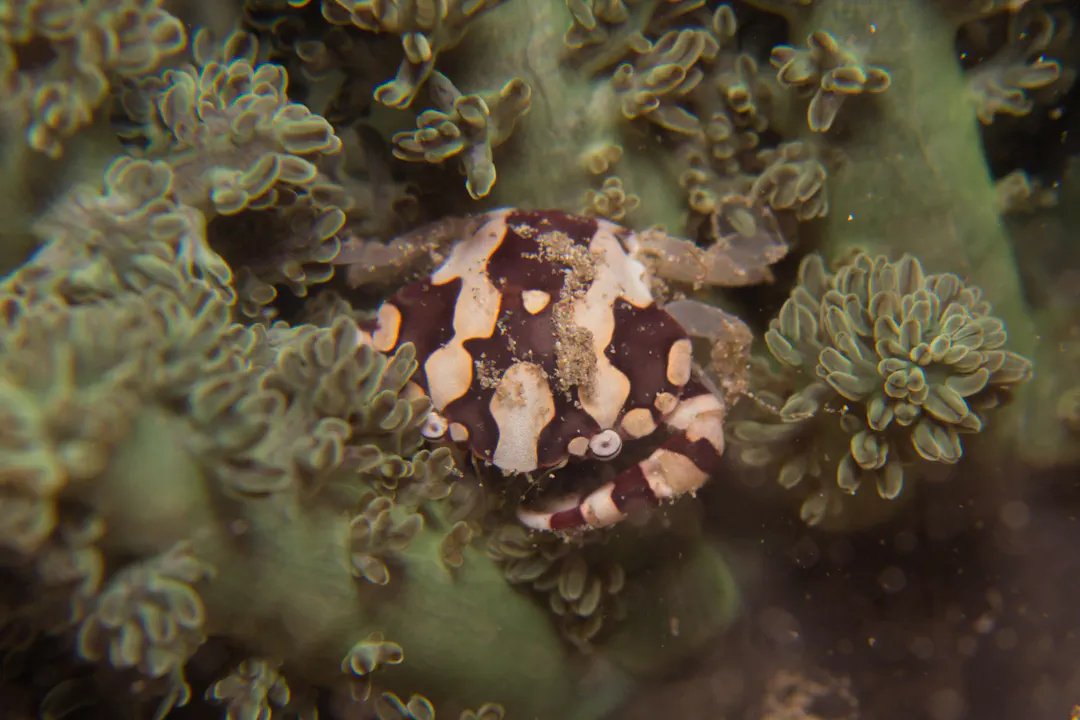 © Ewout KnoesterCC BY-SA 4.0 · iNaturalist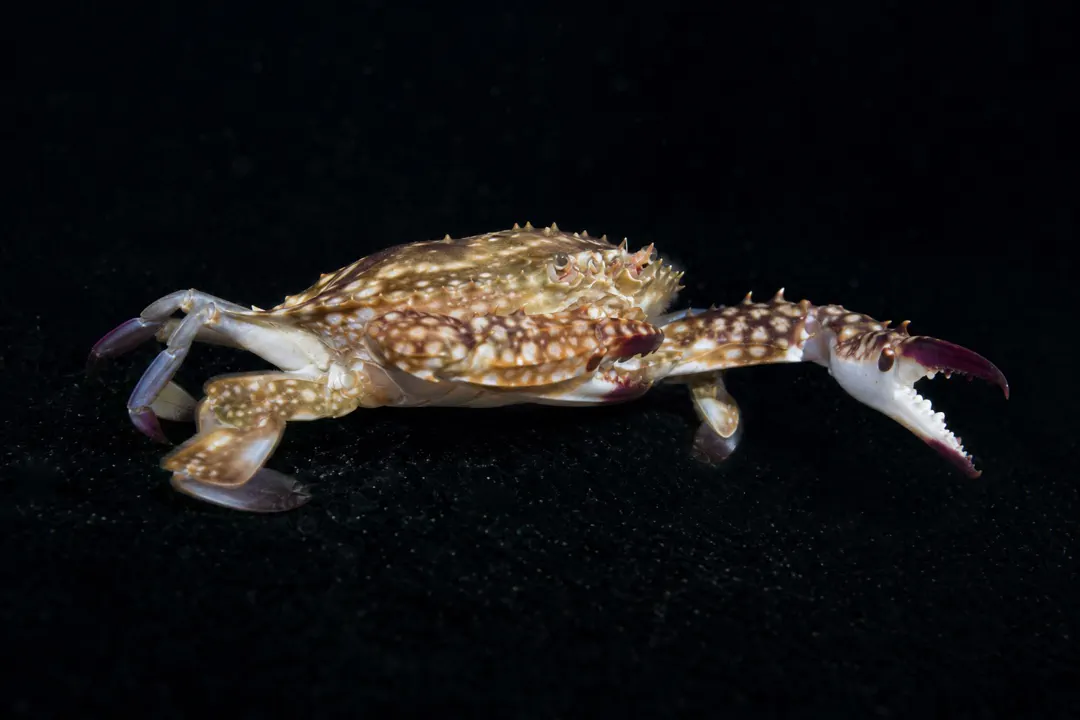
 © Philippe BoujonCC BY-SA 4.0 · iNaturalist
 Goniosupradens acutifrons has no known danger to humans. However, always observe marine life responsibly.
Download Seabook free for iOS and Android.