 © Jan Ebr & Ivana EbrováCC BY 4.0 · iNaturalist
Honeycomb Cowfish
Acanthostracion polygonius
Ostracion rhinorhynchos
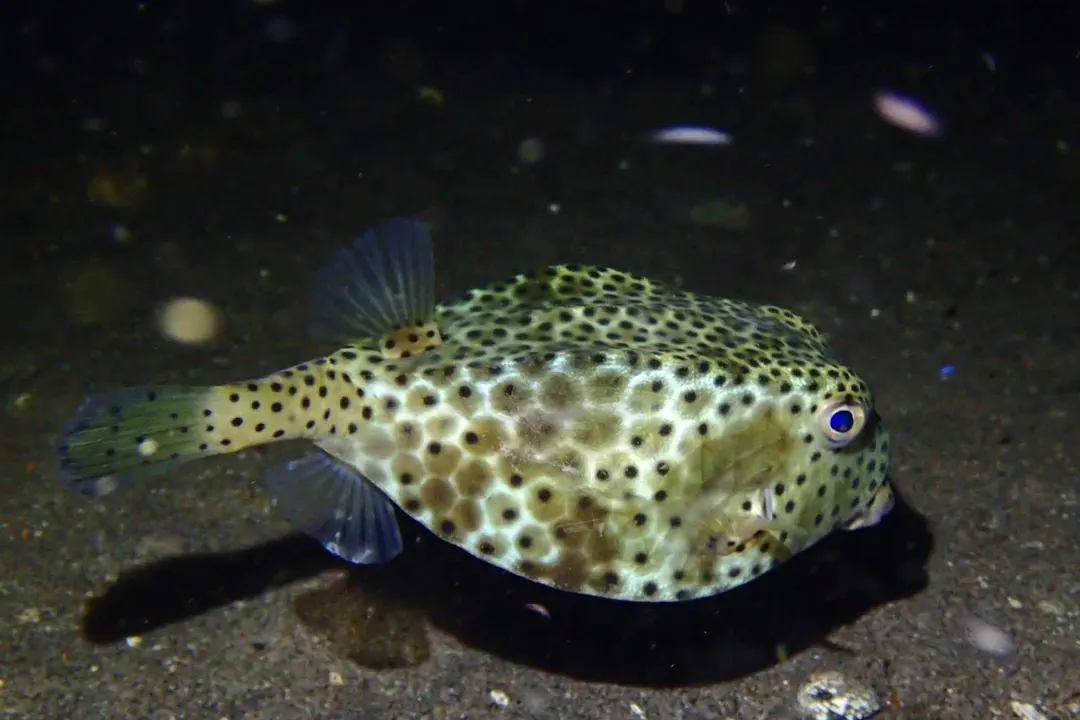
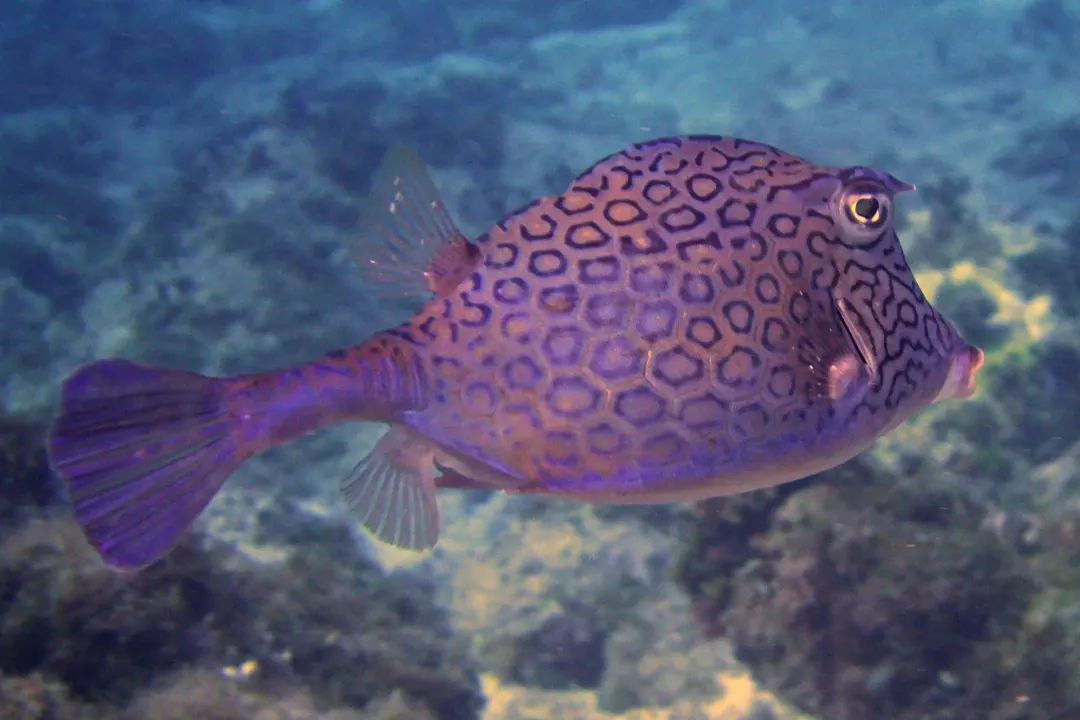
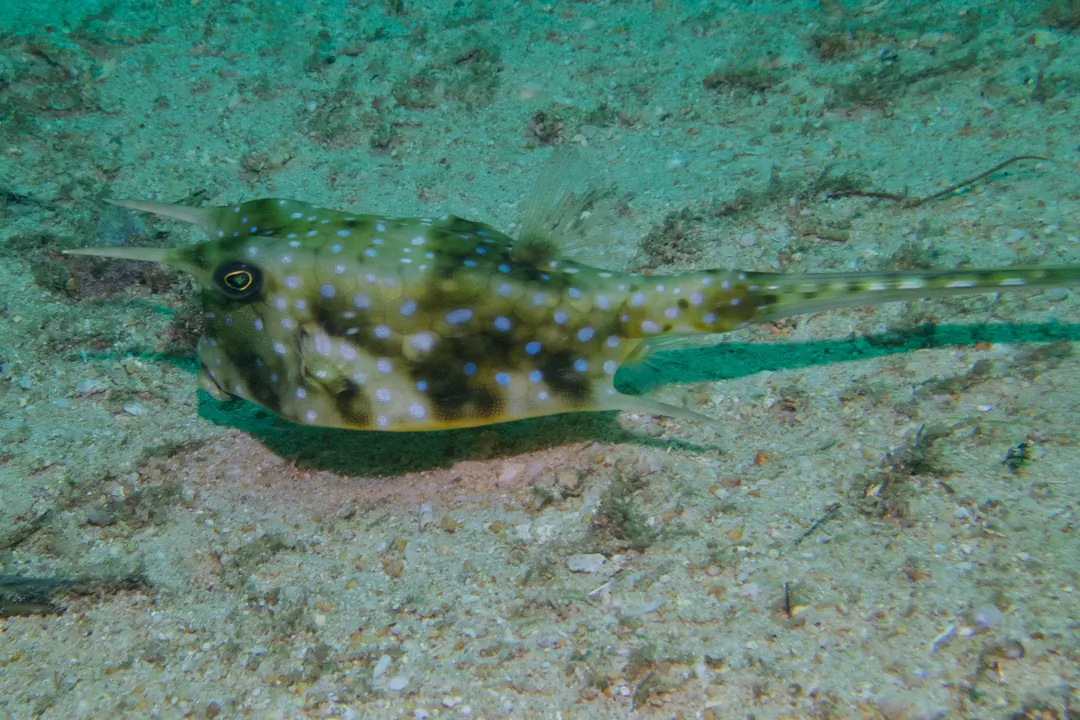
Ostracion rhinorhynchos is a species of boxfish. It was first described by Pieter Bleeker in 1851. It is found in the Indo-West Pacific, where it inhabits coral reefs and eats benthic invertebrates.
Dorsal soft rays (total): 9; Anal soft rays: 9. It has a large protuberance on the snout. Characterized further by having mainly blue-grey body color with blue lines bordering hexagonal plates of carapace; smaller fish whitish to bluish grey color with numerous, large brown or greyish polygons and small black spots, often in clusters of four; quadrangular carapace in cross section, becoming oval anteriorly; concave sides and ventral surface; relatively sharp lateral and pelvic ridges; low and inconspicuous dorsal ridge; anal fin behind level of last dorsal ray; adult snout produced into large conical protuberance, overhangs mouth; rounded caudal fin.
Indo-West Pacific: East Africa to Indonesia, north to southern Japan, south to northern Australia.
It inhabits rubble substrates in channels between sheltered inner reefs or in deep sandy lagoons around coral patches. Solitary or in pairs. Generally uncommon species that inhabits coral reefs and flat bottoms in coastal areas. Feeds on benthic invertebrates.
© Jan Ebr & Ivana EbrováCC BY 4.0 · iNaturalist 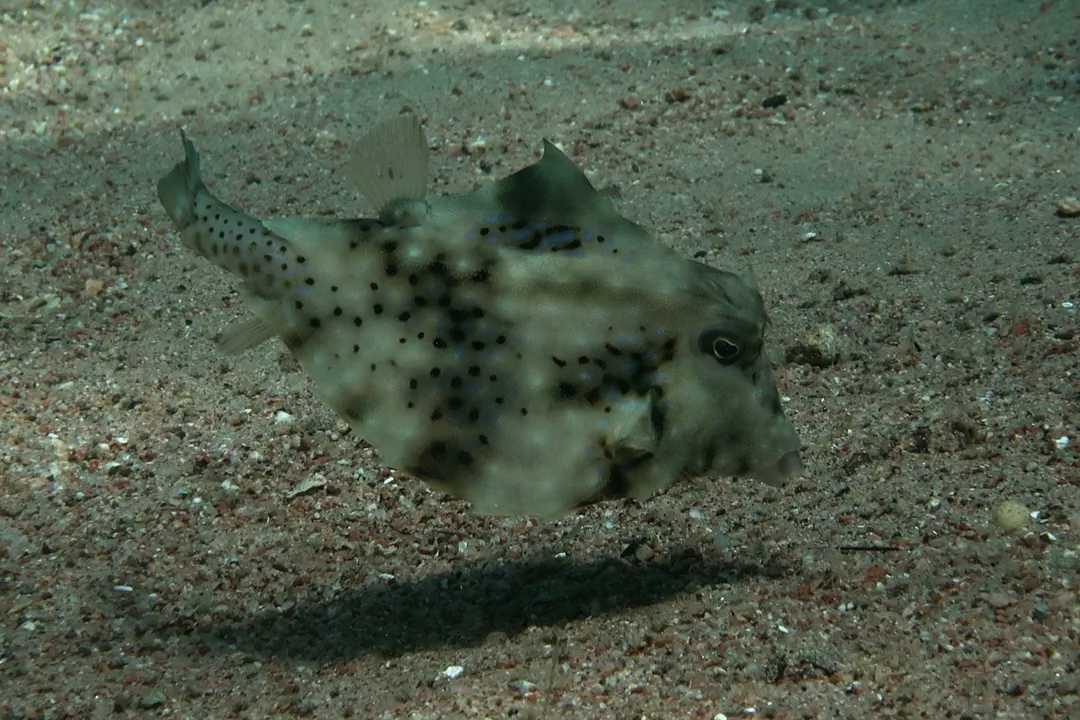 © Daniel BenákCC BY 4.0 · iNaturalist
  © Pierre PericardCC BY 4.0 · iNaturalist
 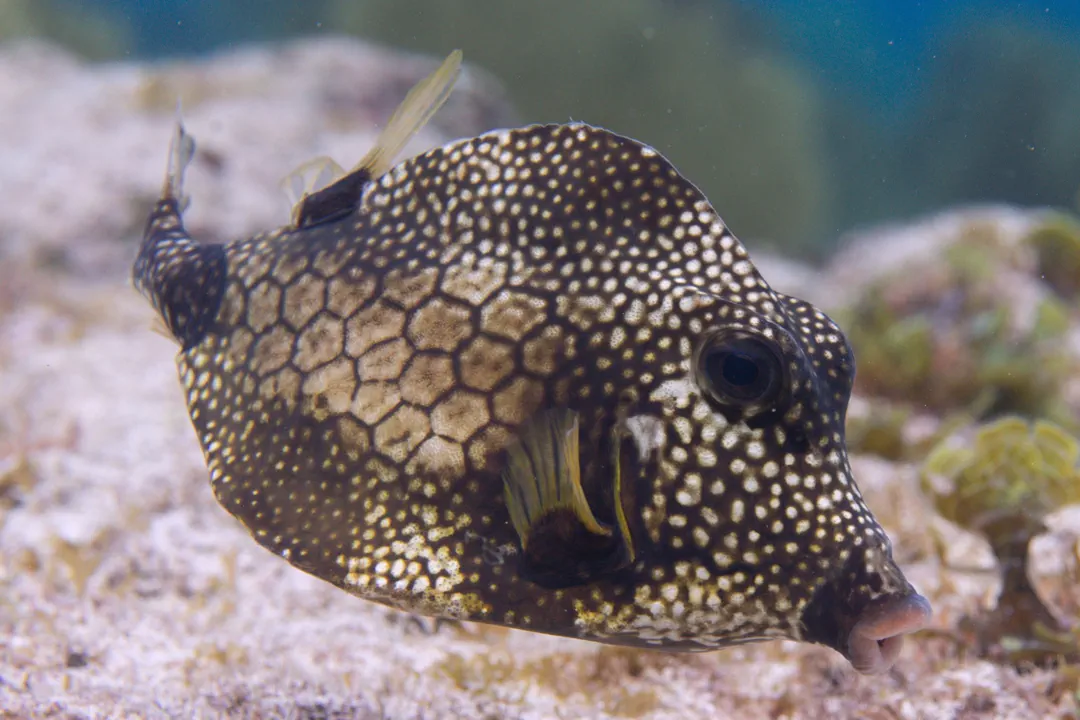 © Dan SchofieldCC BY 4.0 · iNaturalist
 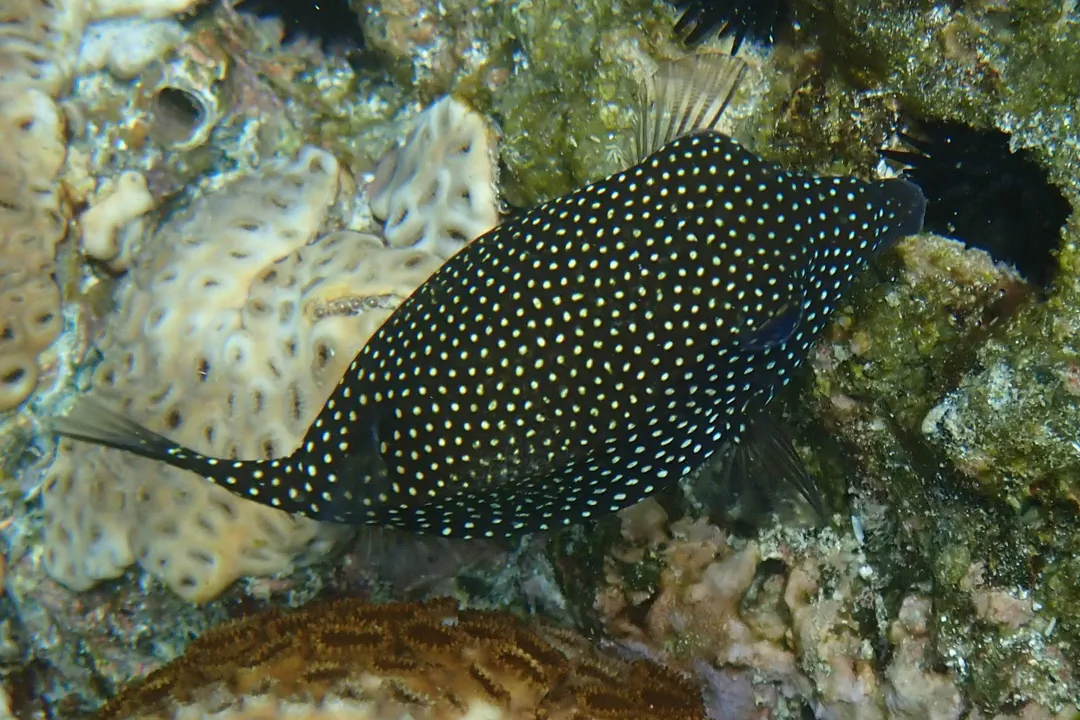 © Cricket RaspetCC BY 4.0 · iNaturalist
 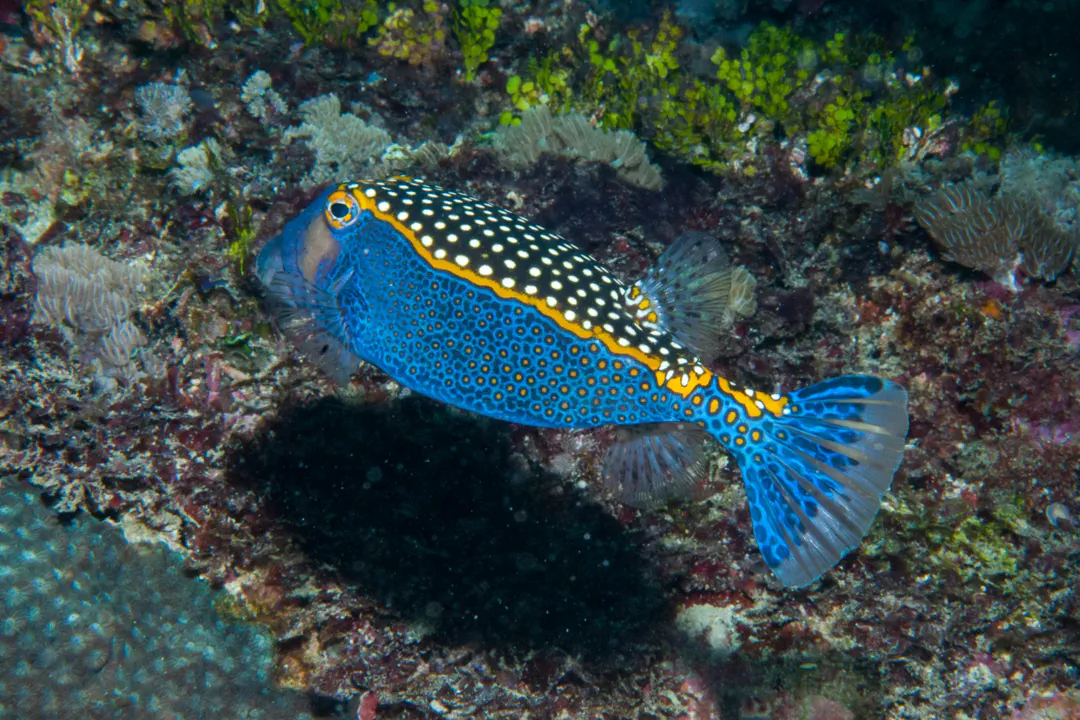 © Bernard PictonCC BY 4.0 · iNaturalist
 Horn-nose Boxfish is classified as venomous. Always exercise caution and keep a safe distance.
Horn-nose Boxfish can be found at depths of up to 50 meters.
Download Seabook free for iOS and Android.