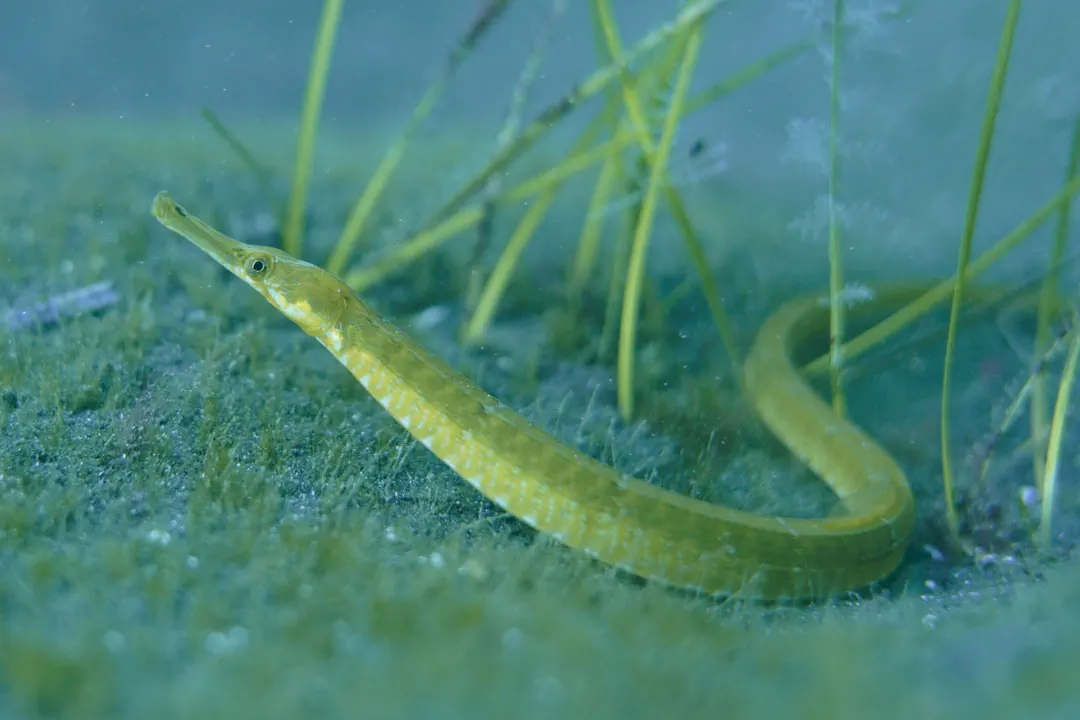
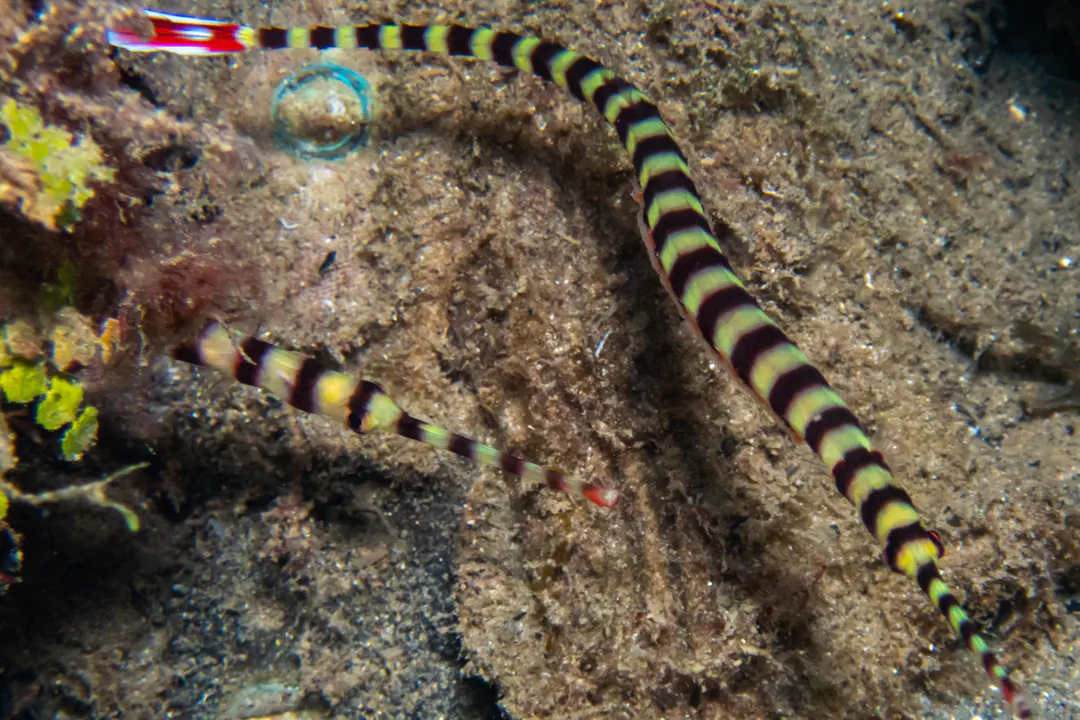
 © portioidCC BY 4.0 · iNaturalist
Banded Pipefish
Dunckerocampus dactyliophorus
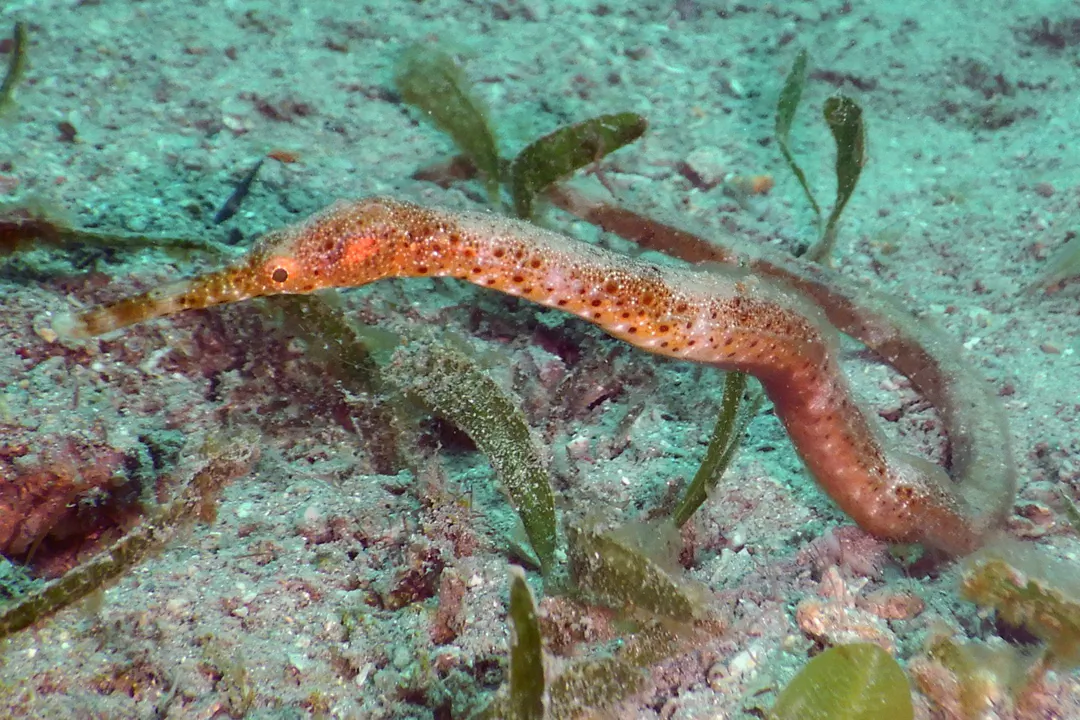
Syngnathus acus
Syngnathus acus is a pipefish of the family Syngnathidae. It is a seawater fish and the type specimen of the genus Syngnathus.
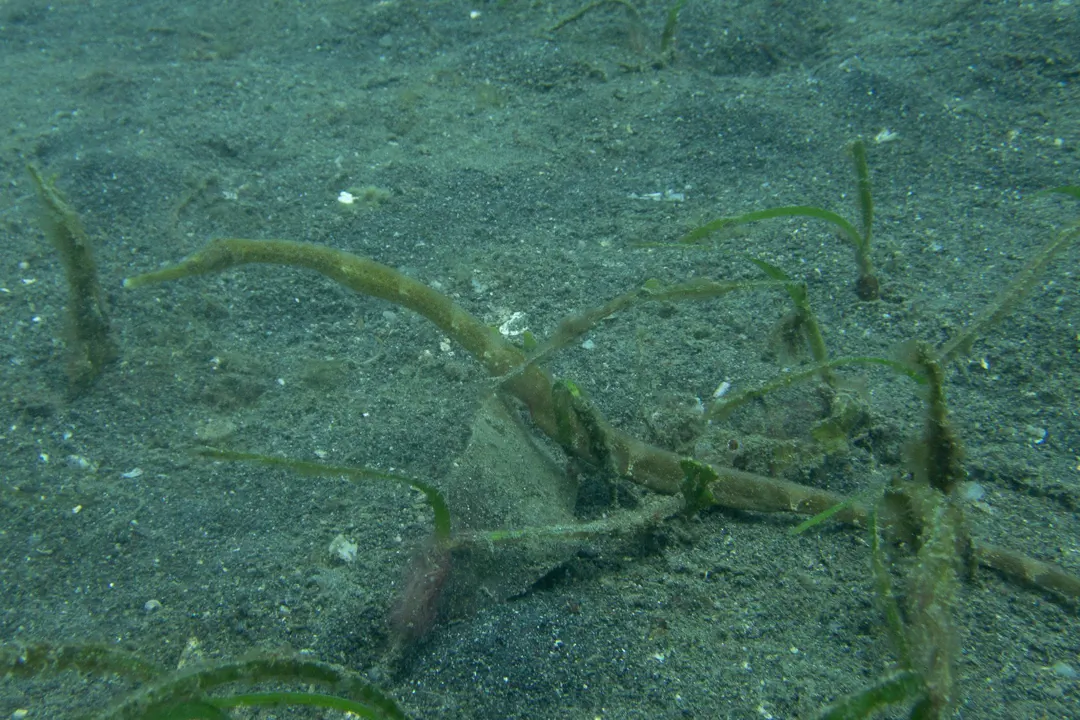
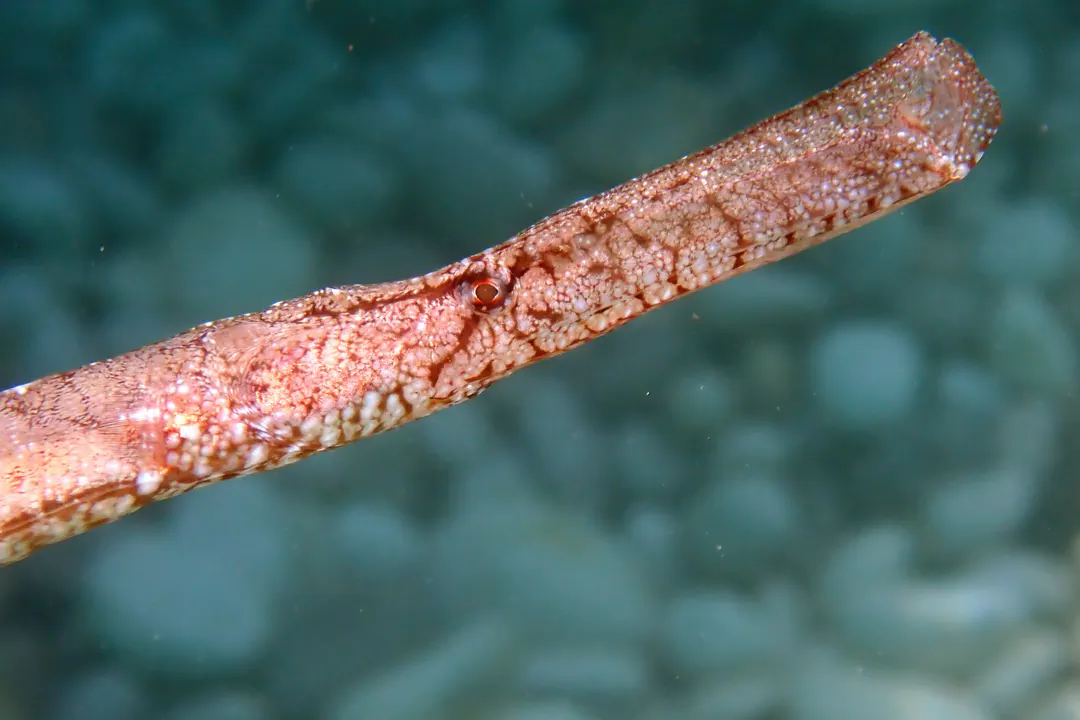
The Greater pipefish has a long segmented armoured body, angular in cross section and stretching up 45 cm long with its stiff appearance. It ranges a color brown to green in with broad alternating light and dark hue along it. Its customized by a long snout with mouth on end and a slight hump on the top of the body just behind the eyes. Common on southerly and westerly coasts in a variety of habitats, often amongst seaweeds and seagrass. The fish is generally 33 cm to 35 cm in length with a reported maximum length of 47 cm. They are almost square in each segment of the body, and known to feel rigid when handled. The Greater pipefish has distinctive body rings which are a sandy brown with darker bars covering his body in between.
The anatomy of fish vary through the sex. The top third of the females belly is deep (when egg bound), twice the breadth of the lower two thirds below the vent. The male is the "tailing" with the twin folds below the vent. The folds of the skin make the middle third and during the "brooding" of the young they swell in size until the young are released from the pouch (at a size of 22 mm to 35 mm).
The Greater Pipefish is found all around the British Isles and is regularly found in the Mediterranean Sea. Its habitat is usually among seaweed and seagrass. It feeds on live mysids and small prawns.
The southern African species Syngnathus temminckii (Kaup, 1856) was until recently synonymised with S. acus. However, morphological data clearly show that it is distinct, and genetic data indicate that it is not even the sister taxon of S. acus, but of another southern African species, the river pipefish S. watermeyeri (Mwale et al., in press).
© portioidCC BY 4.0 · iNaturalist 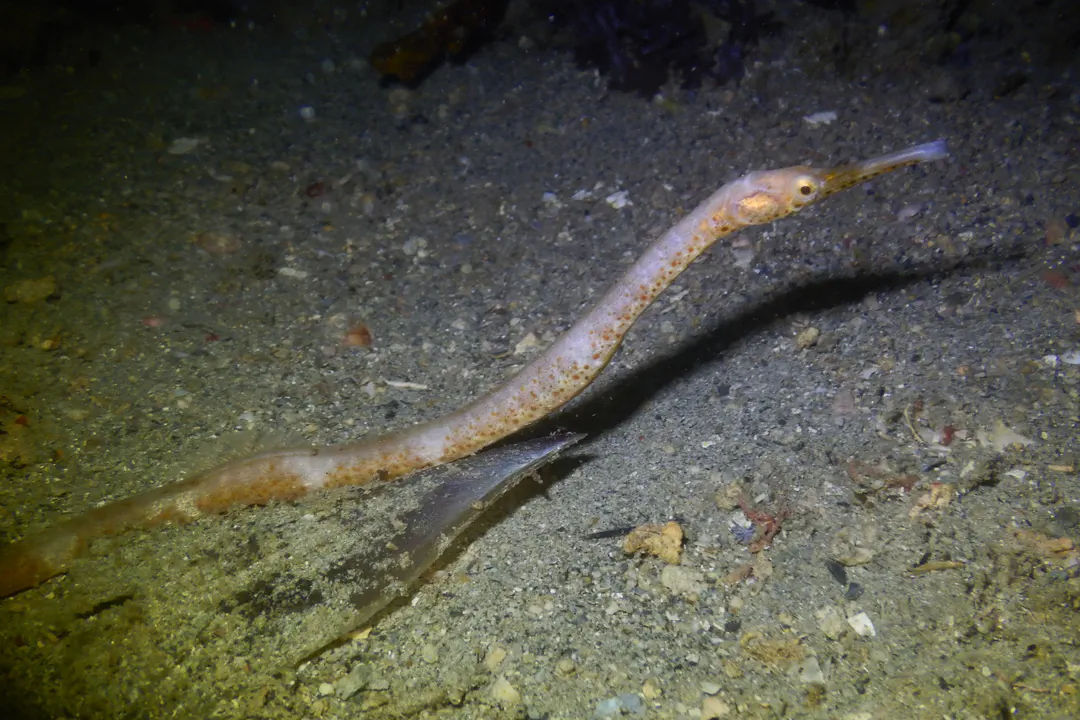 © Ewout KnoesterCC BY-SA 4.0 · iNaturalist
  © Ewout KnoesterCC BY-SA 4.0 · iNaturalist
  Justin PhilboisCC0 · iNaturalist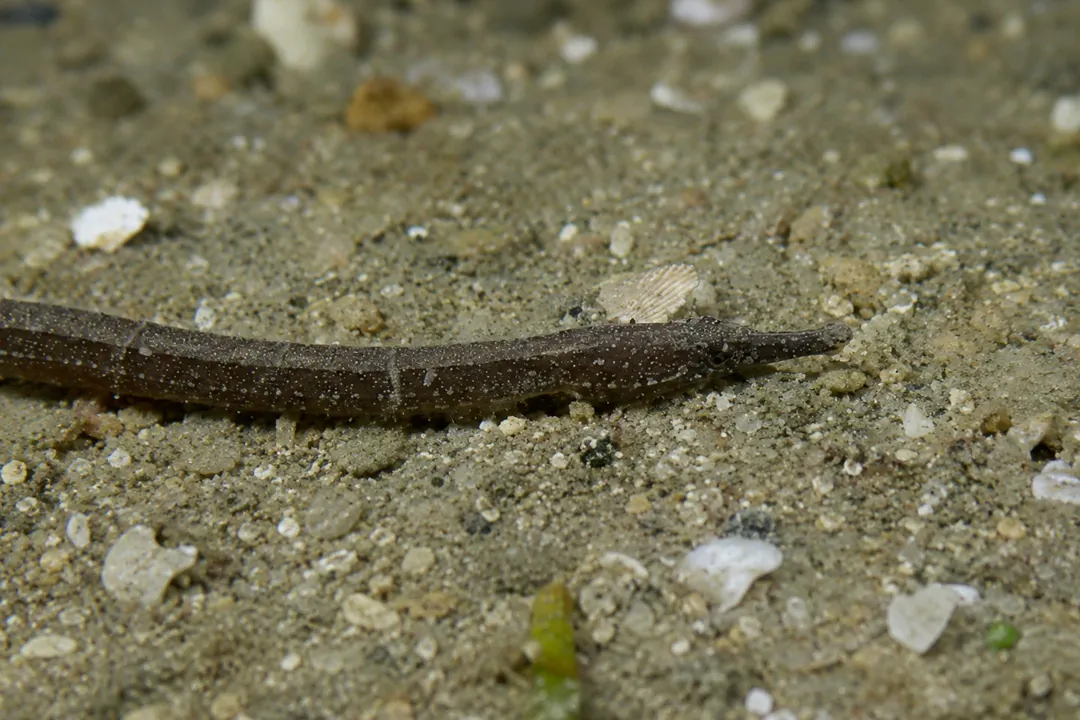
 © Eridan XharahiCC BY 4.0 · iNaturalist
 Greater Pipefish has no known danger to humans. However, always observe marine life responsibly.
Greater Pipefish can be found at depths of up to 110 meters.
Download Seabook free for iOS and Android.