 © Rickard ZerpeCC BY 4.0 · iNaturalist
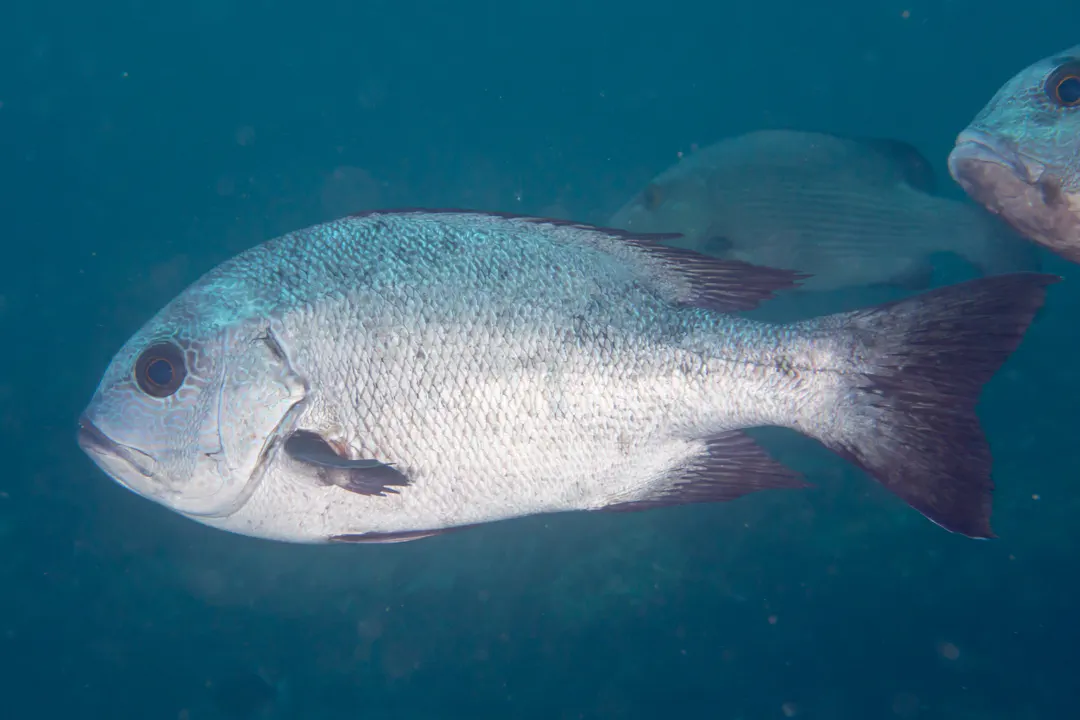
Black-and-white Snapper
Macolor niger
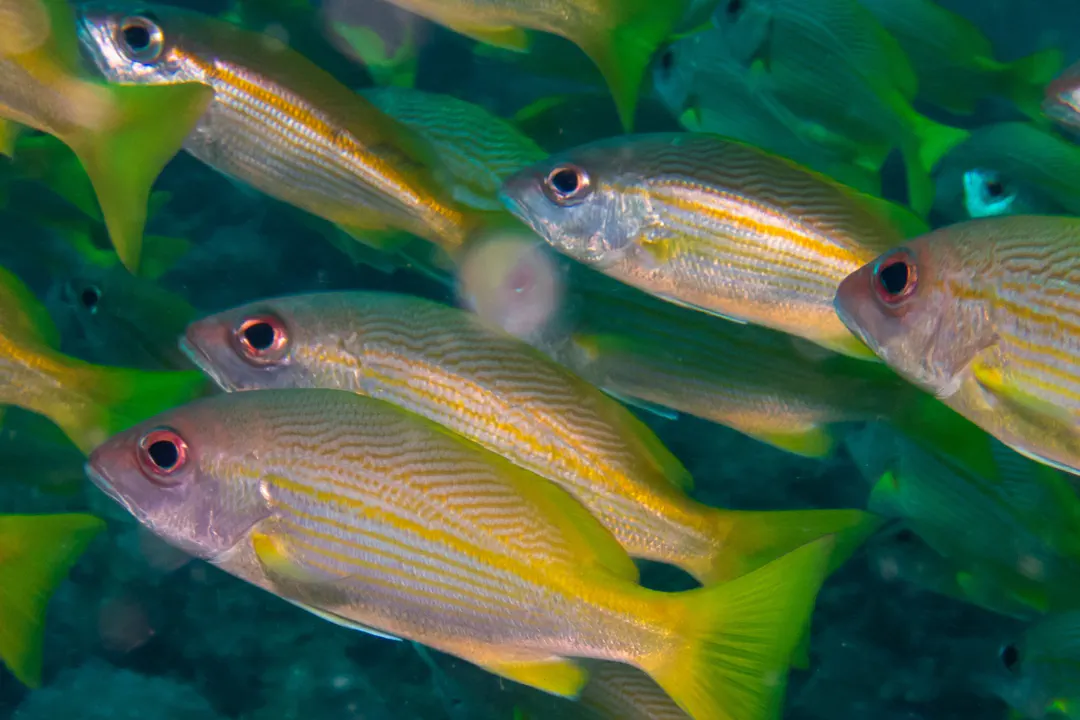
Lutjanus lutjanus
Lutjanus lutjanus is a species of marine ray-finned fish, a snapper belonging to the family Lutjanidae.
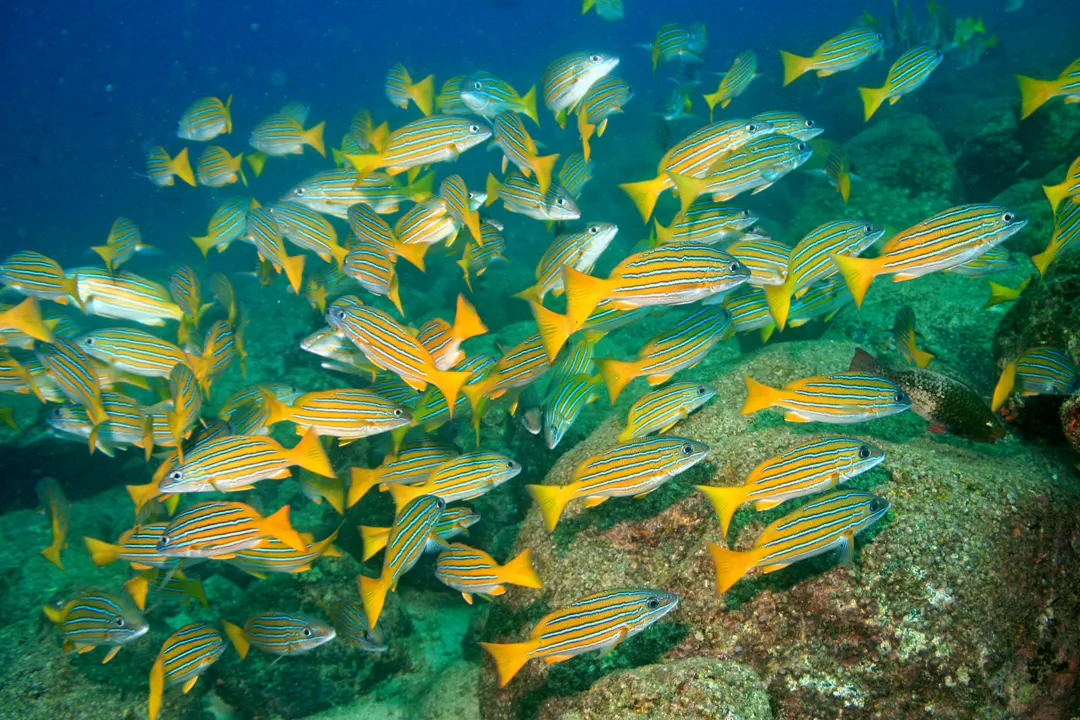
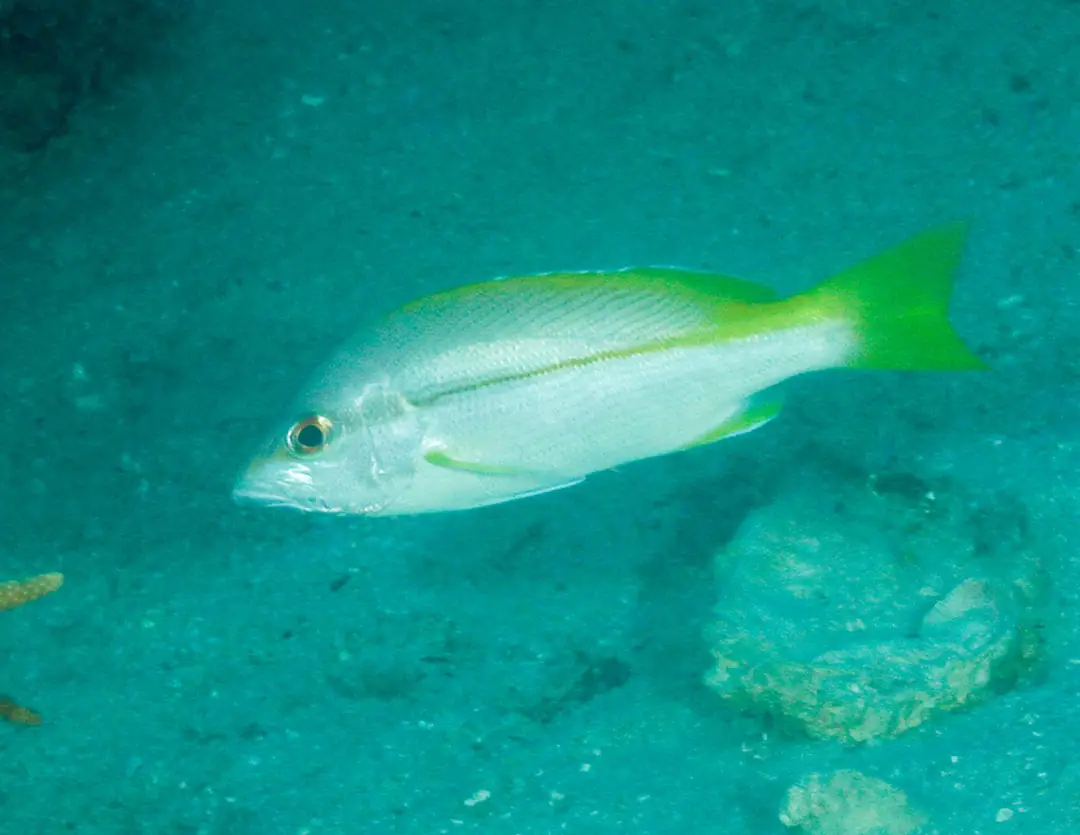
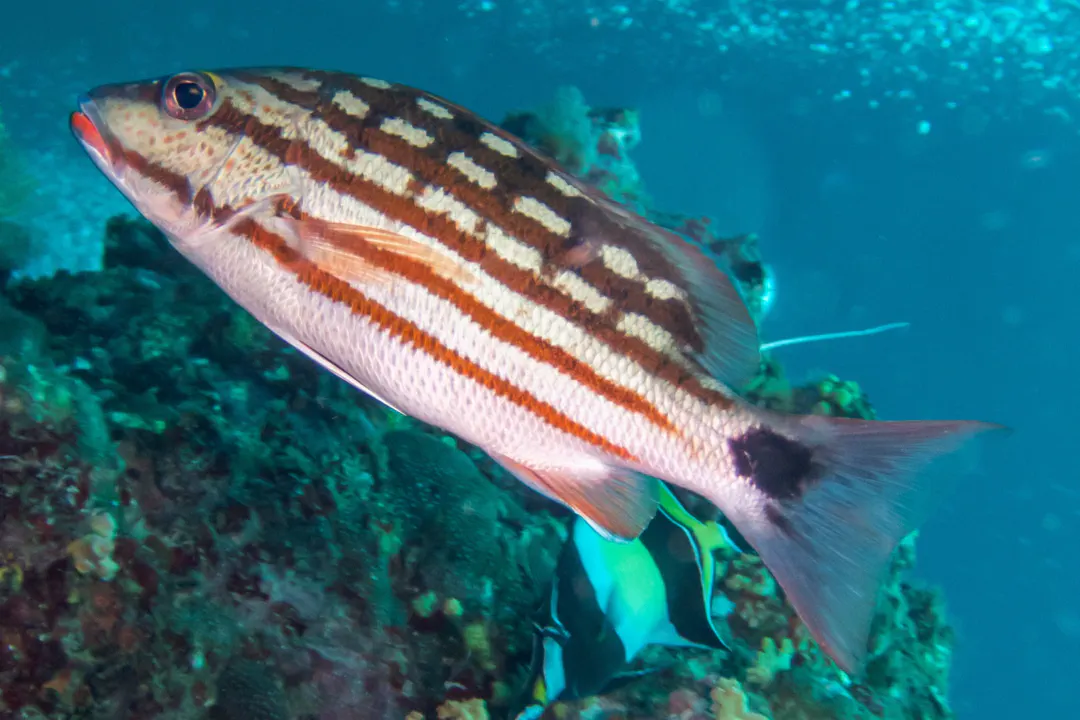
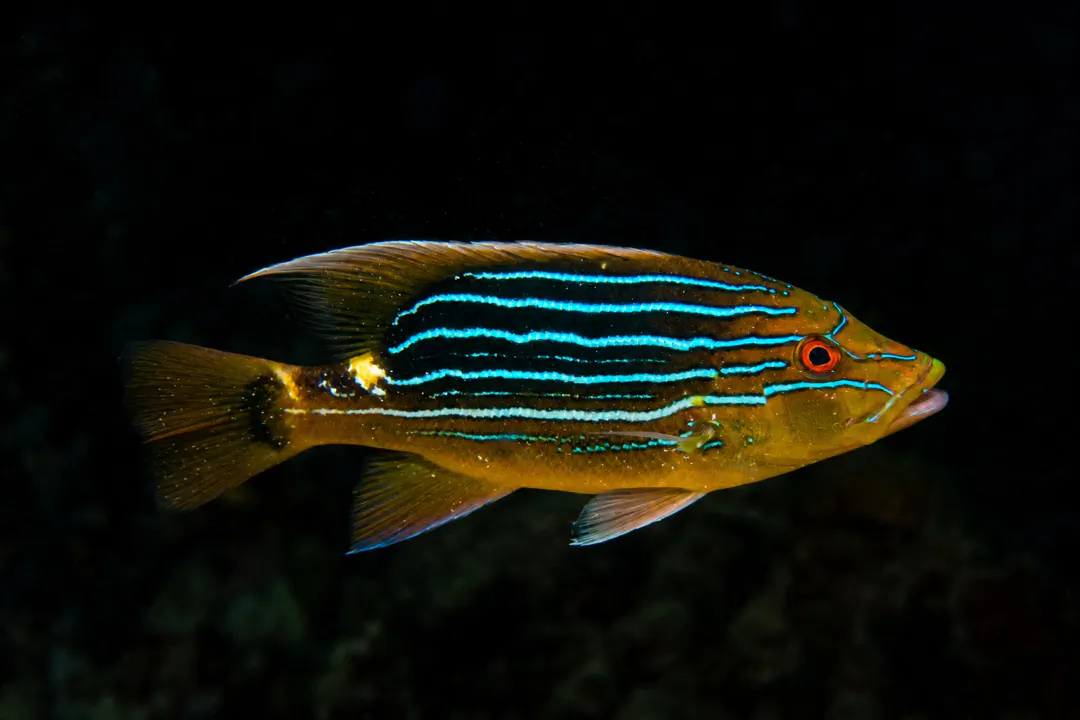
Coloration: The upper back is golden-brown in colour with silvery-white flanks with a brown to yellow stripe running from the snout to the dorsal caudal peduncle. It has oblique golden lines above the lateral line and horizontal stripes below it. The dorsal, anal and caudal fins are vivid yellow.
The bigeye snapper has a fusiform, slender body which has a standard length that is 2.9 to 3.3 as long as the body's deepest points. It has a gently sloped forehead and the preopercular incision and knob are weakly developed. The vomerine teeth are arranged in a triangular patch with a central rearwards extension and the tongue has a patch of grain-like teeth. This fish attains a maximum total length of 35 cm (14 in).
The bigeye snapper has a wide Indo-West Pacific distribution. It is found from the Red Sea and the eastern African coast as far south as South Africa and Madagascar east along the southern Asian coast, including the Seychelles, into the Pacific where it has been recorded from Tonga and Wallis Island. It extends north to Japan and south to Australia. In Australian waters it has been recorded from the coasts north-western Western Australia around the tropical northern coast to the northern coast of Queensland.
It inhabits offshore coral reefs at depths from near the surface to 96 m (315 ft). It is much sought-after by commercial fisheries.
© Rickard ZerpeCC BY 4.0 · iNaturalist 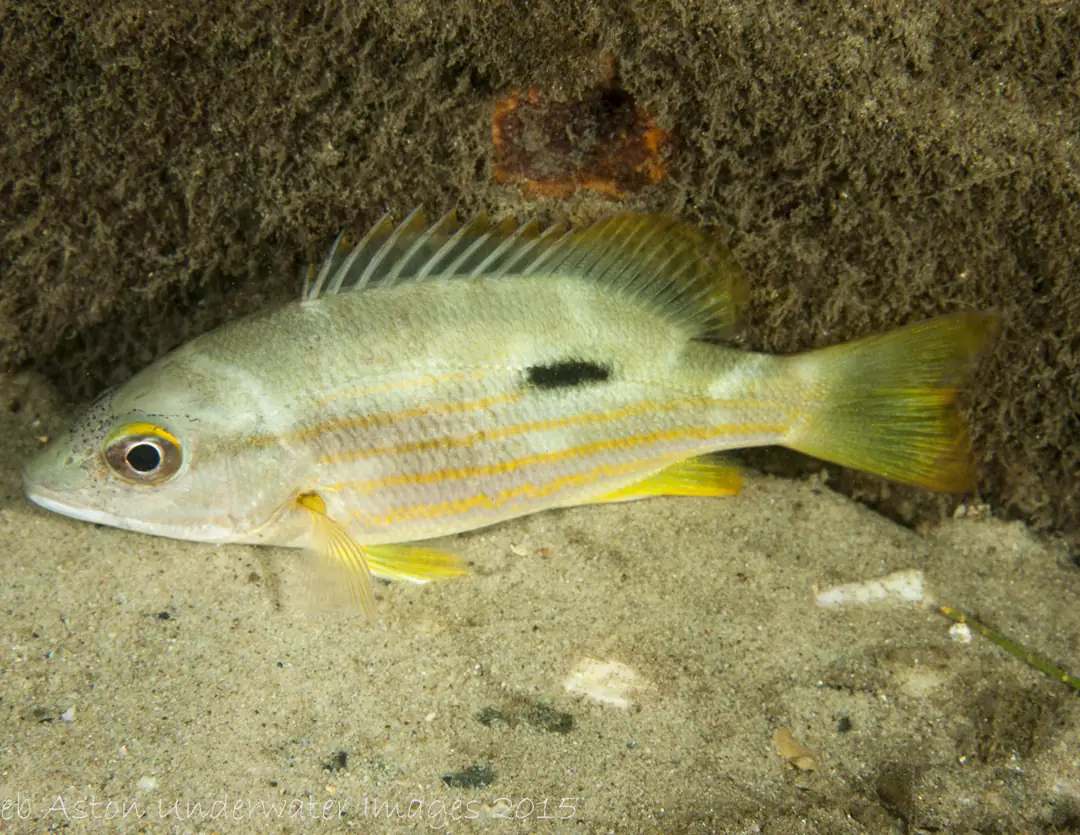 © Deb AstonAll rights reserved
  © LASZLO ILYESCC BY 4.0 · iNaturalist
  © Ian ShawAll rights reserved
  © portioidCC BY 4.0 · iNaturalist
  © seabook.appAll rights reserved
 Bigeye Snapper has no known danger to humans. However, always observe marine life responsibly.
Bigeye Snapper can be found at depths of up to 96 meters.
Download Seabook free for iOS and Android.