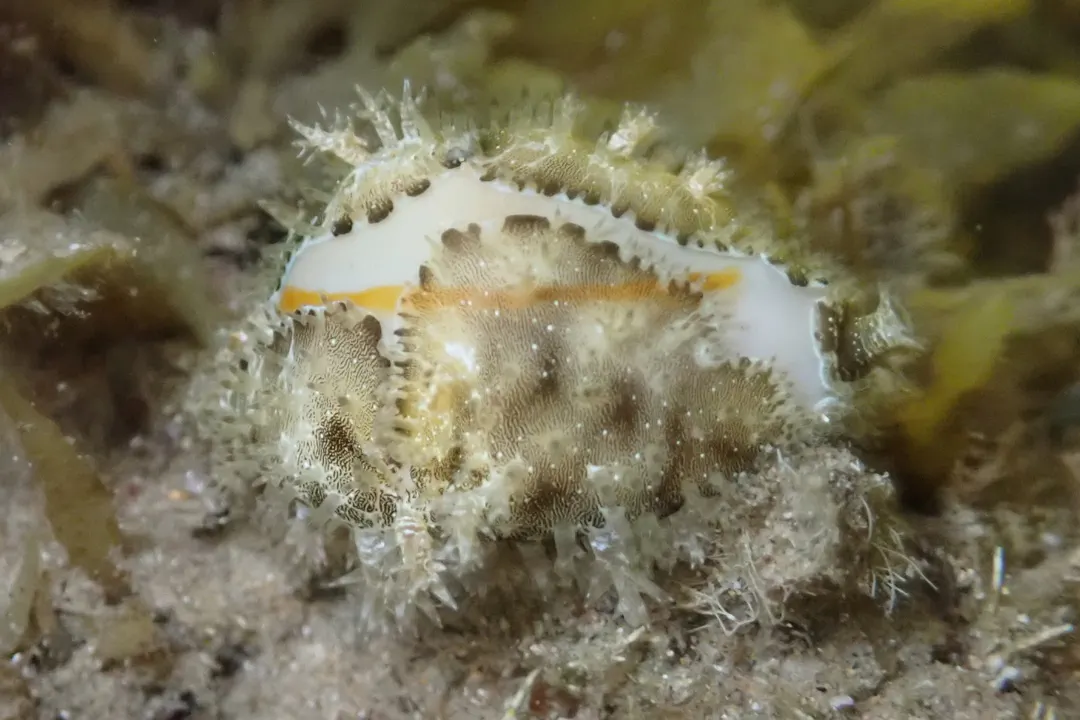
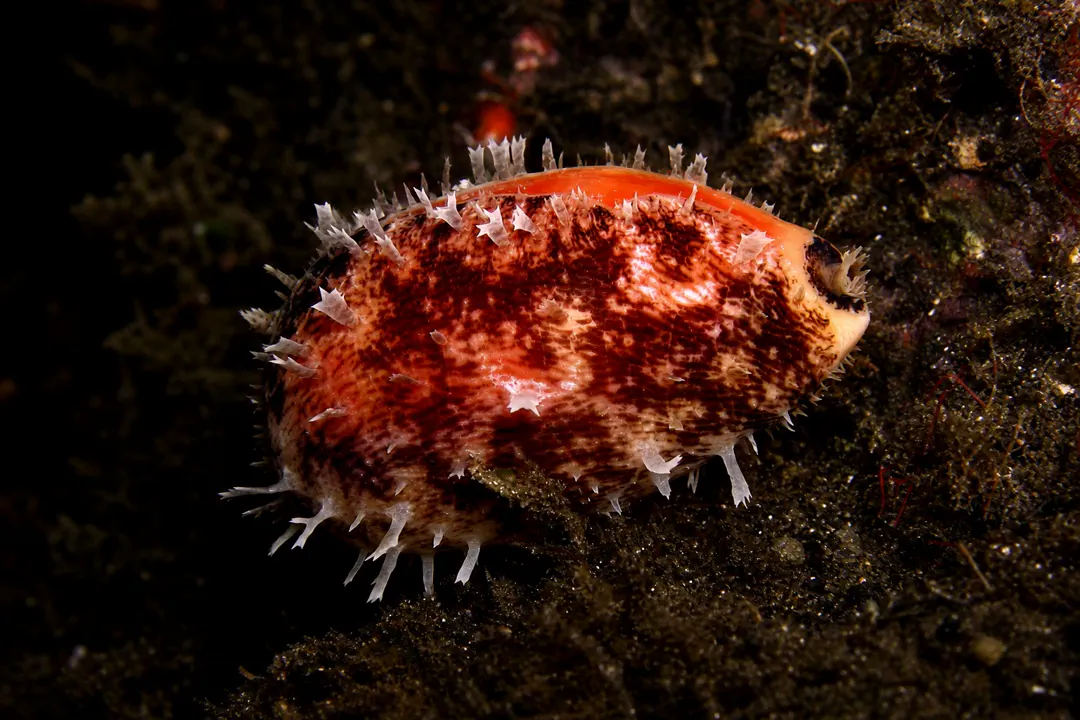
 © seabook.appAll rights reserved
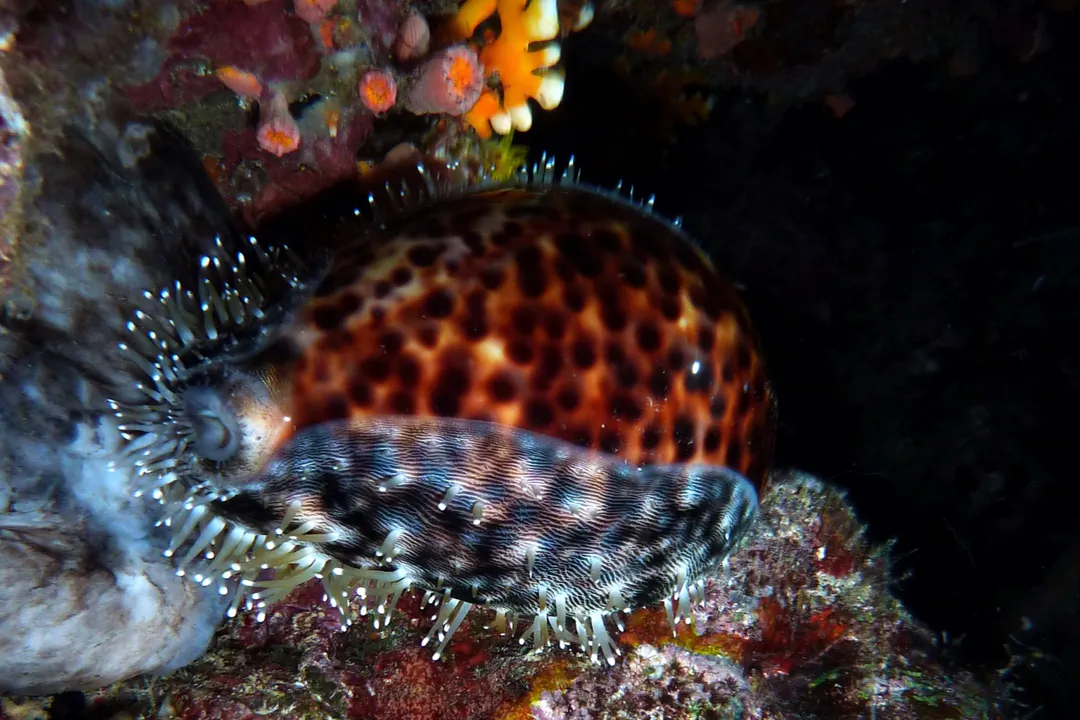
Carnelian Cowrie
Lyncina carneola
Monetaria annulus
Monetaria annulus, common name the ring cowrie or gold ringer, is a species of sea snail, a cowry, a marine gastropod mollusk in the family Cypraeidae, the cowries.
The shell size varies between 9 mm and 50 mm
This species and its subspecies are found in the Red Sea, and in the Indian Ocean on the coasts of Aldabra, Chagos, the Comores, the East Coast of South Africa, Kenya and Tanzania, Madagascar, the Mascarene Basin, Mauritius, Mozambique, Réunion, the Seychelles, Somalia, Yemen, Oman, Maldives, India, Sri lanka, Mozambique, in the tropical Pacific Ocean as far north as Hawaii and towards the western Pacific reaching the Galápagos islands.
There may be three or more subspecies:
In parts of Asia, Africa and the Middle East, Monetaria annulus, the ring cowry, so-called because of the bright orange-colored ring on the back or upper side of the shell, was commonly used as shell money much like Monetaria moneta. Occasionally the ring part on its back would be hammered away, making it nearly indistinguishable from other money cowry species. Many shells of the species were found by Sir Austen Henry Layard in his excavations at Nimrud in 1845–1851. The shell was also introduced to Native Americans during and after the fur trade by European traders as a cheaper substitute [1] for highly treasured elk ivory, for dowry, and for other uses as ornaments.
© seabook.appAll rights reserved 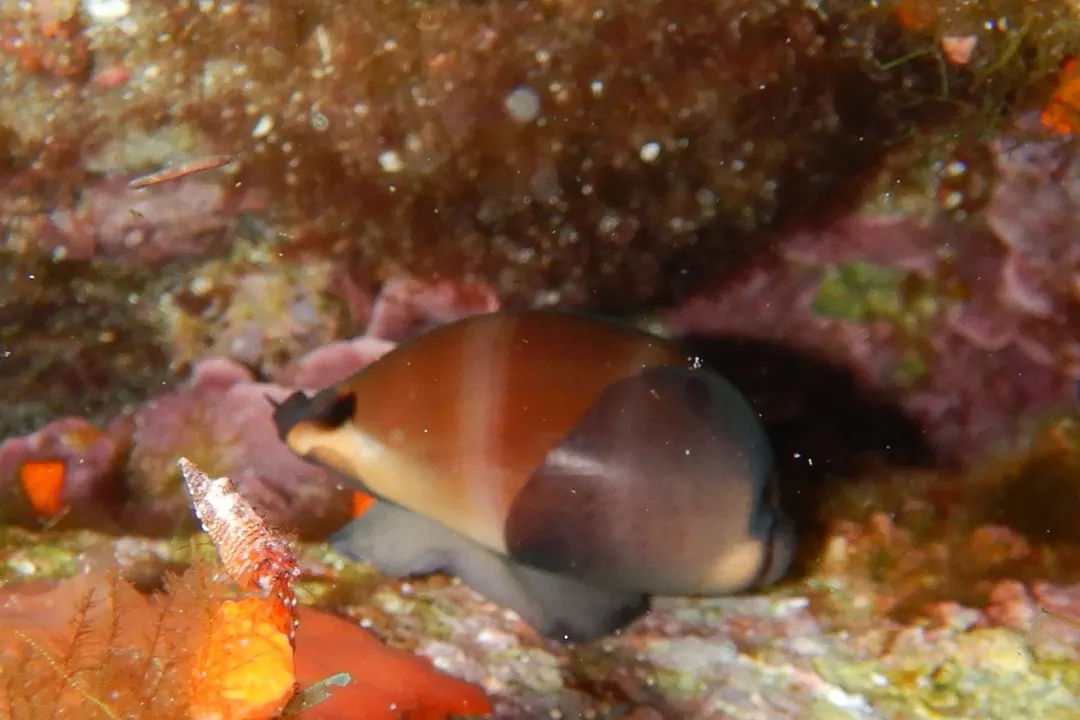 © Valentin MoserCC BY 4.0 · iNaturalist
 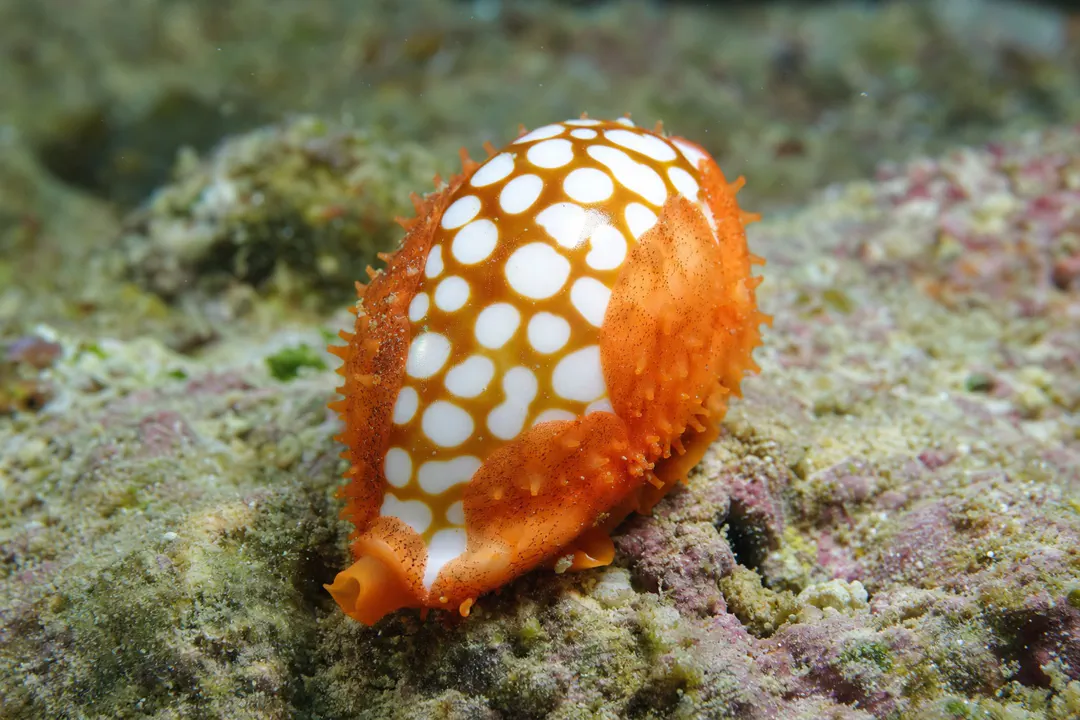 © seabook.appAll rights reserved
  © Kai SquiresCC BY 4.0 · iNaturalist
 Gold Ring Cowrie has no known danger to humans. However, always observe marine life responsibly.
Gold Ring Cowrie can be found at depths of up to 8 meters.
Download Seabook free for iOS and Android.