 © portioidCC BY 4.0
Alexander's Damsel
Pomacentrus alexanderae
Stegastes diencaeus
Stegastes diencaeus is a damselfish from the Western Atlantic. It occasionally makes its way into the aquarium trade. It grows to a size of 12.5 cm in length.
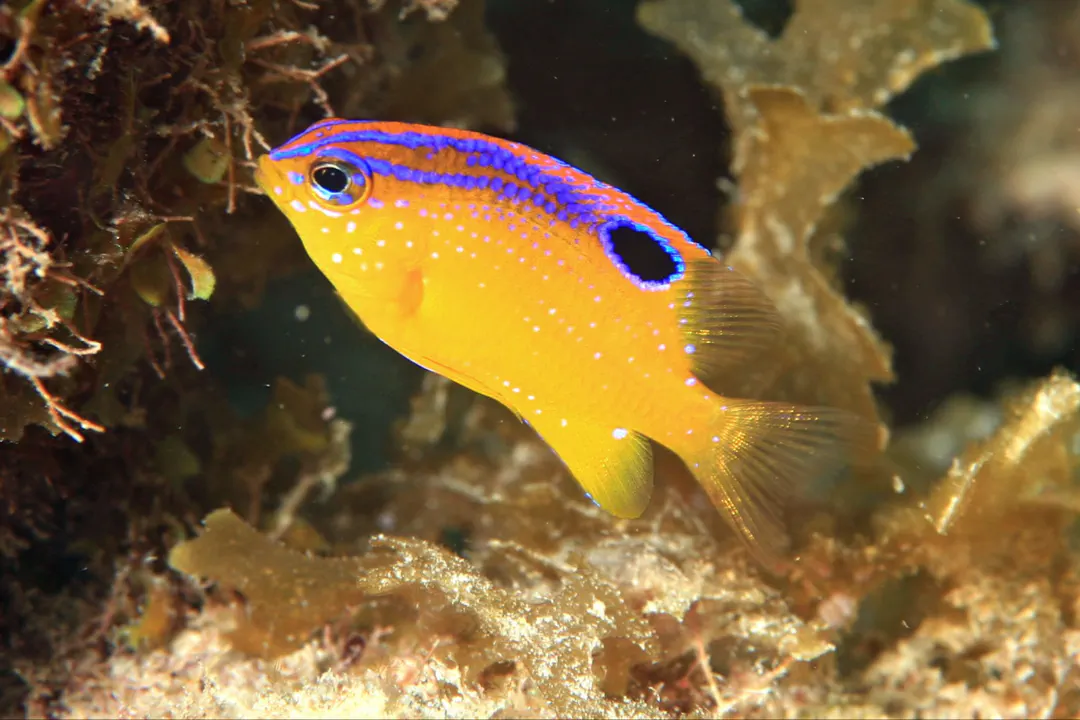
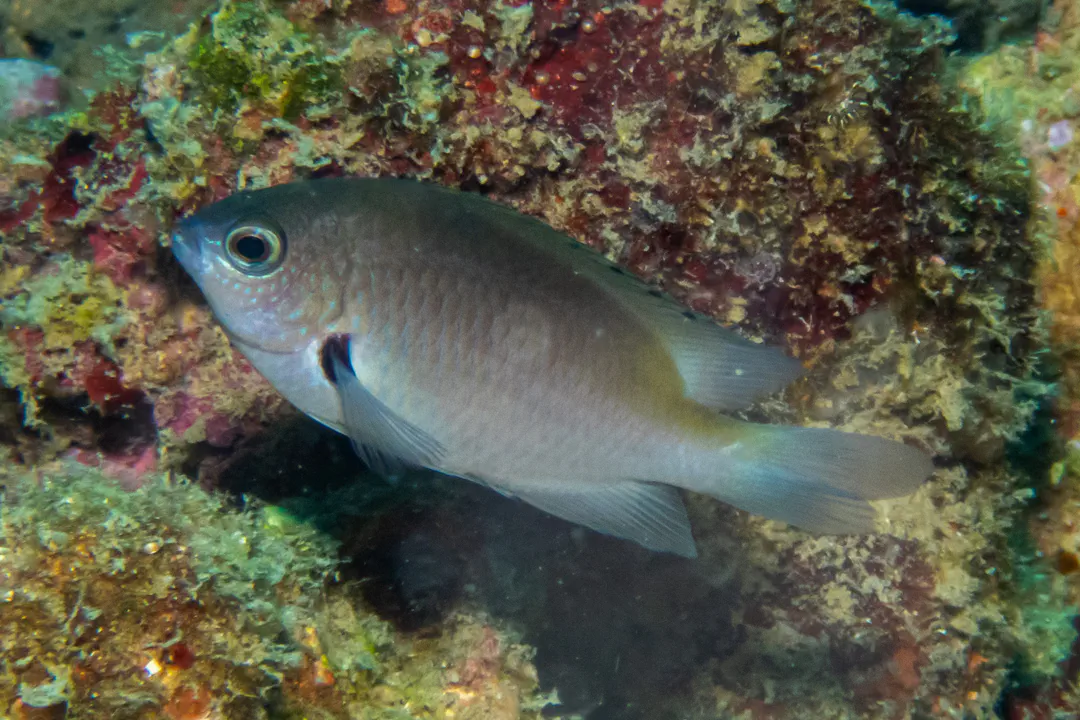
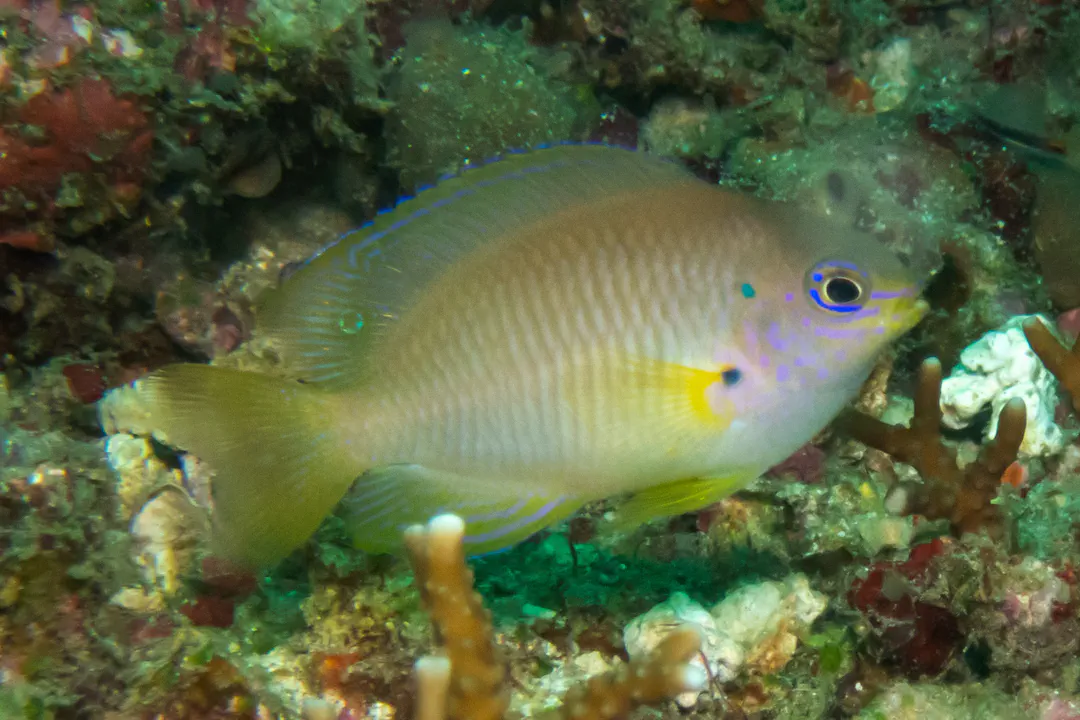
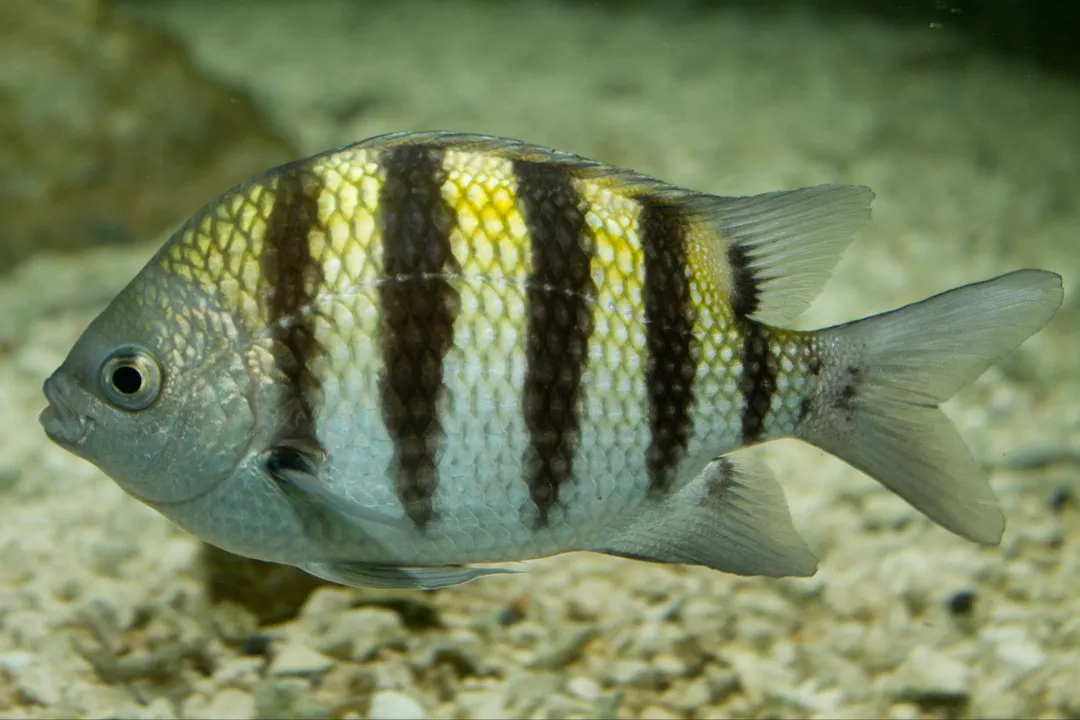
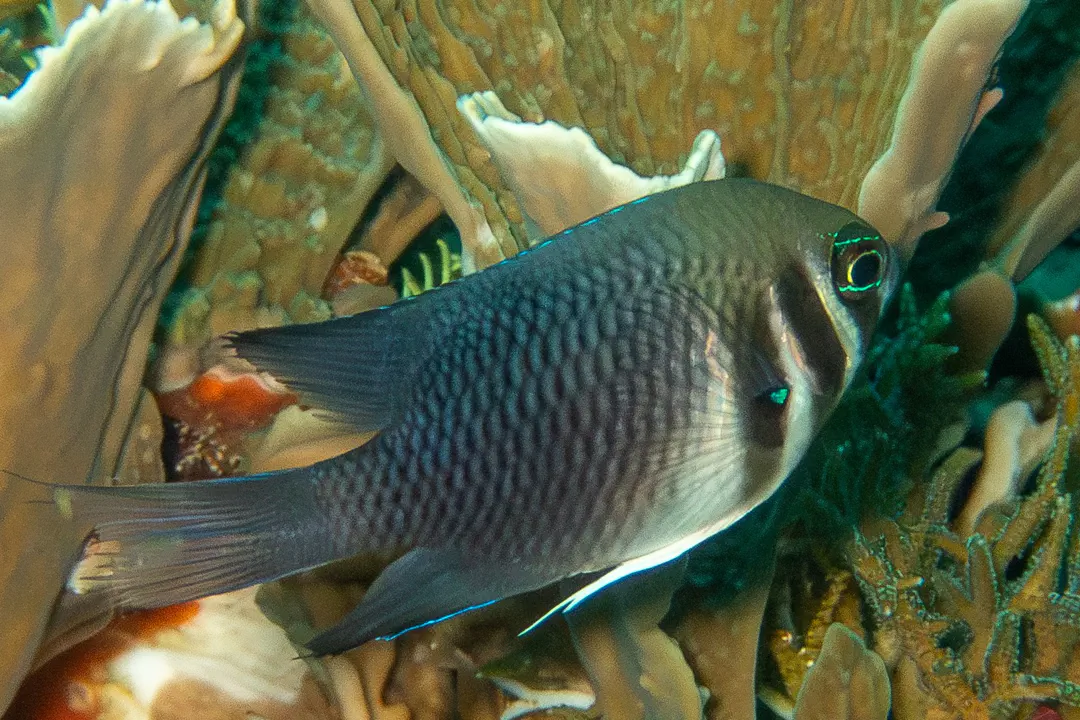
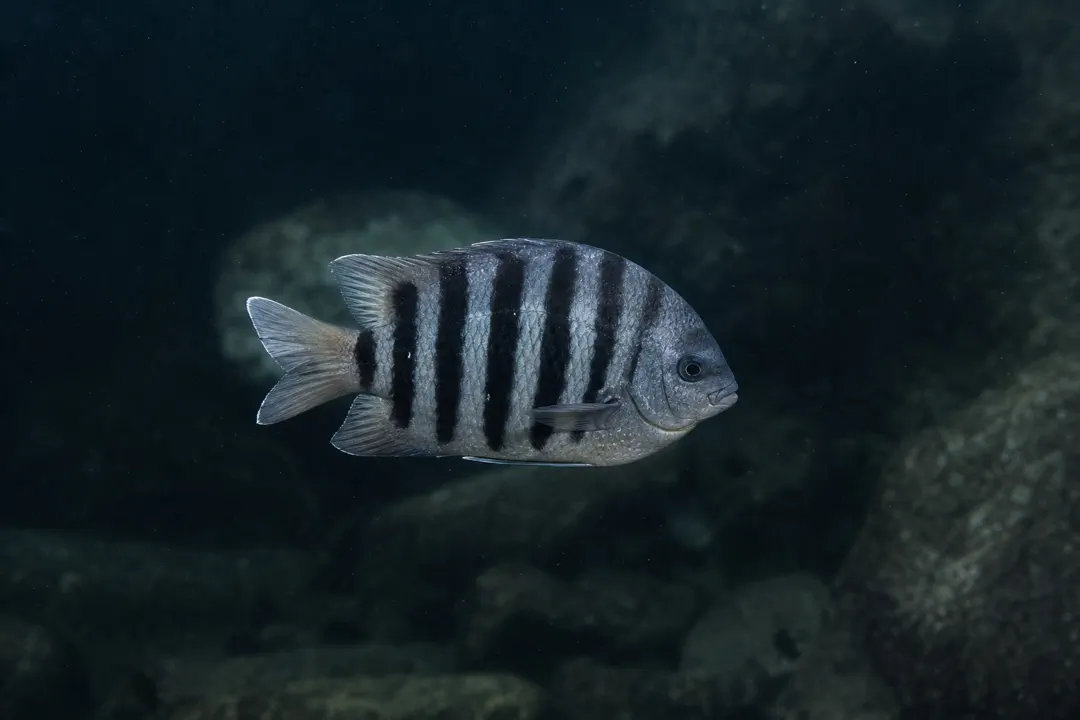
Coloration of adult is blackish to grey. Snout, upper edge of eye-ball and nape are with yellowish-brown cast. Outer margin of anal fin is with thin bright blue line. Juveniles have bright yellow body and fins. Snout, nape and top of back are grey-brown.They have 2 dotted blue lines along snout, top of head and upper back; and a large black and blue ocellus at base of rear dorsal fin spines and upper body.
Body is deeply oval, compressed. The margin of preopercle is serrated; the margin of bone under eye is serrated, without notch between it and the bone before it. Mouth is small, protrusible, opens at front. Teeth are in single row, long and close-set incisors. 10-11 lower gill rakers. A single continuous dorsal fin, XII, 14-17; anal fin II, 13; dorsal and anal fins long and rounded, reaching past base of tail fin; pectoral rays 19-21. Has no projecting short spines at upper and lower base of tail fin. Caudal fin is bluntly forked, lobes are large and rounded. Scales are moderately large and rough. Body is scaled, head is largely scaled (snout scaled to nostrils), as are the basal parts of the median fins. Lateral line is incomplete, ends under end of dorsal fin base; lateral-line scales 19-20.
Western Atlantic: southern Florida (USA), Bahamas, and Caribbean Sea. Including Antilles and Yucatan to Venezuela.
Adults inhabit coral and rocky reefs of sheltered lagoons and inshore areas. Territorial and pugnacious. Oviparous, distinct pairing during breeding. Eggs are demersal and adhere to the substrate. Males guard and aerate the eggs.
© portioidCC BY 4.0 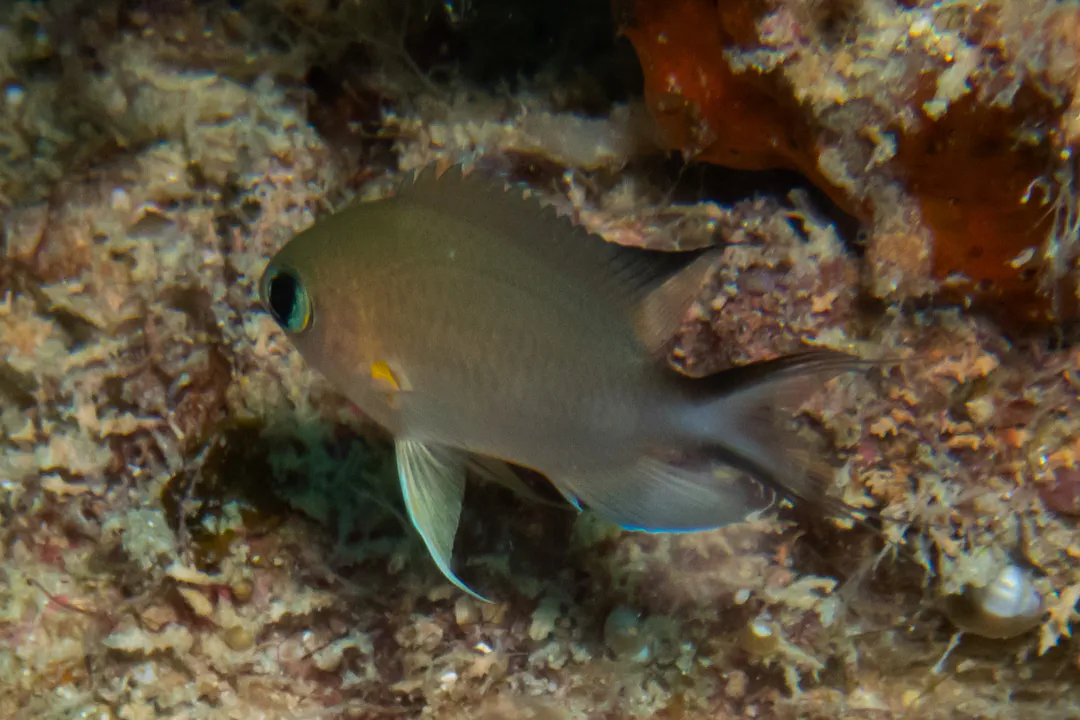 © portioidCC BY 4.0
  © portioidCC BY 4.0 · iNaturalist
  © Brian GratwickeCC BY 4.0 · iNaturalist
  © Piotr LukasikCC BY 4.0 · iNaturalist
  © seabook.appAll rights reserved
 Longfin Damselfish (juvenile) has no known danger to humans. However, always observe marine life responsibly.
Longfin Damselfish (juvenile) can be found at depths of up to 45 meters.
Download Seabook free for iOS and Android.