 © Dan SchofieldCC BY 4.0 · iNaturalist
Caribbean Reef Octopus
Octopus briareus
Hapalochlaena lunulata
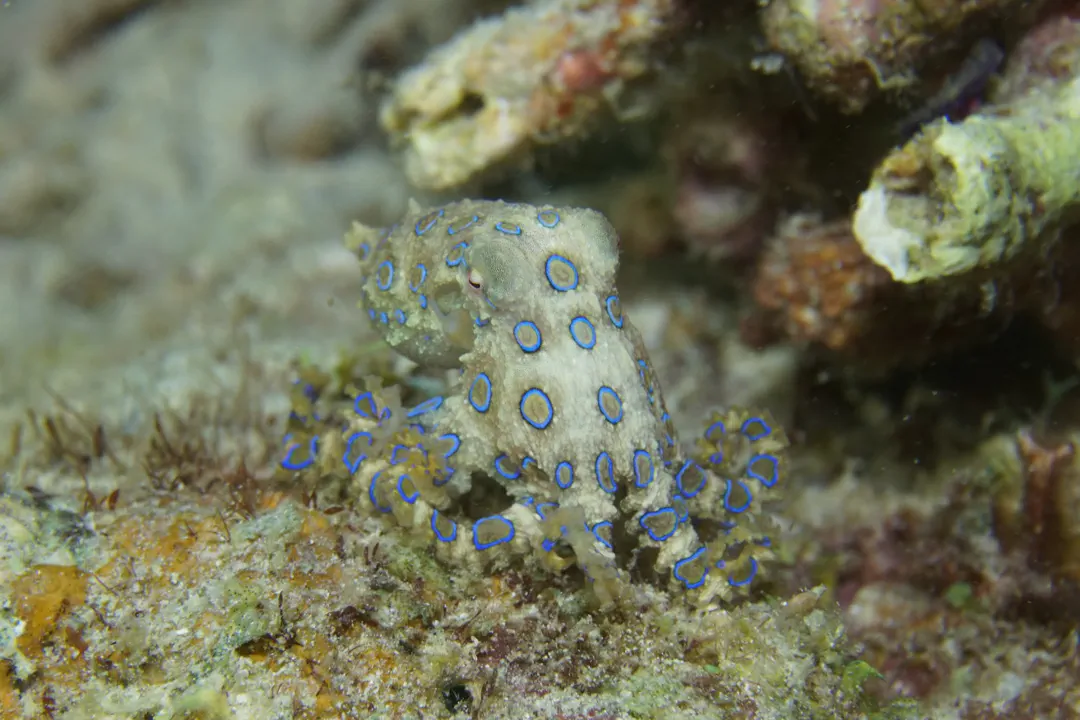
Hapalochlaena lunulata is one of four species of venomous blue-ringed octopuses belonging to the octopodidae family.
The greater blue-ringed octopus is despite its vernacular name a small octopus whose size does not exceed 10 centimeters, arms included, for an average weight of 80 grams. Its common name comes from the relatively large size of its blue ring (7 to 8 millimeters in diameter), so they are indeed larger than those of the other members of the genus and help to distinguish them. The head is slightly flattened dorsoventrally and finished in a tip. Its height arms are short.
The coloration of this octopus varies with the circumstances and the ambient environment from yellow ocher to light brown through whitish (when inactive). The blue rings are about 60, spread throughout the entire animal's coat. The rings are roughly circular and are based on a darker blotch than the background color of the coat. A black line, whose thickness can vary to increase the contrast and be more visible, borders the electric blue circles. The blue rings are an aposematic adornment whose purpose is to clearly show to all potential predators that this octopus is highly poisonous.
The greater blue-ringed octopus is widespread throughout the tropical and subtropical waters of the Indo-West Pacific from Sri Lanka to the Philippines and from Australia to south Japan.
The greater blue-ringed octopus likes shallow waters with mixed seabed (rubble, reefs, sandy areas ...). Like all octopuses, it lives in a burrow and only comes out to search for food or a mate. The entrance of the shelter is littered with legs from meals (empty shells and crab shell and legs) and it's quite easily identifiable.
The greater blue-ringed octopus is a benthic animal which has a solitary way of life. The breeding season varies according to geographical area, the female lays 60 to 100 eggs which are kept under the female's arms during the incubation period, which lasts about a month. Newborns have a brief planktonic development passage before settling on the seabed.
This small octopus is an active carnivore that feeds mainly on crustaceans, bivalve shells and occasionally small fish.
Even if the greater blue-ringed octopus looks calm and docile, it nevertheless remains capable of inflicting a deadly bite to its predators which can even be fatal to humans. Octopuses from genus Hapalochlaena have two kinds of venom glands which impregnate their saliva. One is used to immobilize the hunted crustaceans before eating them. The second one as a defense purpose which venom toxin is named maculotoxin. This toxin is a powerful neurotoxin with a strong paralyzing power. Its effects are similar to the tetrodotoxin. The bite is painless and the effects appear depending on individuals, children are more sensitive to it, between 15 and 30 minutes or even four hours.
The first phase of the poisoning is characterized by facial and extremity paresthesia, the victim feels tingling and/or numbness on the face, tongue, lips and other body extremities. The victim may also have over sweating, headache, dizziness, speech problems, hypersalivation, vomiting, nausea, diarrhea, abdominal pain, movement disorders and a feeling of weakness, cyanosis to extremities and lips, petechial hemorrhages on the body.
The second phase of poisoning usually occurs after eight hours and includes hypotension and generalized muscle paralysis as a spastic type, that is to say that the muscles contract excessively without voluntary control. Death may occur between 20 minutes to 24 hours after symptom onset. Death is usually due to respiratory paralysis. However, throughout the phases of poisoning the state of consciousness of the victim is not affected.
Octopodidae is the family containing the majority of known octopus species.
The World Register of Marine Species lists the following genera:
© Dan SchofieldCC BY 4.0 · iNaturalist  © Stas KuryanAll rights reserved
  Justin PhilboisCC0 · iNaturalist
 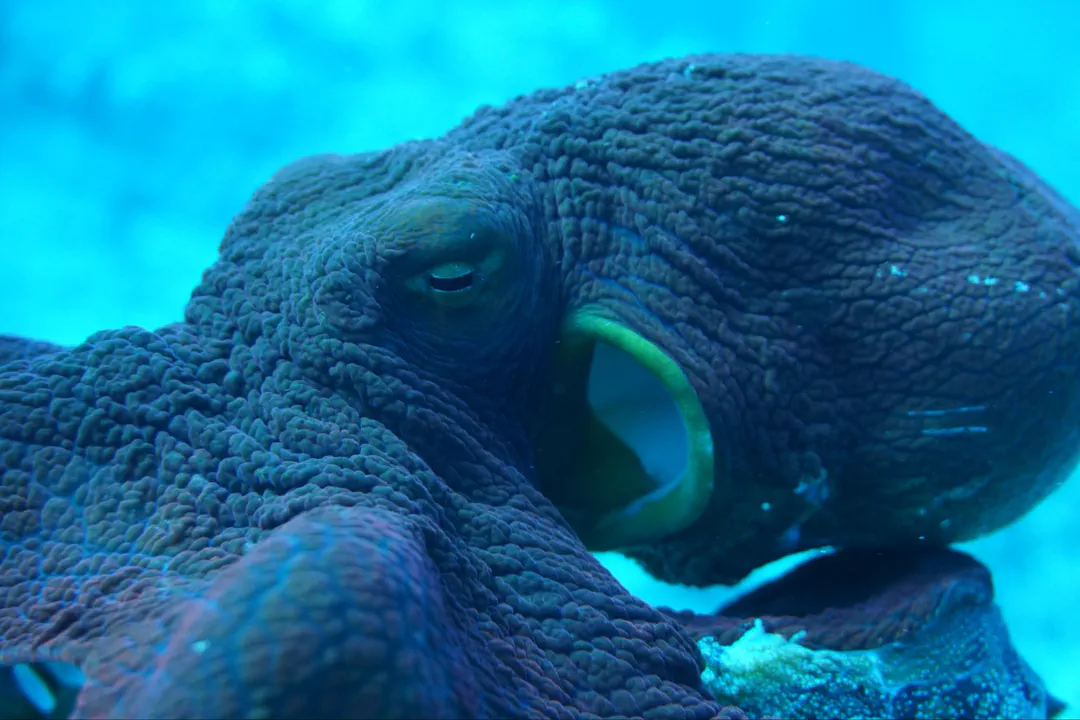 © cello caruso-turielloCC BY 4.0 · iNaturalist
 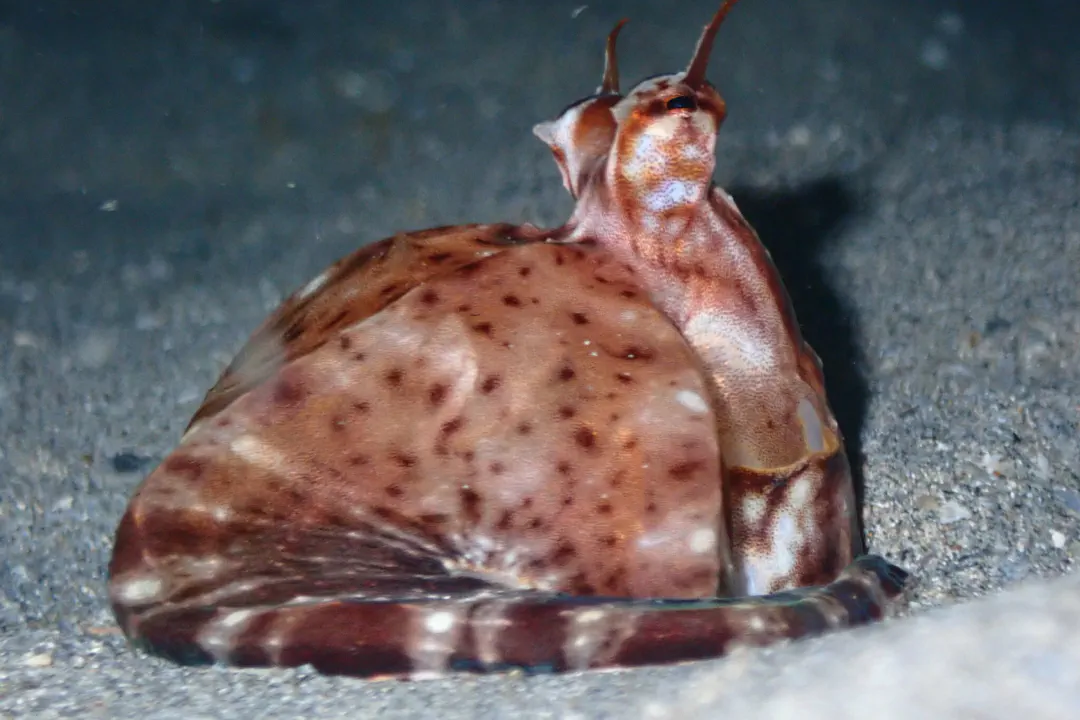 © Ewout KnoesterCC BY-SA 4.0 · iNaturalist
 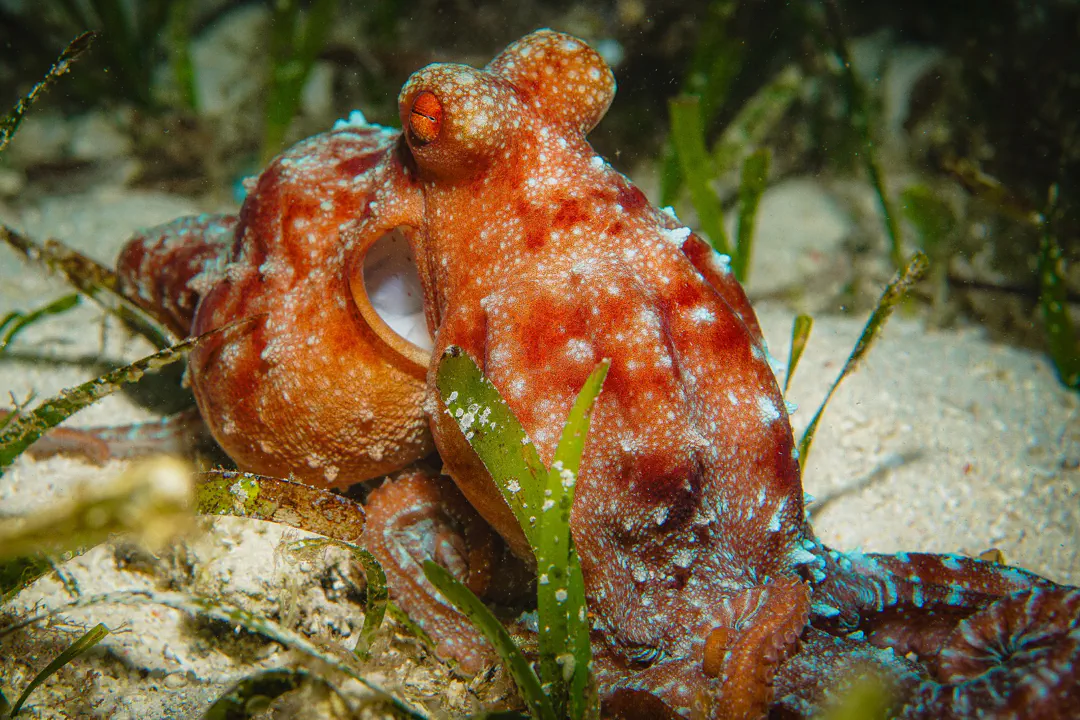 © Stas KuryanAll rights reserved
 Greater Blue-ringed Octopus is classified as venomous, dangerous to humans. Always exercise caution and keep a safe distance.
Greater Blue-ringed Octopus can be found at depths of up to 20 meters.
Download Seabook free for iOS and Android.