 © seabook.appAll rights reserved
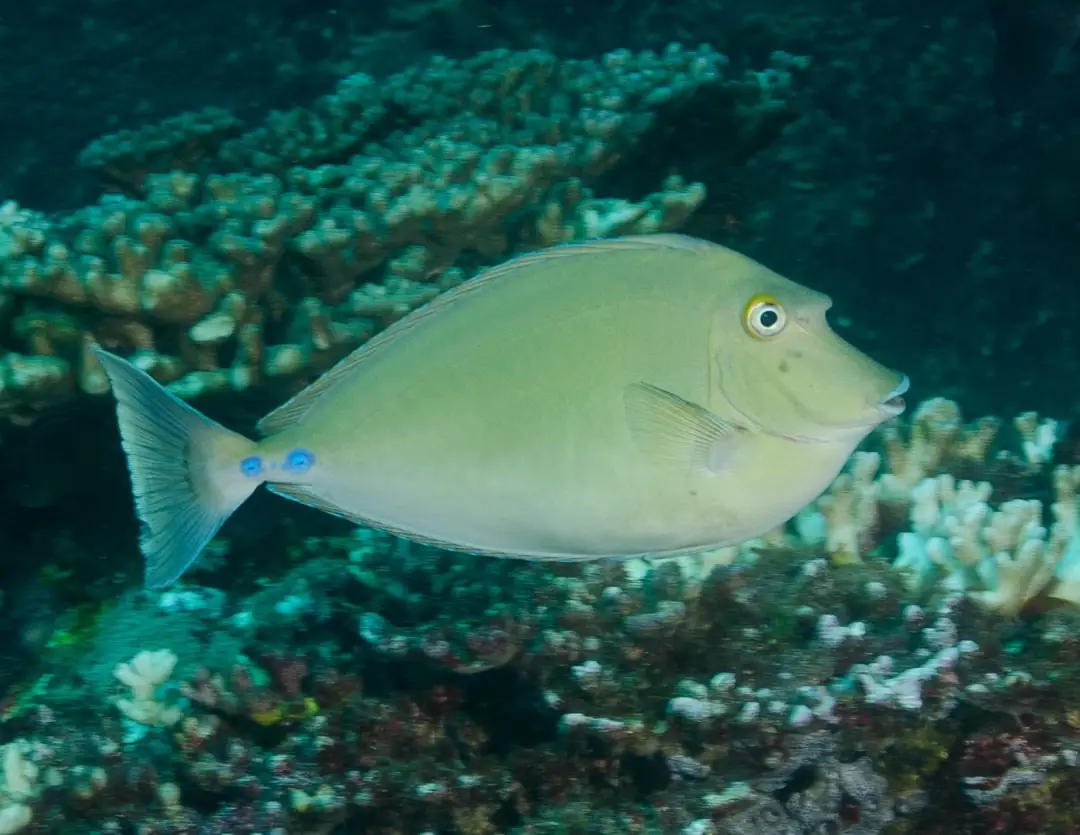
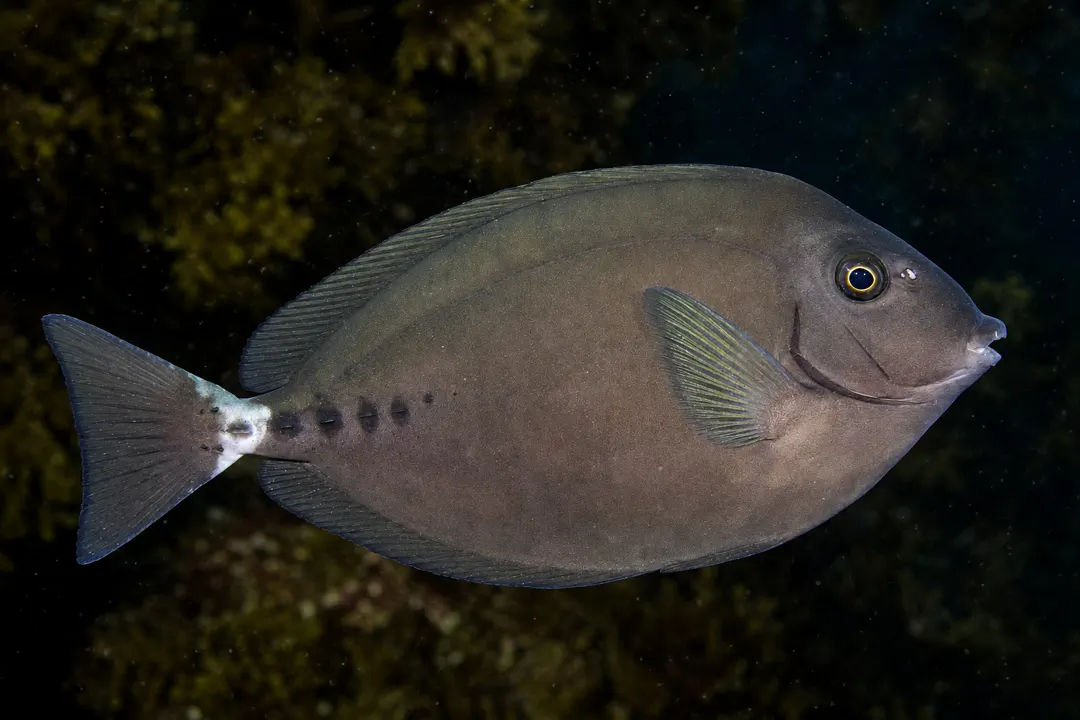
Australian Sawtail
Prionurus microlepidotus
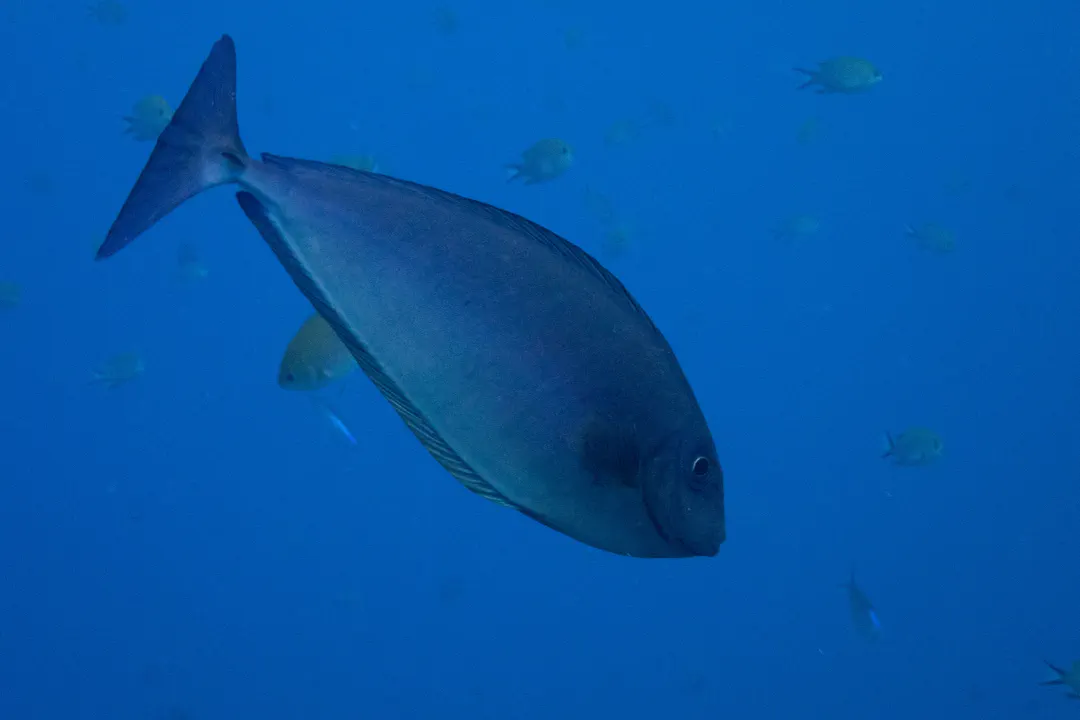
Naso unicornis
The bluespine unicornfish (Naso unicornis), also known as the short-nose unicornfish, is a species of marine ray-finned fish belonging to the family Acanthuridae, the surgeonfishes, unicornfishes and tangs. This species is found in the Indo-Pacific. It is occasionally found in the aquarium trade. It grows to a size of 70 cm in length. It is called kala ('thorn') in Hawaii, dawa in New Caledonia, and ta or tā in Fiji.
The bluespine unicornfish was first formally described as Chaetodon unicornis by the Swedish-speaking Finnish explorer, orientalist, naturalist, and an apostle of Carl Linnaeus Peter Forsskål with its type locality given as Jeddah. In 1801 the French zoologist Bernard Germain de Lacépède described a new species Naso fronticornis as a replacement name for Chaetodon unicornis, which, in 1917 David Starr Jordan designated as the type species of the genus Naso, which had first been proposed as a genus by Lacépède when he described N. fronticornis. Naso is the only genus in the monogeneric subfamily Nasinae, proposed by Henry Weed Fowler and Barton Appler Bean in 1929 within the family Acanthuridae.
The bluespine unicornfish has a blueish-gray body with two blue spines on each side at the base of the tail and a short rostrum or bony horn on the forehead. In small fish the horn is missing and males additionally have tail streamers. These fish have a leather-like skin instead of scales. The bluespine unicornfish can grow up to 70 cm (28 in) with the largest one caught to be 5.8 kg (13 lb).
The bluespine unicornfish is very common in the tropical Indo-Pacific region usually occurring at temperatures between 25 and 29 °C (77 and 84 °F).
The bluespine unicornfish are a near shore fish. The juvenile tend to stay close to shore while the adults tend to live from shallow to the beginnings of the deep water staying within the upper 40 feet. They tend to enjoy spots with waves or strong surges. The bluespine unicornfish live often solitary on coral reefs or can be found in small schools of unicorn fish or as a part of larger schools with many other fish species.
Bluespine unicornfish are herbivores and feed on brown and red algae with coarse or leafy blades.
Bluespine unicornfish are eaten in abundance due to how common they are. They have a strong flavor and odor due to their diet. When skinned, the meat is white with a slight pink-red taint and a firm or moist texture. Bluespine unicornfish are usually eaten raw, boiled, grilled, baked or sauteed. The bluespine unicornfish or the Kala was an important food source in old Hawaii. The tough skin of kala was sometimes stretched over a half coconut shell to make a small knee drum. The Hawaiians also used Kala in ceremonies between members of a tribe or between tribes. Today kala is still a common food source to the people of Hawaii and other Pacific Islands.
© seabook.appAll rights reserved 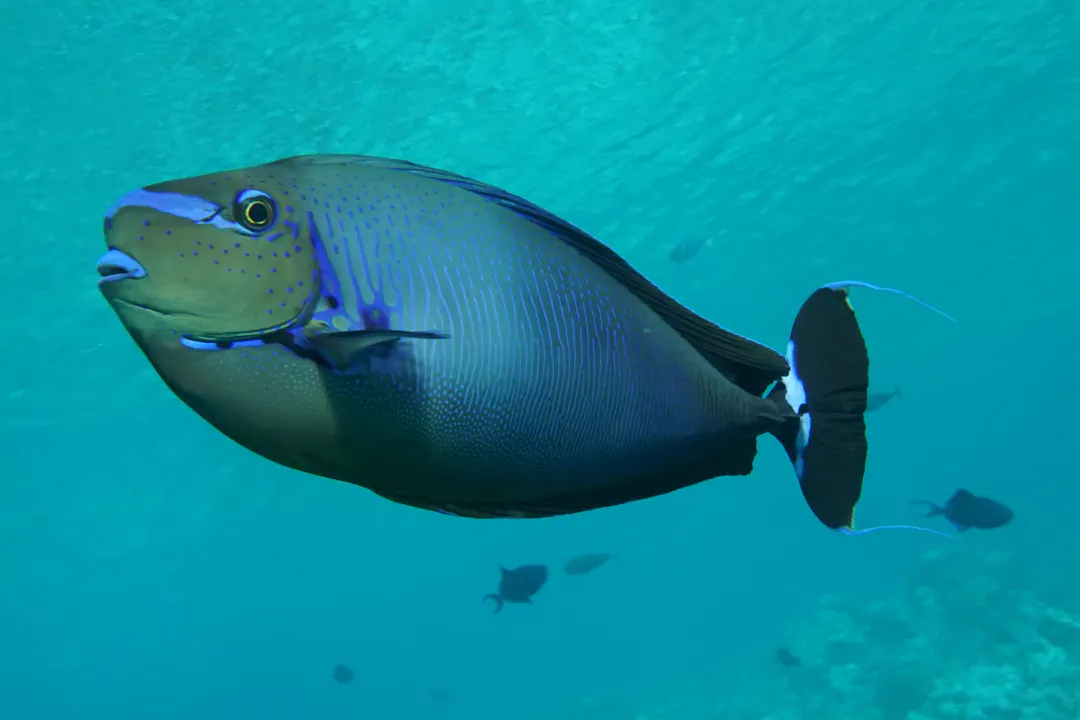 © Stas KuryanAll rights reserved
  Justin PhilboisCC0 · iNaturalist
 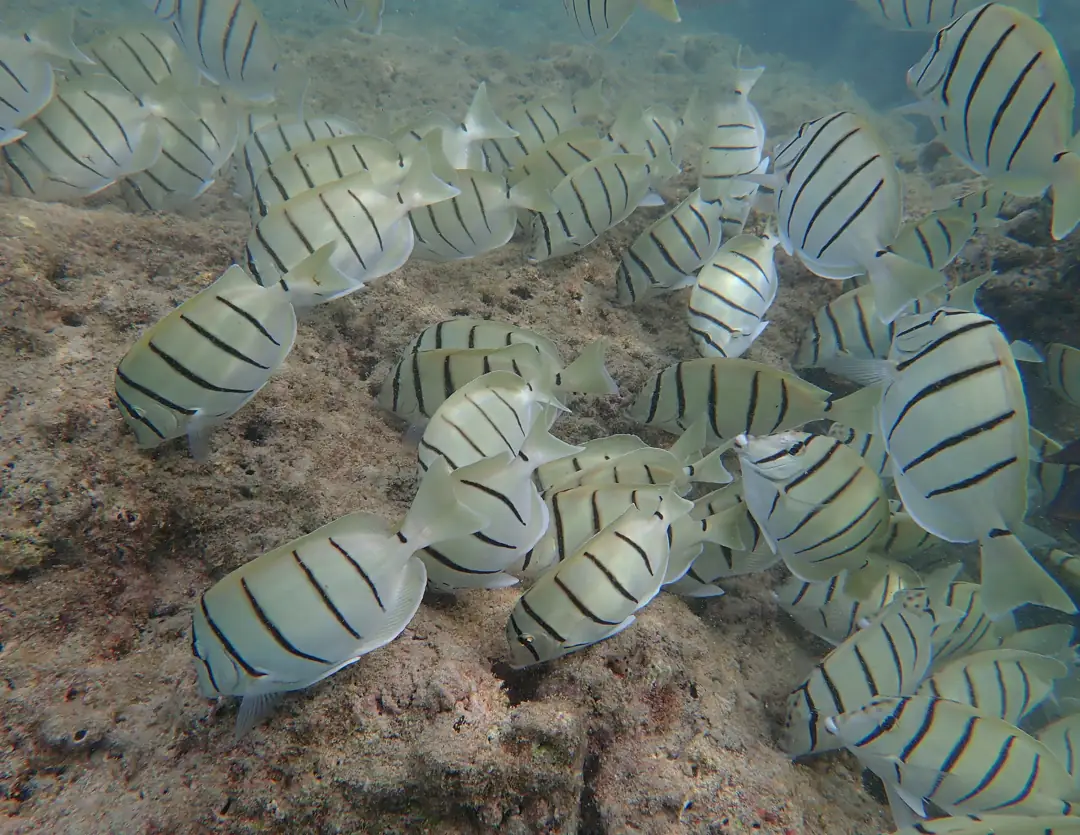 © louisloAll rights reserved
 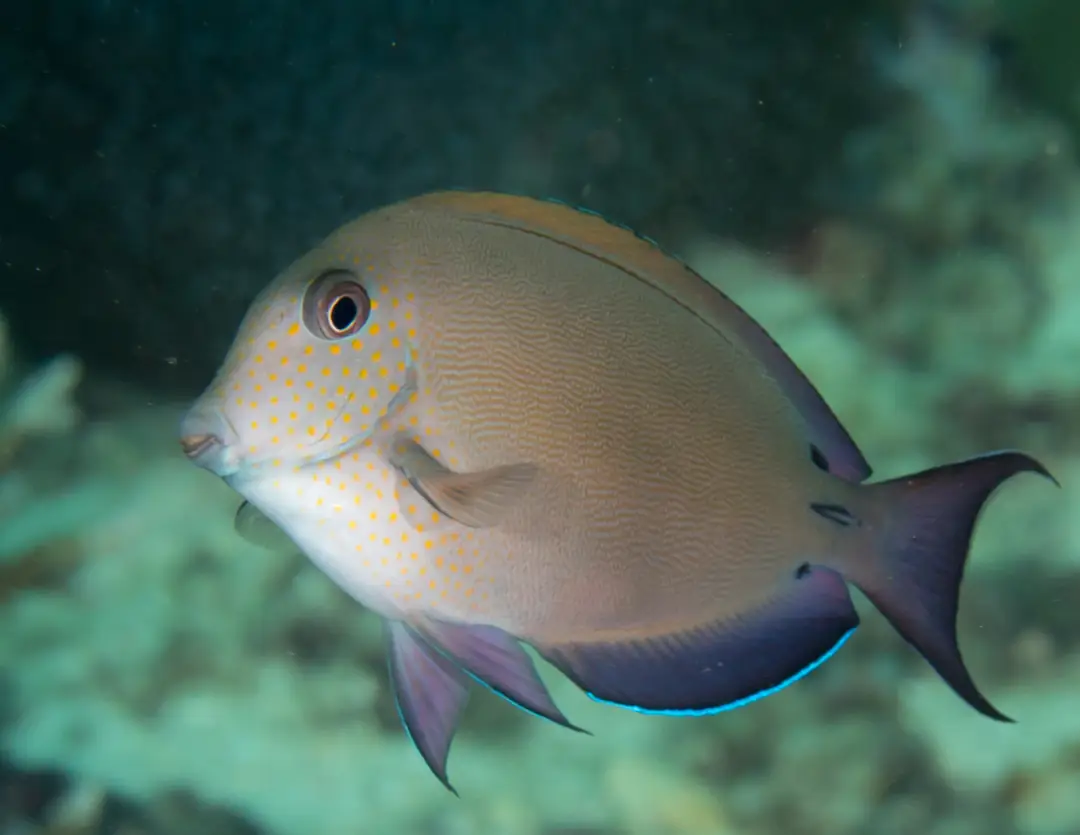 © Rickard ZerpeCC BY 4.0
 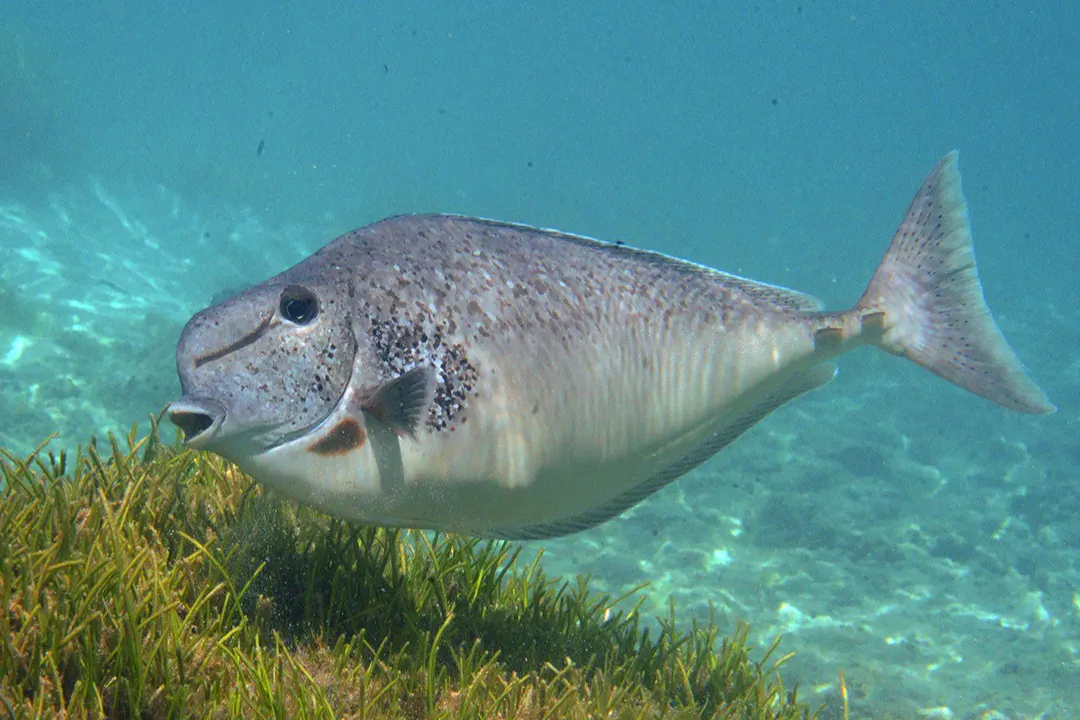 © Elisabeth MorcelCC BY-SA 4.0
 Bluespine Unicornfish is classified as poisonous. Always exercise caution and keep a safe distance.
Bluespine Unicornfish can be found at depths of up to 180 meters.
Download Seabook free for iOS and Android.