 © Ian ShawAll rights reserved
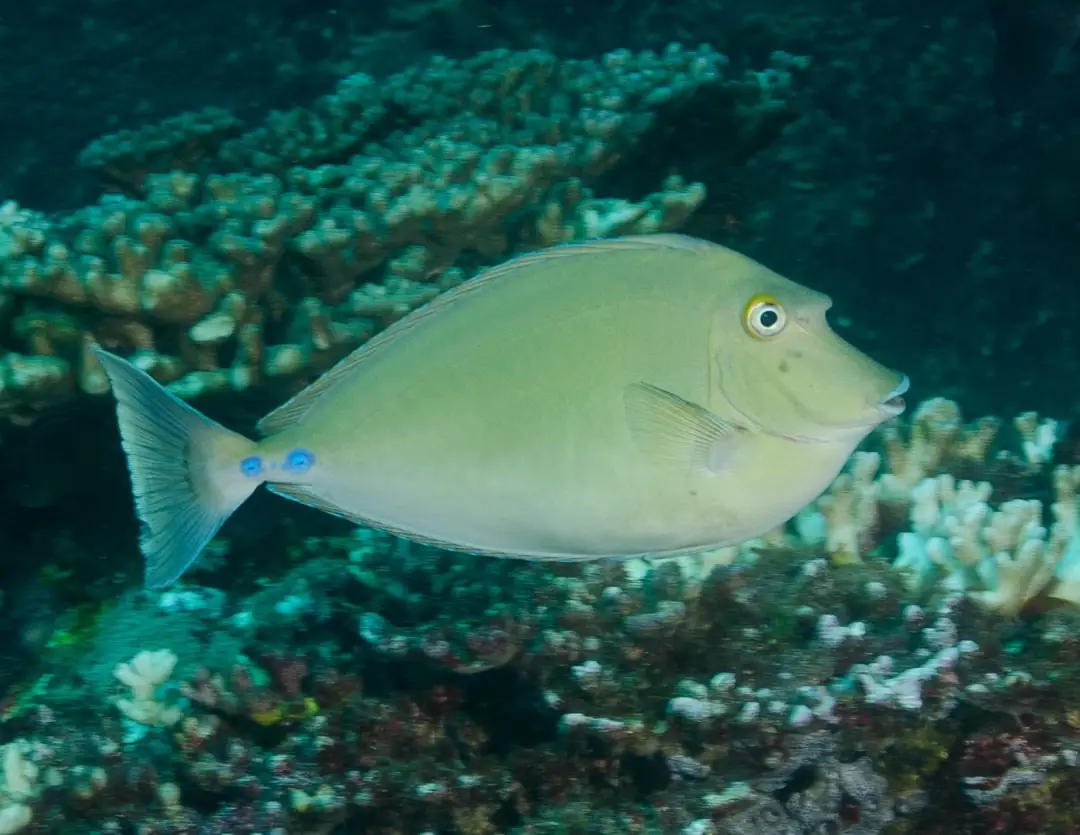
Bluespine Unicornfish
Naso unicornis
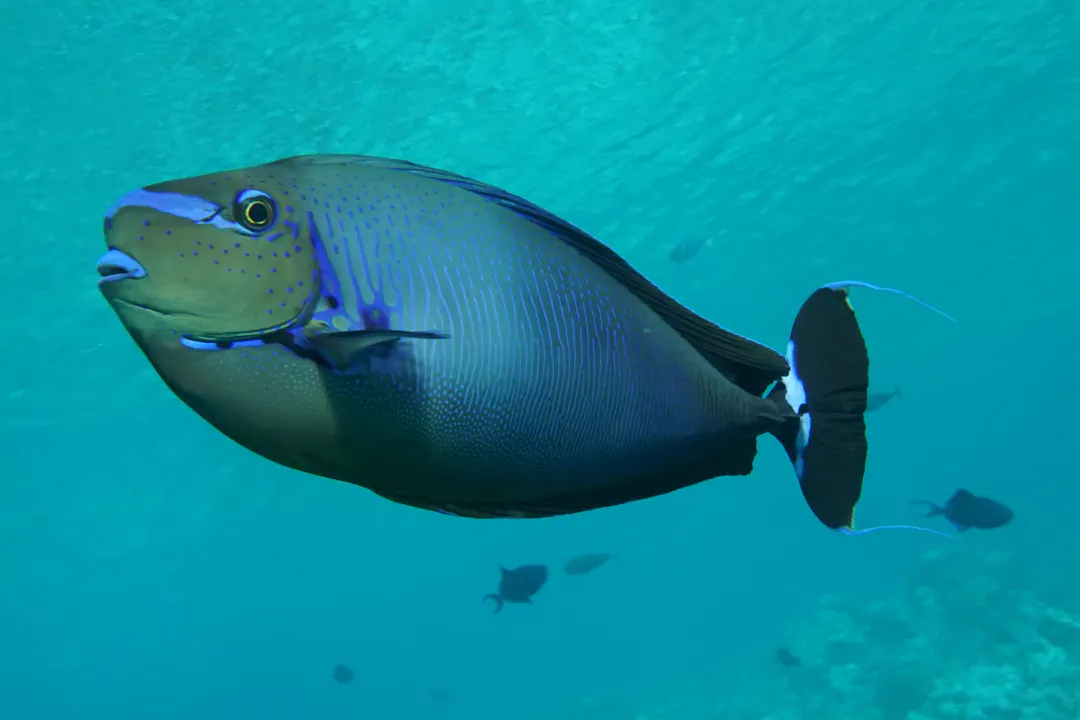
Naso vlamingii
Naso vlamingii is a species of unicornfish in the surgeonfish family.
This is a relatively large member of the Acanthuridae, easily reaching 60 cm. The adult has tall dorsal and anal fins, vertical blue lines on its sides, and small blue spots dorsally and ventrally. A broad blue band extends from the eyes to the prominent snout. The coloration of the juvenile is a dingy green with blue spots and lips, later turning deeper blue with purple markings. The fish turns mud-brown while sleeping or when frightened, a form of camouflage.
This fish is mostly herbivorous but will eat small crustaceans such as copepods. In captivity brine shrimp and mysid shrimp. Most of its natural diet is algae.
This tang is found in the Indo-Pacific oceans off the coasts of East Africa, on the islands of the Marquesas and Tuamotu, southern Japan and southern areas of the Great Barrier Reef. It is most often found in association with reefs and coastal lagoons, sometimes in small schools.
N. vlamingii has very little to commercial fishers but is occasionally available in the marine aquarium industry, where it is a higher-priced, more uncommon tang.
© Ian ShawAll rights reserved 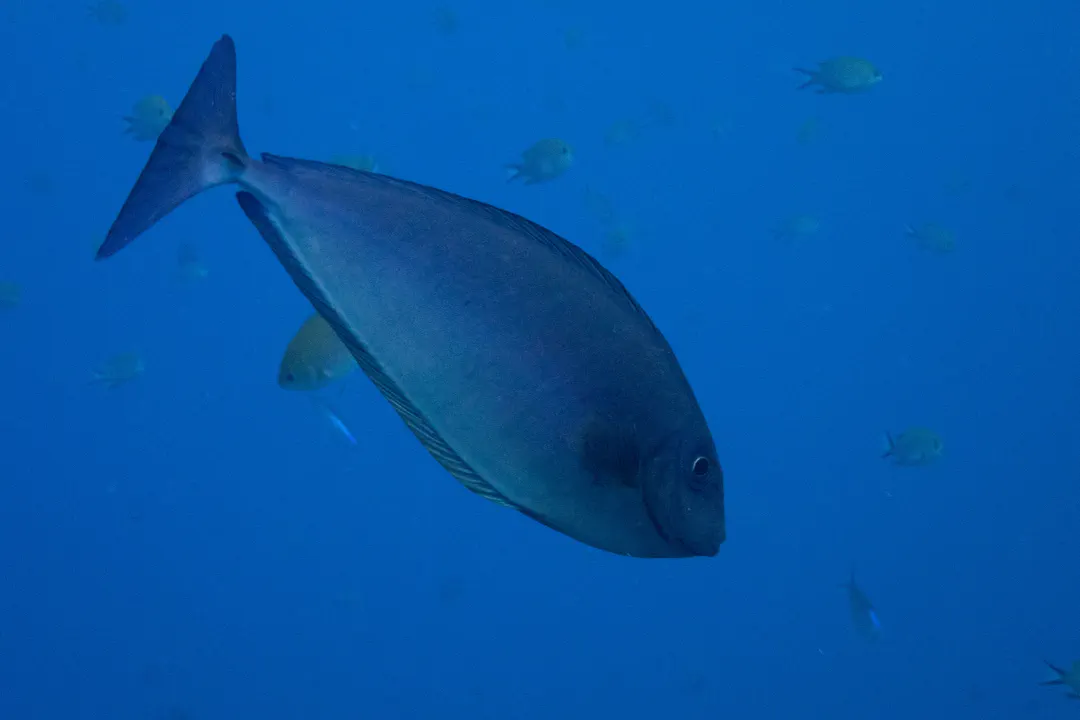 Justin PhilboisCC0 · iNaturalist
  © Darren ObbardCC BY 4.0 · iNaturalist
 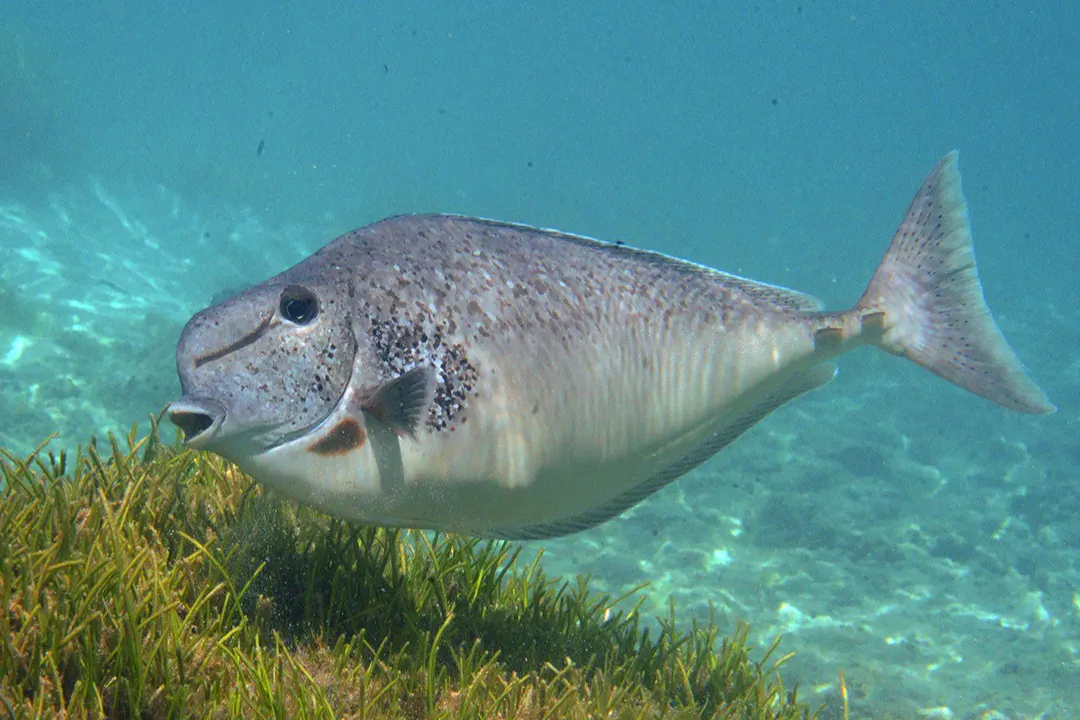 © Elisabeth MorcelCC BY-SA 4.0
 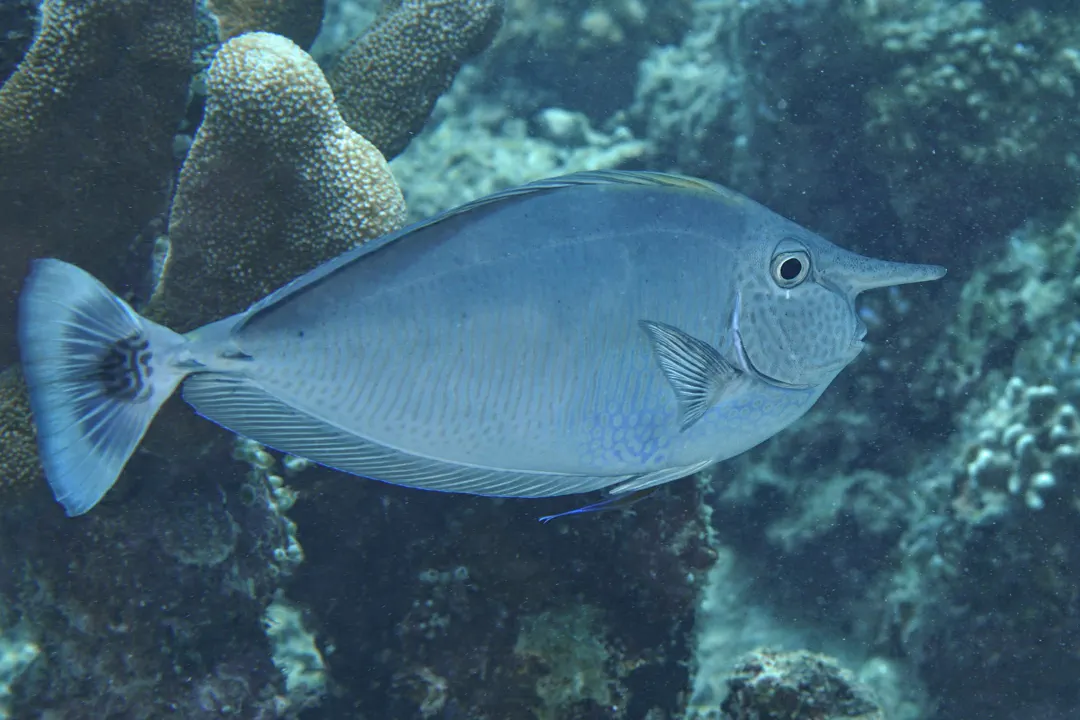 © Stas KuryanCC BY-SA 4.0 · Seabook
 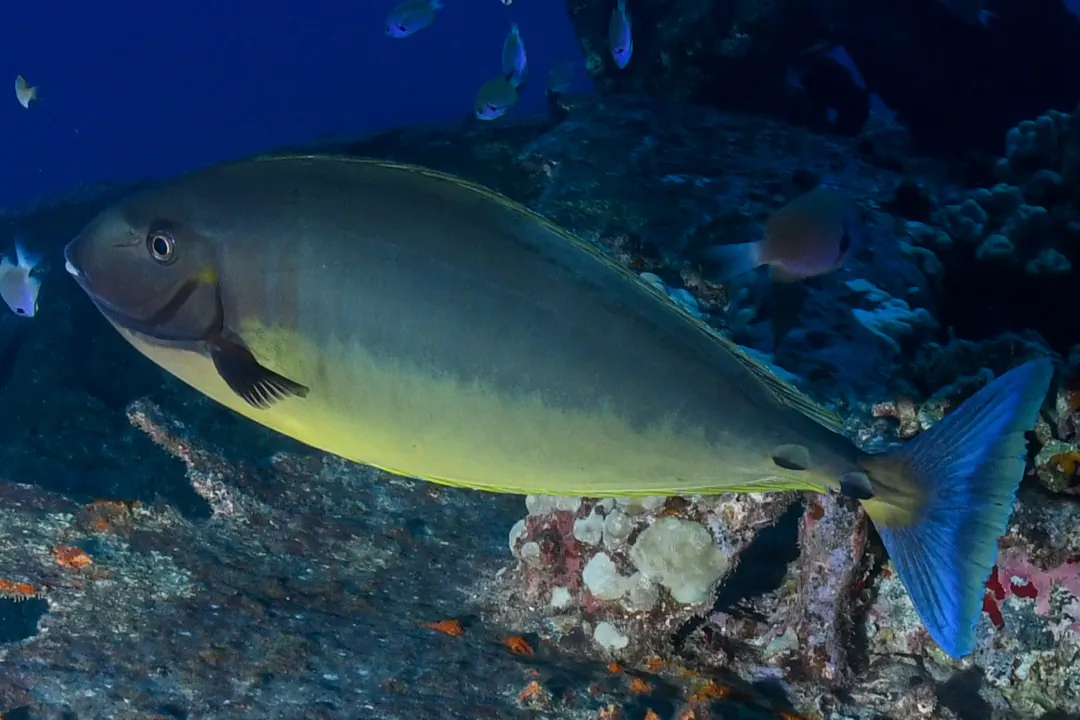 © Robin WhiteCC BY 4.0 · iNaturalist
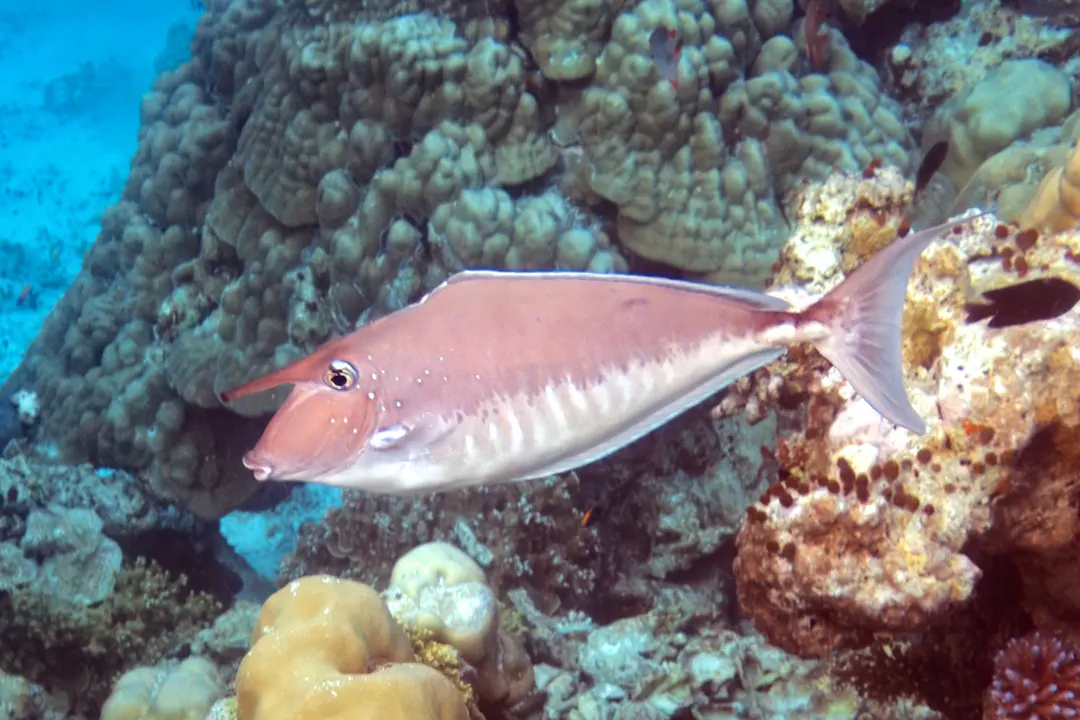
 Bignose Unicornfish has no known danger to humans. However, always observe marine life responsibly.
Bignose Unicornfish can be found at depths of up to 50 meters.
Download Seabook free for iOS and Android.