 © Stas KuryanAll rights reserved
Bignose Unicornfish
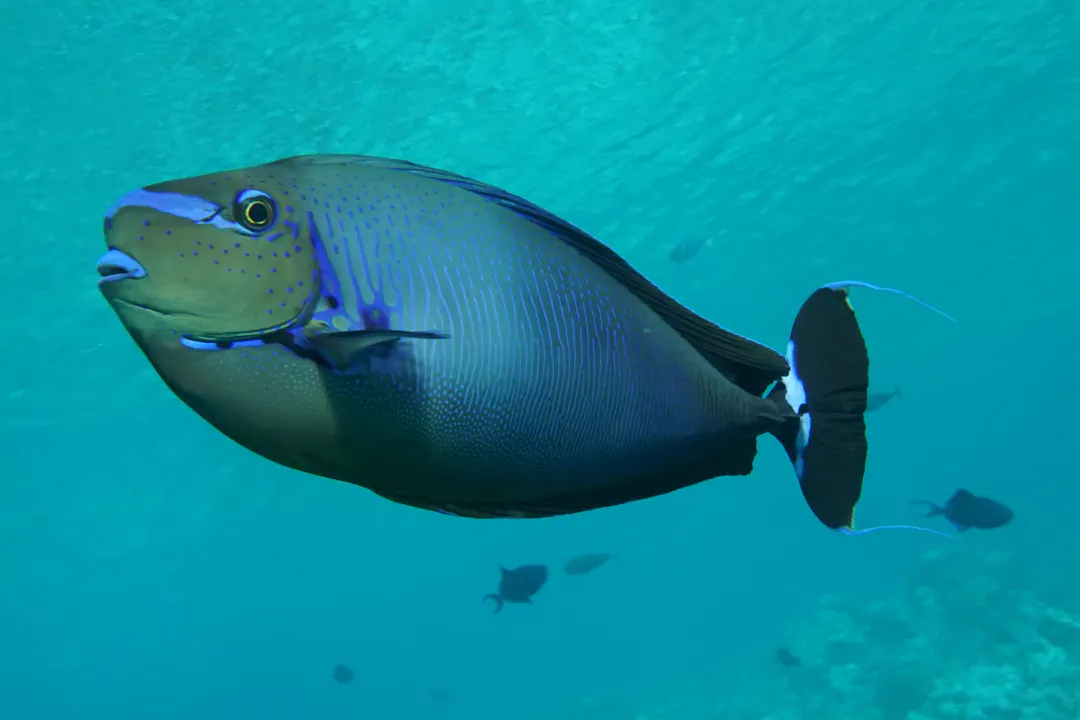
Naso vlamingii
Naso brevirostris
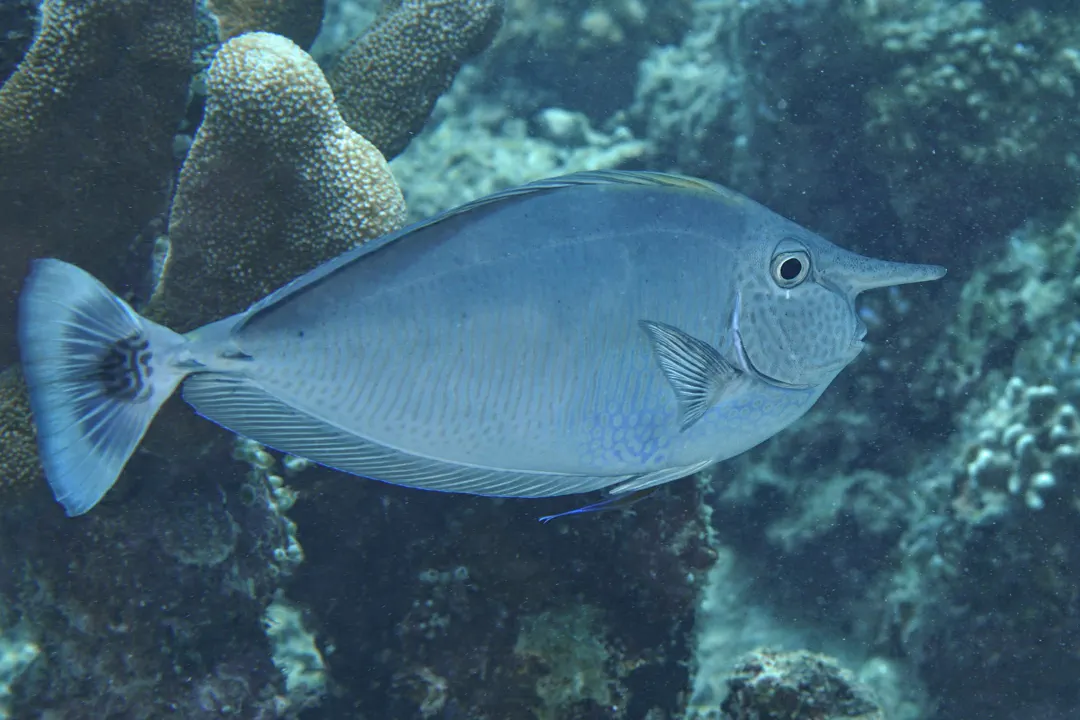
Naso brevirostris is a species of unicornfish in the family Acanthuridae and is widespread throughout the Indian and Pacific Oceans. Another species, Naso maculatus, may also be called the spotted unicornfish.
This species is listed as "least concern" on the IUCN Red List of Threatened Species, and there are no observed declines as a result of commercial or recreational fishing. Juveniles feed on benthic algae, and adults feed on algae and zooplankton.
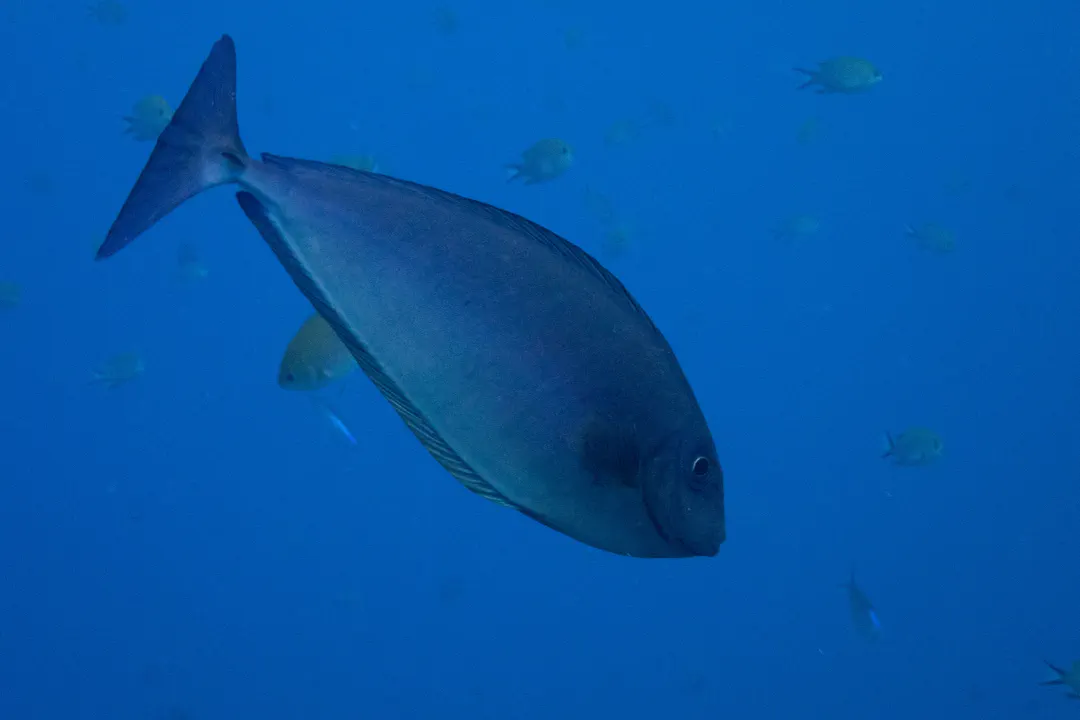
Naso brevirostris can reach a maximum length of 60 centimetres (24 in). These fishes have an elongate, oval body, with a short snout and a small, protrusible mouth. They are olivaceous brown to bluish grey in color, with a prominent horn, many small dark spots on head and short irregular lines on sides of body. The anterior part of the body is rather pale. The tail is whitish with dark blotch. The caudal knives are relatively larger in males (sexual dimorphism). These fishes have six dorsal spines, 27-29 dorsal soft rays and 27-30 anal soft rays. Subadults show dark spots on head and body, while juveniles lack the prominent horn.
Indo-Pacific: Red Sea and East Africa to the Hawaiian, Marquesas and Ducie islands, north to southern Japan, south to Lord Howe Island; exxcluding Oman and Persian Gulf. Eastern Central Pacific: Galápagos Islands.
The short-nosed unicornfish dwells in mid-waters along steep outer lagoon, in rocky shore and seaward reef drop-offs, and prefers water temperatures ranging from 22.4 to 29° Celsius.
This species forms spawning aggregations. Adults feed on algae and zooplankton, while juveniles mainly feed on benthic algae.
© Stas KuryanAll rights reserved 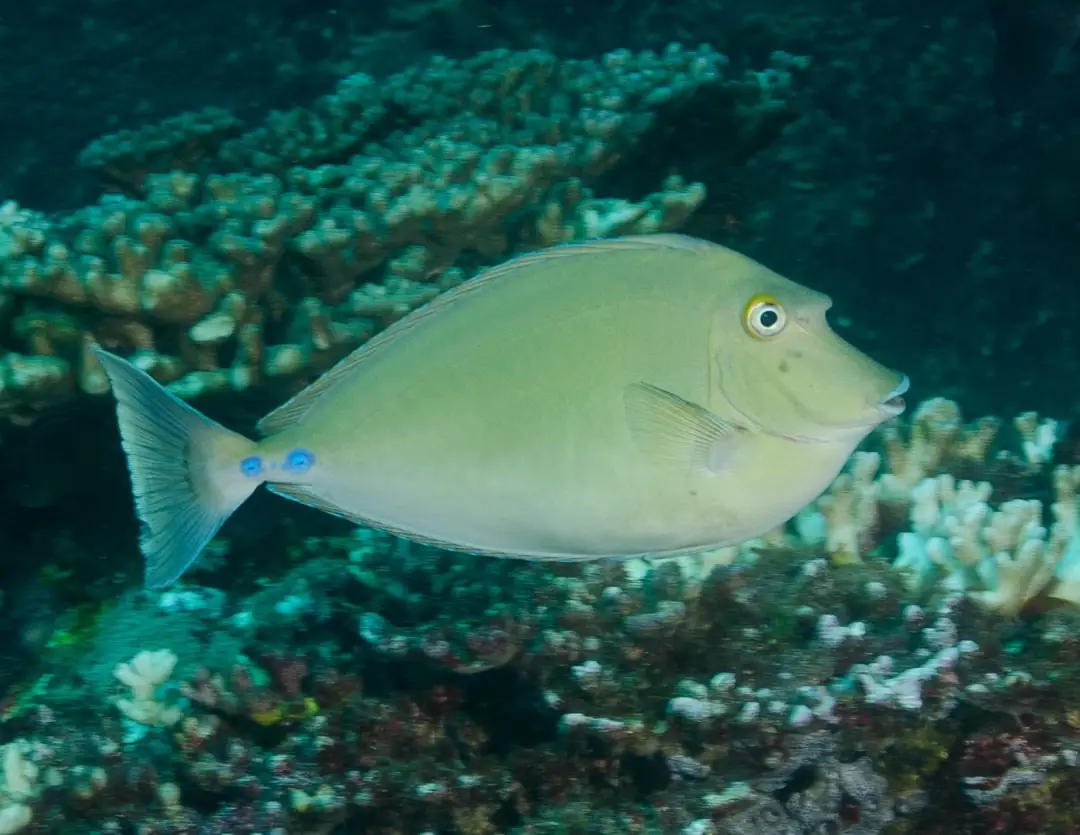 © Ian ShawAll rights reserved
  Justin PhilboisCC0 · iNaturalist
 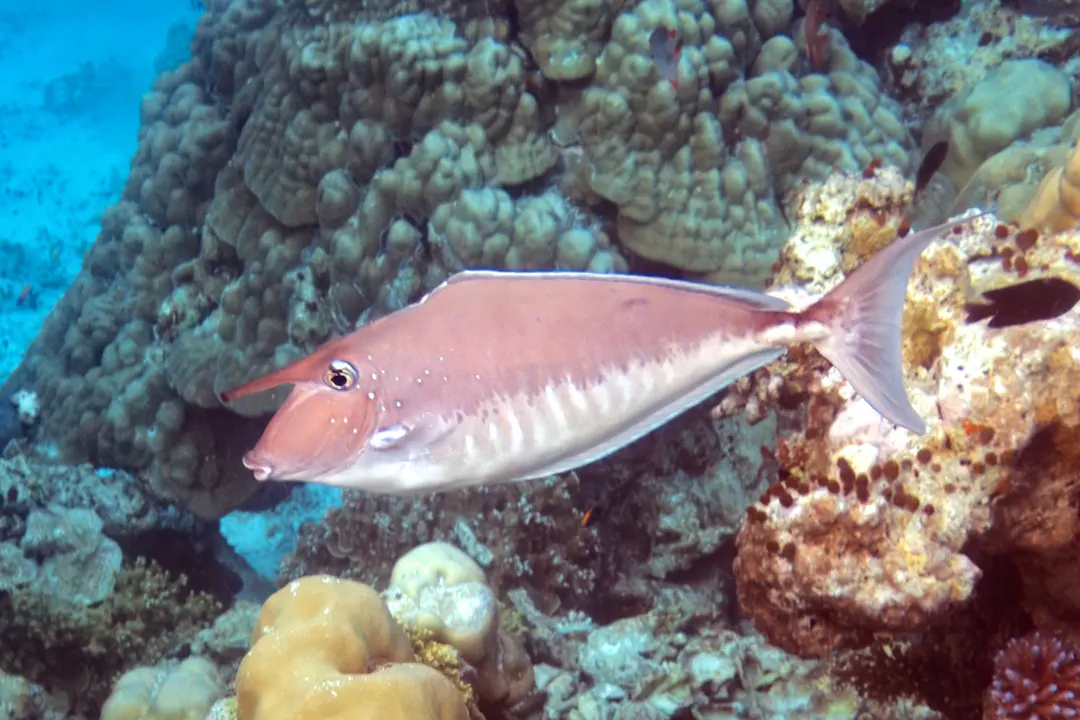 © Darren ObbardCC BY 4.0 · iNaturalist
 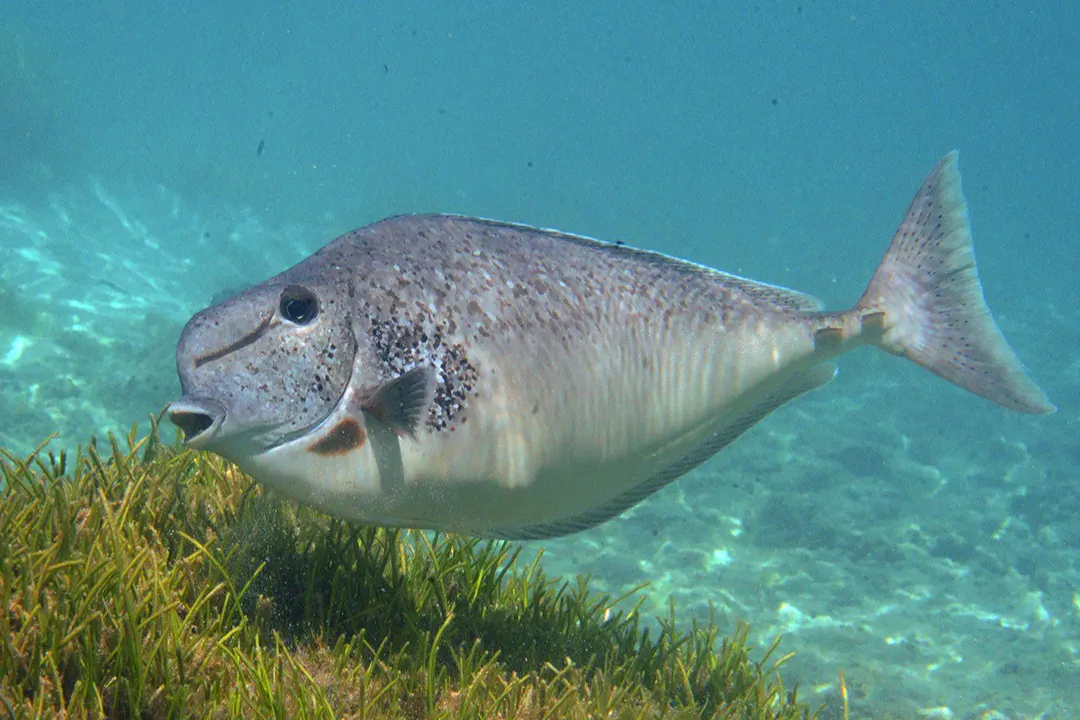 © Elisabeth MorcelCC BY-SA 4.0
 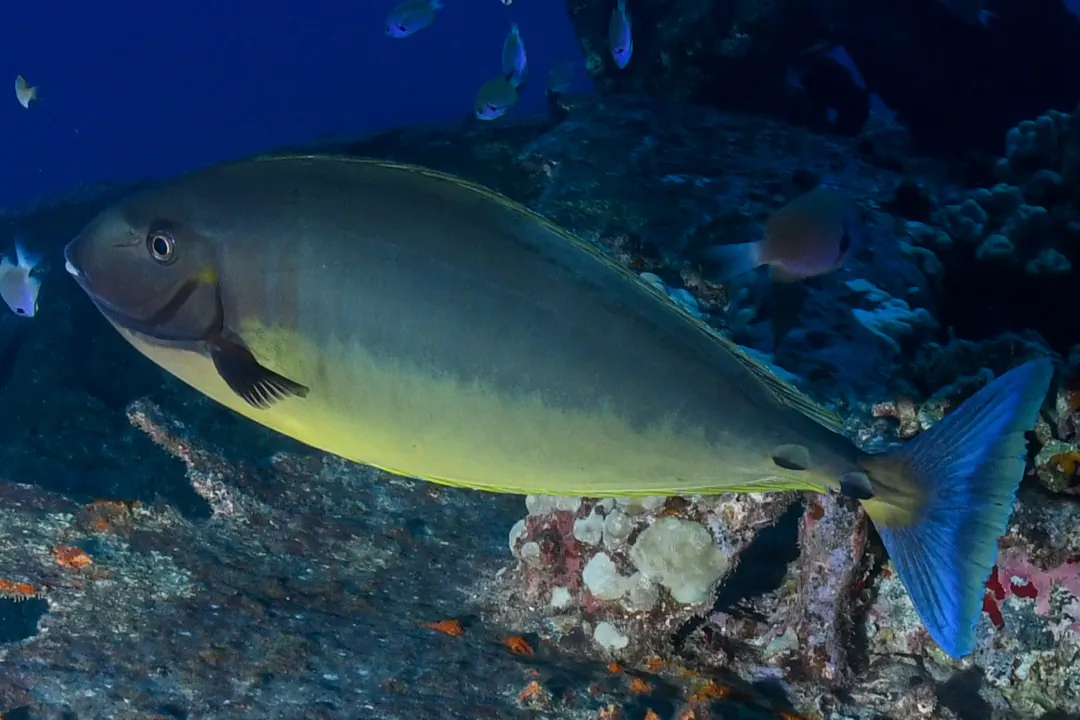 © Robin WhiteCC BY 4.0 · iNaturalist
 Paletail Unicornfish is classified as poisonous. Always exercise caution and keep a safe distance.
Paletail Unicornfish can be found at depths of up to 122 meters.
Download Seabook free for iOS and Android.