 © Darren ObbardCC BY 4.0 · iNaturalist
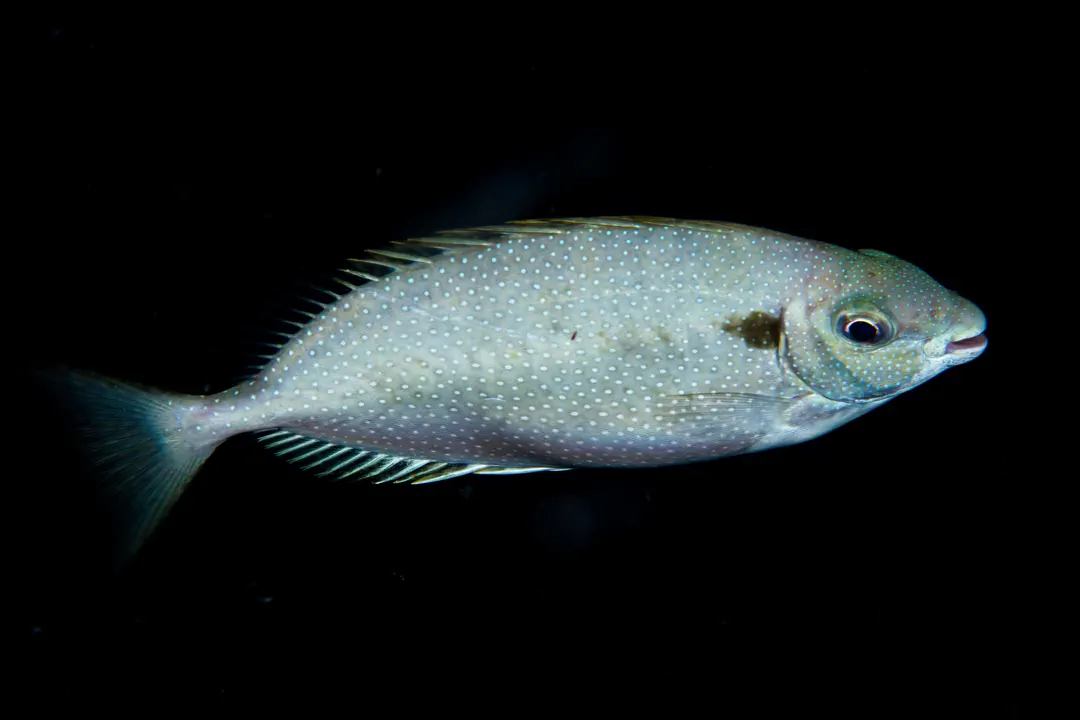
Blackeye Rabbitfish
Siganus puelloides
Siganus canaliculatus
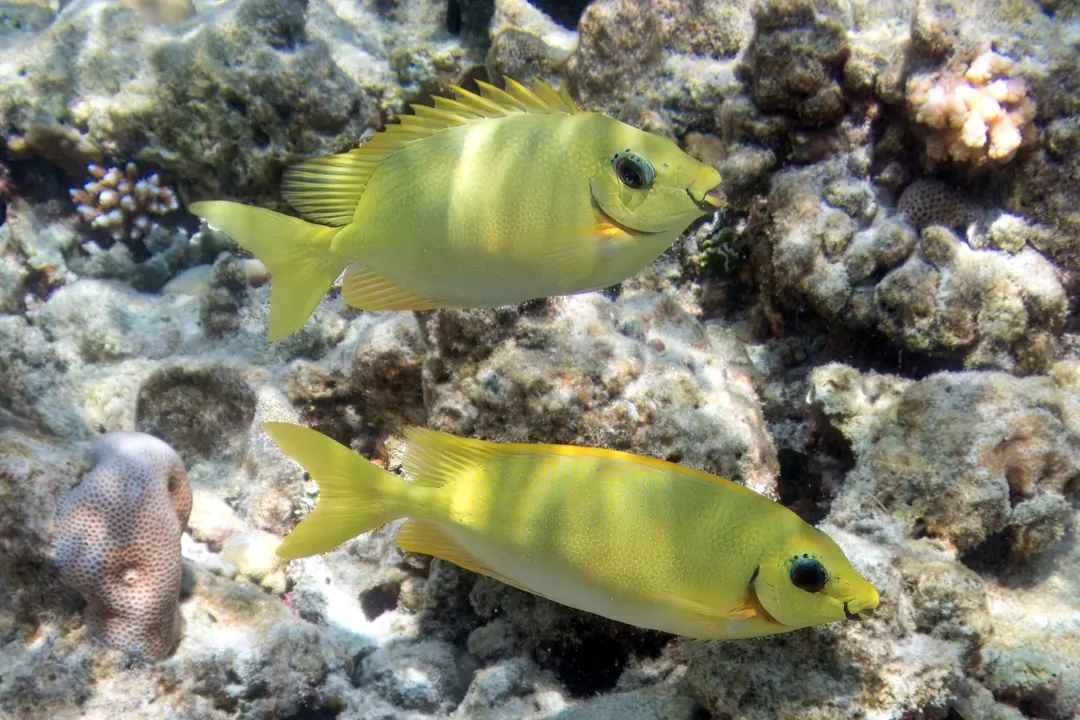
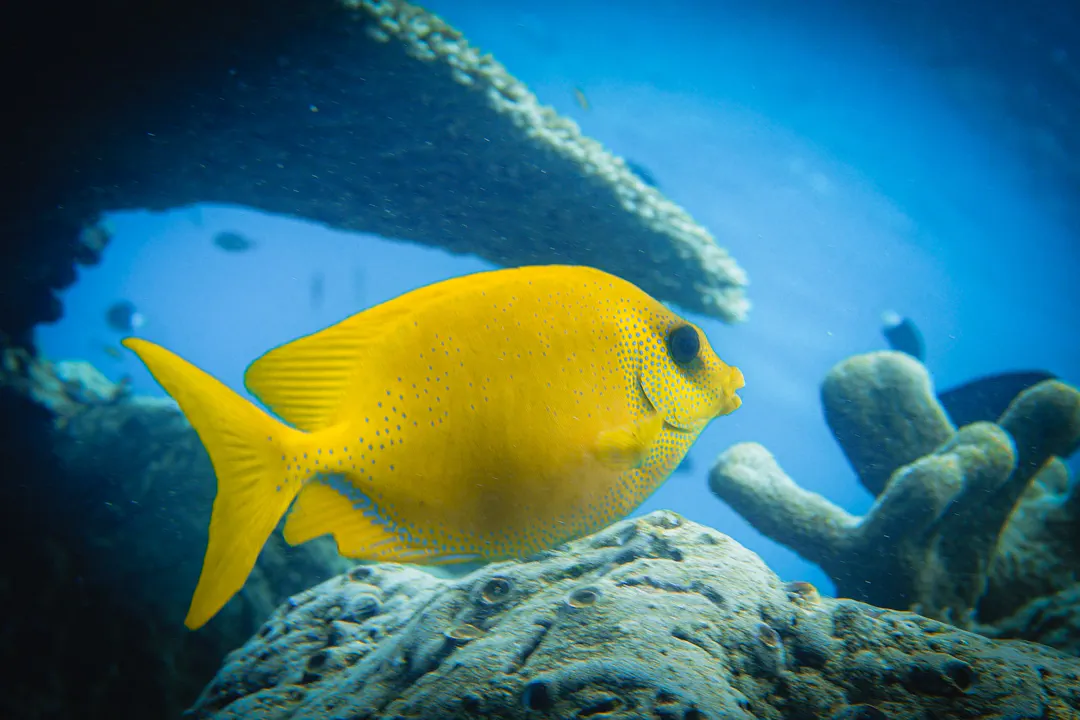
Siganus canaliculatus is a species of ray-finned fish in the family Siganidae. It is native to the western Pacific Ocean and Indian Ocean where it occurs on reefs and in lagoons.
Colour of body is highly variable, greenish grey to yellow brown with numerous (100-200) pearly blue to whitish spots on nape and trunk, match-head size on lower sides. There are 2-3 rows between first spine of dorsal fin and lateral line (area of eye would cover about 6 spots in this region), and about 10 rows between highest point of lateral line and base of first anal-fin spine. When frightened or injured, sides are mottled light and dark brown and cream, creating 6 or 7 regularly spaced, dark diagonal zones with paler zones of similar width between them. Dark eye-sized spot is usually just behind upper end of gill opening, and a narrow bar along upper edge of gill cover. It has poisonous spines. Max length is 40 cm, common length is 20 cm.
Indo-West Pacific: Persian Gulf, Gulf of Oman, Pakistan, India, Sri Lanka, Burma, Thailand, Singapore, Malaysia, Indonesia, Papua New Guinea, Philippines, Cambodia, Viet Nam, south China, Taiwan and Western Australia. Also known from Ryukyu Islands; Palau and Yap in Micronesia and Melanesia.
Adults inhabit inshore, algae reefs, estuaries and in large lagoons with algae-rubble habitats. Mainly common on rocky substrates. In contrast to S. fuscescens, this species seems to tolerate more turbid waters, occurring within the vicinity of river mouths especially around seagrass beds. Adults also occur several kilometers offshore in deep, clear waters. Juveniles form very large schools in shallow bays and coral reef flats; school size reduces with size, with adults occurring in groups of 20 individuals or so. Herbivorous, feed on benthic algae and to some extent on seagrass. Fished by trawling and seine netting; bycatch in traps set in deep water and marketed fresh in very large numbers. Consumed as food.
© Darren ObbardCC BY 4.0 · iNaturalist 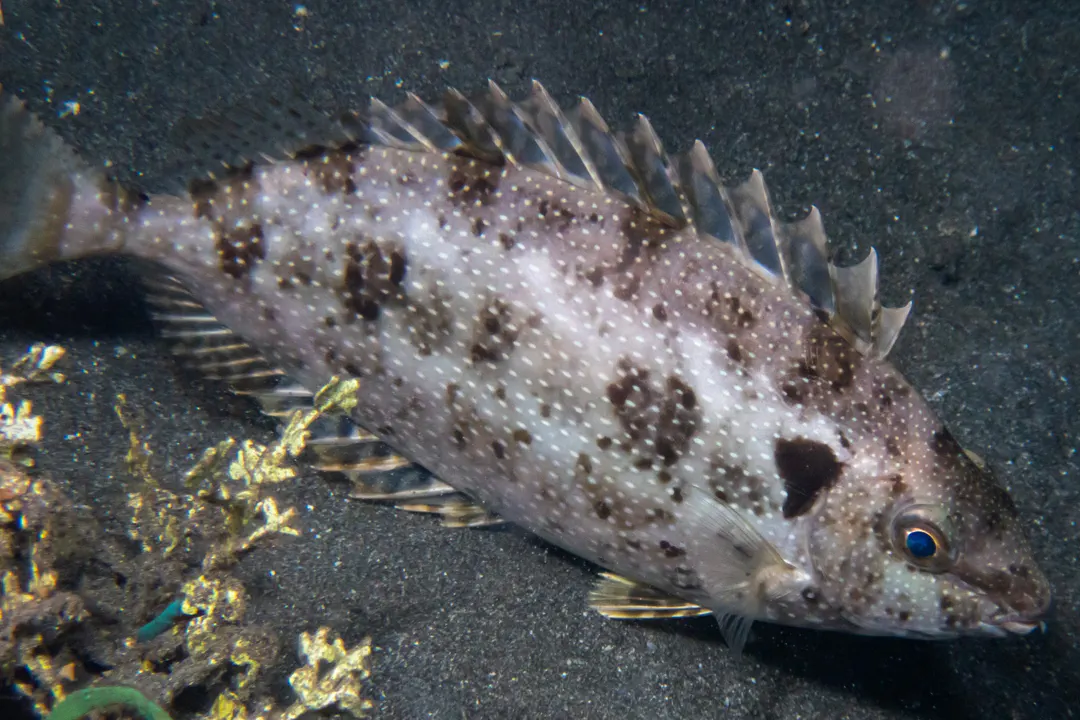 © portioidCC BY 4.0 · iNaturalist
  © Olka KuryanAll rights reserved
 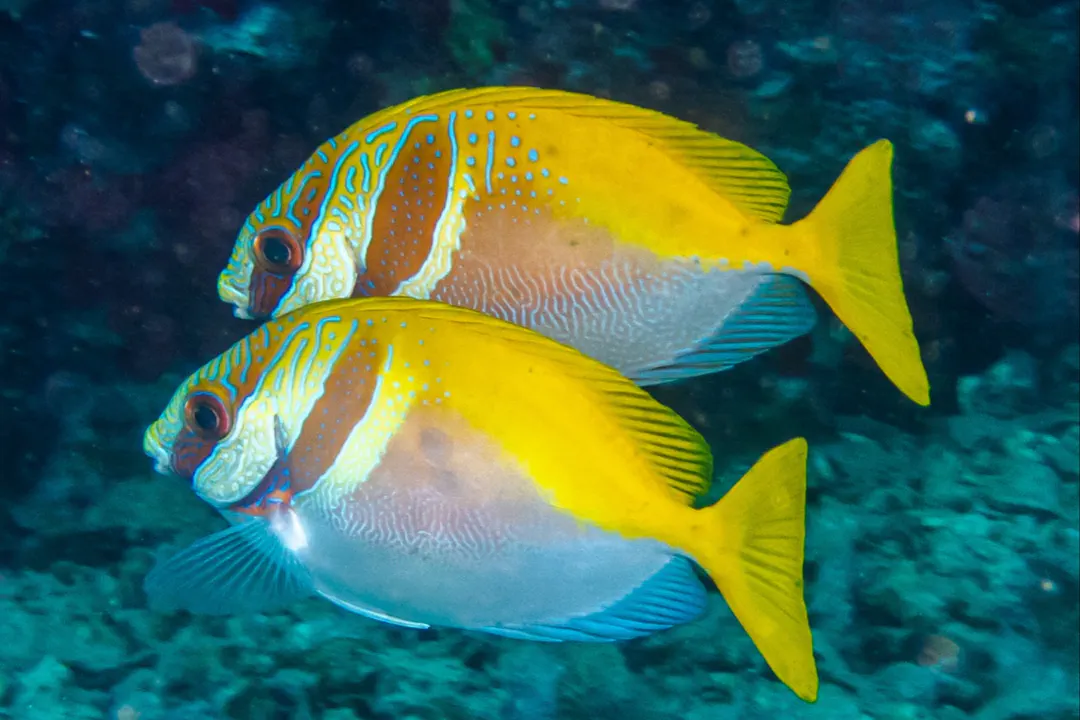 © portioidCC BY 4.0 · iNaturalist
 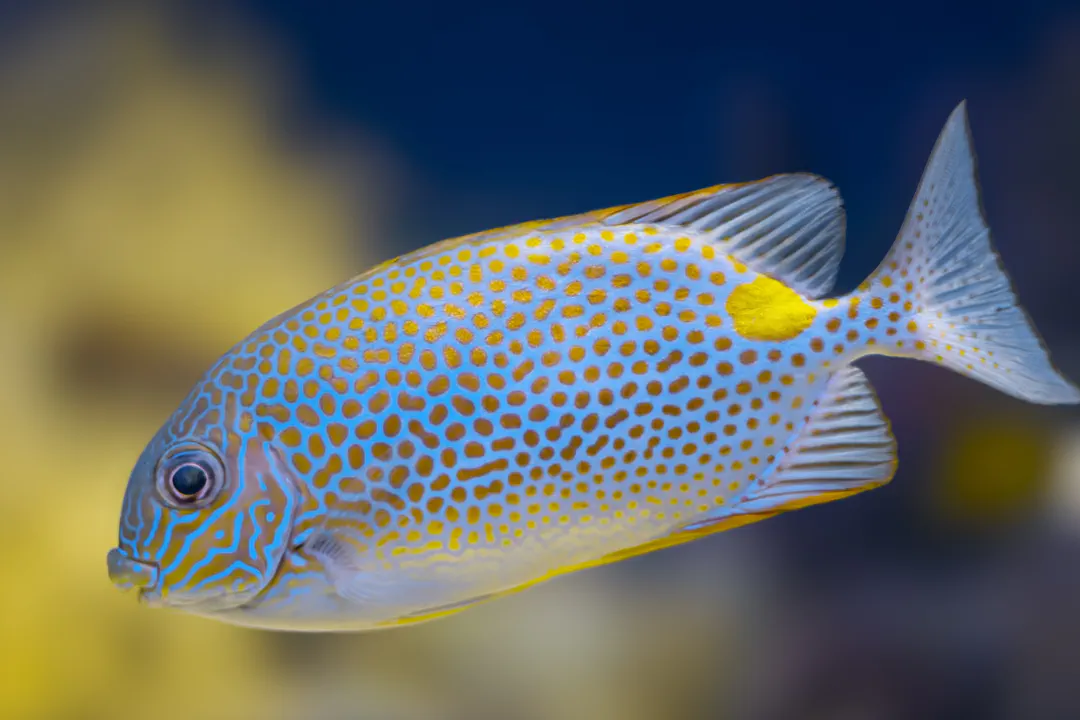 © seabook.appAll rights reserved
 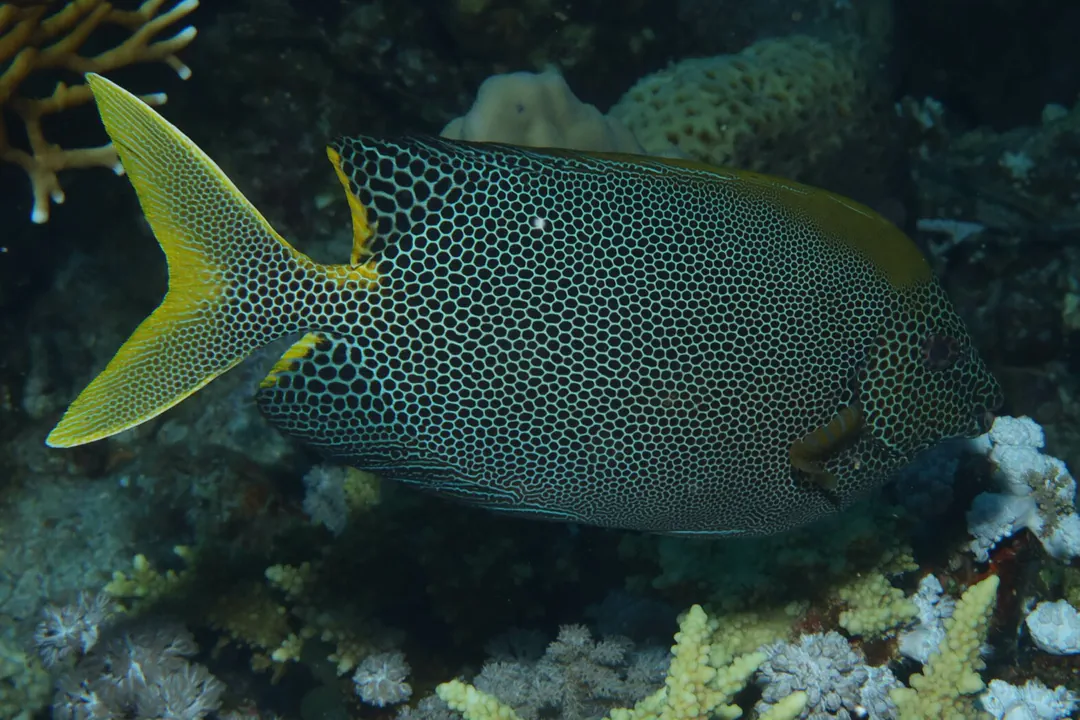 © Julien RenoultCC BY 4.0 · iNaturalist
 White-spotted Rabbitfish is classified as venomous, dangerous to humans. Always exercise caution and keep a safe distance.
White-spotted Rabbitfish can be found at depths of up to 50 meters.
Download Seabook free for iOS and Android.