 © Lesley ClementsAll rights reserved
Bicolour Parrotfish
Cetoscarus bicolor
Scarus hypselopterus
Scarus hypselopterus is a species of parrotfish.
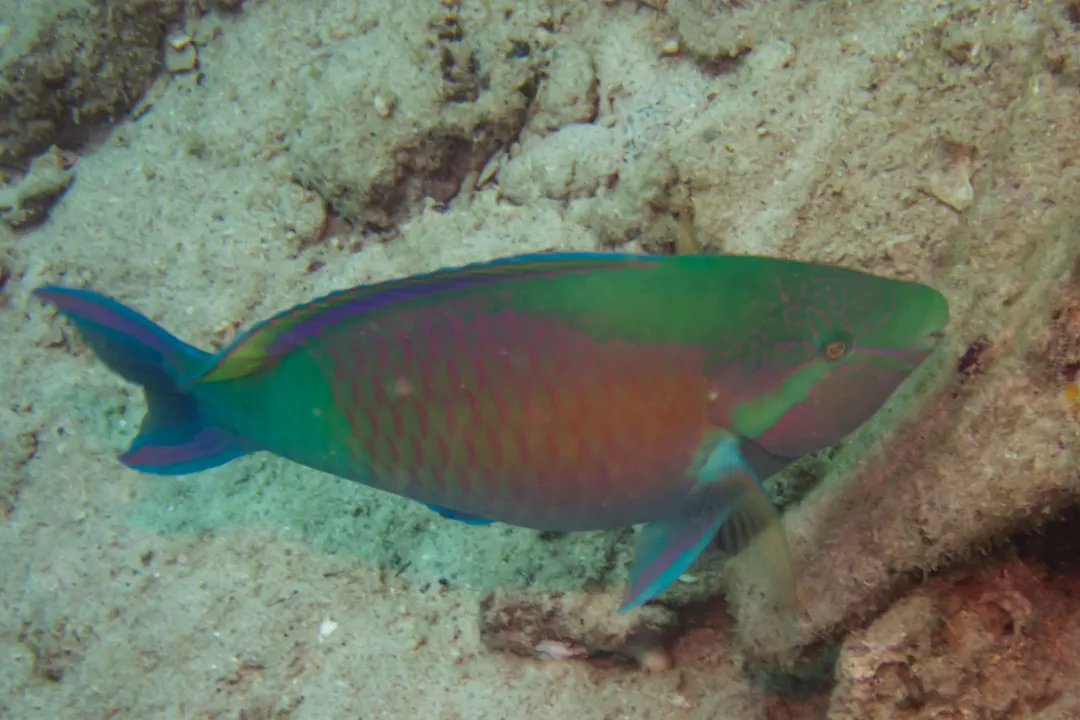
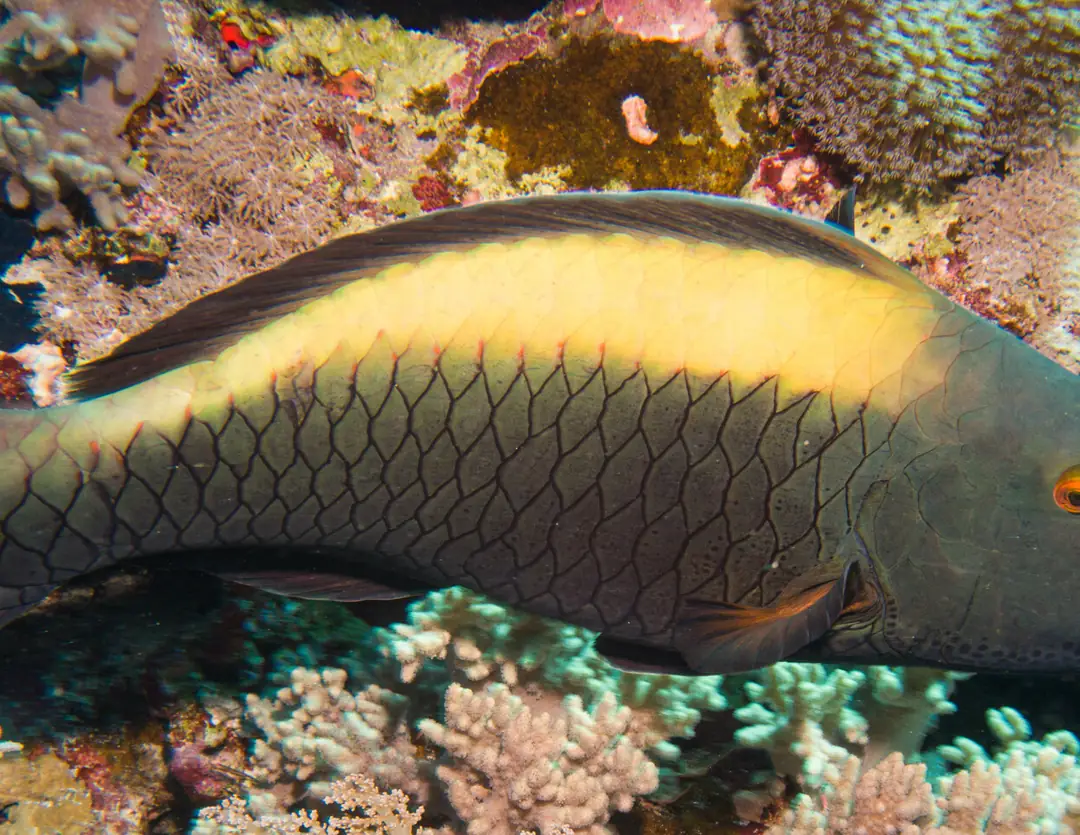
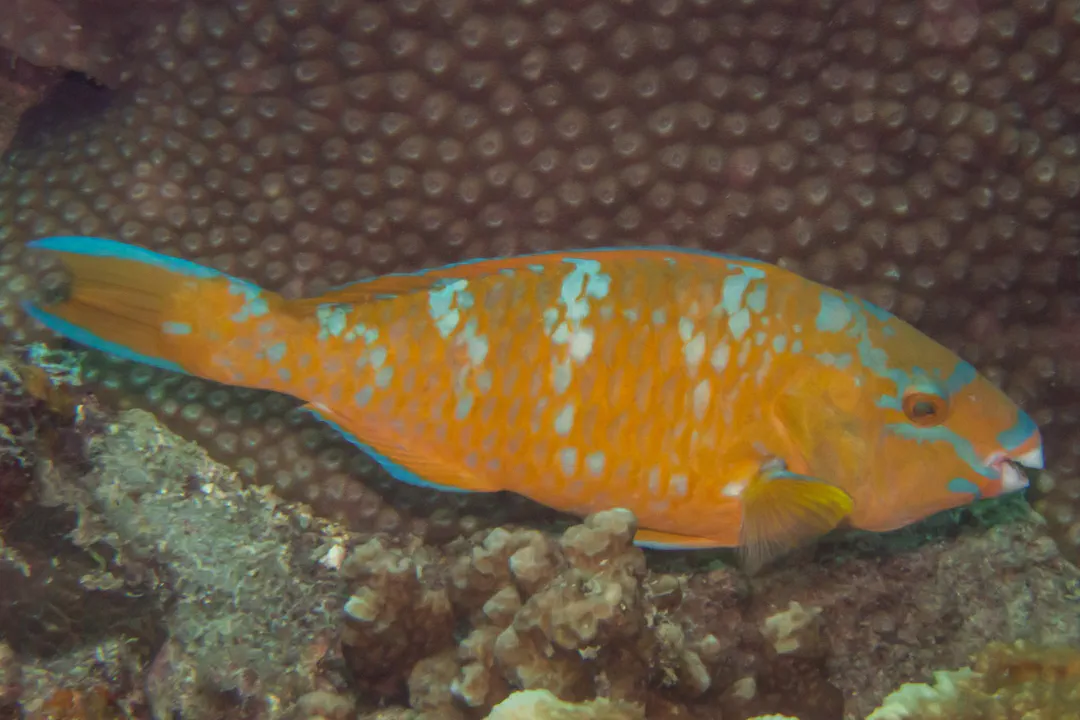
Colors vary between sexes and its stage of growth (phase). Males resemble S. bowersi but differs in that the tan area of S. bowersi does not extend as far back as the anal fin. Initial phase has a distinctive black spot at front of the anal fin and yellowish tail and soft dorsal fin. Dorsal spines (total): 9; Dorsal soft rays (total): 10; Anal spines: 3; Anal soft rays: 9.
In addition, the following features of color pattern are diagnostic: initial phase and female is whitish blue. Caudal fin is yellow. Terminal-male phase complexly colored in blue-green, pink, and yellow with greenish blue saddle extending from postorbital region to 4th dorsal spine and slanting anteroventrally to just behind pectoral fin base. Head is with pink stripes on snout that divides to form a branch through upper eye, continuing a short distance beyond, and a branch through lower eye, extending onto opercle.
Indo-Pacific: Moluccas in Indonesia, Philippines, Ryukyus in Japan and Palau.
Inhabits coastal and outer reef areas rich in coral growth with this rare species being found at depths between 30 – 100 feet (10 – 30 m) where it feeds mainly on algae.
© Lesley ClementsAll rights reserved 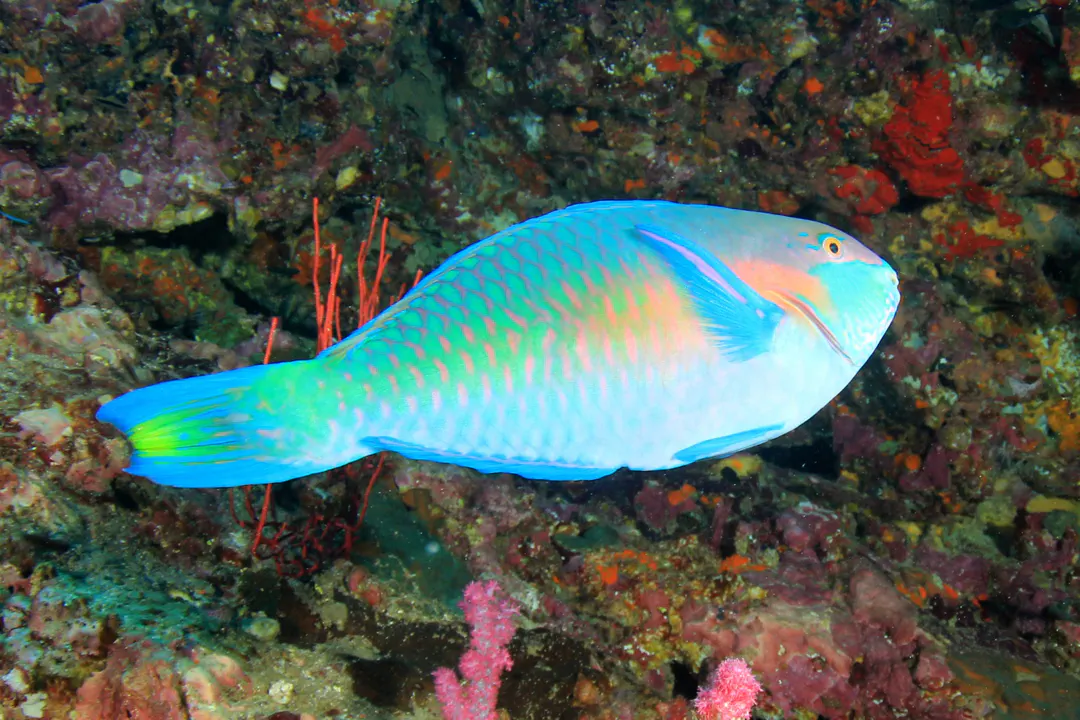 © seabook.appAll rights reserved
  © portioidCC BY 4.0 · iNaturalist
 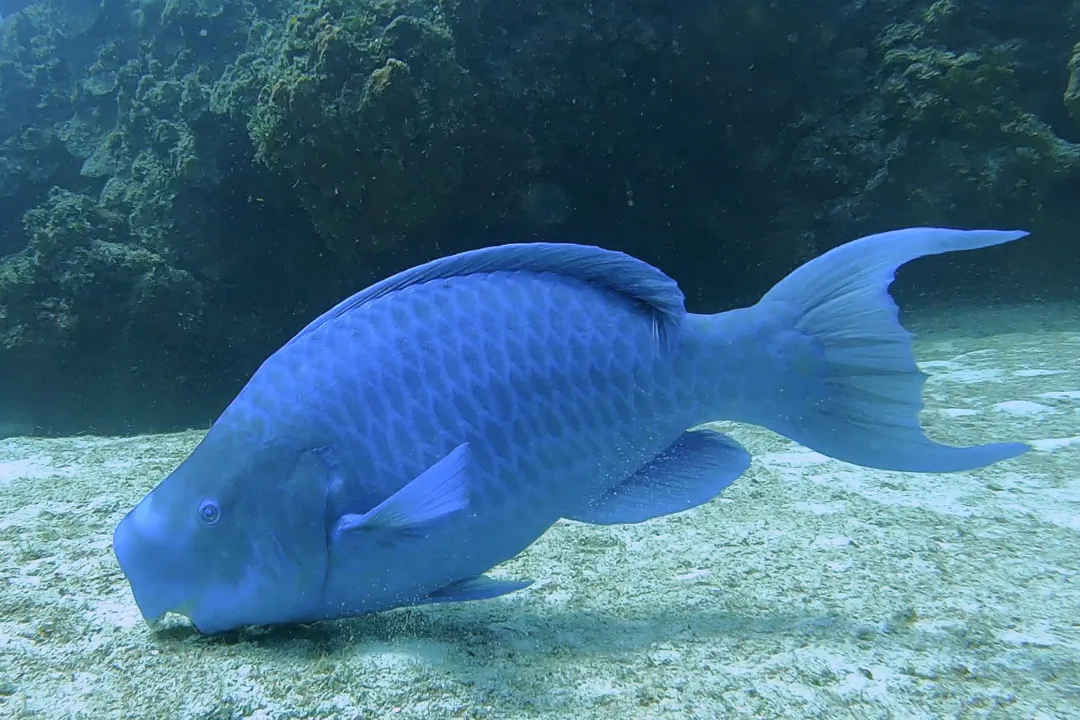 © Dan SchofieldCC BY 4.0 · iNaturalist
 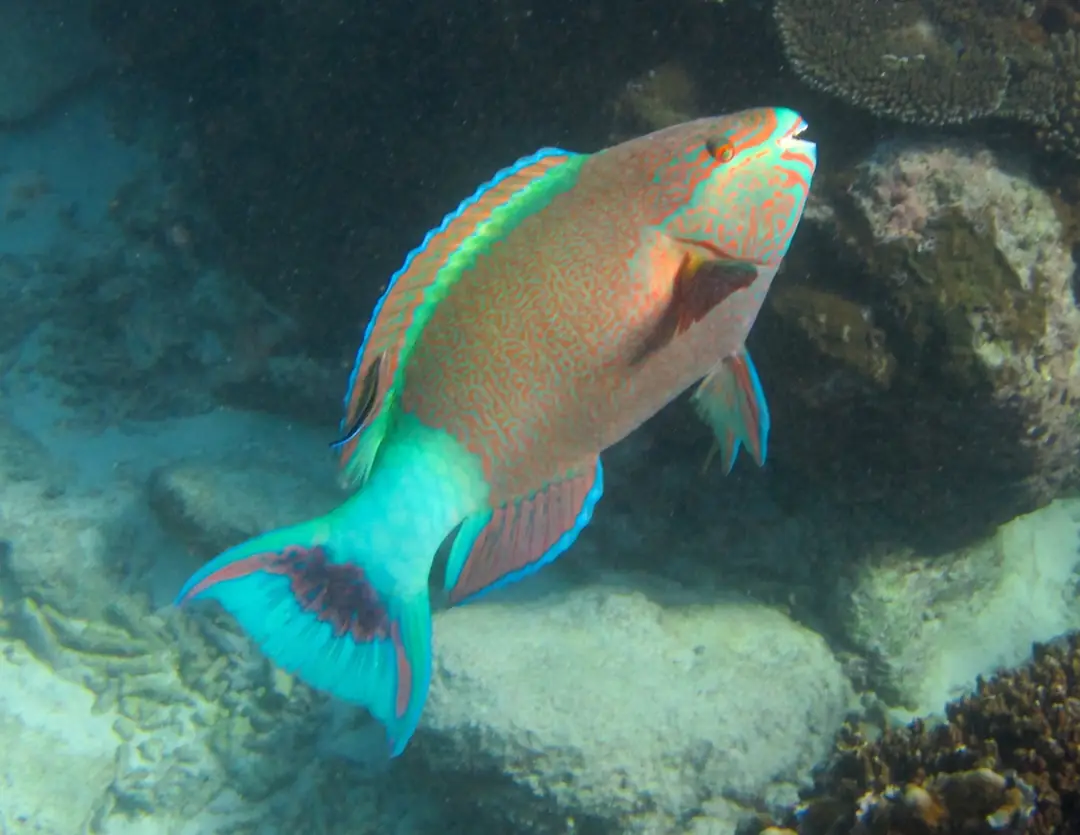 © Geoff ShuetrimCC BY 4.0
 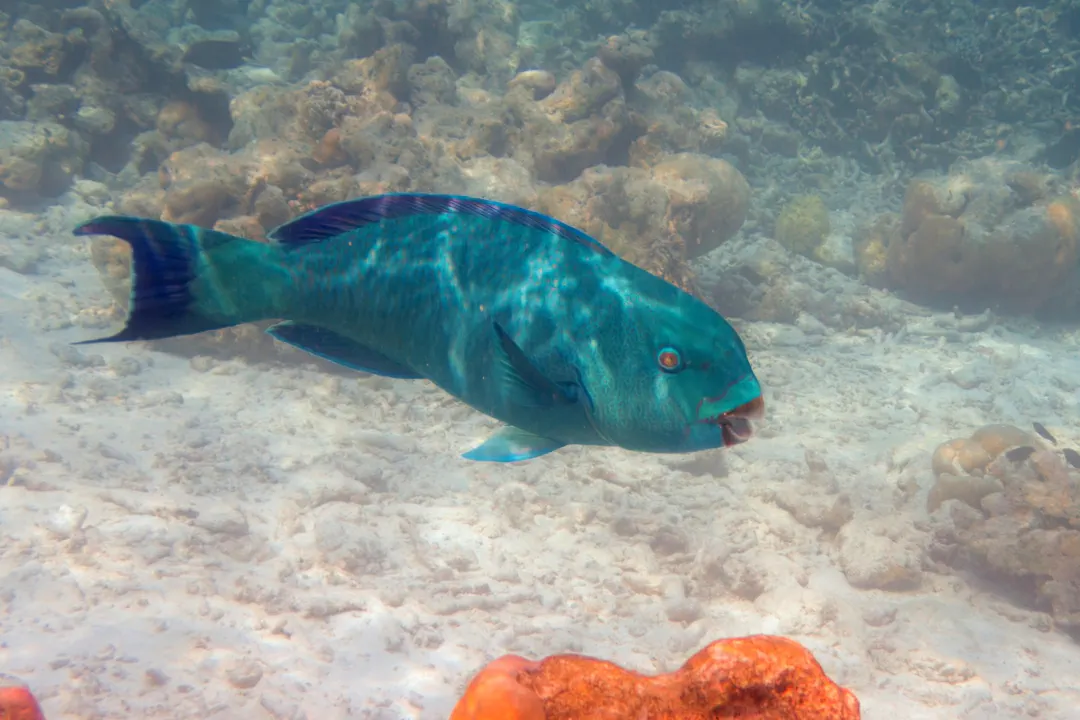 © Darren ObbardCC BY 4.0 · iNaturalist
 East-Indies Parrotfish (male) has no known danger to humans. However, always observe marine life responsibly.
East-Indies Parrotfish (male) can be found at depths of up to 30 meters.
Download Seabook free for iOS and Android.