 © Bernard PictonCC BY 4.0 · iNaturalist
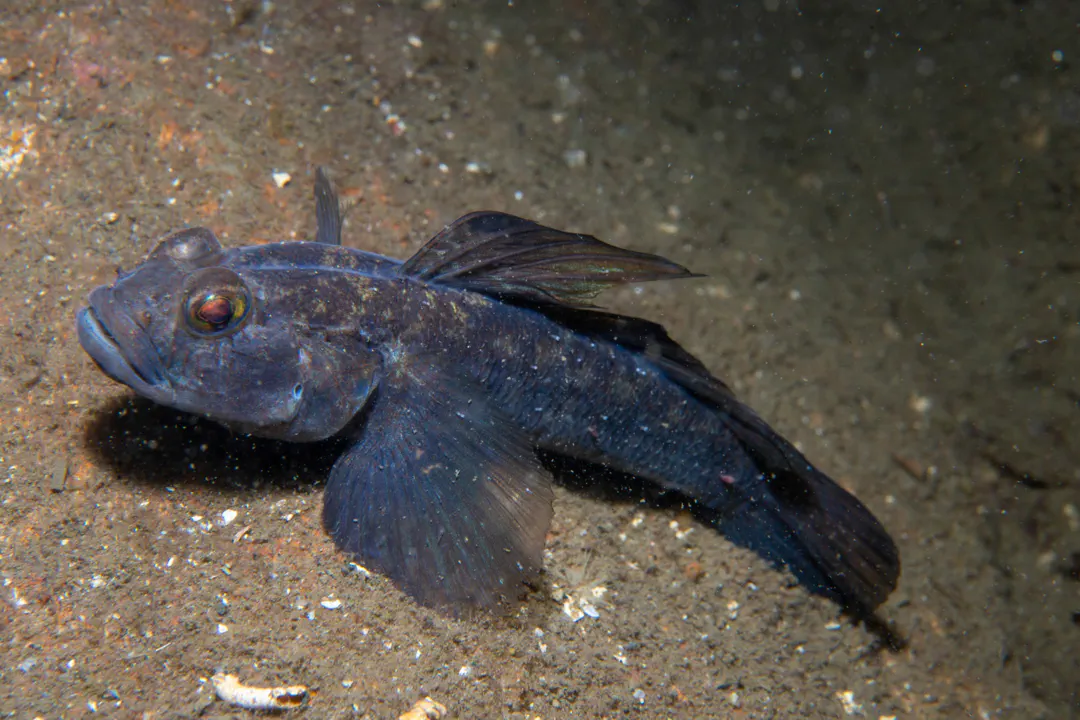
Black Goby
Gobius niger
Trimma benjamini
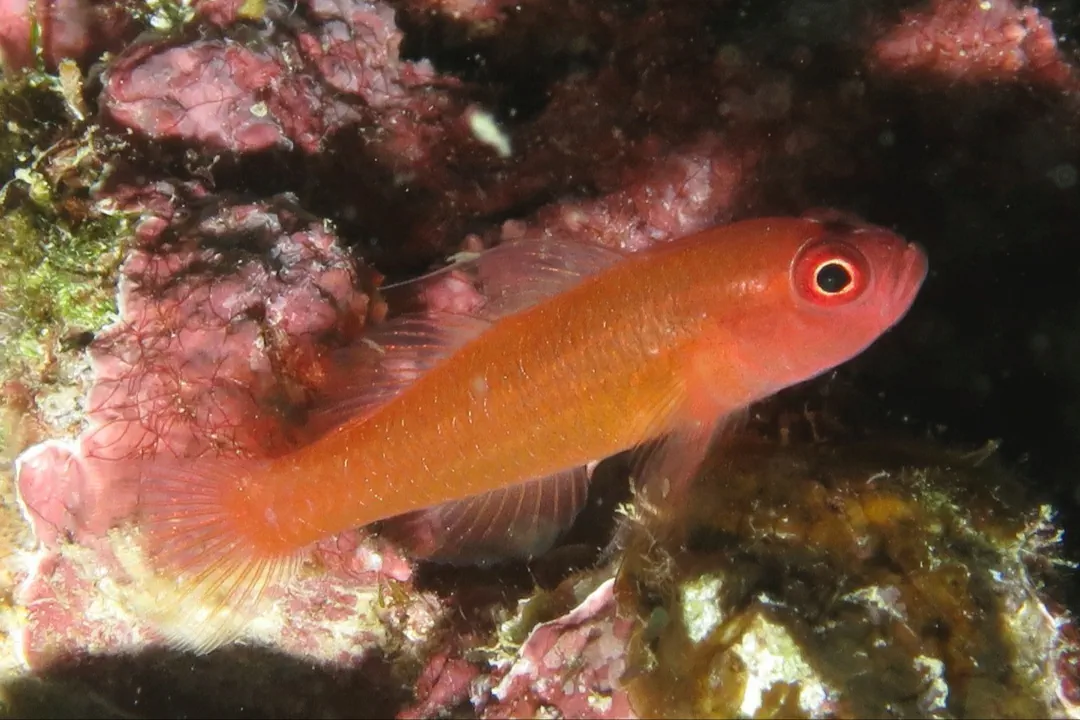
Trimma benjamini is a species of goby native to the western Pacific Ocean.
It has a reddish-orange body with a narrow pale blue to whitish line around the eye, and a red iris with a whitish to yellow inner ring. A thin vertical bluish grey bar from the anteroventral margin of the eye to the middle of the jaws and a second bar extending more-or-less vertically downward onto cheek from about the middle of the eye (often persisting in preserved material as faint grey bars). Distinguished by having the following characters: a deep concave, ‘U’-shaped interorbital trench; the bony interorbital about half pupil-diameter in width; with a slight groove posterodorsal to the eye; without median predorsal scales, sides of nape covered with small scales reaching to or near to the eyes; cheek and operculum without scales; base of pectoral-fin with oval, moderate-sized scales; prepelvic area with 5-6 rows of cycloid scales, isthmus naked anteriorly, with one slightly enlarged scale on the membrane between the bases of the pelvic fins; central 6-13 pectoral rays branched, uppermost and lowermost rays unbranched; fifth pelvic-fin ray branched once dichotomously and about 60-75% length of the fourth; all other rays usually with one sequential branch, basal membrane connecting the two pelvic fins only at the base; second dorsal spine longest, usually filamentous, extending at most to midway along the base of the second dorsal fin in Australian material; D2 usually I,10; A usually I, 9; nape crest fleshy from the first dorsal origin to above the operculum.
Western Pacific: Sulawesi to Tonga; north to Marshall Islands; south to New Caledonia and the Great Barrier Reef.
It inhabits coastal and outer reef slopes. Benthic, occuring singly or in loose groups, and a plankton-feeder; with prolonged pelagic larval duration of 33.9 days (= 24% of maximum lifespan) and linear post-larval growth; daily mortality rate ranging from 2.9% to 6.3%; sex ratio of 1:1.6 male/females).
© Bernard PictonCC BY 4.0 · iNaturalist  © Pierre PericardCC BY 4.0 · iNaturalist
  © IzuzukiCC BY 4.0
 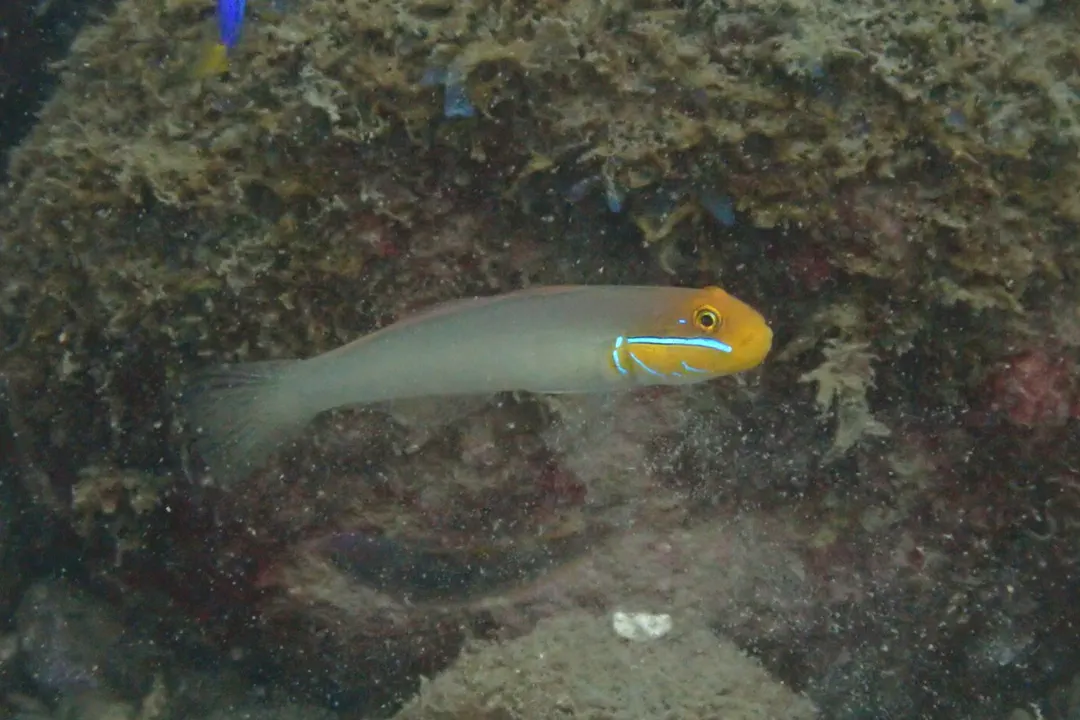 © 呂一起(Lyu yi-chi)CC BY 4.0 · iNaturalist
 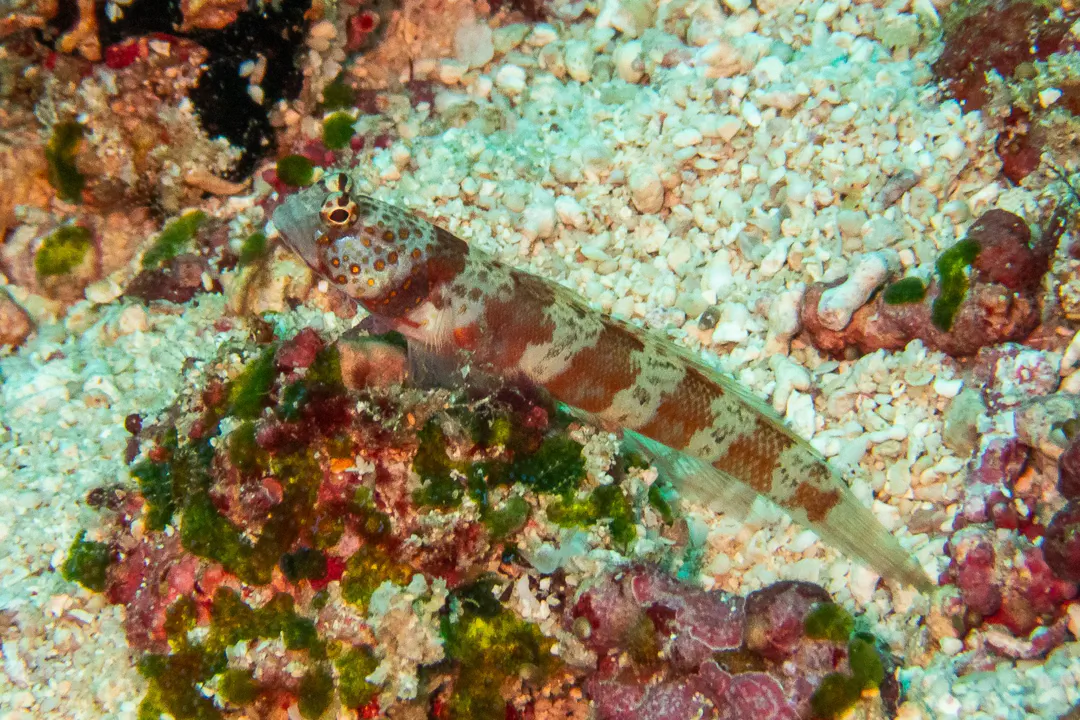 © Piotr LukasikCC BY 4.0 · iNaturalist
 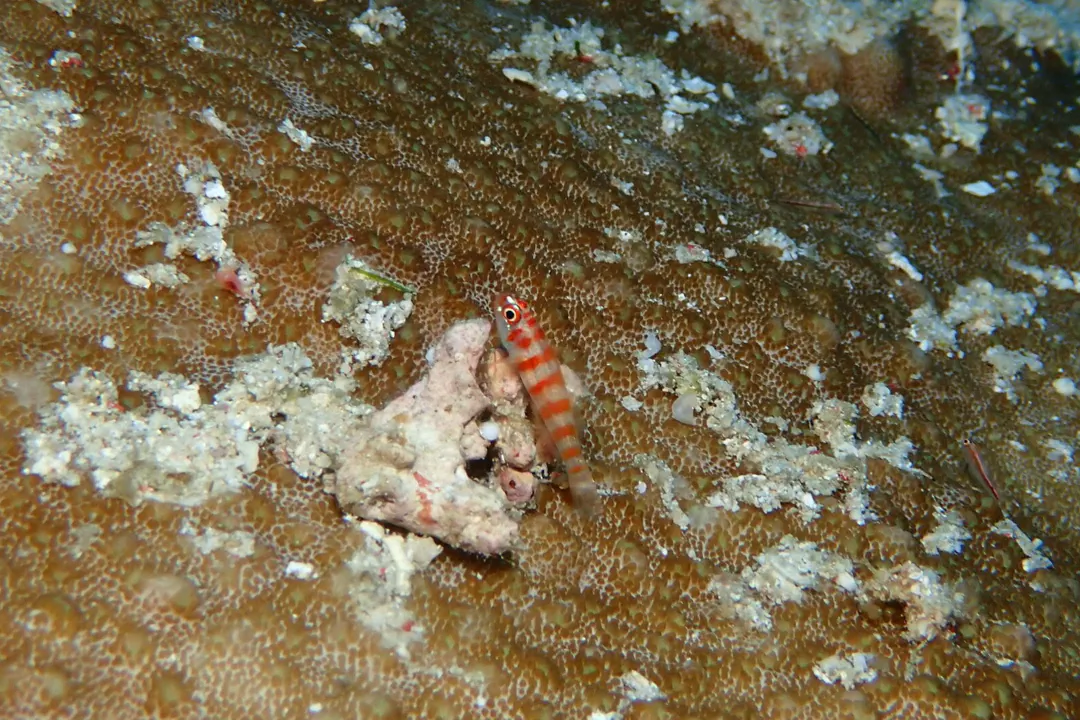 © 呂一起(Lyu yi-chi)CC BY 4.0 · iNaturalist
 Ringeye Pygmygoby has no known danger to humans. However, always observe marine life responsibly.
Ringeye Pygmygoby can be found at depths of up to 90 meters.
Download Seabook free for iOS and Android.