 © Debra BakerCC BY 4.0 · iNaturalist
Giant Sea Fan
Annella mollis
Muricea californica
The California Golden Gorgonian was first described by Carl Wilhelm Samuel Aurivillius in 1931. The original name published was Muricea californica, with the type locality being Santa Catalina, California. californica is the feminine Latin adjective meaning 'of California,' referring to the species’ type locality. The genus name Muricea was established by J. V. F. Lamouroux in 1821, derived from the Latin murex, meaning a spiny shell or pointed object. The 2016 revision treats Muricea californica as a valid species and lists no species-level synonyms or transfer to another genus. The species is placed in the Muricea plantaginea species group according to the 2016 revision. Historically, the genus Muricea has included names such as Eumuricea and Muricea (Eumuricea), which are now treated as unaccepted junior subjective synonyms. The current higher classification of the species is Animalia, Cnidaria, Anthozoa, Octocorallia, Malacalcyonacea, Plexauridae, Muricea.
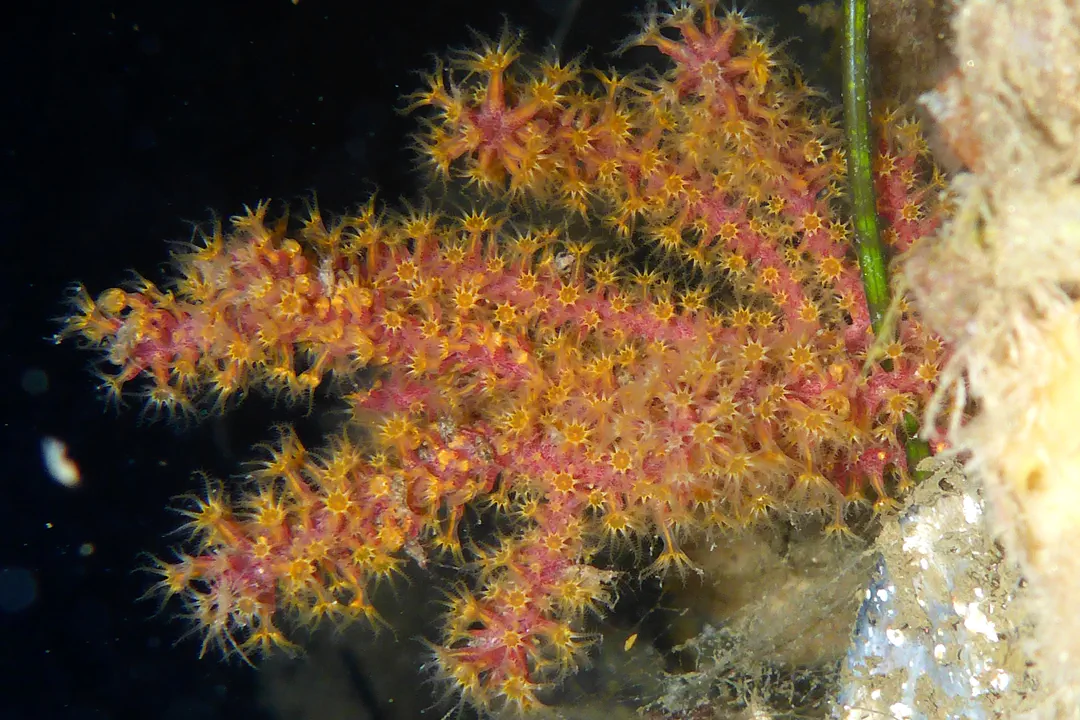
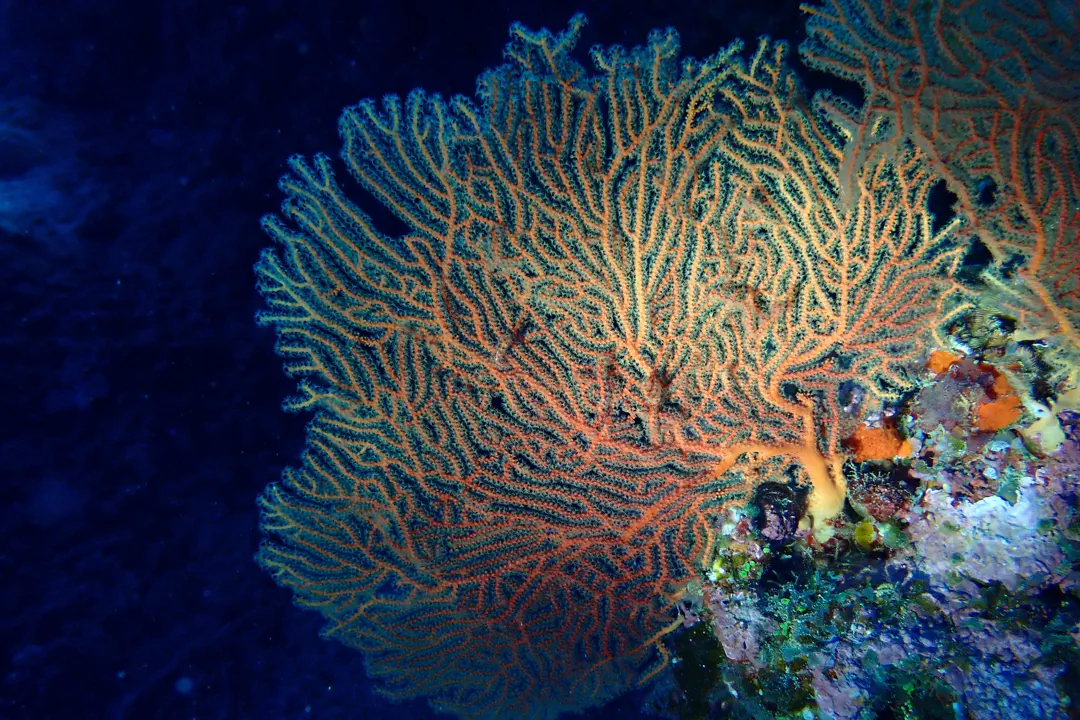
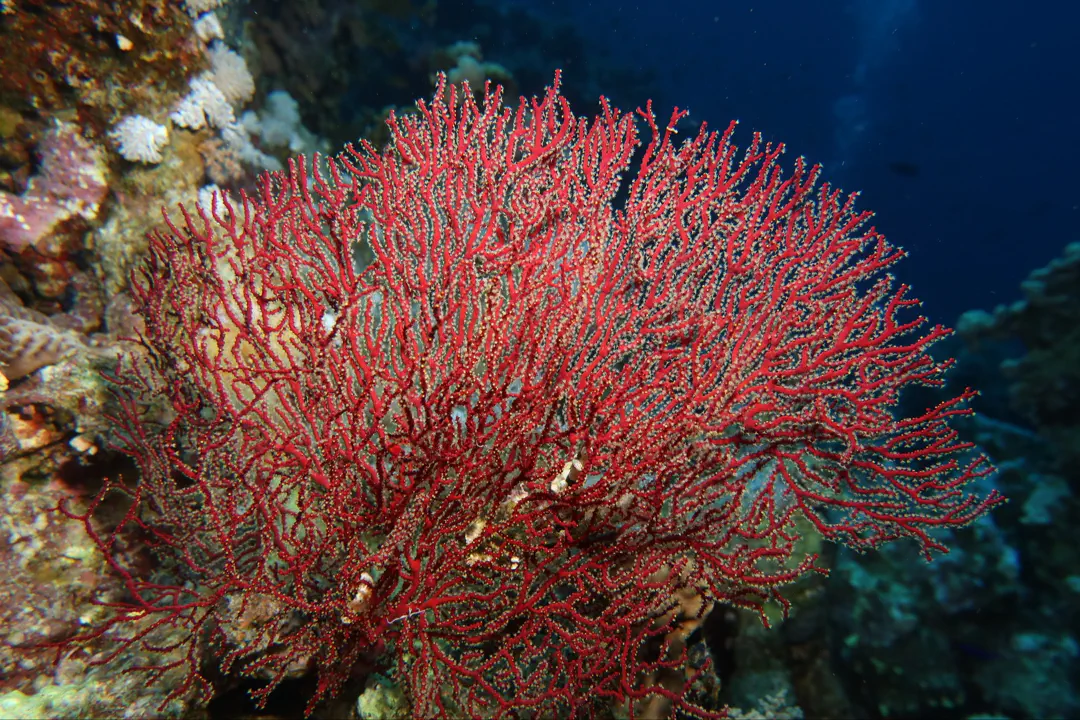
The California Golden Gorgonian has thick branches that are typically reddish-brown, brown, golden-brown, or purplish, with extended polyps that range from nearly white through yellow to orange, commonly producing a golden appearance. Contrasting yellow or golden polyps on brown branches are a key identifying feature of the species, which generally has a uniform colour along its branches. It is a large, robust, bushy or arborescent gorgonian with thick, irregularly and laterally branched branches, reaching roughly 1 m in height. The branches of the California Golden Gorgonian are flexible and sway in current, and the colony is attached to hard substrate, distinguishing it from stony corals. The species can be distinguished from the brown gorgonian, Muricea fruticosa, by its conspicuous yellow/golden polyps and more uniform branch colour. Compared to flat or fan-shaped Muricea species, the California Golden Gorgonian is generally bushier and has thicker branches. Confident species identification may require examining branchlet and calyx structure or skeletal sclerites, as colour alone can be unreliable due to variations with lighting, depth, and polyp expansion.
The California Golden Gorgonian lives in shallow subtidal rocky reefs, kelp forests, and rocky walls, primarily occurring subtidally but can be found near the lowest intertidal zone. It attaches to firm, hard surfaces, particularly granite, shale reefs, pilings, and shells, often growing upside down in caves or on vertical surfaces. The species is reported from a depth range of approximately 1–30 m, with most records occurring at depths of 8–15 m. Geographically, the California Golden Gorgonian is found in the eastern Pacific, from southern California to Santa María, Baja California, Mexico, and has also been reported near Isla Tiburón and Kino Bay in the Gulf of California.
The California Golden Gorgonian is a sessile, colonial octocoral, and evidence specifically addressing its behaviour is limited. The polyps are suspension feeders and can produce mucus throughout the day, with mucus production generally greater during daylight, although this does not establish a complete day-night activity rhythm. Colonies consist of many connected polyps and are sessile, with no evidence found for coordinated social behaviour, territoriality, or interactions among separate colonies. Reproduction includes asexual growth by budding or clonal expansion and sexual spawning, with eggs and sperm released into the water, leading to larvae that later settle and develop into polyps. The precise spawning season and timing for the California Golden Gorgonian were not established by the sources reviewed. No authoritative species-specific evidence was found describing a behavioural response to divers, but physical contact can damage its branches or living polyps, so divers should maintain buoyancy and avoid touching or disturbing colonies.
The California Golden Gorgonian is a suspension- or filter-feeder, consuming waterborne plankton, larvae, eggs, and other very small organisms. Feeding occurs through numerous individual polyps that extend small, pinnate tentacles into the water to trap suspended particles and prey, which are then transferred to the mouth. The colony's branching fan is positioned to intercept moving water, increasing contact with drifting food. The species has been reported with algal symbionts in its polyps, although the extent of its nutritional dependence on photosynthesis versus captured prey is not established.
No documented directed fishery, harvest fishery, or recognized fishery value was found for the California Golden Gorgonian. Gorgonians in the genus Muricea are considered delicate in captivity, which limits their suitability for aquaria. No authoritative source identifies the California Golden Gorgonian as edible or as a human food, and it should not be collected or consumed. No documented significant human-health hazard specific to the California Golden Gorgonian was found, although contact with living tissue may cause irritation. The California Golden Gorgonian has not been formally evaluated by the IUCN or another authoritative global assessment, but it is described as locally common and widely distributed. Main human-related concerns for the California Golden Gorgonian include coastal pollution, sedimentation, nutrient enrichment, and algal or cyanobacterial overgrowth, which may impair feeding or damage colonies.
© Debra BakerCC BY 4.0 · iNaturalist 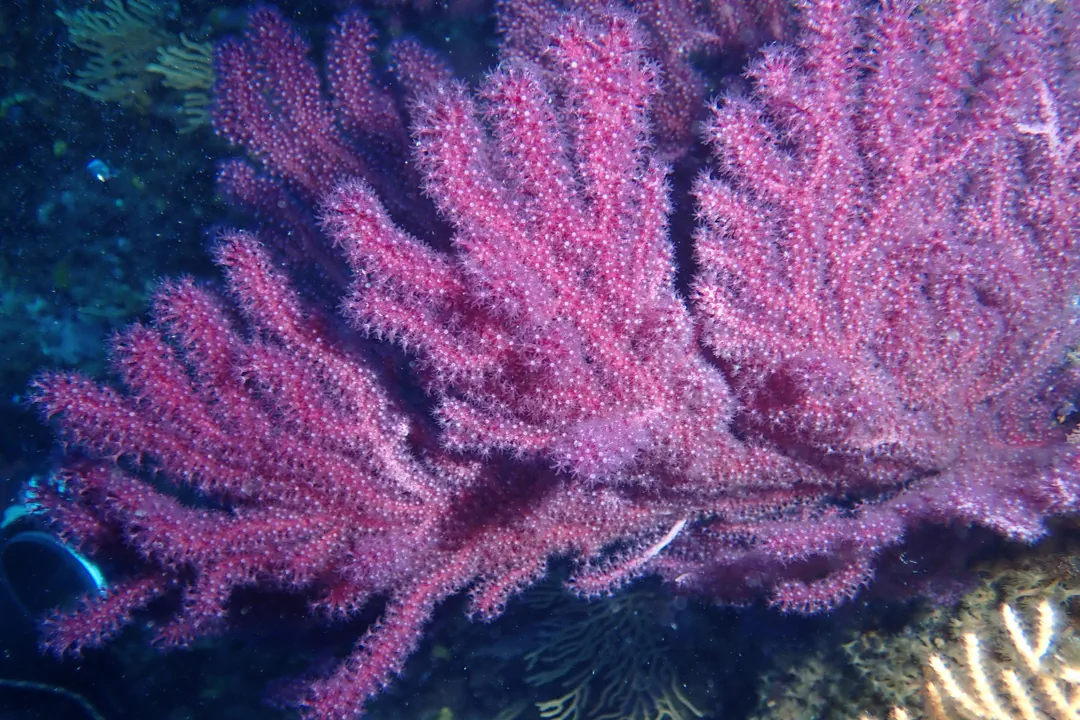 © Julien RenoultCC BY 4.0 · iNaturalist
  © Julien RenoultCC BY 4.0 · iNaturalist
 California Golden Gorgonian has no known danger to humans. However, always observe marine life responsibly.
California Golden Gorgonian can be found at depths of up to 30 meters.
Download Seabook free for iOS and Android.