 © Roger RittmasterCC BY 4.0 · iNaturalist
Blackstripe Dottyback
Pseudochromis perspicillatus
Labracinus cyclophthalmus
Labracinus cyclophthalmus is a Pseudochromis from the Western Pacific. It occasionally makes its way into the aquarium trade.
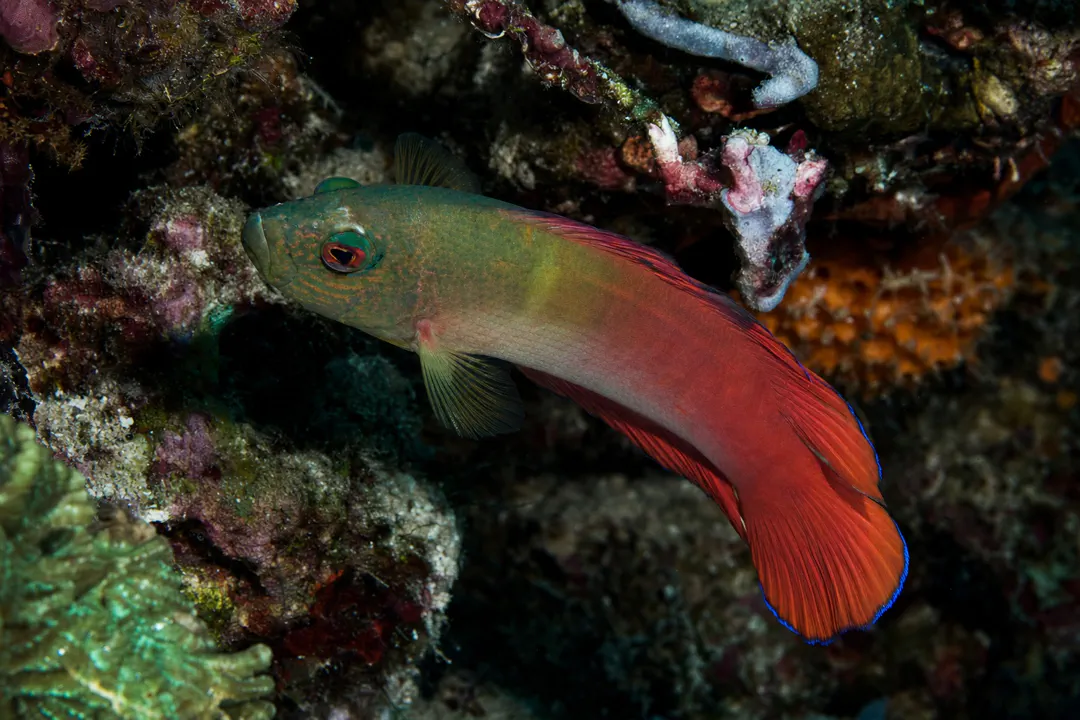
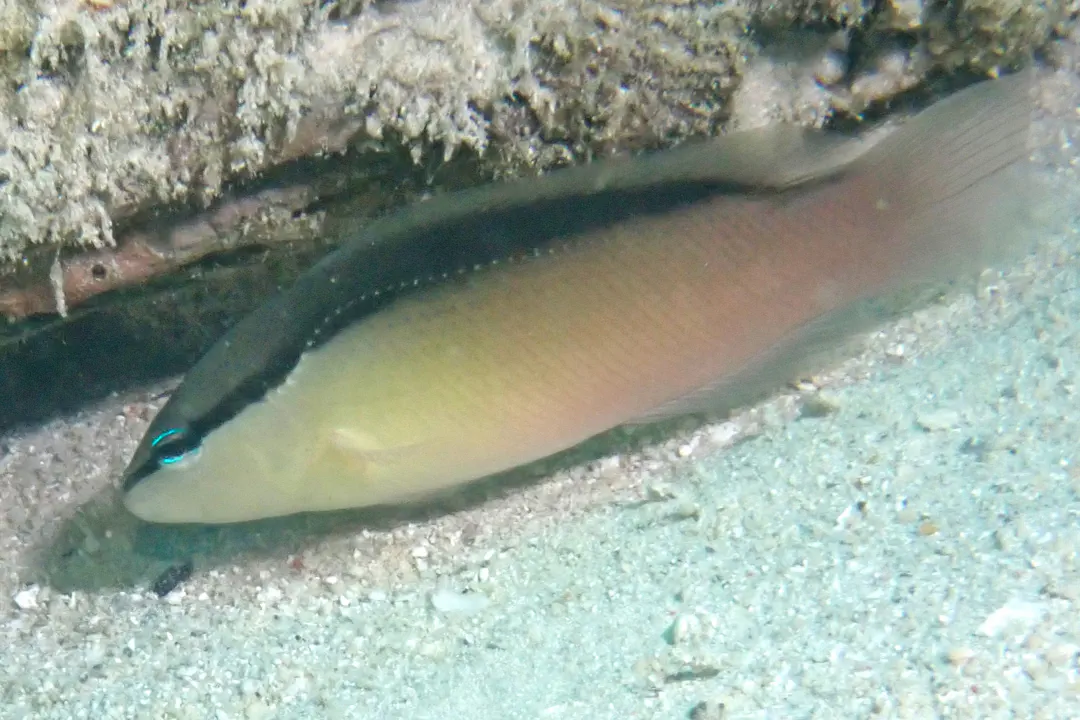
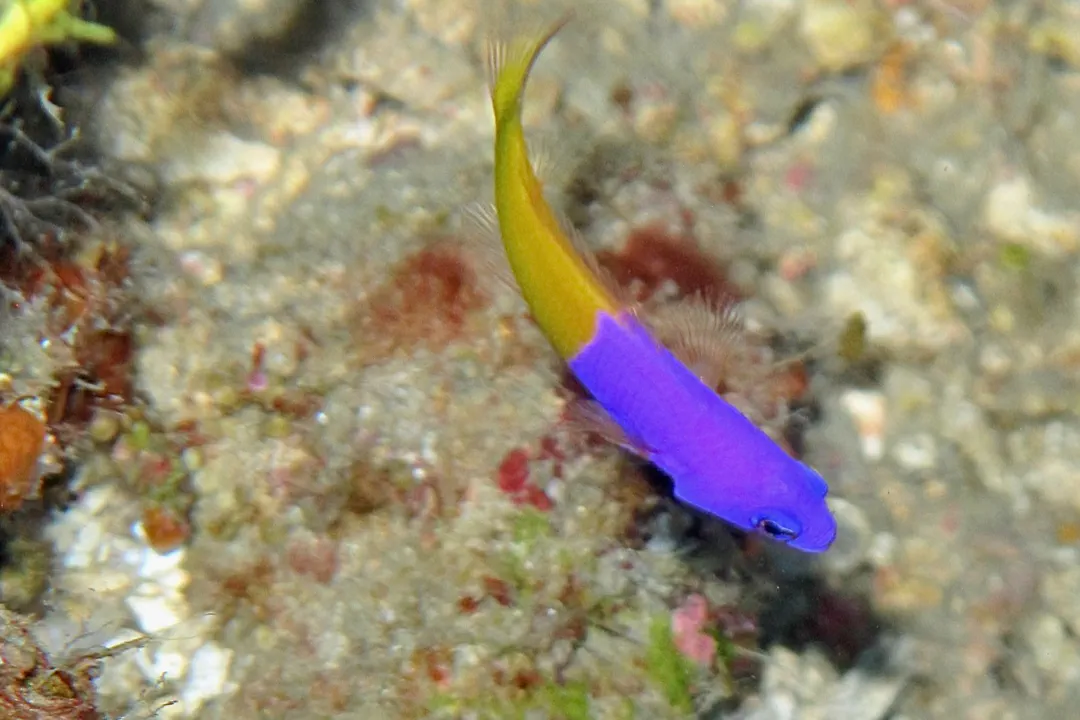
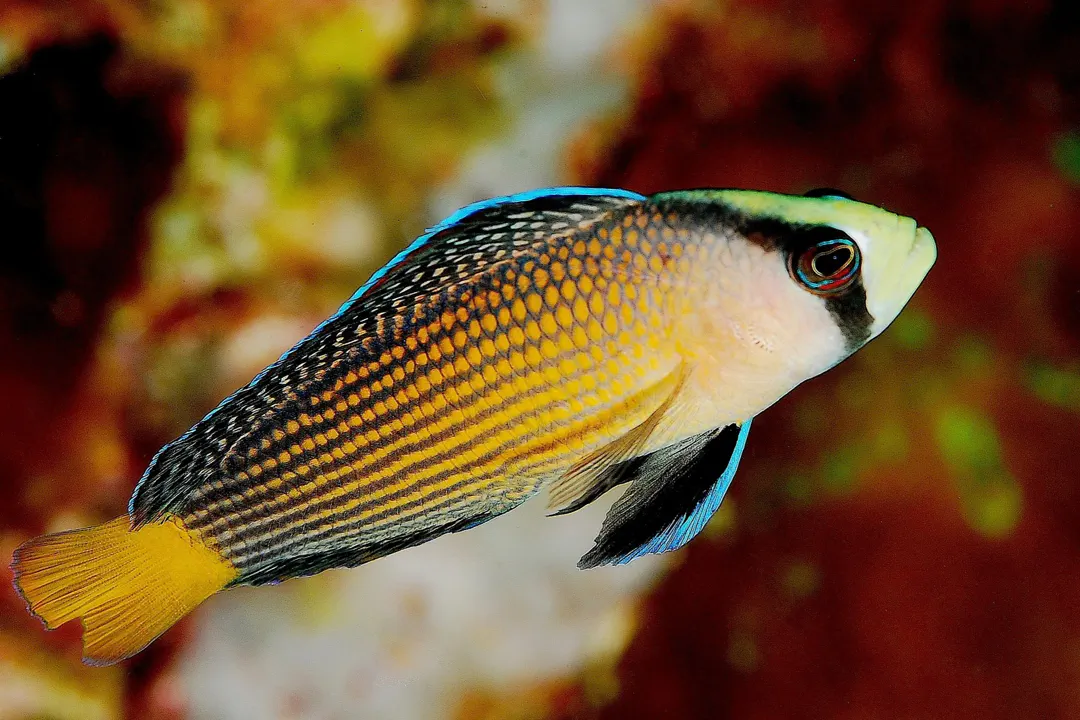
Variable colour and markings, but all with red eye and oblique dark lines underneath (but difficult to see in dark individuals). Head and body varying from pale grey to dark grey, olive, or bright red, usually darker dorsally; cheeks and preorbital area usually with blue to dark grey oblique bars; scales of dorsoanterior part of body each with a bluish to black spot. There are dark spots sometimes coalescing to form stripes along dorsal-fin base or along alternate scale rows on posterior part of body; upper part of body sometimes with a series of white to bright yellow, short, oblique bars; dorsal fin greyish to dark grey or bright red, usually with outer margin blue to dark grey, and with a series of reddish to black rows of spots anteriorly, which align posteriorly to form stripes. Females often with spots forming comma-shaped markings. Males sometimes with 1 to several large, dark grey to black, horizontally elongate blotches on anterior part of dorsal fin; anal fin brownish or bluish to dark grey or red, usually with 3 to 12 pale stripes and blue to dark grey outer margin. Caudal fin bluish to bright red or black with blue to black margin.
Body moderately deep to deep. Total gill rakers on first gill arch 18 to 22, of which 6 to 9 on upper limb, and 11 to 14 on lower limb. Dorsal fin with II slender spines and 25 rays; anal fin with III spines and 14 rays; caudal fin rounded. Lateral line with anterodorsal series of 48 - 62 tubed scales, and a peduncular series of 18 - 22 tubed scales. It grows to a size of 23,5 cm in length.
Western Pacific: widely distributed throughout the Indo-Malayan Archipelago, from southern Japan, south to the Northwest Shelf of Australia, and east to New Ireland, Papua New Guinea.
It is found near shelter of coral or rock of shallow reefs, with moderate surge or currents, in spread-out groups of mixed sexes. Also in tidal pools, reef flats and reef slopes, often in relatively silty areas at depths ranging to 20 m. It moves about activity through the gutters and passages. It feeds on small fishes. Frequently seen in the aquarium fish trade, and has been bred in captivity.
© Roger RittmasterCC BY 4.0 · iNaturalist  © Rickard ZerpeCC BY 4.0 · iNaturalist
  Jean-Paul BoerekampsCC0 · iNaturalist
  © Bernard DUPONTCC BY 4.0 · iNaturalist
  © Jenny (JennyHuang) from TaipeiCC BY 4.0 · iNaturalist
 Firetail Dottyback has no known danger to humans. However, always observe marine life responsibly.
Firetail Dottyback can be found at depths of up to 20 meters.
Download Seabook free for iOS and Android.