 © 呂一起(Lyu yi-chi)CC BY 4.0 · iNaturalist
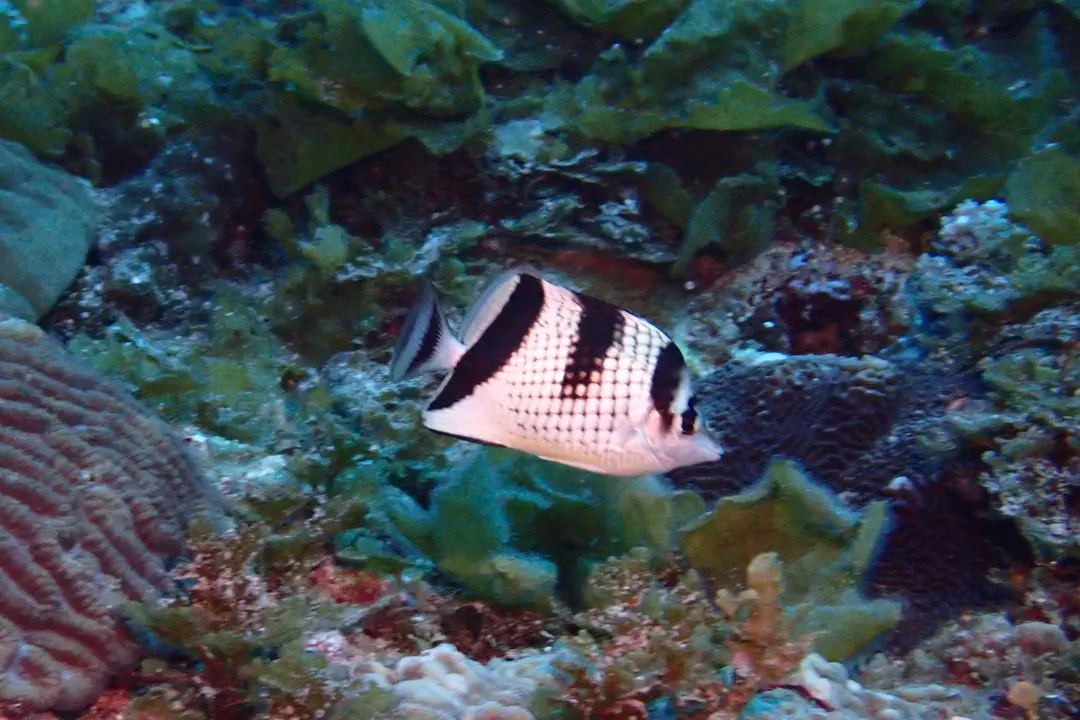
Asian Butterflyfish
Chaetodon argentatus
Chaetodon ulietensis
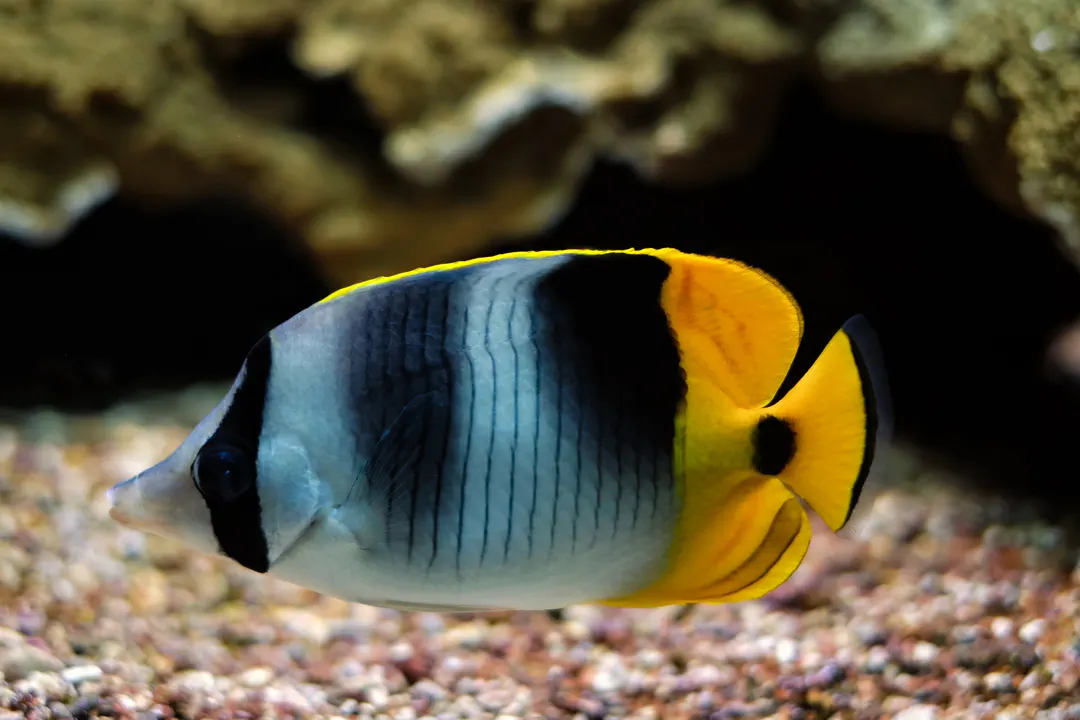
Chaetodon ulietensis is a species of butterflyfish (family Chaetodontidae).
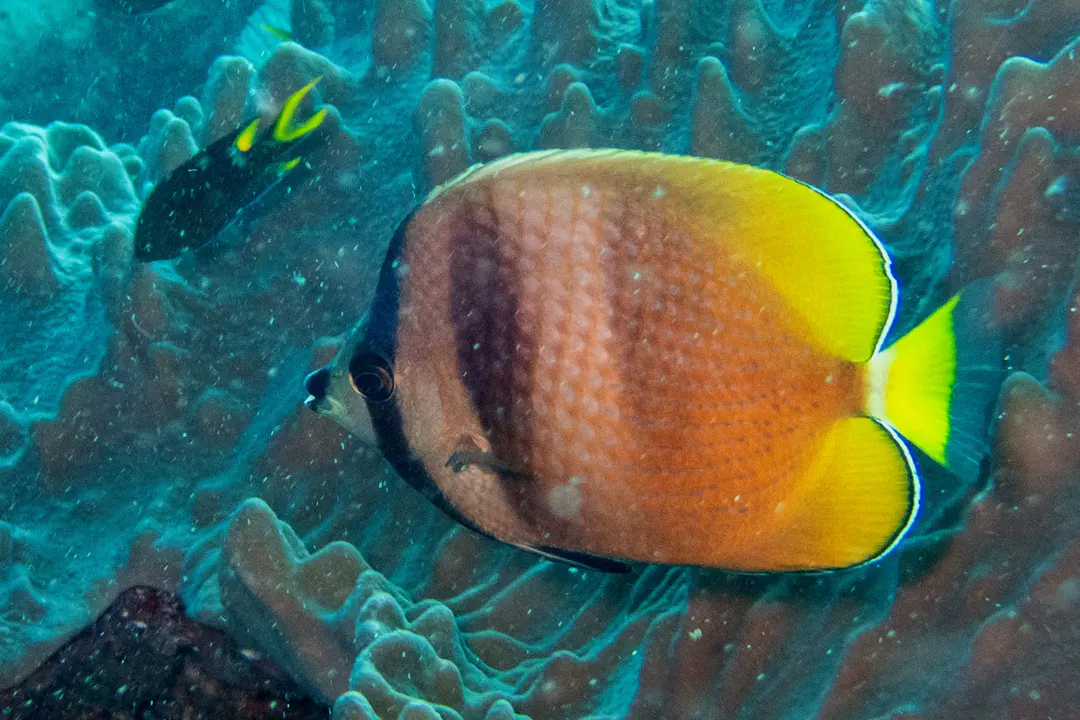
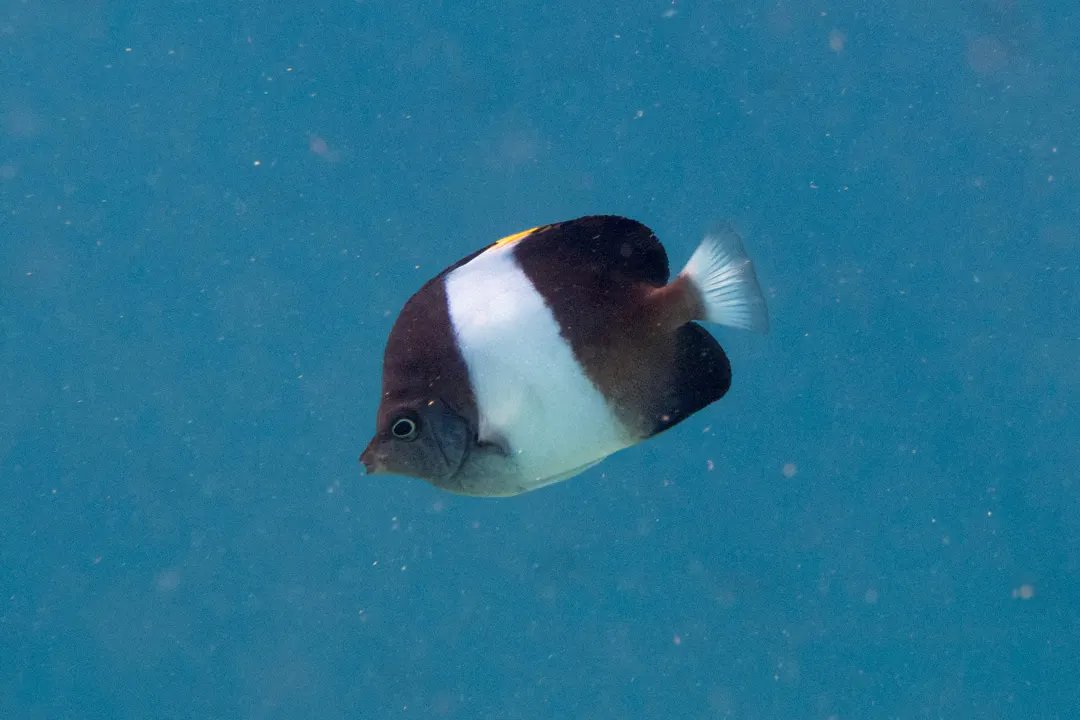
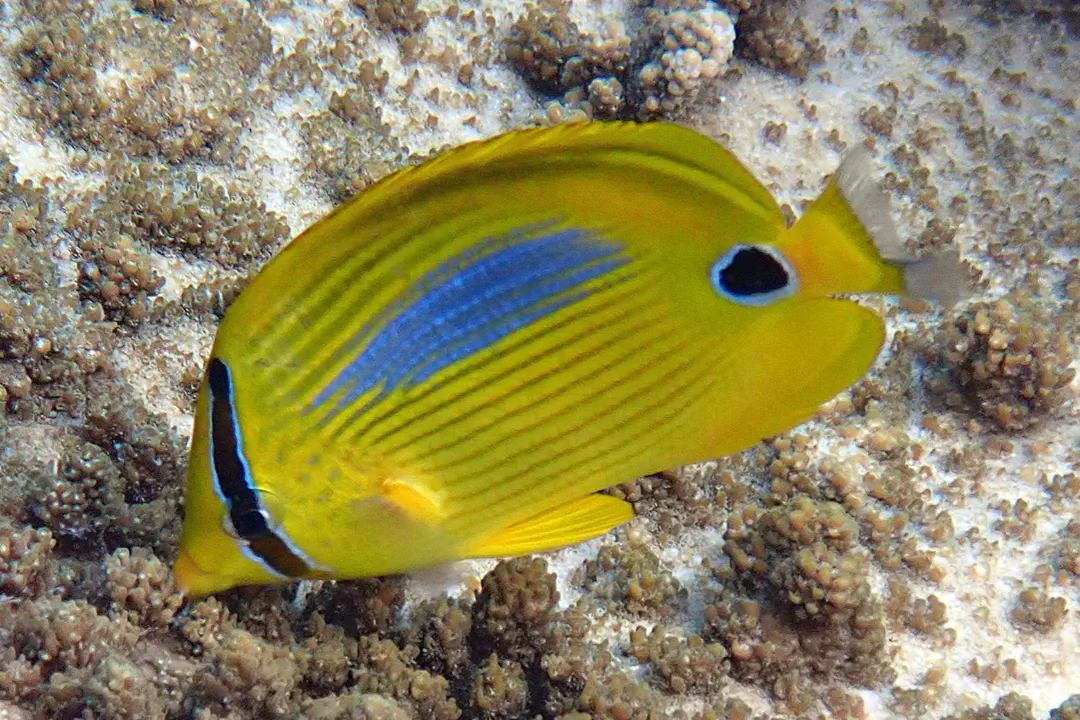
These fish can reach a size of 15 cm. They are white with vertical thin black lines down the body and two dark saddles on the fore and hind back, which softly grade into the background color bellywards gradient. Immediately after the hind quarter saddle, the body and tail is bright yellow with a black spot on the caudal peduncle. The dorsal fin has a streak of yellow from the crown of the head to the tail. Like most of its relatives this species displays a black eye band like a mask. As in most butterflyfish, the Pacific double-saddle butterflyfish is prone to blanching at night and when startled.
It flourishes in coral-rich environments in the central Indo-Pacific region. Their range extends from the Cocos-Keeling Islands to the Tuamotu Islands, and north to Japan.
C. ulietensis is often found singly or in pairs on coral-rich reef systems, foraging on sessile invertebrates and algae. It is not a territorial species that freely grazes throughout a wide range within reefs, lagoons and harbors, and every now and then large groups congregate at rich feeding spots. It is rarely ever observed in a deep reef environment or the open sea; juveniles are typically reared in shallow lagoons, estuaries or harbors. It is usually found from the surface to 20 m depths, and like shallow channels with high current.
An opportunistic omnivore, diet consists mainly of microscopic algae, other plankton, and small sessile invertebrates. As a measure of defense, they typically wedge themselves in tight crevasses to escape predators.
Although common in the wild, it is rarely imported by the aquarium trade. In aquarist terms, it is considered a hardy Chaetodon and beneficial for the control of nuisance pests. The Pacific Double-saddle Butterflyfish has been observed as a beneficial predator of Aiptasia and Majano sea anemones. Like most Raccoon Butterflyfish (C. lunula), C. ulietensis will eliminate this nuisance within a 2- to 6-week period depending on the anemone population and size of the tank. And unlike most raccoon butterflyfish, this species rarely feeds on ornamental corals. The Pacific Double-saddle Butterflyfish readily accepts most prepared frozen and dry foods, thus it can easily make the transition to aquarium life, unlike the Copperband Butterflyfish (Chelmon rostratus) or other less hardy Chaetodon species.
© 呂一起(Lyu yi-chi)CC BY 4.0 · iNaturalist 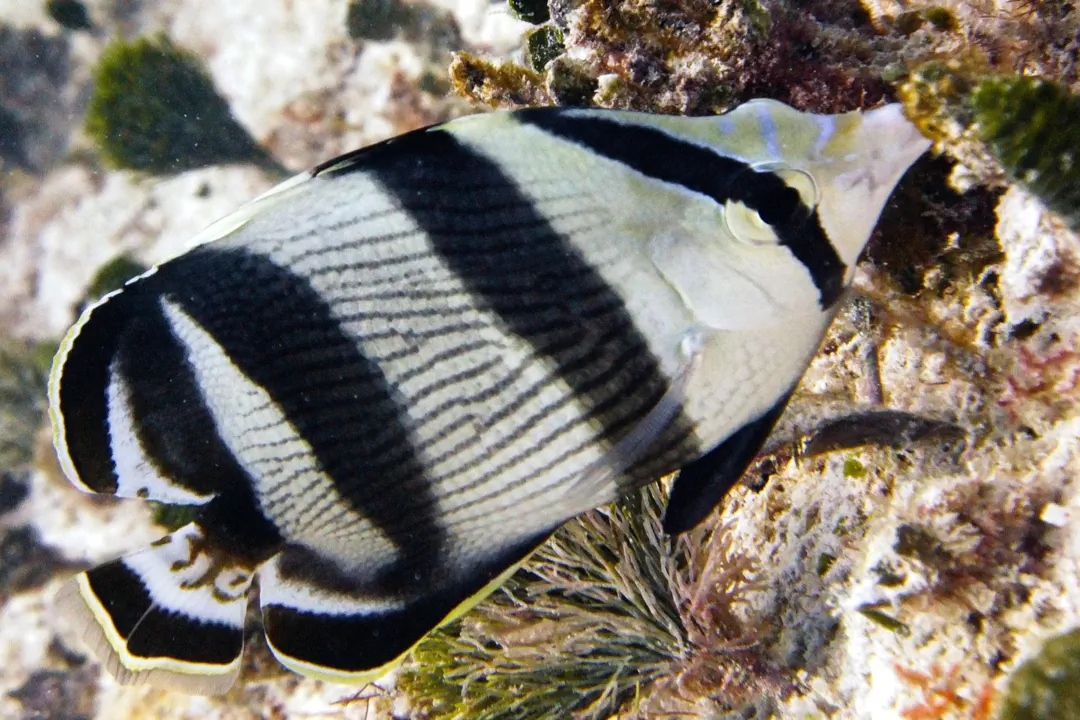 © Matteo CassellaAll rights reserved
  © Ben CostamagnaCC BY 4.0 · iNaturalist
  © Piotr LukasikCC BY 4.0 · iNaturalist
  © Emanuele SantarelliCC BY-SA 4.0 · iNaturalist
  © Susan PriorCC BY 4.0 · iNaturalist
 Pacific Double-saddle Butterflyfish has no known danger to humans. However, always observe marine life responsibly.
Pacific Double-saddle Butterflyfish can be found at depths of up to 40 meters.
Download Seabook free for iOS and Android.