 © 呂一起(Lyu yi-chi)CC BY 4.0 · iNaturalist
Asian Butterflyfish
Chaetodon argentatus
Chaetodon ocellatus
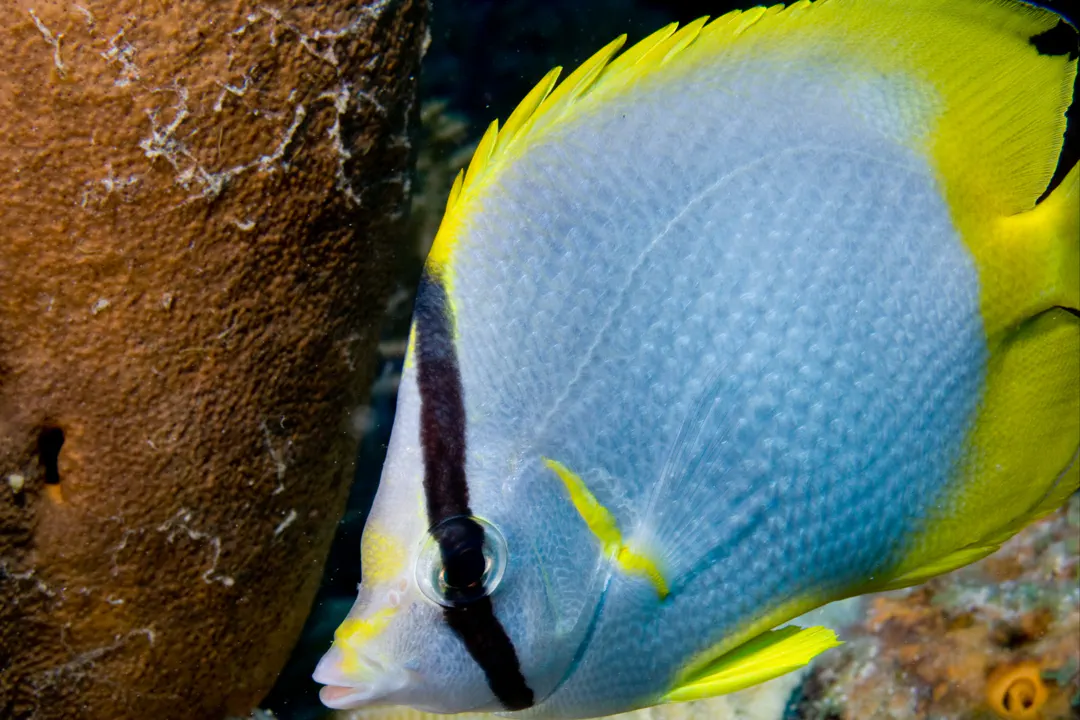
Chaetodon ocellatus is a butterflyfish found in the western Atlantic Ocean, in the Gulf of Mexico and most commonly found in the Caribbean Sea.
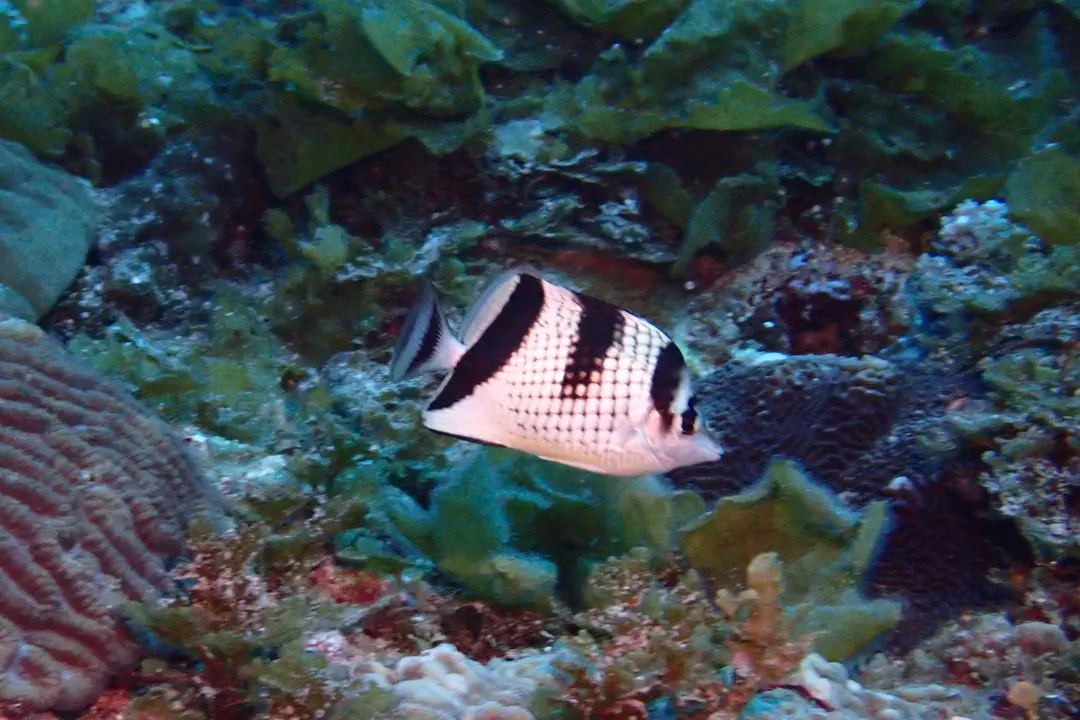
The name is derived from the dark spot on the fish's dorsal fin. This, combined with a vertical, black bar through the eye, is an adaptation that can confuse predators. Body is white with a black bar running across the head through the eye. In juveniles, a second black bar runs from the base of the soft portion of the dorsal fin to the base of the anal fin. The dorsal, caudal and anal fins are either yellow or transparent. A narrow yellow bar from gill opening to pectoral base. The vertical black bar disappears as the fish gets older and other black lines become more prominent.
Western Atlantic: Florida, USA to Brazil. Larvae are sometimes swept northward which accounts for the sighting of juvenile specimens as far north as Massachusetts, USA during summer months. One record (one specimen, 3 cm) from Musquodoboit Harbor, Nova Scotia, Canada.
Inhabit shallow, coral reefs with clear water. Develop dusky bands at night. Oviparous. Form pairs during breeding.
© 呂一起(Lyu yi-chi)CC BY 4.0 · iNaturalist  © Matteo CassellaAll rights reserved
  © Ben CostamagnaCC BY 4.0 · iNaturalist
 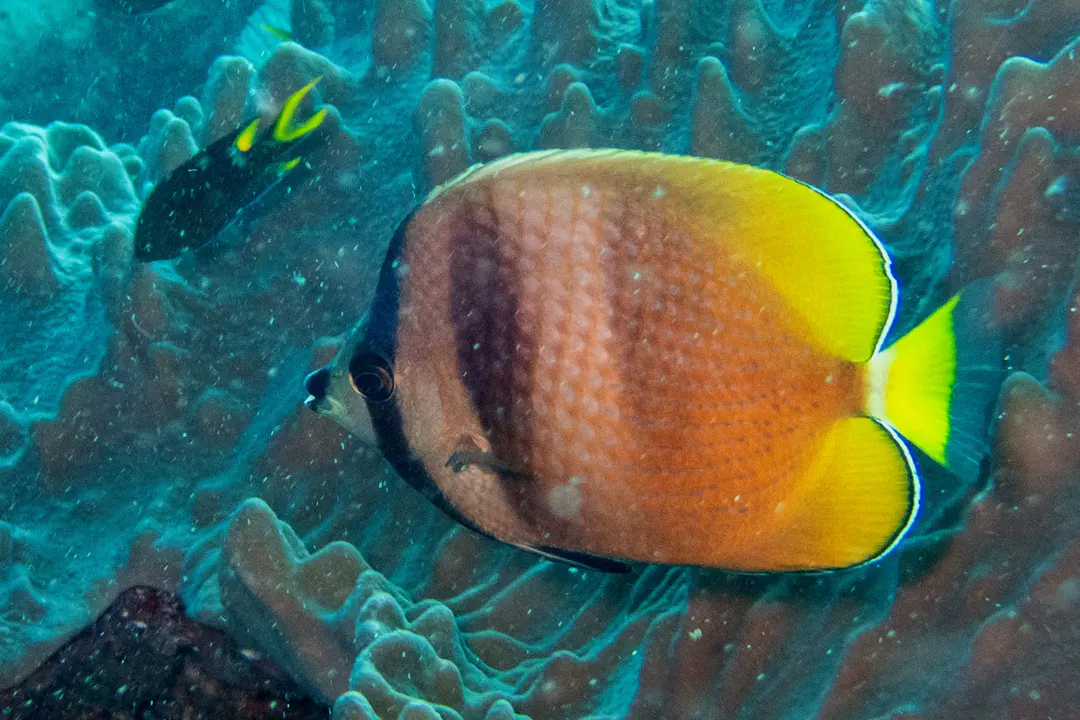 © Piotr LukasikCC BY 4.0 · iNaturalist
 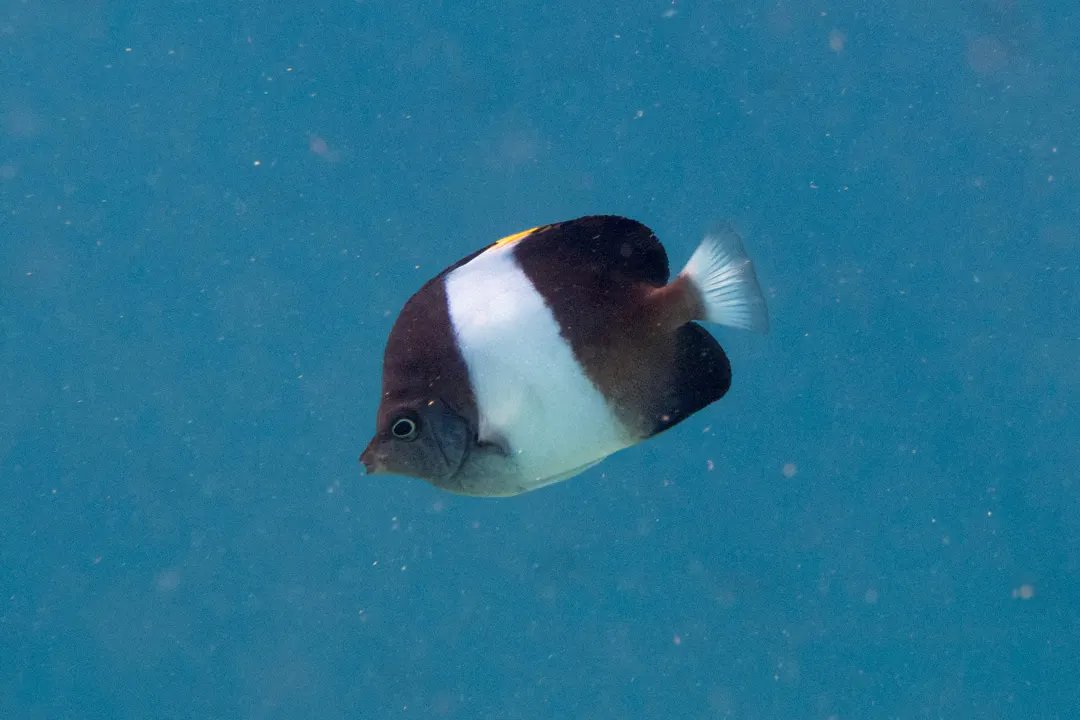 © Emanuele SantarelliCC BY-SA 4.0 · iNaturalist
 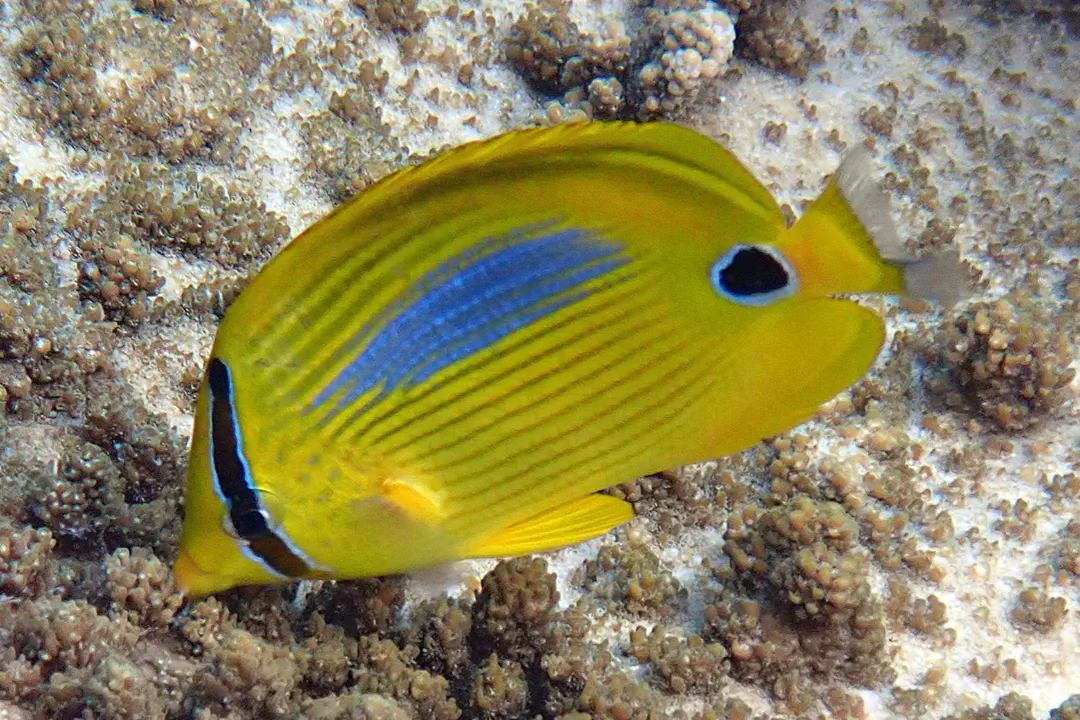 © Susan PriorCC BY 4.0 · iNaturalist
 Spotfin Butterflyfish has no known danger to humans. However, always observe marine life responsibly.
Spotfin Butterflyfish can be found at depths of up to 30 meters.
Download Seabook free for iOS and Android.