 © Bernard PictonCC BY 4.0 · iNaturalist
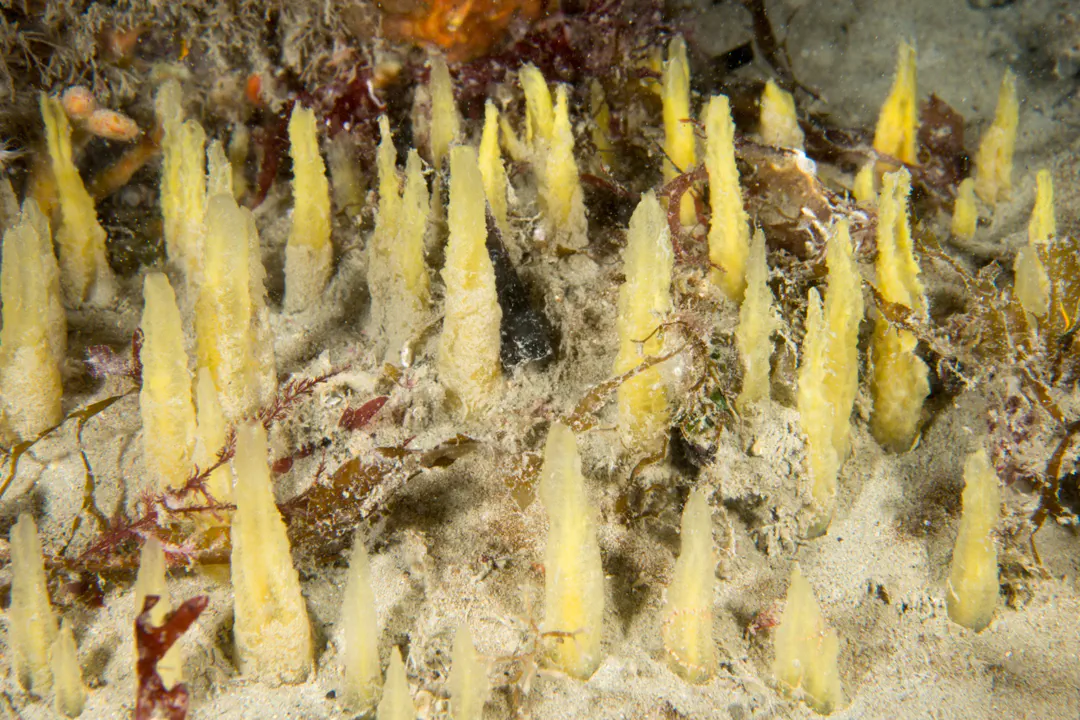
Brush Sponge
Ciocalypta penicillus
Cinachyrella australiensis
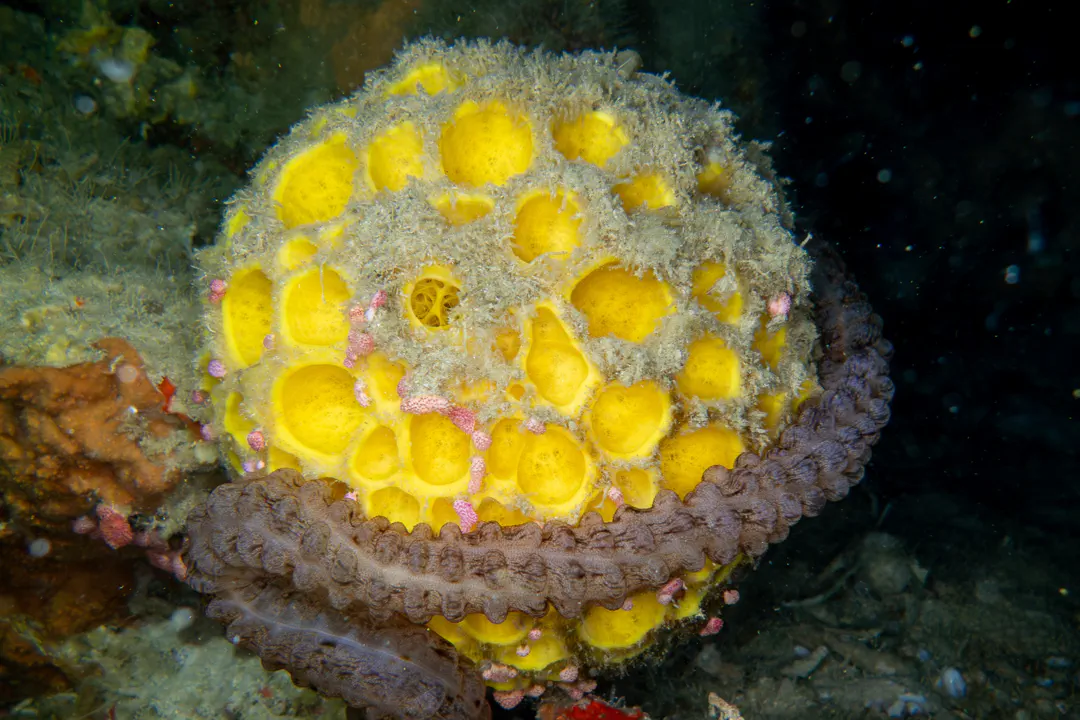
Cinachyrella australiensis is a species of marine sponges from Tetillidae family.
It is a spherical in shape with numerous porocalices resembling the lunar surface and colored various shades of yellow, orange and brown.
Features: 6-8cm in diameter, spherical densely covered with short, fine spines. These are needle-shaped spicules that stick out of the surface.There may be circular pits or indentations on the surface that are bare of spines. These are specialised pore-bearing pits called porocalices. These regularly spaced pits do make them resemble golf balls. Sometimes, broken ones are also seen, showing the yellow internal radiating skeletons. Young ones lack the pits on the surface and often resemble furry balls. Colour usually yellow to oragne, although sediment accumulated on the spines may hide the colour.
Looks similar to the Rambutan sponge (Tethya robusta) which has fewer fine spines sometimes with bulbous tips and anchored to the surface with stringy tissues. Golf ball sponges lack these bulbous tips and stringy anchors.
Indo-West Pacific: Indonesia, Malaysia, Palau and Australia.
It is found in coral reefs, rocky shores, and coastal mangroves, as well as landlocked marine systems called marine lakes.
It is a filter-feeder. Members of the class Demospongiae are hermaphroditic. Life cycle: The zygote develops into parenchymella larva (free-swimming) before settling down on a substrate where it grows into a young sponge.
© Bernard PictonCC BY 4.0 · iNaturalist  © Albert KokCC BY-SA 4.0 · iNaturalist
  © portioidCC BY 4.0
 Golf Ball Sponge has no known danger to humans. However, always observe marine life responsibly.
Golf Ball Sponge can be found at depths of up to 84 meters.
Download Seabook free for iOS and Android.