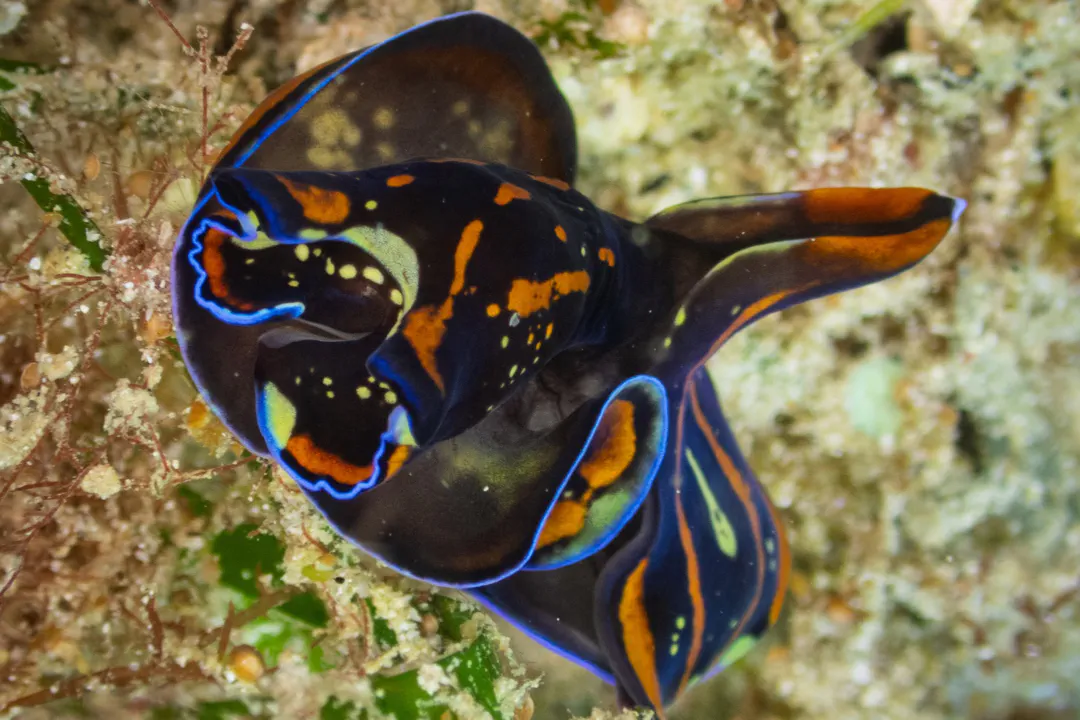
 © Pierre PericardCC BY 4.0 · iNaturalist
Blue-margin Headshield Slug
Philinopsis speciosa
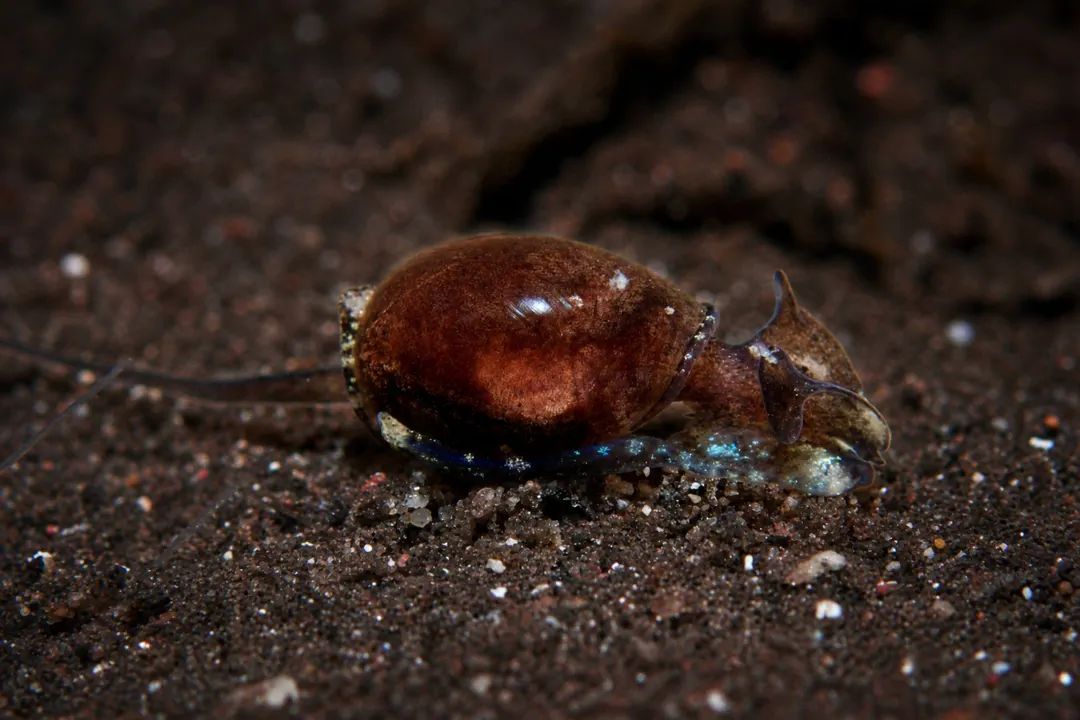
Haminoeid sp
Haminoeidae, commonly known as the haminoeid bubble snail family, is a taxonomic family of sea snails, marine opisthobranch gastropod mollusks in the superfamily Haminoeoidea.
The name of this family has long been controversial, and used to be Atyidae or Atydidae. Another, but incorrect, spelling was Haminaeidae (See (ICZN) 2000. Opinion 1942).
A number of genera have been proposed for this family, but the species are hard to identify (or sometimes impossible to identify) by looking only at the external characteristics. Until the internal anatomy of 'wet' specimens has been fully described, the status of many of the genera listed here is uncertain.
These bubble snails occur in all warm or temperate seas.
These are sand dwellers or they live on muddy bottoms, in bays, estuaries, and close to the shore in tidepools.
These are colorful snails, that can partially take the color of the sea floor.
Their large cephalic shield is rounded at the front, but deeply lobed behind. The mantle protrudes behind the shell. The shell is partially or completely enfolded by lateral parapodial (= fleshy winglike outgrowths) lobes.
Their shell varies in size according to the species, from 3 mm to 30 mm.
The shell is ovoid, thin and translucent. It may be smooth or have spiral grooves (striae). The umbilical apex is sunken or enclosed and no longer visible. Large body whorl with fine spiral striations. Smooth columella. The thin outer lip of the aperture extends beyond the apex of the shell and is thus longer than the body whorl. The aperture narrows posteriorly and is wider anteriorly.
These snails are herbivorous. Their diet consists of various kinds of green algae. They can survive in brackish water.
They are hermophroditic. Their eggs are deposited in round or oval jellylike strings, attached to eelgrass or sand.
Atys naucum and Atys cylindricum are known to show biological fluorescence.
© Pierre PericardCC BY 4.0 · iNaturalist 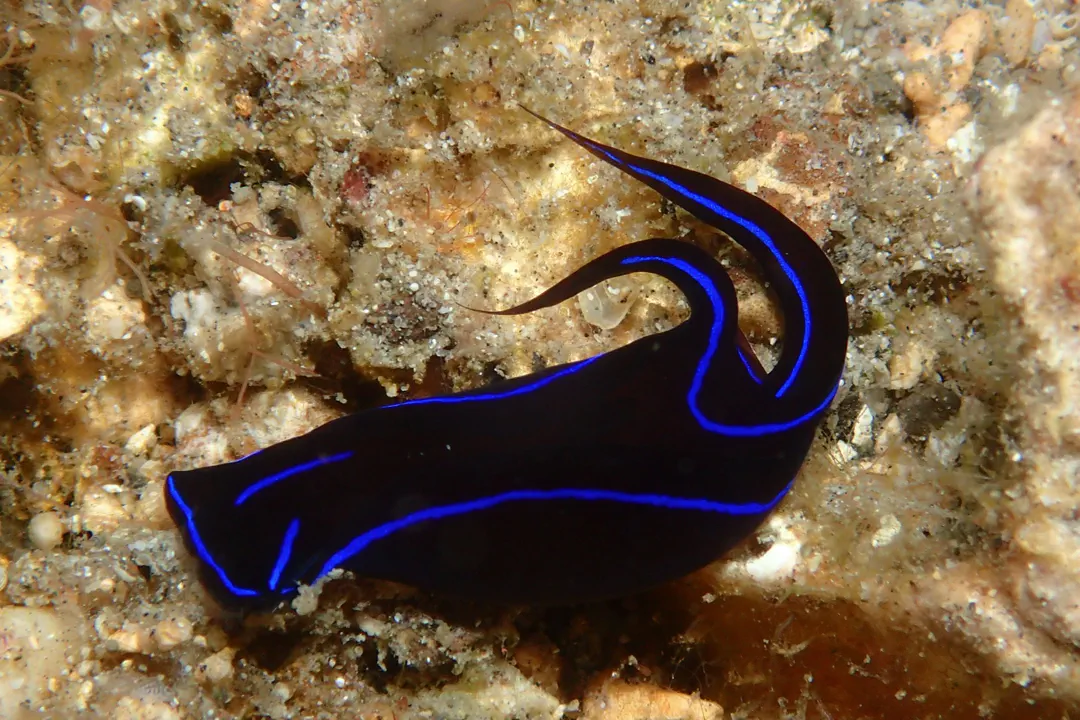 © Dan SchofieldCC BY 4.0 · iNaturalist
 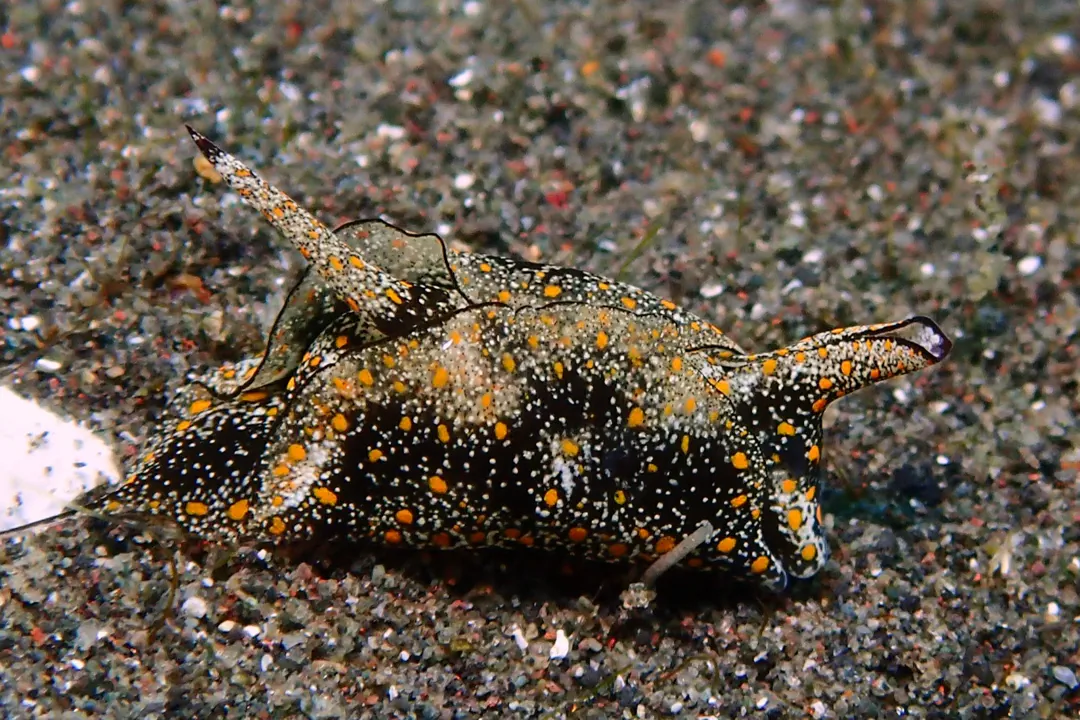 © Dan SchofieldCC BY 4.0 · iNaturalist
 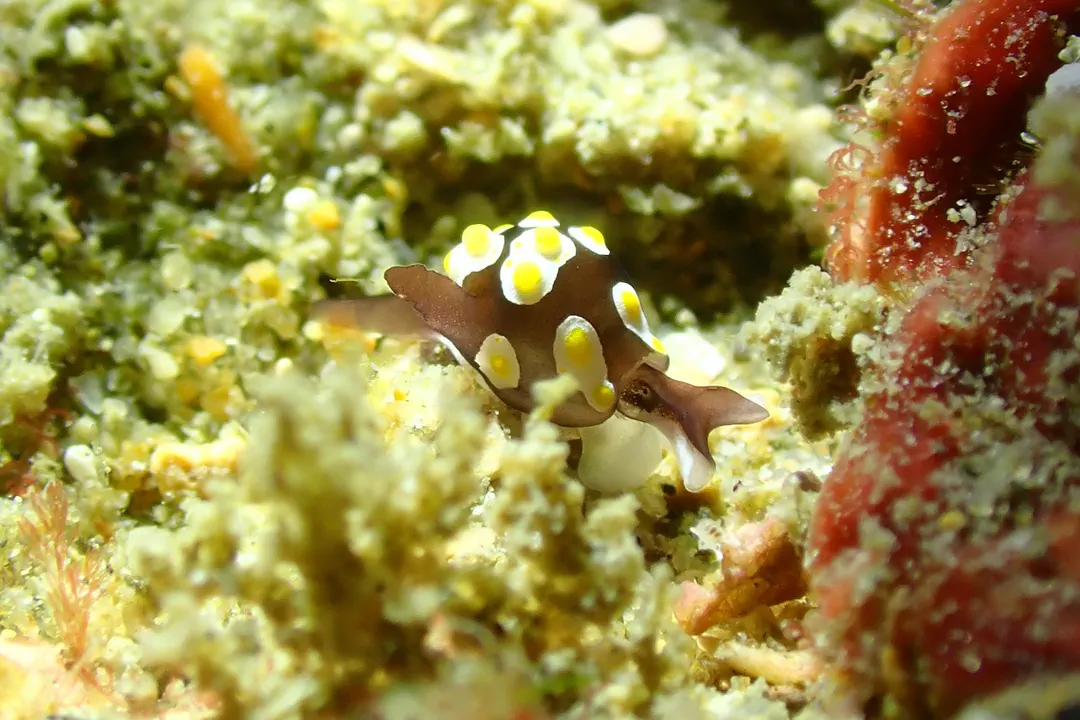 © 呂一起(Lyu yi-chi)CC BY 4.0 · iNaturalist
 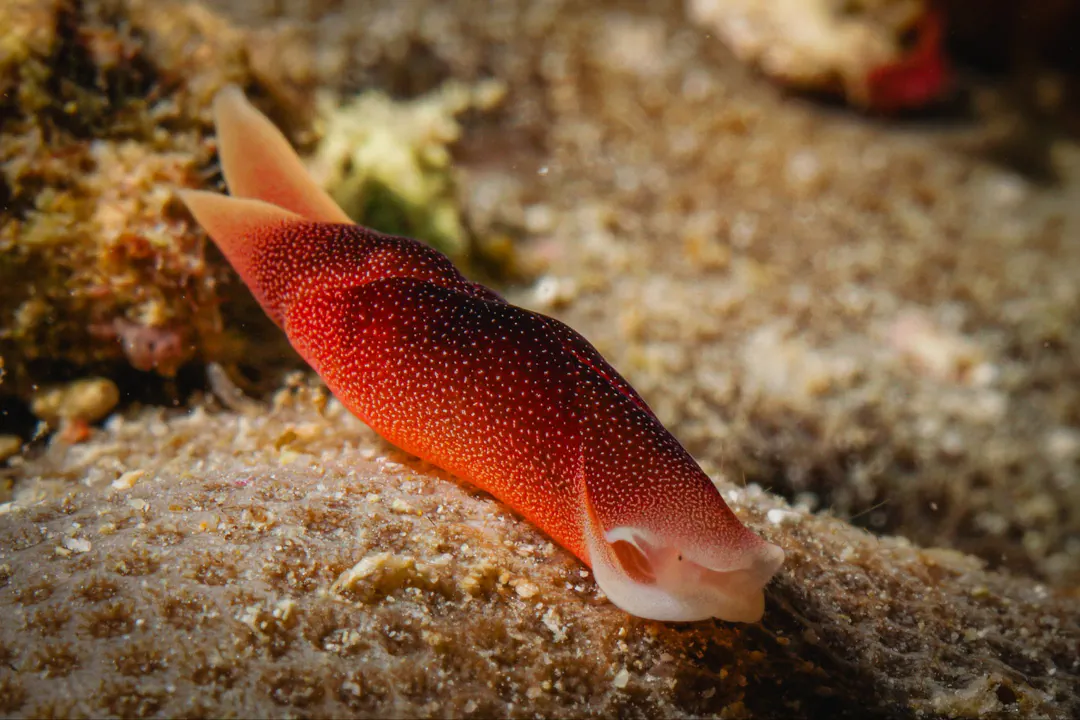 © Stas KuryanAll rights reserved
 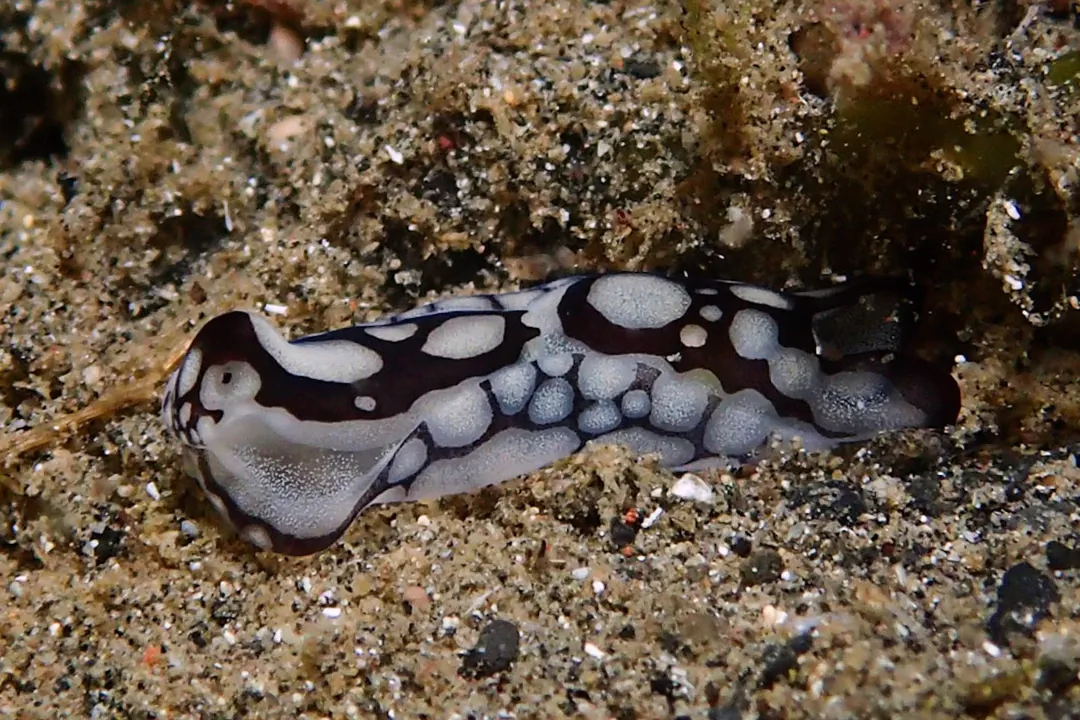 © Dan SchofieldCC BY 4.0 · iNaturalist
 Haminoeid Bubble Snail has no known danger to humans. However, always observe marine life responsibly.
Download Seabook free for iOS and Android.