 © Dan SchofieldCC BY 4.0 · iNaturalist
Blue Velvet Headshield Slug
Chelidonura varians
Philinopsis speciosa
Philinopsis speciosa, the blue-lined philinopsis is a species of sea slug, a shell-less opisthobranch gastropod mollusc in the family Aglajidae. It is native to the Indo-Pacific region.
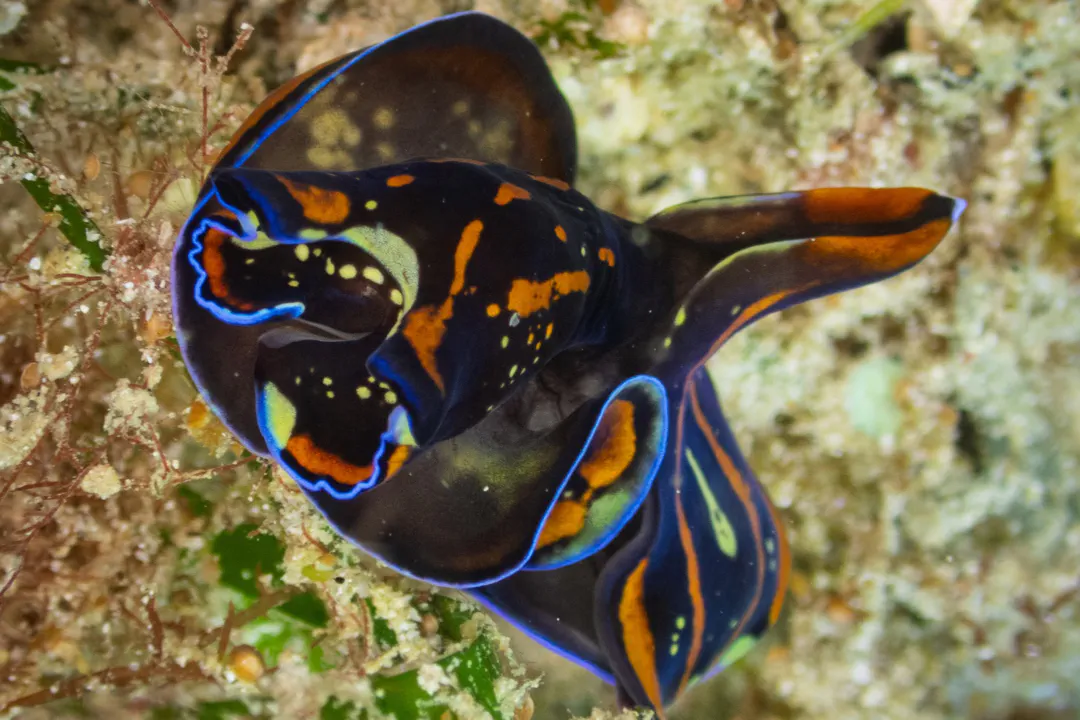
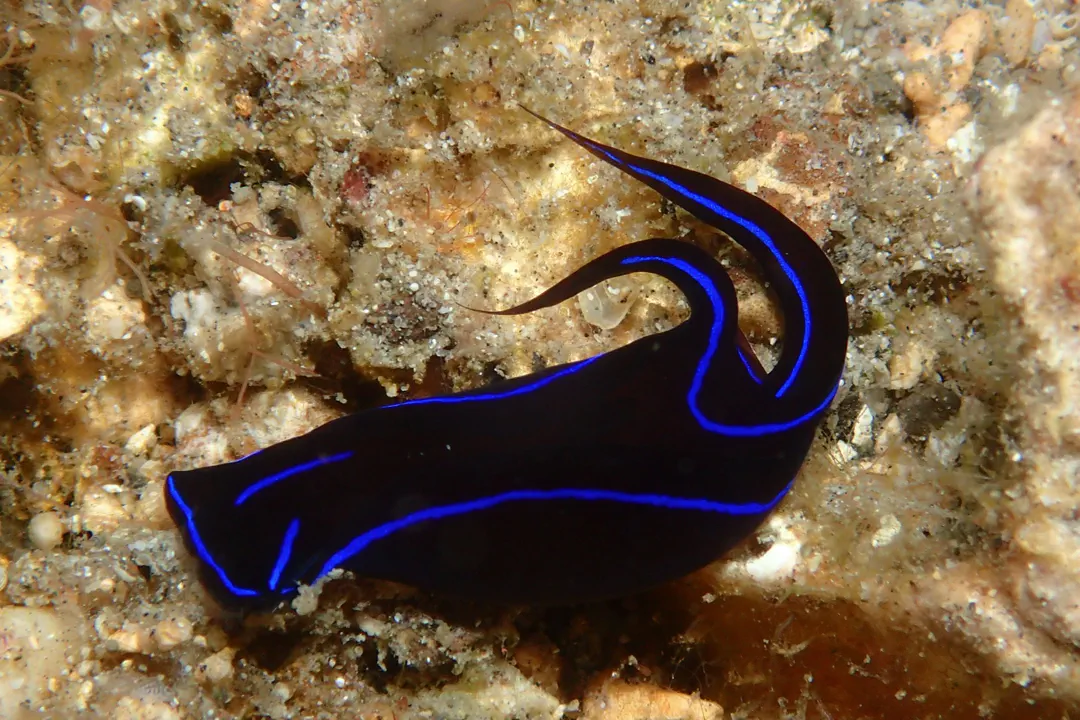
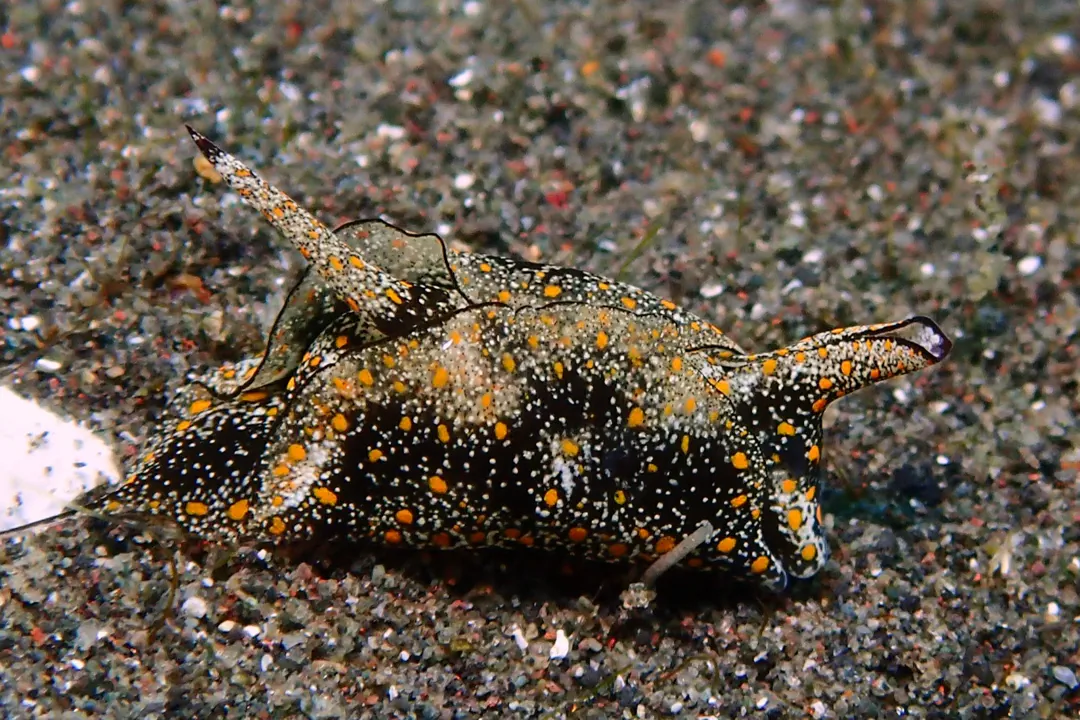
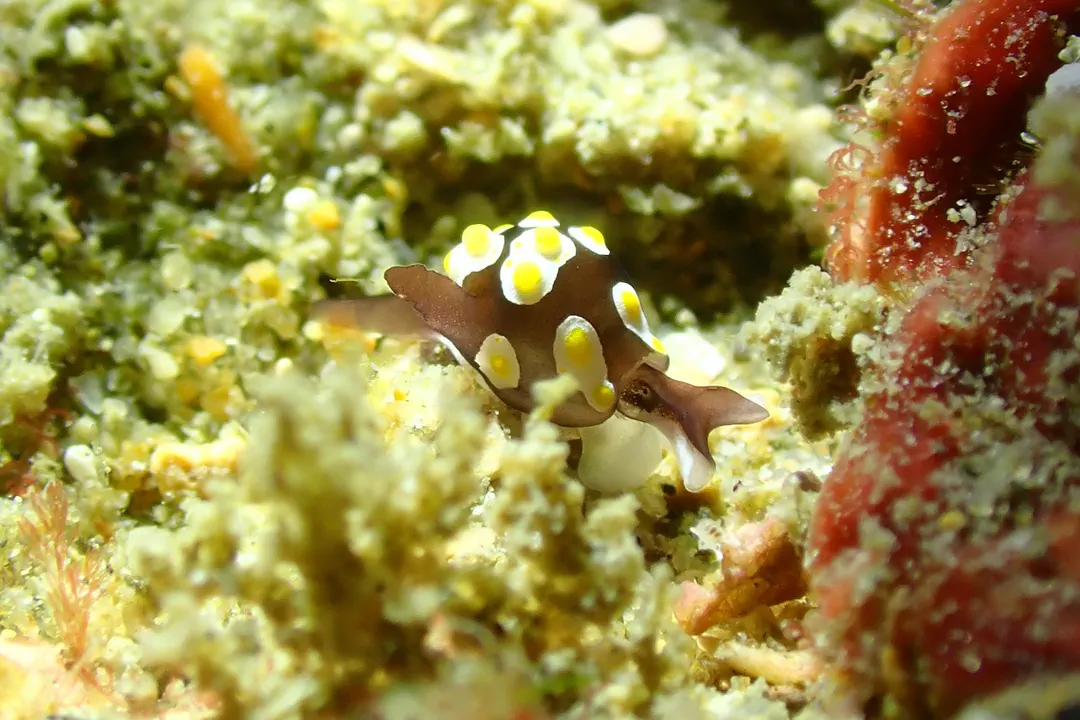
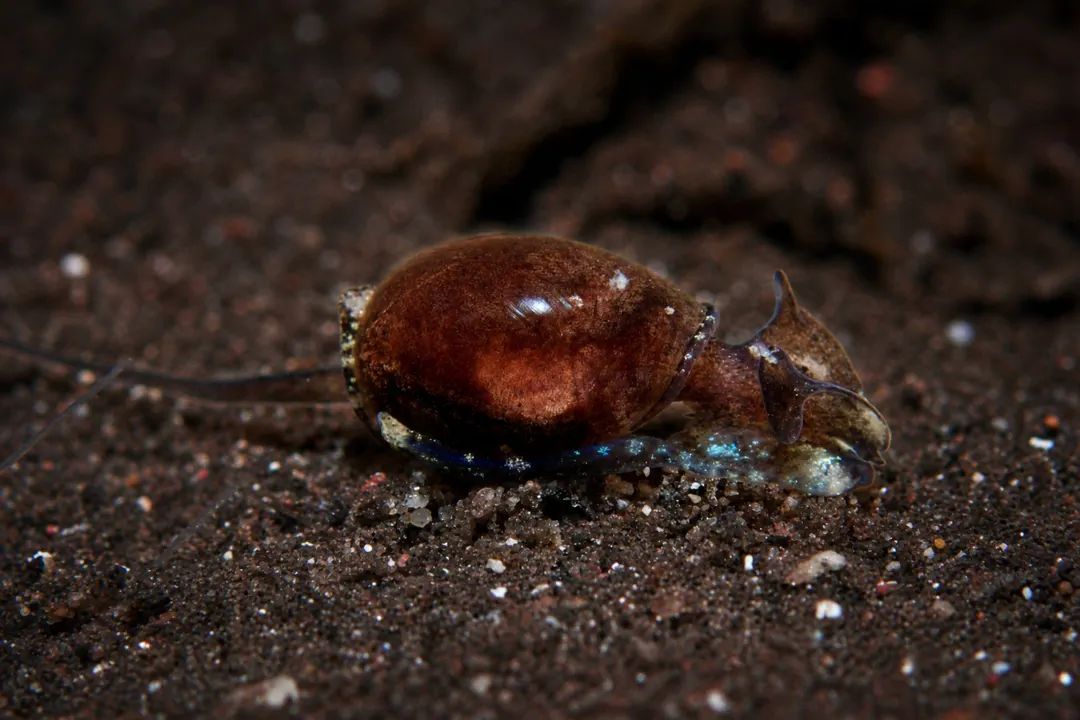
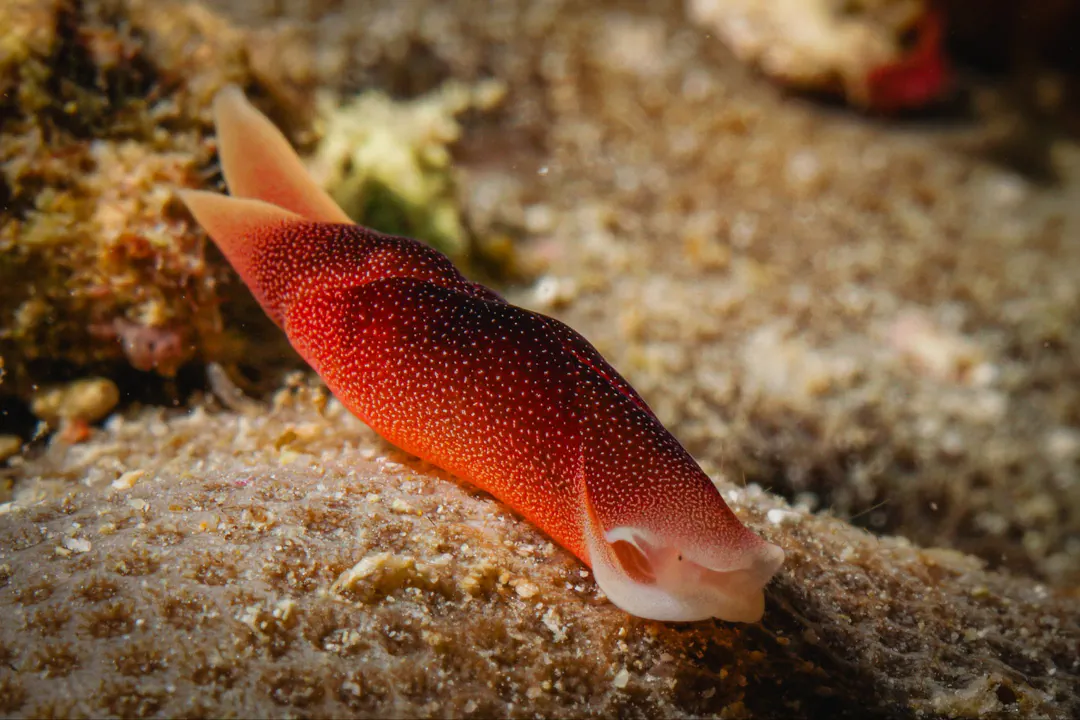
Body highly variable in colour from pale brown to almost black. White spots of variable size on the body. The parapodia has an orange, black and/or blue markings which can appear as lines.
Philinopsis speciosa is a large mollusc, growing to a length of about 125 mm (5 in). It has a well-developed, broad headshield, with a squared front and tapering rear, terminating in an upright tube; the headshield is used for gliding over and burrowing beneath the surface of the sand. Behind the headshield is a body shield which bears two, rounded lobes at the back. On either side of the body are lateral outgrowths known as parapodia. The colour of this sea slug is very variable; it is usually brown, dark brown or black, with white, cream, yellow or orange spots, and a thin blue line or streaks around the margin. There is sometimes an additional white or yellow line at the margin, and a pair of longitudinal orangish bands may be present near the midline of the headshield.
This is a flattened, sand-dwelling species that is highly variable in color. Light animals are usually cream to light brown shading to dark brown near the margin. They usually have a fine, bluish-white marginal line and are mottled with orange and white. Often, there is a purple patch on the "tails." Dark animals are velvet-black margined in blue but various intergrades are common. Occasional animals may be white with violet-tipped "tails."
Philinopsis speciosa is a common animal found in open sand and Halimeda kanaloana beds at depths of 9-27 m (29-90 ft). Occasionally, it may also be found in mixed habitats at moderately exposed to highly exposed sites in depths of as little at 1 m (3 ft). Mature animals are usually nocturnal but younger ones may sometimes be seen in numbers crawling on the surface by day, particularly in Halimeda kanaloana beds. It feeds on sand dwelling haminoeids. It has also been observed eating the sea hare, Stylocheilus striatus. Its egg mass is an elongate, white sack composed of a tangled egg string. Egg masses are typically anchored in sand and are often found in pairs suggesting that both animals in a mating pair may lay before separating.
Philinopsis speciosa has a widespread distribution in the tropical Indo-Pacific region, its range extending from the east coast of Africa and the Red Sea to Japan, Hawaii and New Caledonia. It is found on the lower shore and the subtidal zone, on sandy and clay bottoms and among seaweed, at depths down to about 20 m (66 ft).
© Dan SchofieldCC BY 4.0 · iNaturalist 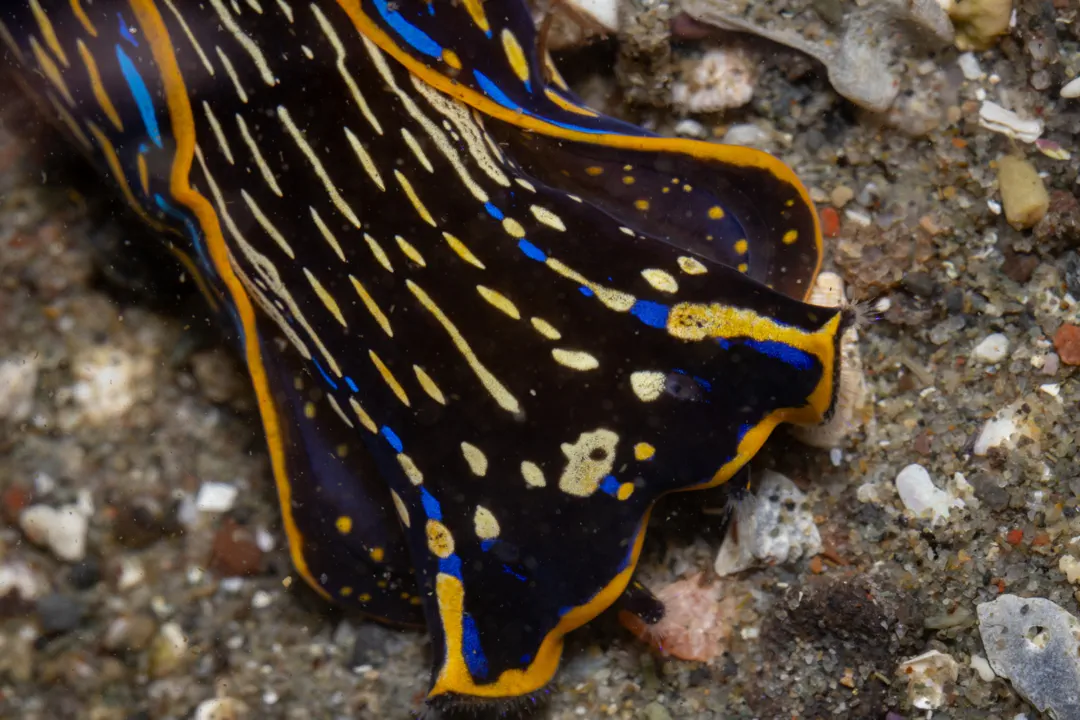 © NathanCC BY 4.0 · iNaturalist
  © Dan SchofieldCC BY 4.0 · iNaturalist
  © 呂一起(Lyu yi-chi)CC BY 4.0 · iNaturalist
  © seabook.appAll rights reserved
  © Stas KuryanAll rights reserved
 Blue-margin Headshield Slug has no known danger to humans. However, always observe marine life responsibly.
Blue-margin Headshield Slug can be found at depths of up to 27 meters.
Download Seabook free for iOS and Android.