 © Rickard ZerpeCC BY-SA 4.0 · iNaturalist
Barred-fin Moray
Gymnothorax zonipectis
Echidna nebulosa
Echidna nebulosa is a species of marine fish of the family Muraenidae.
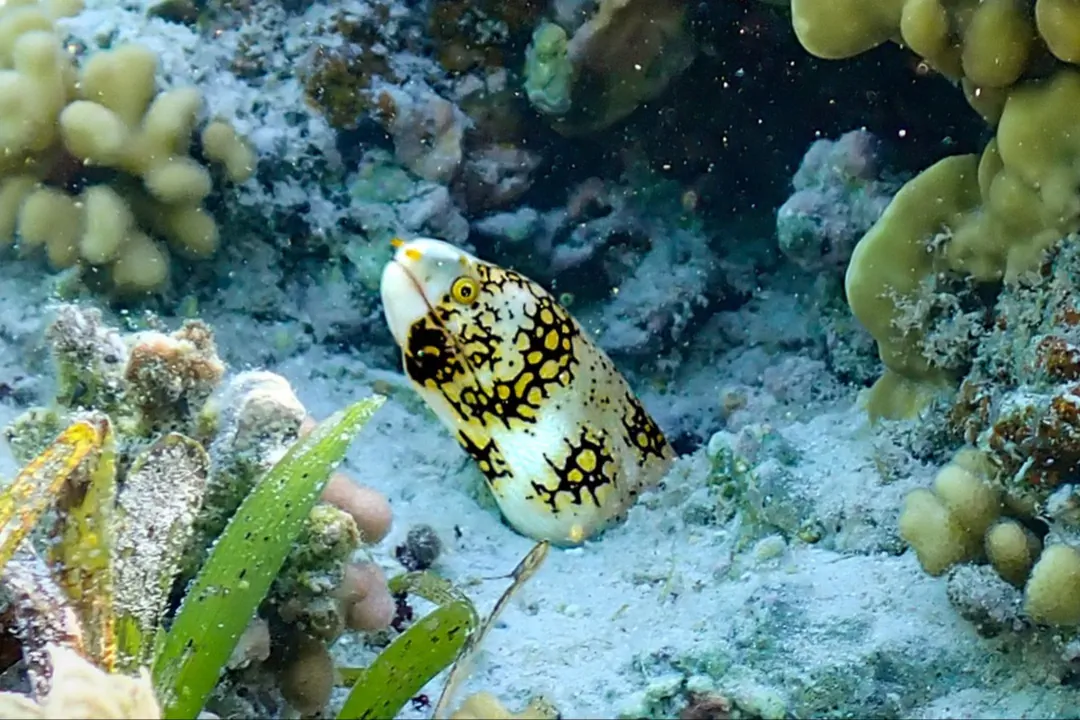
This species reaches a length of 100 centimetres (39 in) but its common size is 50 centimetres (20 in). Body is white with 2 rows of large dendritic black blotches. It has brownish black spots between blotches become irregularly linear with age. Yellow eyes.
It is widespread throughout the Indo-Pacific area from the eastern coast of Africa throughout Micronesia including the Red Sea and Hawaii. The species is also found in the eastern Central Pacific from southern Baja California, Mexico, and from Costa Rica to northern Colombia.
It lives at depths of between 2 and 30 metres (7 and 100 ft). Found between rocks and corals of intertidal reef flats, also in shallow lagoon and seaward reefs. Benthic. Nocturnal. Feed mainly on crustaceans. Protogynous hermaphroditism unconfirmed for this species. Safely kept with small aquarium fishes. Solitary, seen usually in the open or with only head exposed.
The snowflake moray is a very commonly kept saltwater eel. They are very hardy and well-suited to life within an aquarium. Up to 28" in length in captivity, the snowflake moray requires an aquarium that is larger than 20 gallons (40–50 gallons when full grown) with a tight-fitting lid, as these eels (and all eels, for that matter) are good at escaping and can fit through surprisingly small holes in aquarium lids. The snowflake eel has been known to live to 4 years and older in captivity. They are carnivores, readily accepting just about any meaty foods, including krill, shrimp, silversides and octopus meat. Unless already acclimated to frozen foods, the moray eel will likely need to be fed with live ghost shrimp when first acquired. Weaning can be accomplished over time. The feeding of freshwater feeder fish (goldfish, rosy reds, etc.) will likely cause liver disease if fed to the eel, so such feeding should be avoided.
The snowflake moray eel is not safe to keep with shrimp, crabs or lobsters, since crustaceans are their natural diet. However, they are safe to keep with most other invertebrates, including starfish, anemones and sea urchins. Snowflake morays are reef safe and will not bother corals, though these eels are messy eaters and will require strong filtration and a relatively large protein skimmer for the long-term health of any corals housed in their aquarium. The moray eel will likely consume very small fish such as damselfish. Compatible tankmates for the snowflake moray eel include other relatively large, aggressive fish, such as lionfish, tangs, triggerfish, wrasses, and possibly even other snowflake moray eels if they are both introduced to the tank at the same time.
© Rickard ZerpeCC BY-SA 4.0 · iNaturalist  © Robin WhiteCC BY 4.0 · iNaturalist
  © Borja FierroCC BY 4.0 · iNaturalist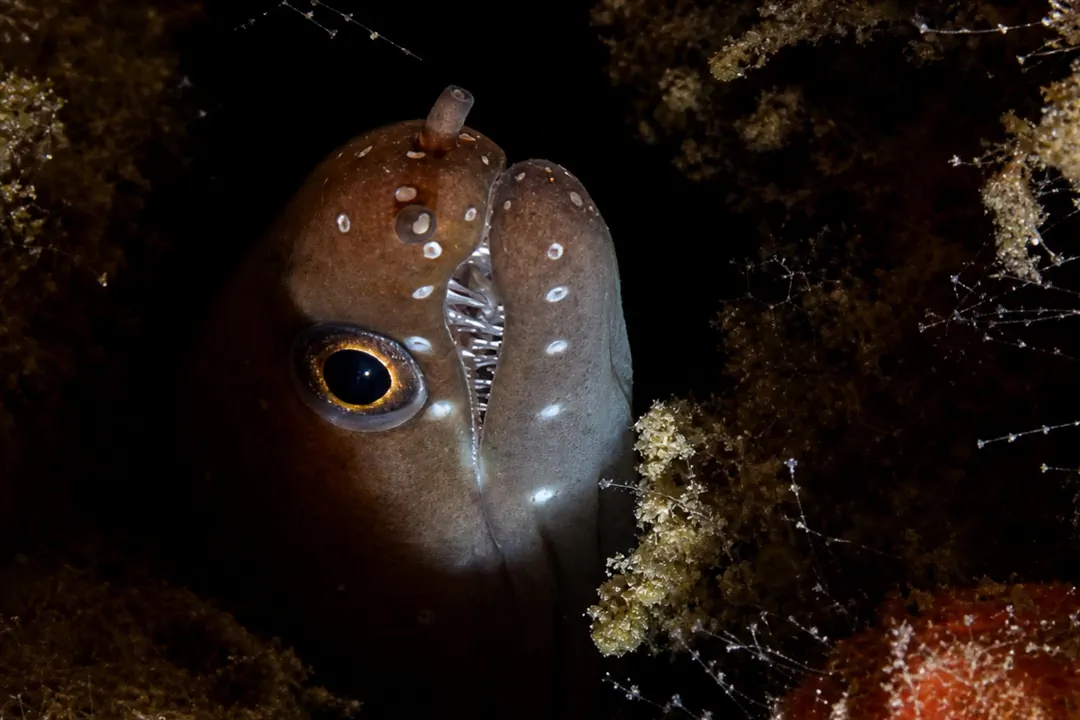
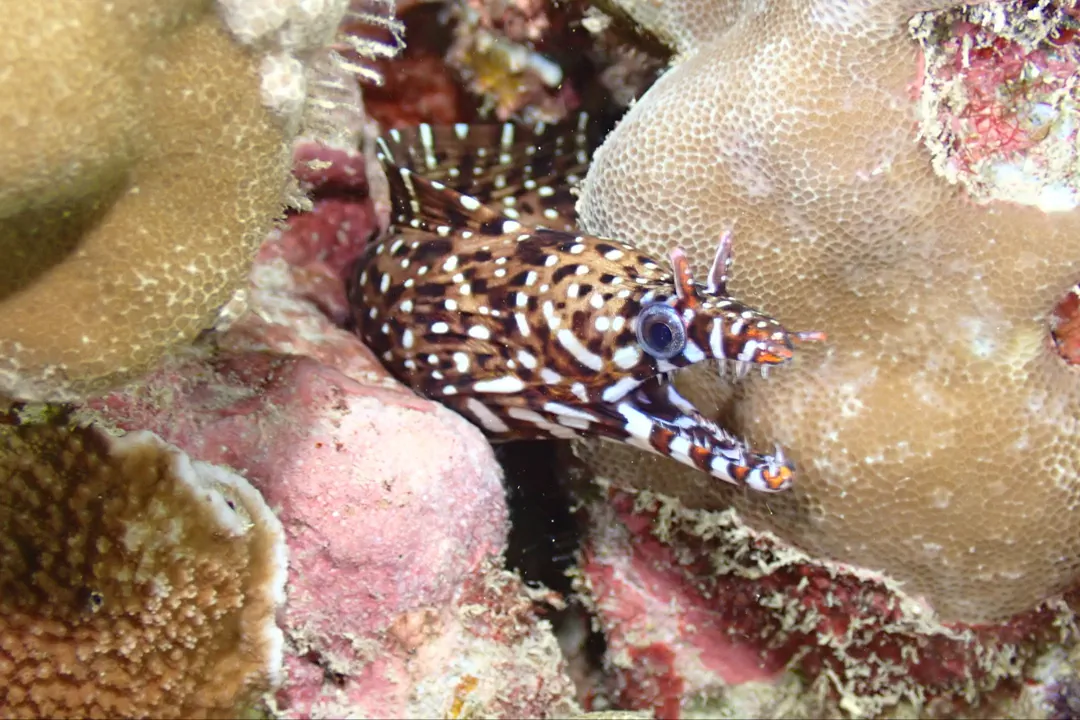 © Robin WhiteCC BY 4.0 · iNaturalist
 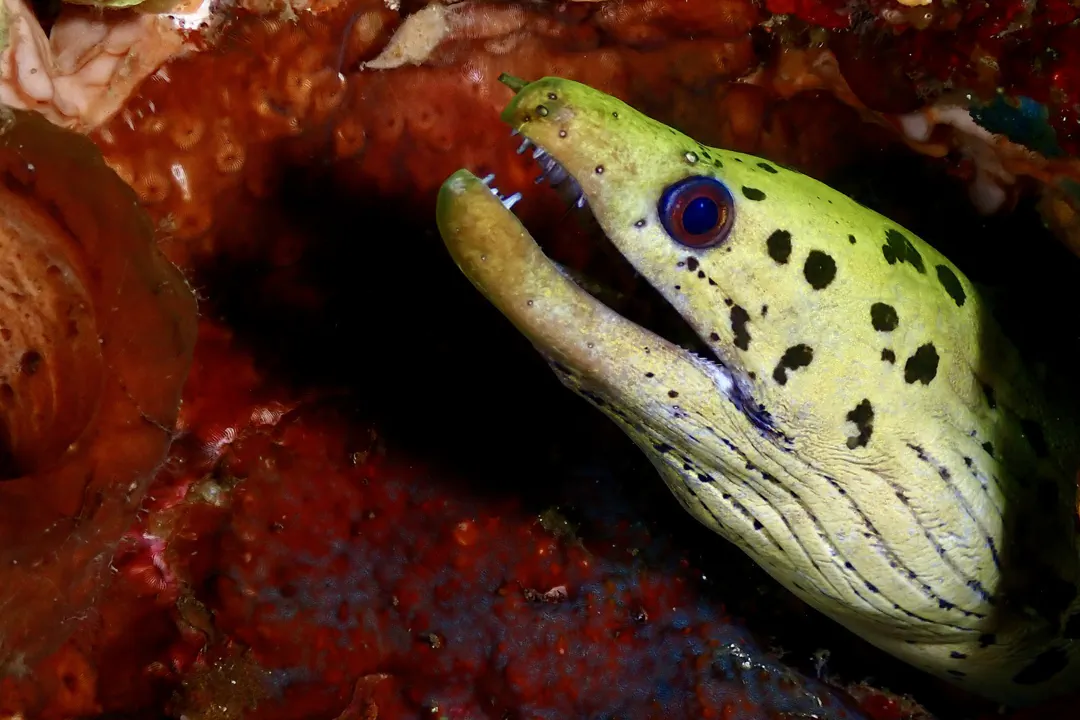 Chris SpainCC0
 Snowflake Moray has no known danger to humans. However, always observe marine life responsibly.
Snowflake Moray can be found at depths of up to 48 meters.
Download Seabook free for iOS and Android.