 © Rickard ZerpeCC BY-SA 4.0 · iNaturalist
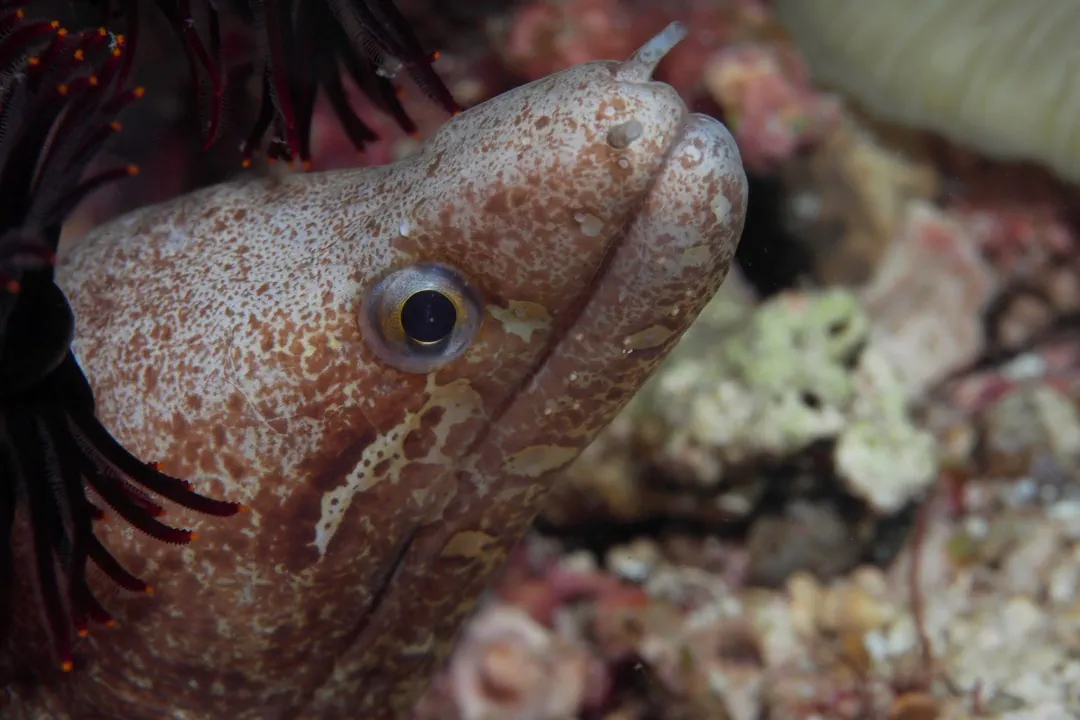
Barred-fin Moray
Gymnothorax zonipectis
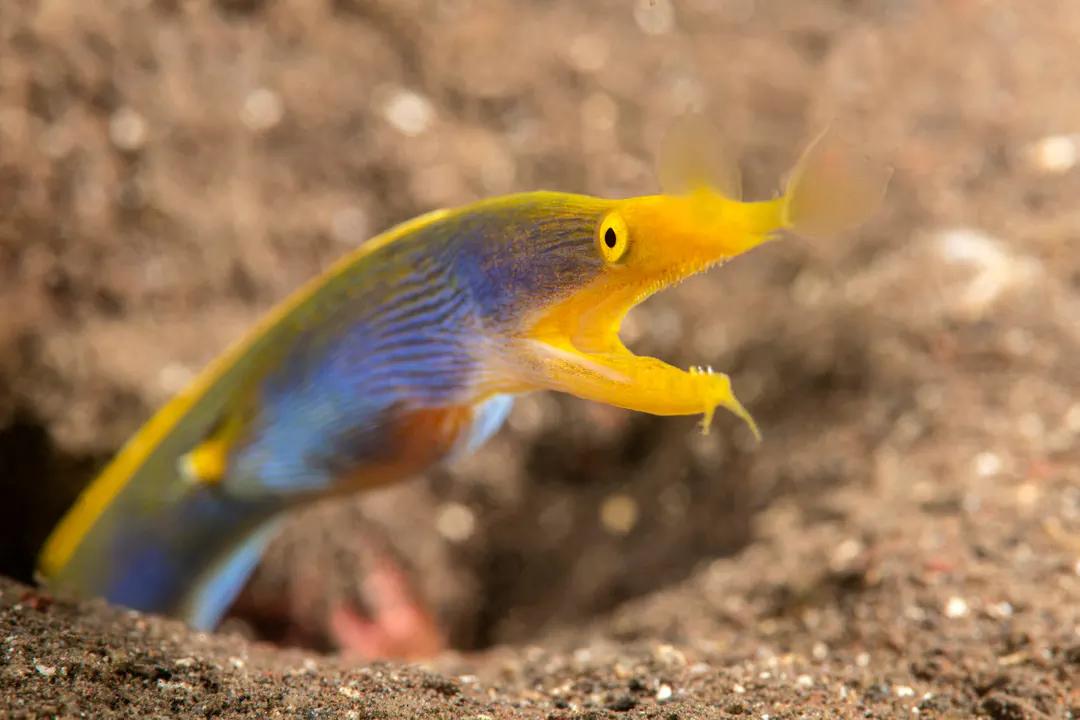
Rhinomuraena quaesita
Rhinomuraena quaesita is a species of moray eel, the only member of the genus Rhinomuraena. What is now known as R. quaesita also includes the former R. amboinensis. R. quaesita was used for blue ribbon eels and R. amboinensis for black ribbon eels, but these are now recognized as the same species. Although generally placed in the moray eel family Muraenidae, it has several distinctive features leading some to place it in its own family, Rhinomuraenidae.
The ribbon eel is an elegant creature bearing a resemblance to a mythical Chinese dragon with a long, thin body and high dorsal fins. The ribbon eel can easily be recognised by its expanded anterior nostrils. Based on observed colour changes, it is generally considered a protandric hermaphrodite (first male, then changing sex to female), although this has yet to be confirmed. Colour change related to sex change is not known from any other moray eel species. The presumed juveniles and subadults are jet black with a yellow dorsal fin, in adult males the black is replaced by blue, and adult females are entirely yellow or yellow with some blue to the posterior. The blue adult males range from 65 to 94 cm (26 to 37 in) in length, while the larger yellow females can reach up to 130 cm (51 in). In captivity, the colour differences are not related to maturity or sex.
Indo-Pacific: East Africa to the Tuamoto Islands, north to southern Japan, south to New Caledonia and French Polynesia; including Marianas and Marshalls.
Adults occur in lagoon and seaward reefs. They are secretive species normally hidden in sand or rubble, sometimes with only its head protruding. Feed on small fishes.
Because most ribbon eels do not live longer than a month in captivity, some feel that this species should never be purchased except for people with experience in keeping morays in captivity. Ribbon eels have been observed in many cases to stop eating after being captured, although there are reports of them surviving and eating in captivity for 2 years or more. Higher levels of success have been achieved in public aquaria, where there are a few reported cases of spawning at facilities in Europe and North America.
With proper sized tanks, water flow, and depth of proper sand they can be kept for much longer in pairs. When keeping these it is critical that there is large amount of decor and large caves of rock or PVC piping to make them feel safe or else they will stress and die in the aforementioned manner. These morays can sometimes be able to be trained to eat inanimate foods by waving pieces of meat on snake feeding tongs. In some many cases fin-nipping is a problem for obvious reasons.
Although captured for the aquarium industry, it remains common and widespread, and is not considered threatened.
© Rickard ZerpeCC BY-SA 4.0 · iNaturalist  © Robin WhiteCC BY 4.0 · iNaturalist
  © Borja FierroCC BY 4.0 · iNaturalist
 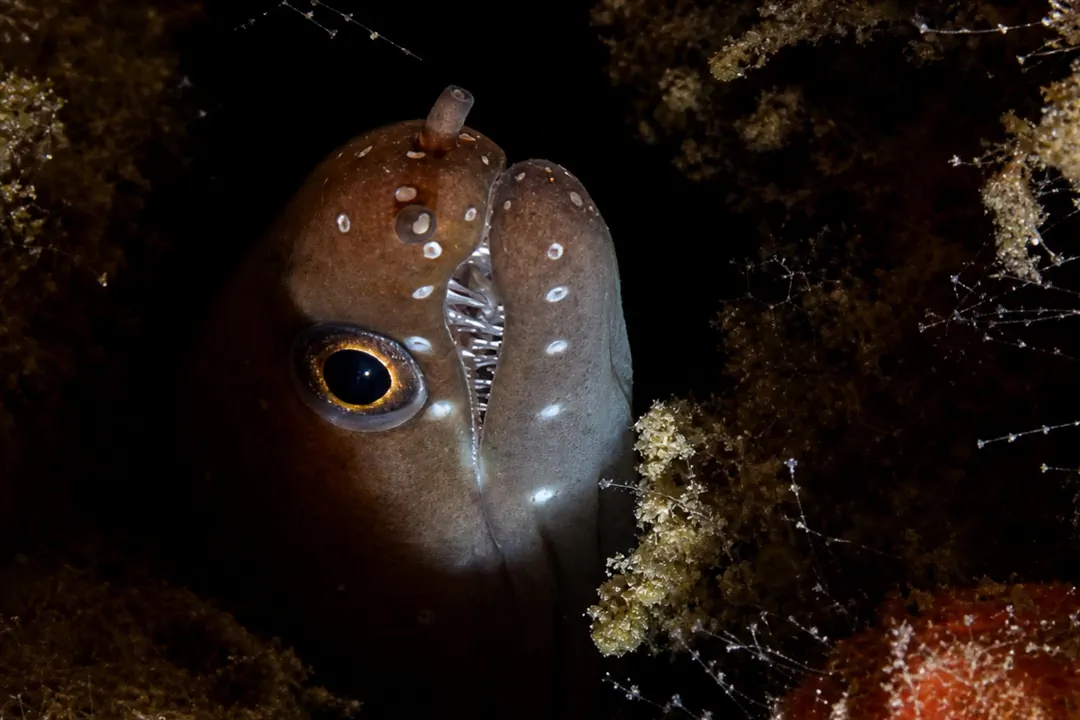 © seabook.appAll rights reserved
 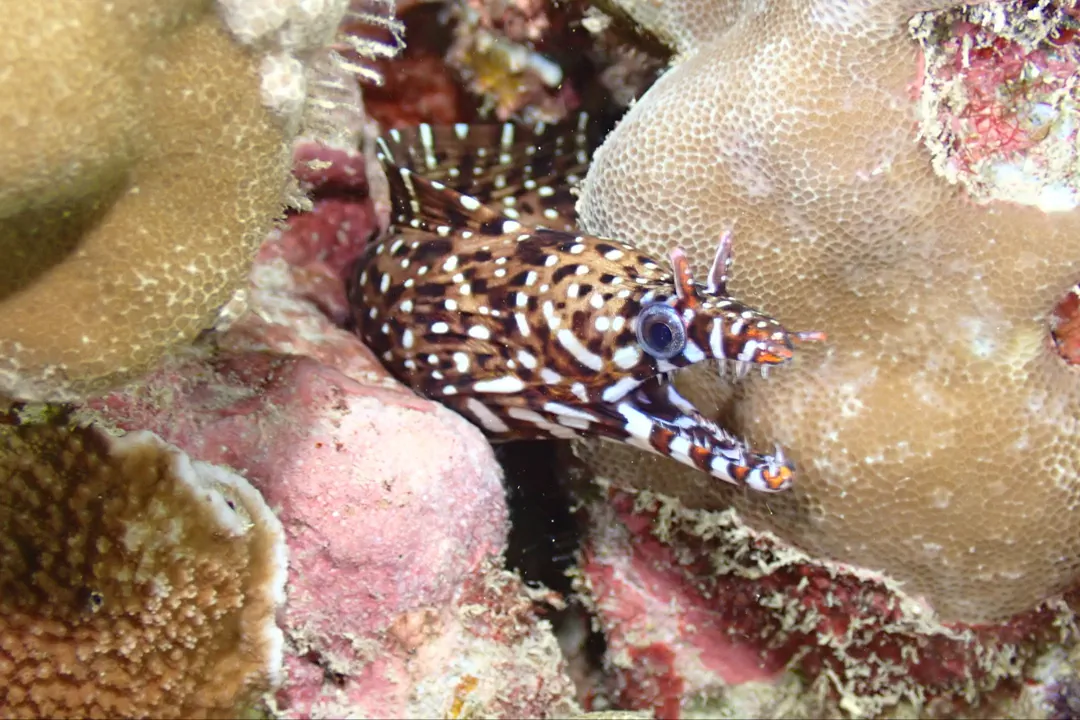 © Robin WhiteCC BY 4.0 · iNaturalist
 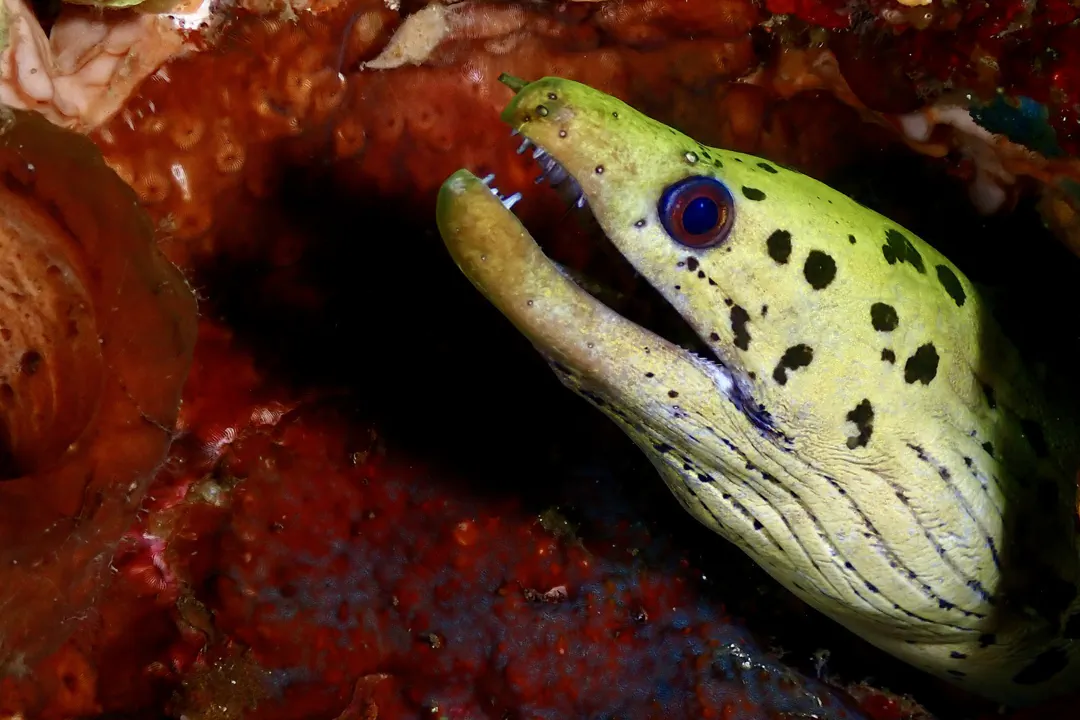 Chris SpainCC0
 Ribbon Eel (male) has no known danger to humans. However, always observe marine life responsibly.
Ribbon Eel (male) can be found at depths of up to 67 meters.
Download Seabook free for iOS and Android.