 © portioidCC BY 4.0
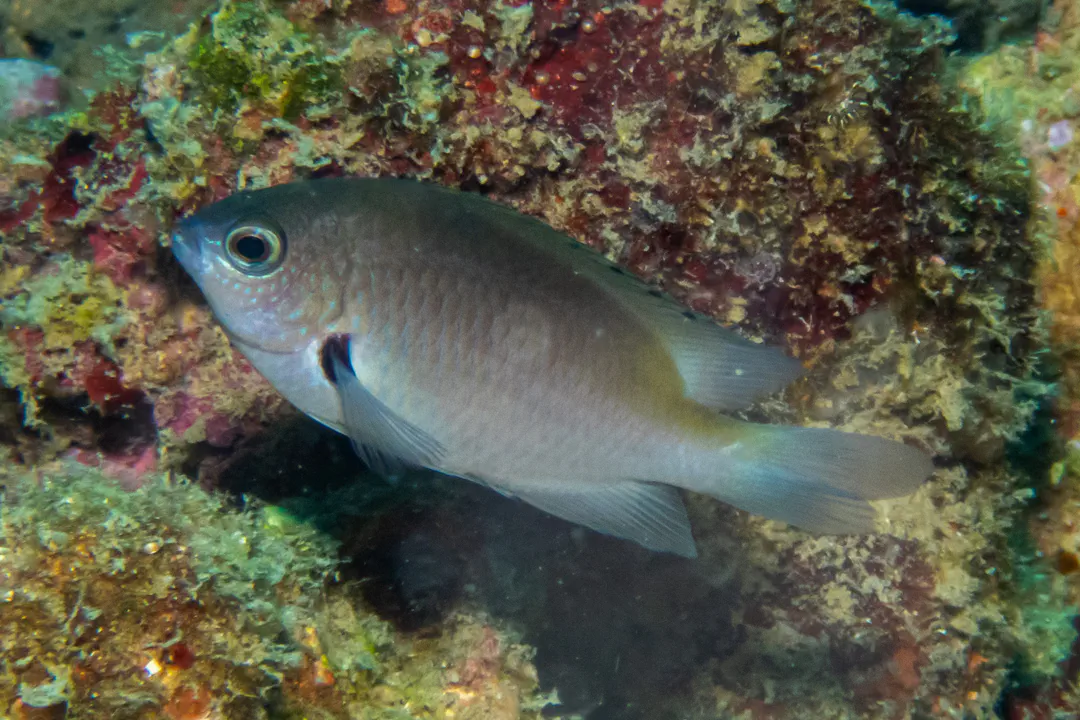
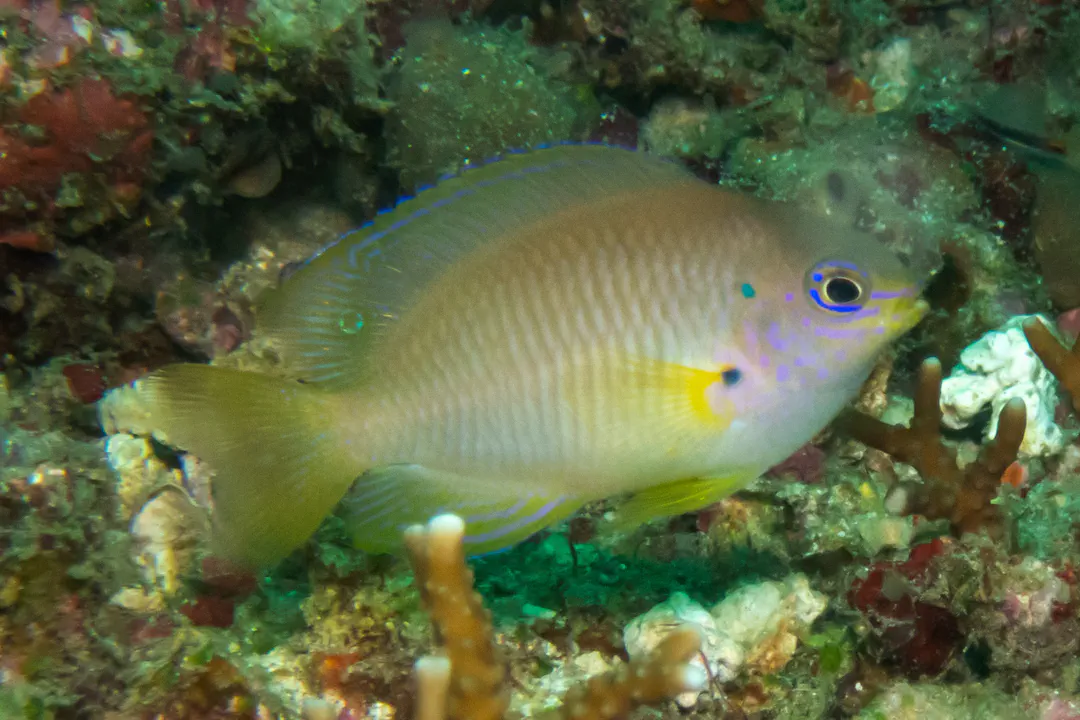
Alexander's Damsel
Pomacentrus alexanderae
Azurina cyanea
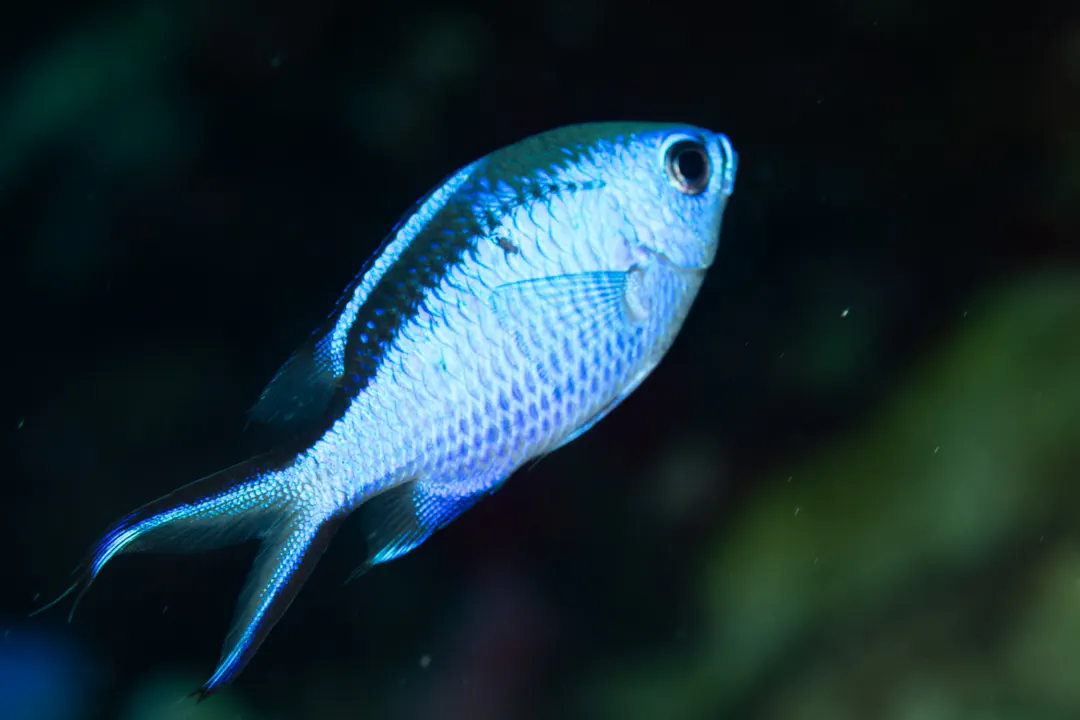
Chromis cyanea is a damselfish in the subfamily Pomacentrinae, found in Bermuda, southern Florida and the Caribbean Sea.
Body is bright blue, scarcely paler below, with black stripe. Black margin is on spinous dorsal fin, upper and lower lobes of caudal fin and front of anal fin; no black spot at pectoral base. Dorsal spines (total): 12; Dorsal soft rays (total): 12; Anal spines: 2; Anal soft rays: 12.
Western Atlantic: Bermuda, southern Florida (USA), and the Caribbean Sea. Including the Bahamas, Gulf of Mexico and Antilles.
Being a shallow water fish, the blue chromis is commonly found at depths of 3 to 5 m, but it can reach depths of 25 m below sea level. It's also been recorded at a depth of 60 m below sea level. It lives on the surface of reefs, but often swims in the water columns above the reefs to feed on plankton. It's a rather solitary species, seen alone or in small groups, and tends to stay close to the reefs. The younger fish stay near the bottom in order to avoid predators. The males maintain a solitary breeding territory. After breeding with multiple females, they guard the eggs until the planktonic larvae hatch.
The blue chromis is largely collected for use in aquariums. There are no reliable numbers on the extent of this collecting, but damselfish make up the most intensely collected fish group, making up almost half of the aquarium trade.
Besides the intense aquarium trade, the rapid expansion of lionfish in the Caribbean and the Atlantic coast is the greatest threat to the blue chromis, as well as several other tropical fish native to the Caribbean. Furthermore, the loss of live corals could have a definite impact on the species, though this has yet to be investigated more closely.
The blue chromis is assessed as "Least Concern" by the IUCN. Despite appearing only within an area of 2,500,000 km, it is considered abundant within that area, without any known continuous decline in range or population numbers. It's collected for the aquarium trade, but not in great numbers. Despite this, a deeper study is required to measure the impact of the decline in habitat quality in the Caribbean has on the species.
© portioidCC BY 4.0 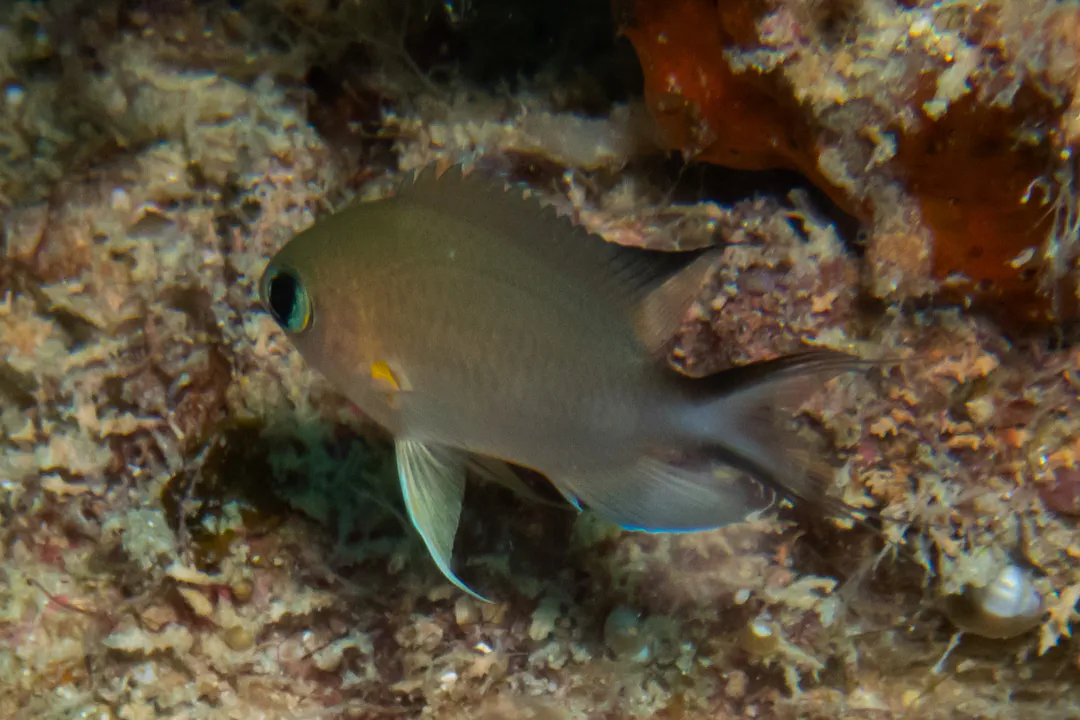 © portioidCC BY 4.0
  © portioidCC BY 4.0 · iNaturalist
 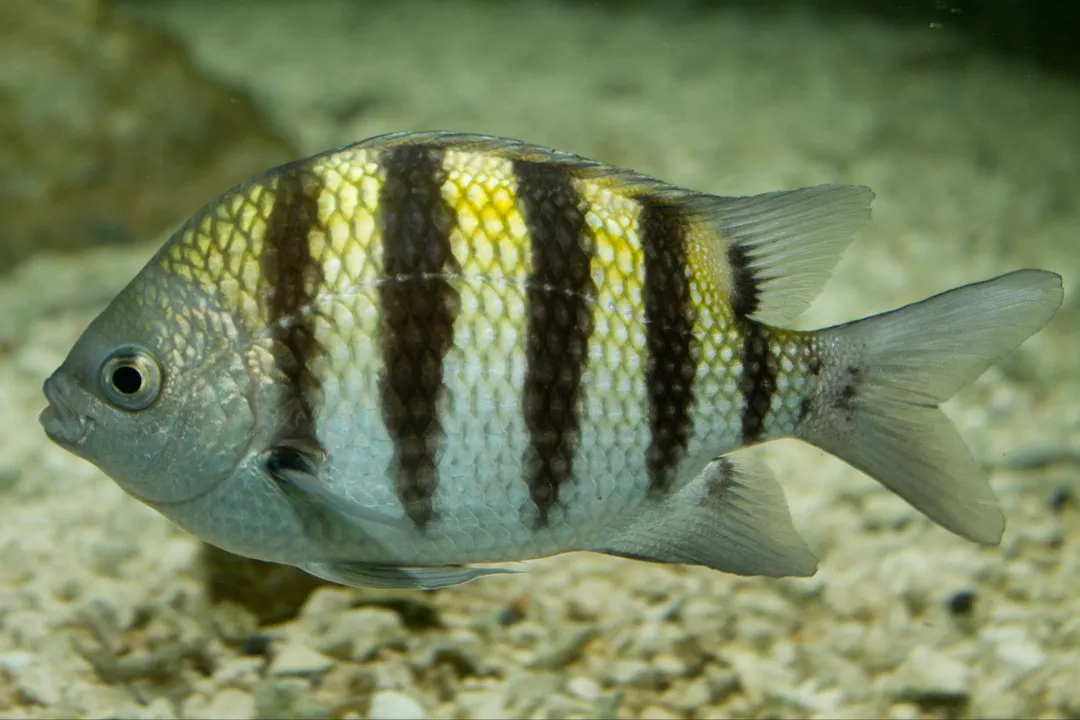 © Brian GratwickeCC BY 4.0 · iNaturalist
 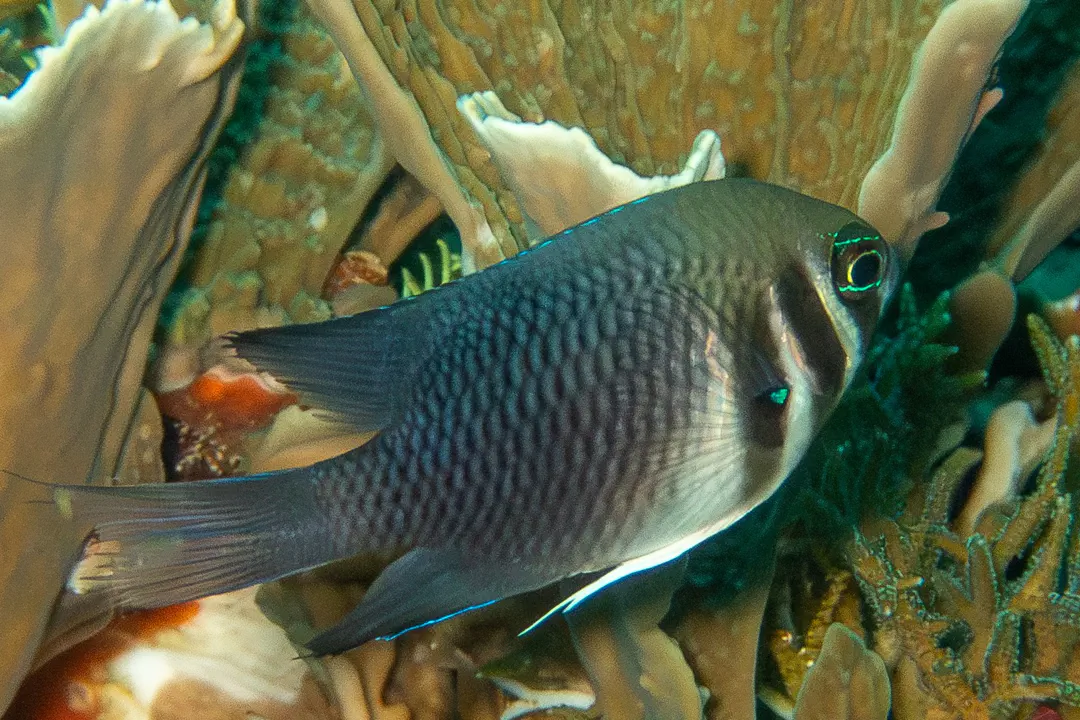 © Piotr LukasikCC BY 4.0 · iNaturalist
 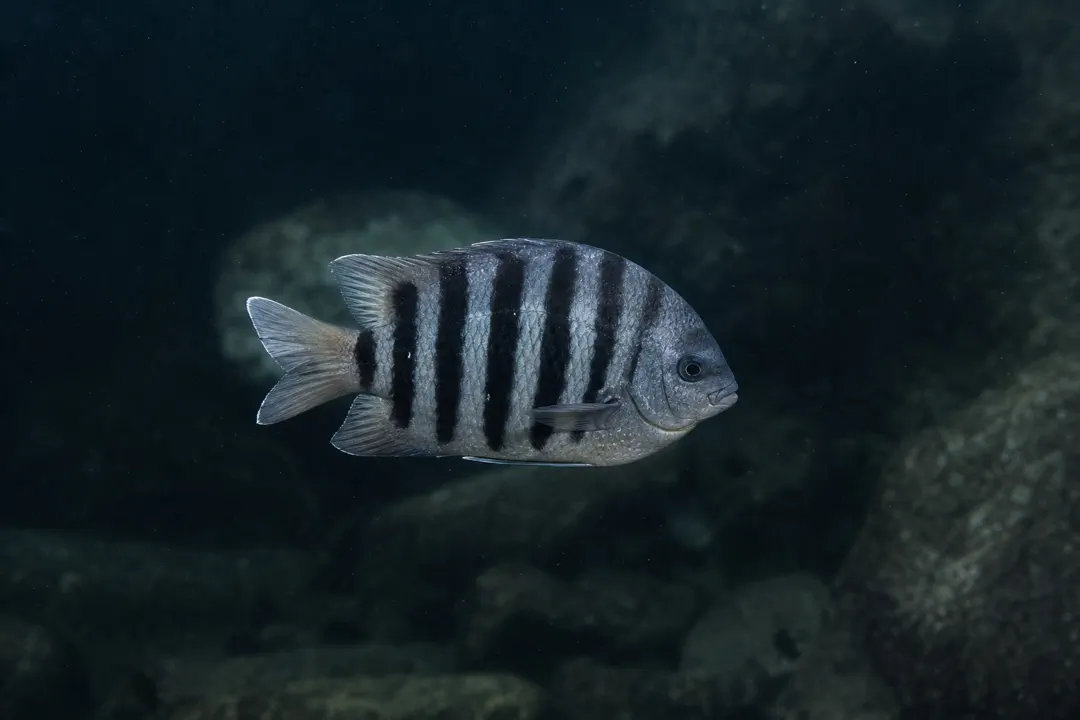 © seabook.appAll rights reserved
 Blue Chromis has no known danger to humans. However, always observe marine life responsibly.
Blue Chromis can be found at depths of up to 60 meters.
Download Seabook free for iOS and Android.