 © portioidCC BY 4.0
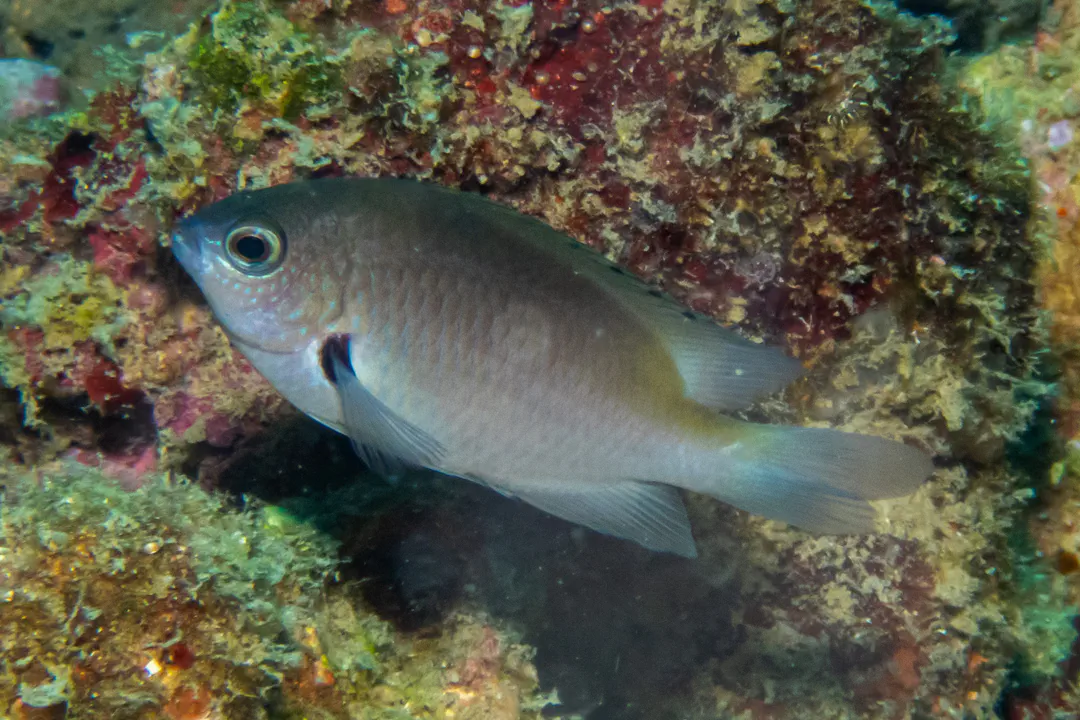
Alexander's Damsel
Pomacentrus alexanderae
 © Alex DoyleCC BY 4.0 · iNaturalist
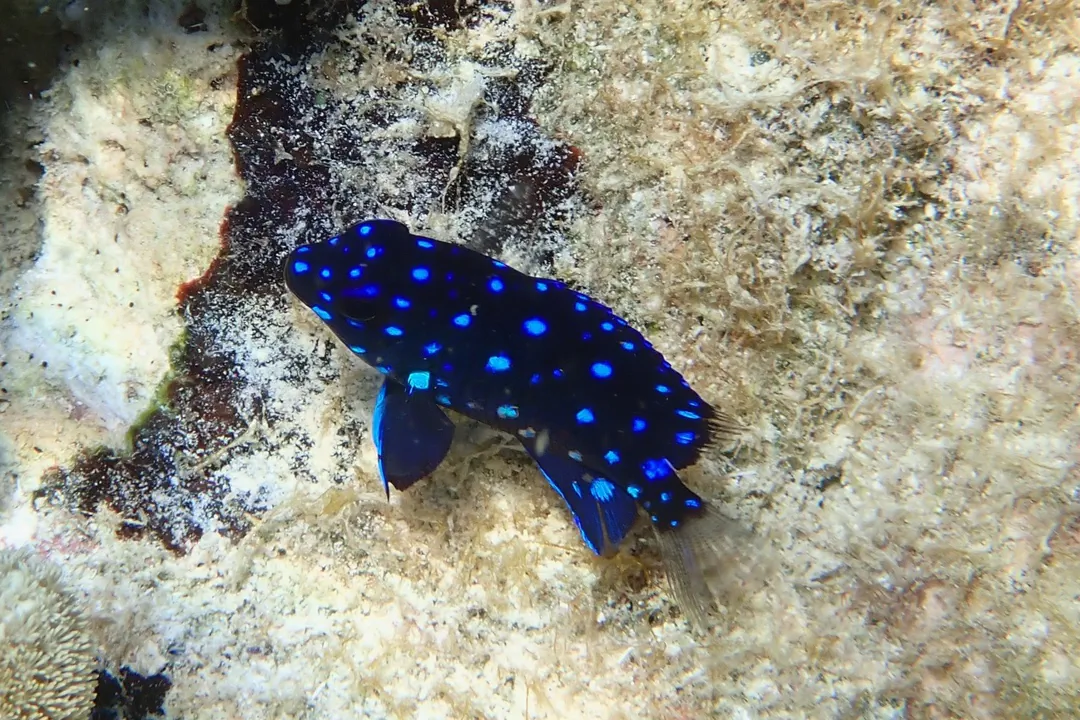
Microspathodon chrysurus
Microspathodon chrysurus (Jewel damselfish) is a Damselfish from the Western Atlantic. It occasionally makes its way into the aquarium trade. It is probably the most aggressive of all Damselfish, and should be kept with fish substantially larger and more robust than itself.
It grows to a size of 21 cm in length. Adult and young adult damselfish differ significantly in terms of body color. The difference was so stark that researchers believed the adult and young adult forms were two distinct species. Adults are brown with a yellow caudal fin. When juvenile it has brilliant (metallic) blue spots on a dark blue back ground.
Western Atlantic: southern Florida (USA) and Bermuda through the Caribbean Sea to Brazil.
The spawning cycle of the yellowtail damselfish starts at sunrise and lasts approximately 1 hour after male damselfish have prepared nests on dead coral surfaces. Their eggs are demersal, adhering to the substrate where males guard and aerate them. Hatching occurs the morning of the 6th day of incubation. Reproductive activity is highest during the lunar period between full and new moon. At those points in the lunar cycle, the gravitational pull of the sun and the moon are very high resulting in spring tides.
In regards to feeding habits, adults typically graze on algae while juveniles are carnivorous. M. chrysurus is omnivorous with a gradual change in feeding habits throughout development. This change in diet is related to the distribution of adult and young adult damselfish. Gut content analysis of yellowtail damselfish shows a change is food ingested from young adulthood to adulthood. Young adults primarily feed on animal-like nematocysts and zooxanthellae. Adults tend to tend to be more selective in their feeding habits, eating blue-green algae called cyanophytes. However, if there is an abundance of another food source available those are likely to be ingested by the species.
Clutch cannibalism occurs when a parent consumes its brood. Total clutch cannibalism by parental males has been observed in yellowtail damselfish directly and by analysis of gut contents. There are several working hypotheses as to why this behavior has been conserved. It is hypothesized that the decision to stop providing care could be to reallocate time and energy to attract more mates and thus increase lifetime reproductive success. Another possible reason is to increase growth rate or survival of parental damselfish in poorer condition.
The patterns of clutch loss are related to size of the brood. There is a significant tendency for smaller clutches to disappear. Most of the clutches that disappear in M. chrysurus are young, first day clutches. Researchers have not found this pattern of loss to be attributed to reproductive activity.
There is interspecific overlap of feeding areas of M. chrysurus and two other damselfish species—Stegastes dorsopunicans and Stegastes planifrons. All three cohabitants consume the same benthic microalgae and have the same feeding cycles. In terms of defending the feeding grounds from intruders, studies have shown that M. chrysurus is less competent than Stegastes spp. at inhibiting intruders. However, yellowtail damselfish have a competitive advantage because of their size. M. chrysurus are aggressive toward their cohabitants, using their size-based dominance to obtain food.
© portioidCC BY 4.0  © portioidCC BY 4.0
  © portioidCC BY 4.0 · iNaturalist
 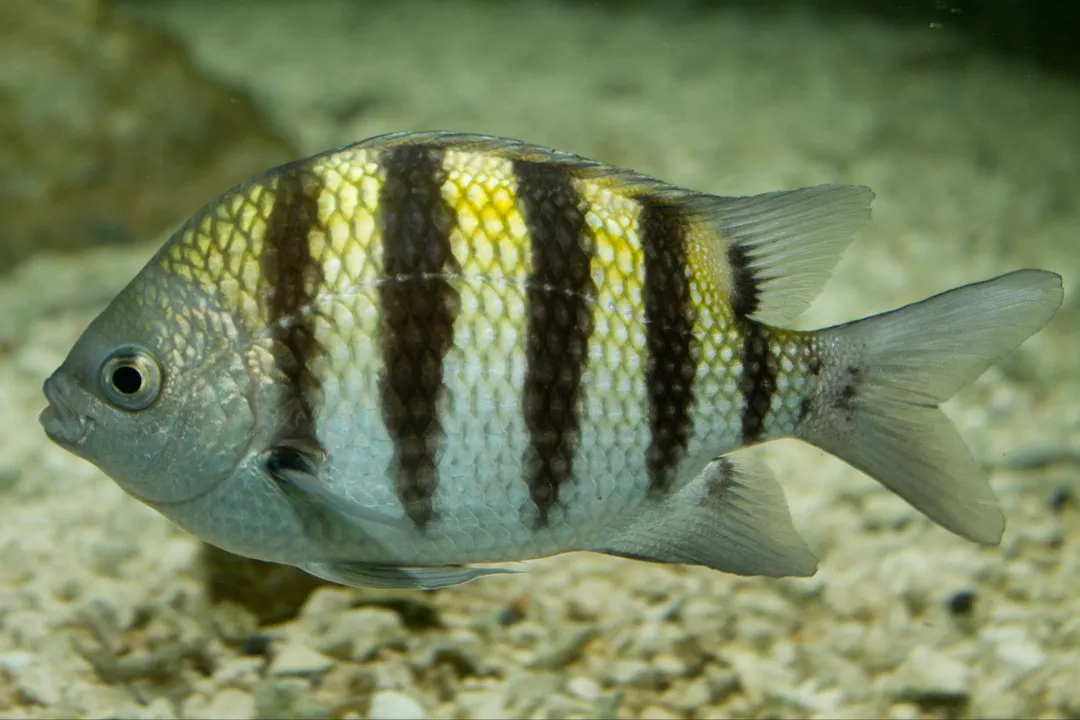 © Brian GratwickeCC BY 4.0 · iNaturalist
 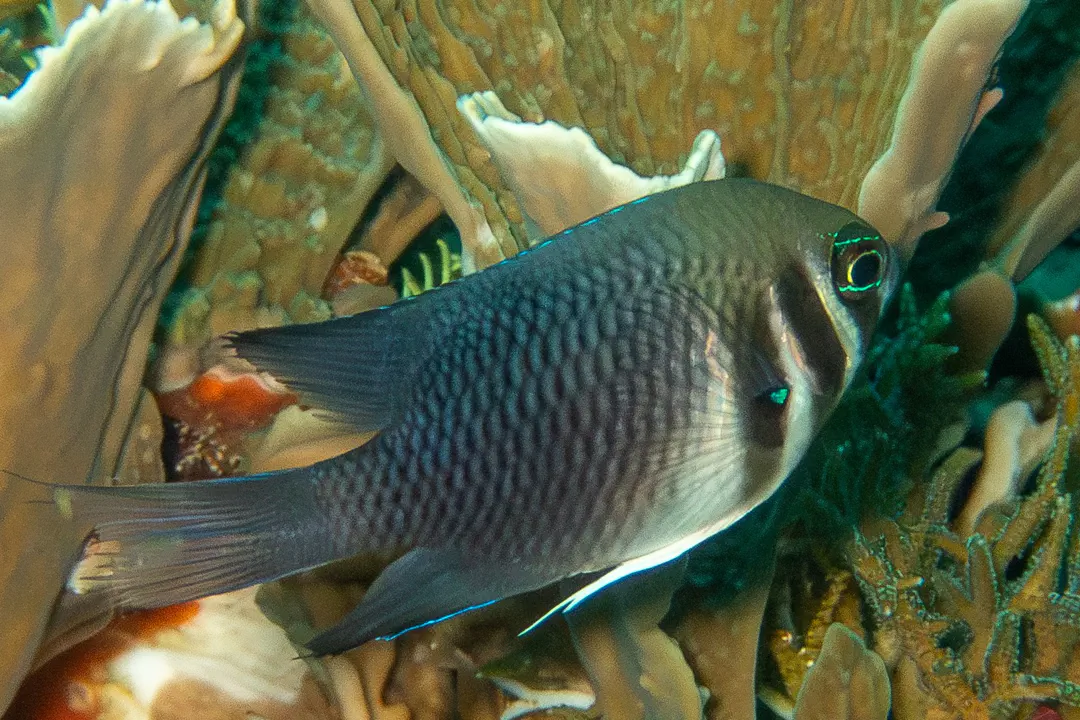 © Piotr LukasikCC BY 4.0 · iNaturalist
 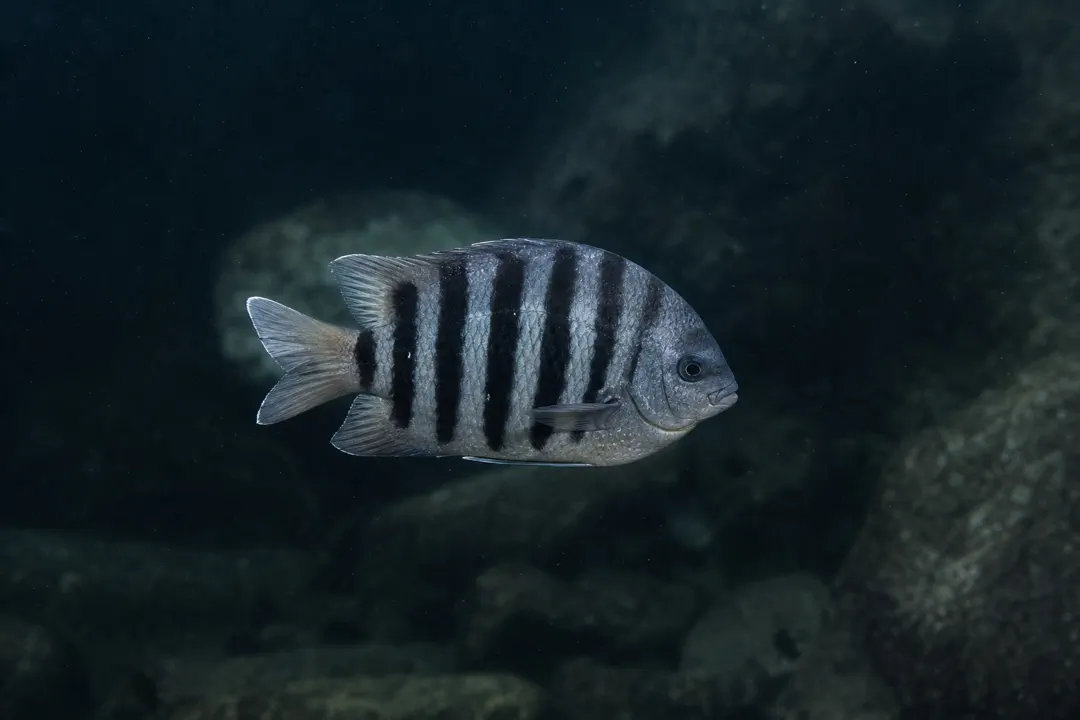 © seabook.appAll rights reserved
 Yellowtail Damselfish (juvenile) has no known danger to humans. However, always observe marine life responsibly.
Yellowtail Damselfish (juvenile) can be found at depths of up to 120 meters.
Download Seabook free for iOS and Android.