 © Darren ObbardCC BY 4.0 · iNaturalist
Blackeye Rabbitfish
Siganus puelloides
Siganus corallinus
Siganus corallinus is a species of ray-finned fish in the family Siganidae.
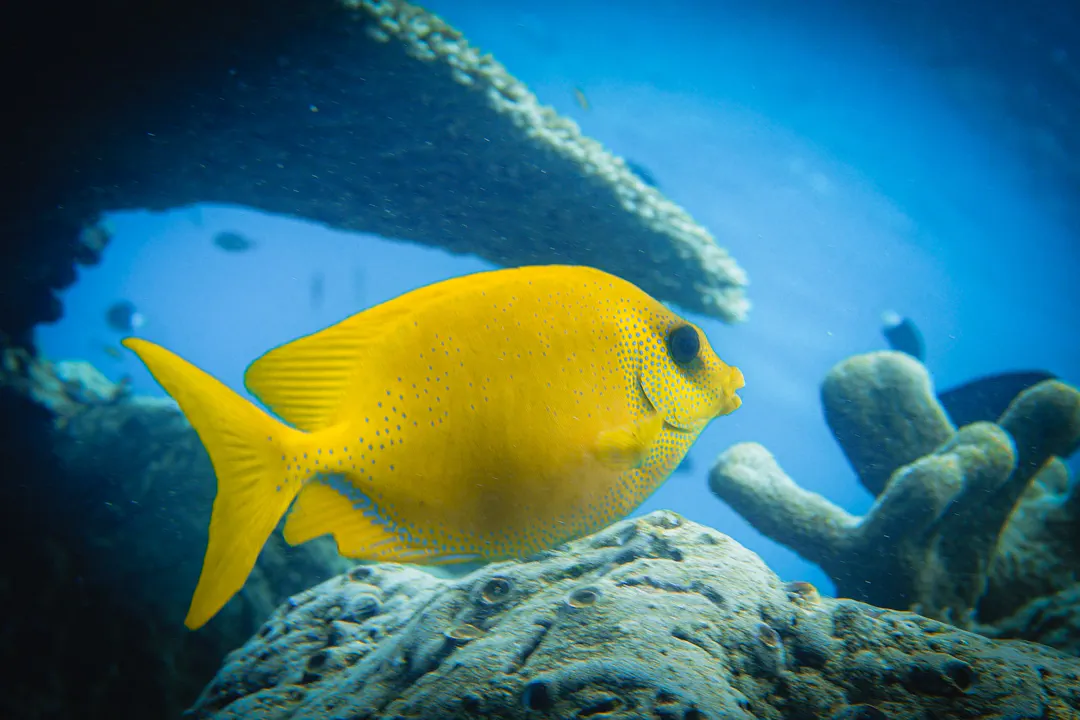
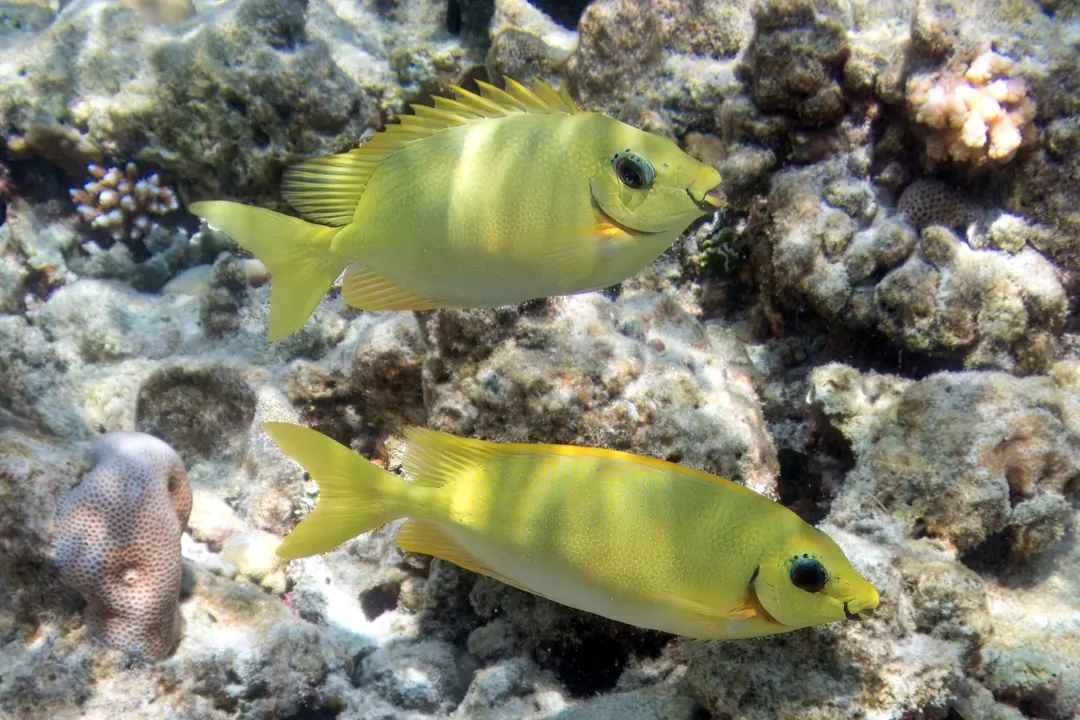
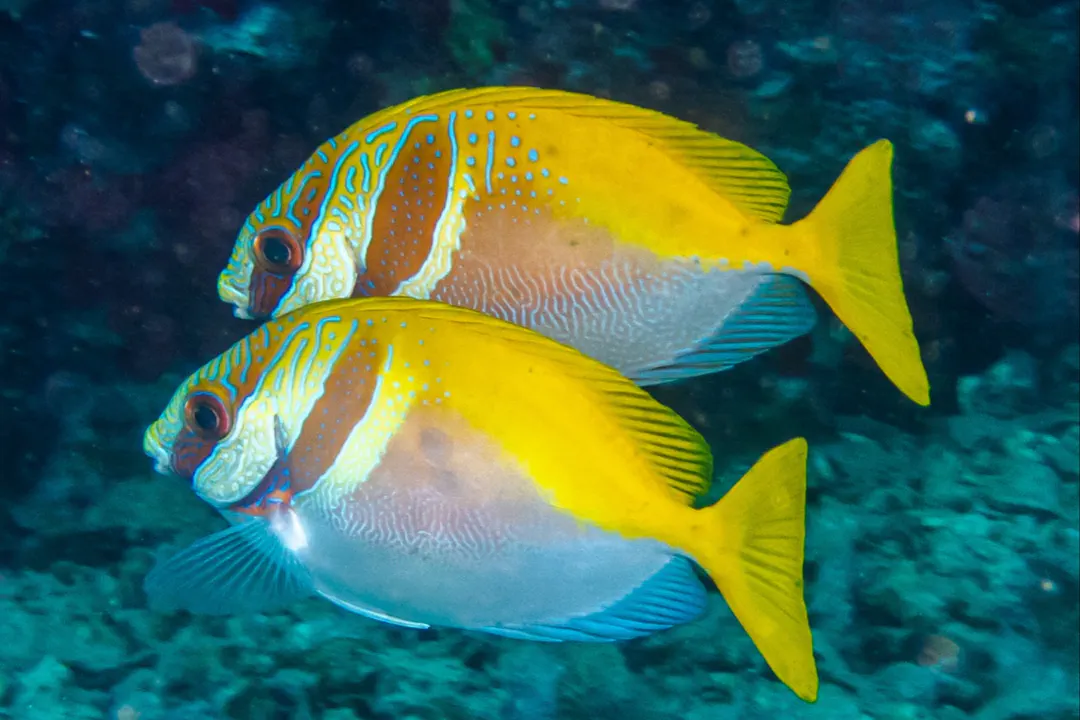
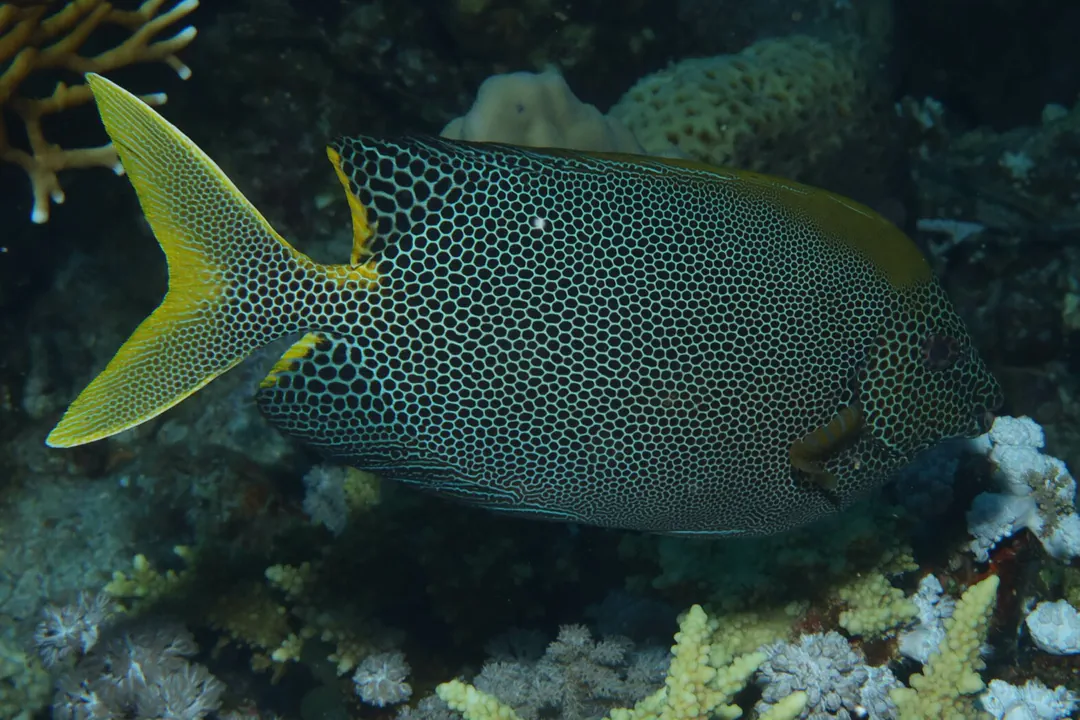
Head, body and fins are orange-yellow with pale blue ocelli with darker blue margins on head, thorax and sides. Spots are about pinhead size, larger and more crowded on head, sometimes smaller on sides. Ocelli may extend onto bases of dorsal and anal fins, and on bases of outer rays of caudal fin. Very small juveniles (up to 50 mm SL) may have vertical blue lines on side, fragmenting into the ocelli with increase in size. Orbit is with a diffused-edged dark, triangular smudge; orange-brown iris. Fin spines stout, pungent and venomous. Midline of thorax and ridges fully scaled. Dorsal spines (total): 13; Dorsal soft rays (total): 10; Anal spines: 7; Anal soft rays: 9; Vertebrae: 13. The blue-spotted spinefoot reaches up to 35 cm (14 in) in standard length, but typically is about 20 cm (8 in).
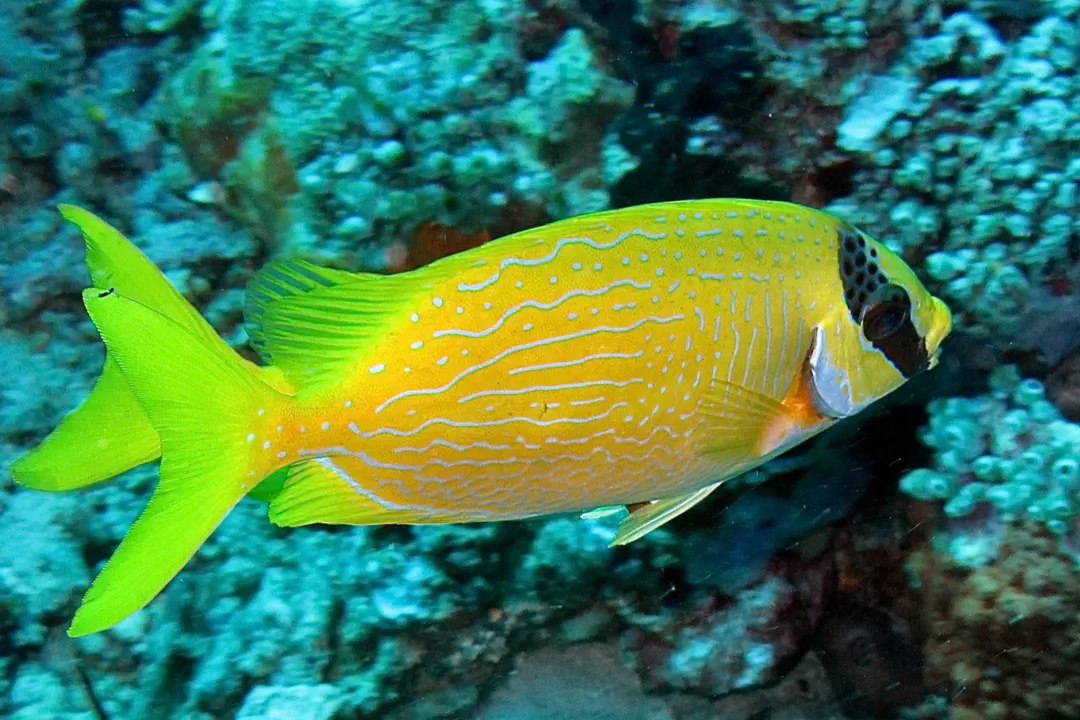
There are some geographic variations in its colour pattern (especially in the size and distribution of the spots) over its large range and some authorities have recommended splitting it into three or two species: In the former case the species are S. corallinus of the Indian Ocean, S. tetrazonus of the Western Pacific Ocean, and S. studeri of the Coral Sea region. When two are recognized, it is the widespread S. corallinus (with S. tetrazonus as a synonym) and S. studeri of the Coral Sea region.
Indo-West Pacific: Aldabra Islands, Seychelles, Maldives, Andaman Sea, Thailand, Indonesia, Peninsular Malaysia, Sabah, Singapore, Vietnam, Philippines, Ryukyu Islands, Ogasawara Islands, Palau, Kiribati, Papua New Guinea, Solomon Islands, Australia, Vanuatu, and New Caledonia. Replaced by Siganus trispilos in northwest Australia.
It typically inhabits coral reefs, although juveniles often can be seen in seagrass meadows. It is generally fairly common. It is often caught as a food fish and occasionally as an aquarium fish. It has been reported to cause hallucinations when consumed.
© Darren ObbardCC BY 4.0 · iNaturalist 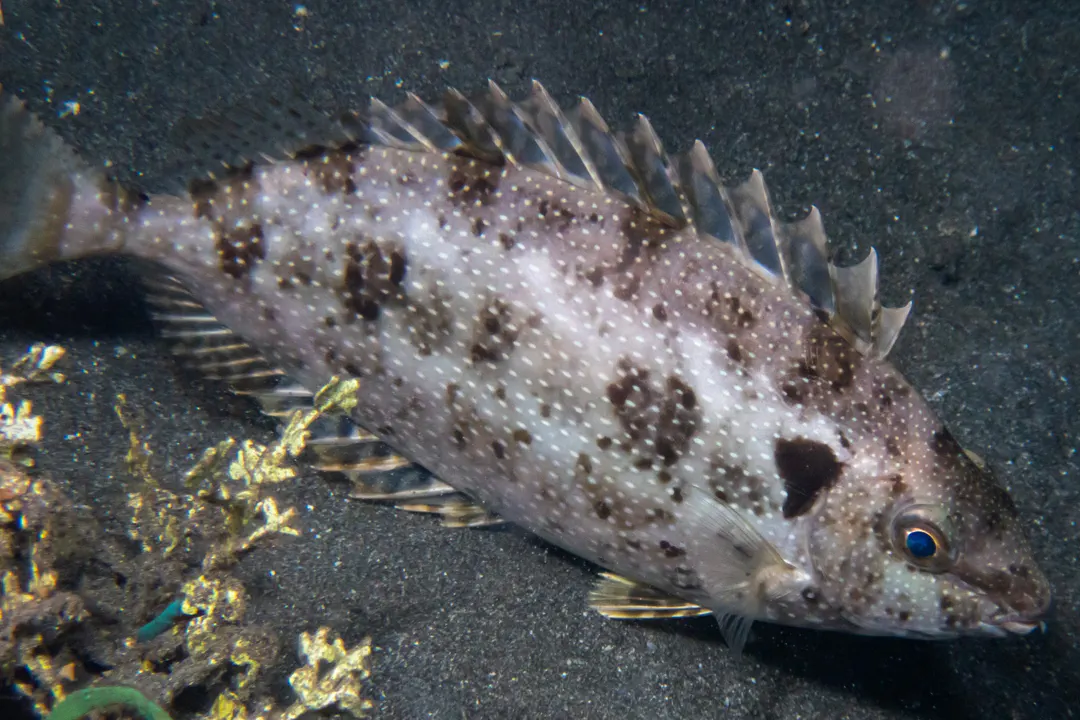 © portioidCC BY 4.0 · iNaturalist
  © portioidCC BY 4.0 · iNaturalist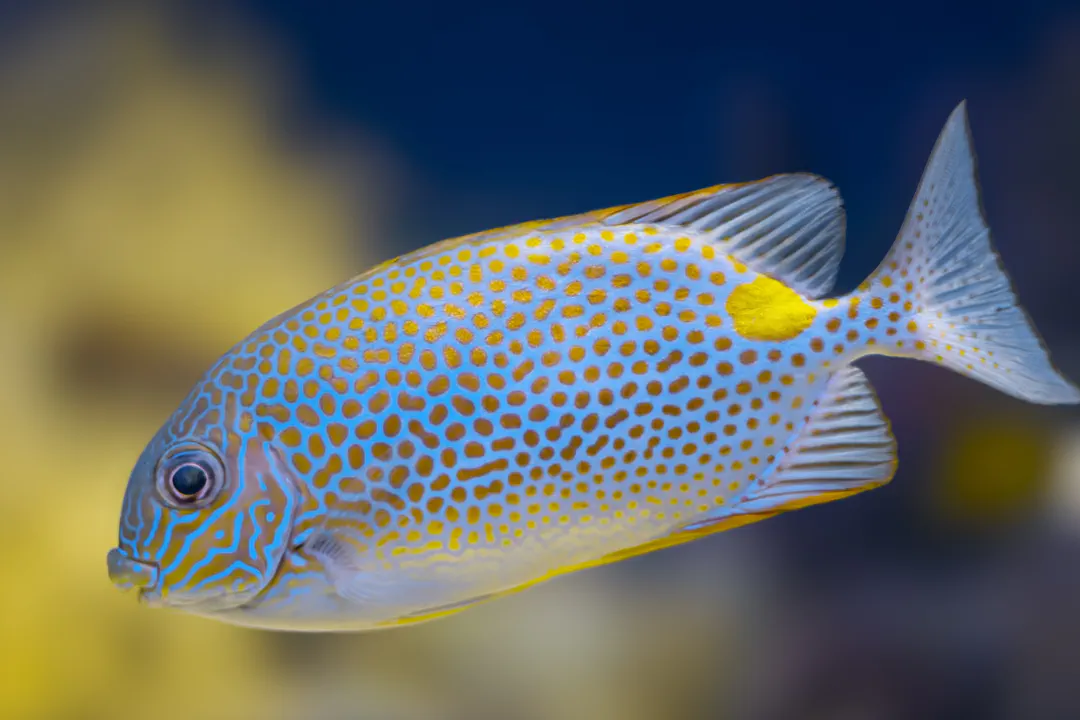
 © Julien RenoultCC BY 4.0 · iNaturalist
  © Bernard DUPONTCC BY 4.0 · iNaturalist
 Coral Rabbitfish is classified as venomous, dangerous to humans. Always exercise caution and keep a safe distance.
Coral Rabbitfish can be found at depths of up to 30 meters.
Download Seabook free for iOS and Android.