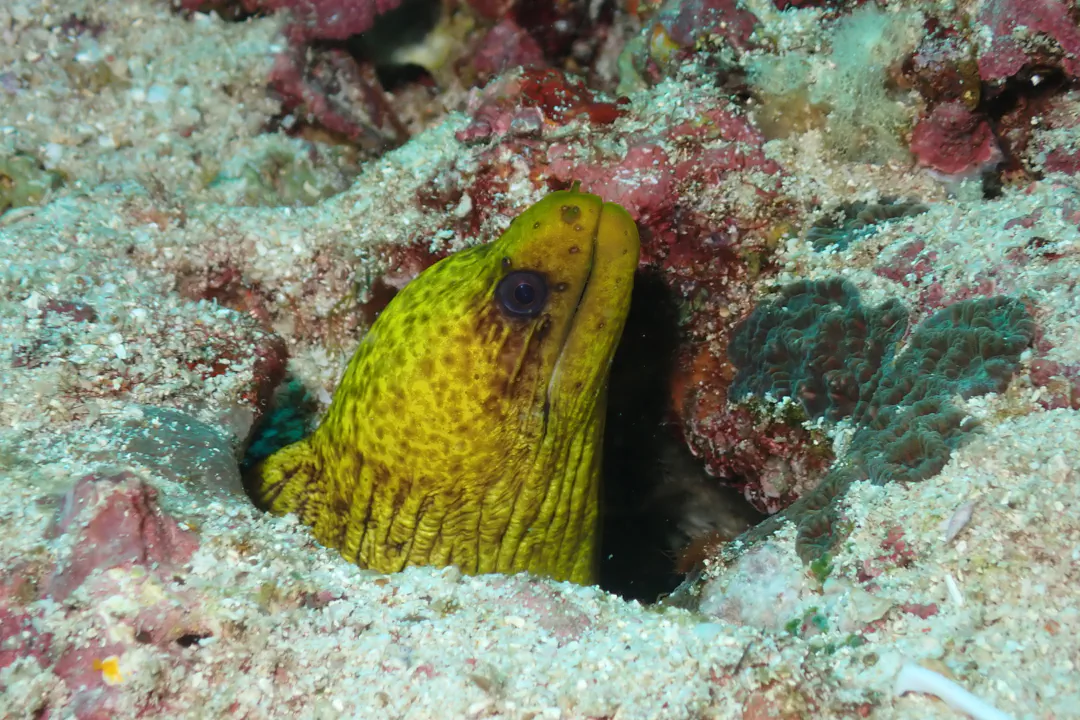
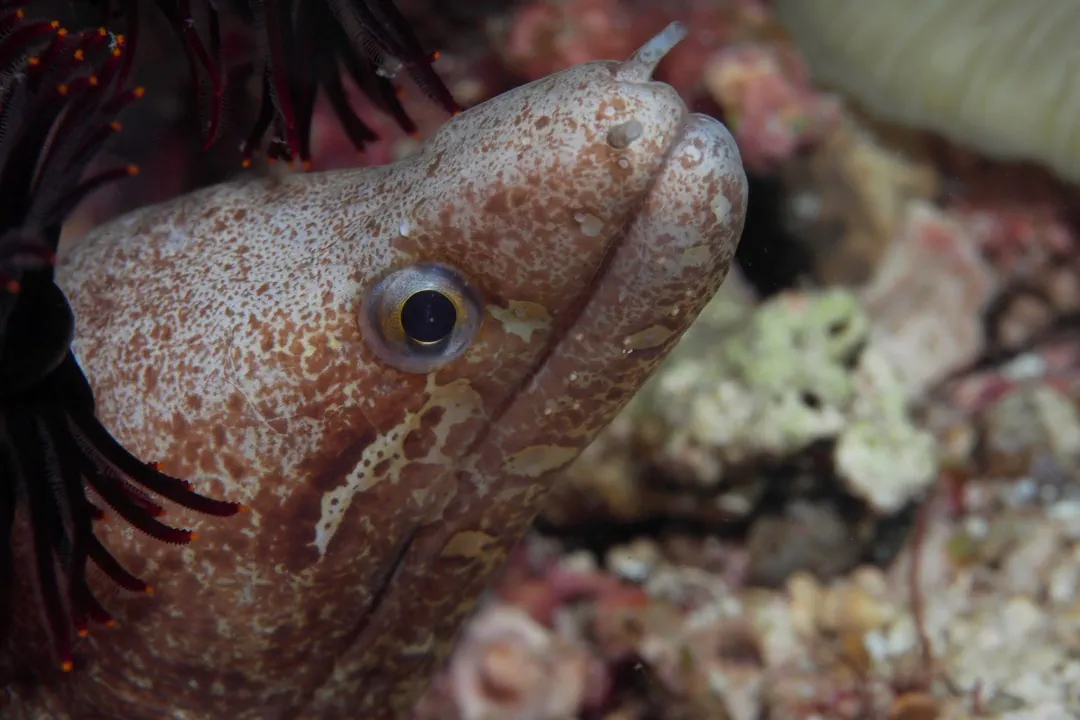
 © Rickard ZerpeCC BY-SA 4.0 · iNaturalist
Barred-fin Moray
Gymnothorax zonipectis
Gymnothorax formosus
Gymnothorax formosus, commonly known as the Palenose Moray, is a species of moray eel in the family Muraenidae found in the western central Pacific Ocean. The species reaches a maximum length of 69.2 cm.
The Palenose Moray was first described by Pieter Bleeker in 1864. It was originally named Gymnothorax formosus Bleeker, 1864, with no different original genus combination listed. The type locality for this species is Wahai, Ceram (Seram), Indonesia. The specific epithet formosus is Latin for 'beautiful,' 'handsome,' or 'well-formed.' The genus name Gymnothorax is attributed to Bloch, 1795, and is generally formed from Greek elements associated with 'naked' and 'breast/thorax.' The species has been treated as a synonym of Gymnothorax undulatus by some authors, while others have retained it as valid. The current status of the species is valid as Gymnothorax formosus Bleeker, 1864, according to the Catalog of Fishes.
The Palenose Moray has an elongated, scaleless body that is laterally compressed toward the tail, which is characteristic of moray eels. The dorsal, caudal, and anal fins of the species form a continuous fin margin. No dependable live-colour description is available for the Palenose Moray, making identification based solely on colour challenging. Identification of the Palenose Moray from similar species typically requires a clear photograph along with locality information and examination of diagnostic characters such as vertebral counts and jaw arrangement.
The Palenose Moray is a marine species found in the Indo-West Pacific region. Its geographic distribution includes East Africa, the Seychelles, Comoros, Mayotte, Madagascar, Mauritius, Indonesia, Papua New Guinea, southern Japan, Taiwan, northern Australia, New Caledonia, Hawaii, and the Pitcairn Group. The species is classified as demersal, indicating it lives near the sea floor. No specific reef zone assignment has been verified for the Palenose Moray, as it is only listed as marine. The substrate preference for the Palenose Moray is not specified in the available sources. There is no verified depth range documented for the Palenose Moray in the authoritative records.
The Palenose Moray is currently assessed as Least Concern on the IUCN Red List. There is no reliable evidence that the Palenose Moray supports a directed commercial fishery, and its occurrence as bycatch is not sufficiently documented. No authoritative source documents a significant or established trade in the Palenose Moray, indicating it should not be assumed to be a routine aquarium species. Species-specific evidence on the consumption and food safety of the Palenose Moray is unavailable, and while moray eels can accumulate ciguatoxins, the risk of ciguatera for this species cannot be confirmed. As a moray eel, the Palenose Moray could inflict a serious defensive bite if handled, cornered, or hand-fed, and contact should be avoided.
© Rickard ZerpeCC BY-SA 4.0 · iNaturalist 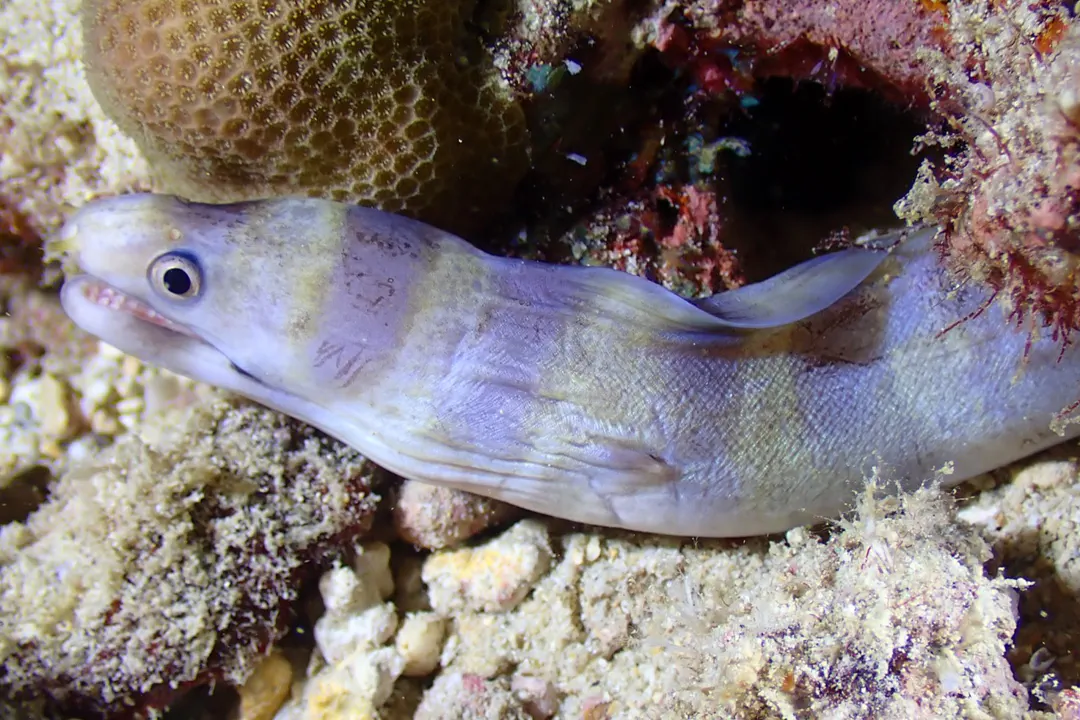 © Robin WhiteCC BY 4.0 · iNaturalist
 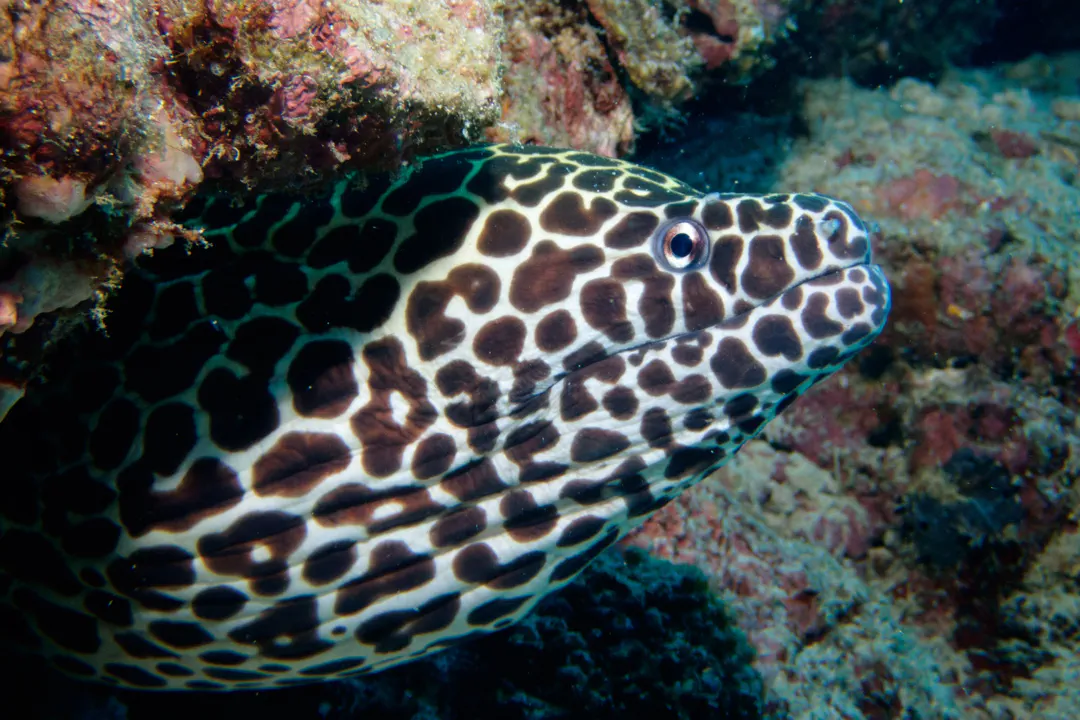 © Borja FierroCC BY 4.0 · iNaturalist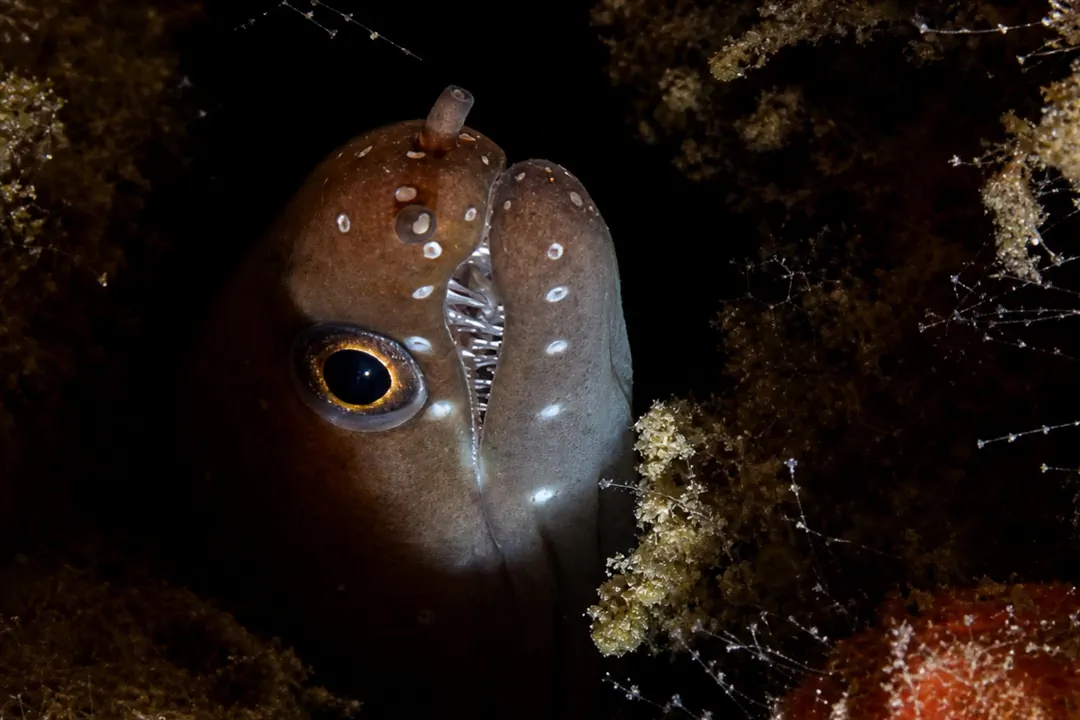
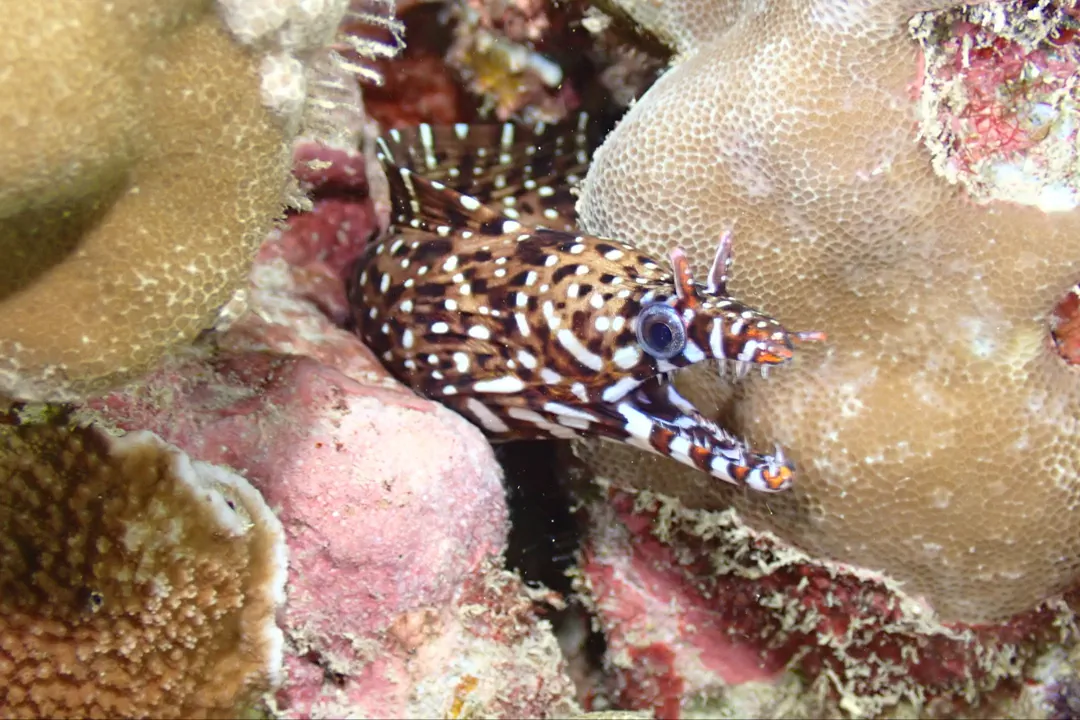 © Robin WhiteCC BY 4.0 · iNaturalist
 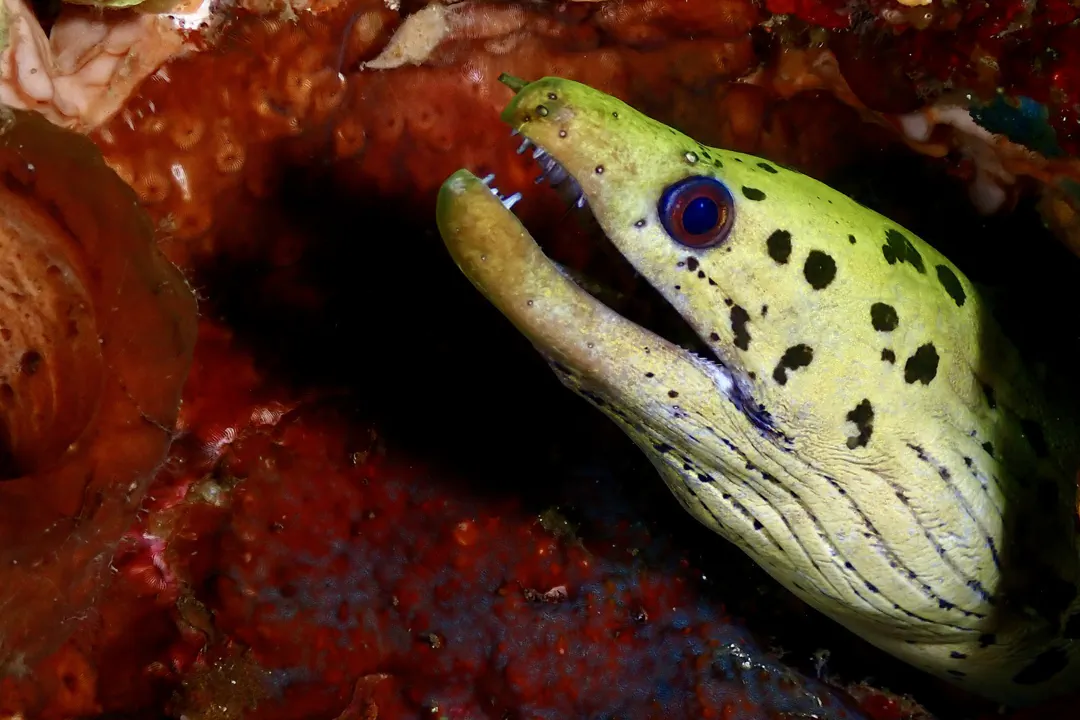 Chris SpainCC0
 Palenose Moray has no known danger to humans. However, always observe marine life responsibly.
Download Seabook free for iOS and Android.