 © Roger RittmasterCC BY 4.0 · iNaturalist
Barred Filefish
Cantherhines dumerilii
Aluterus scriptus
Aluterus scriptus is a marine fish belonging to the family Monacanthidae.
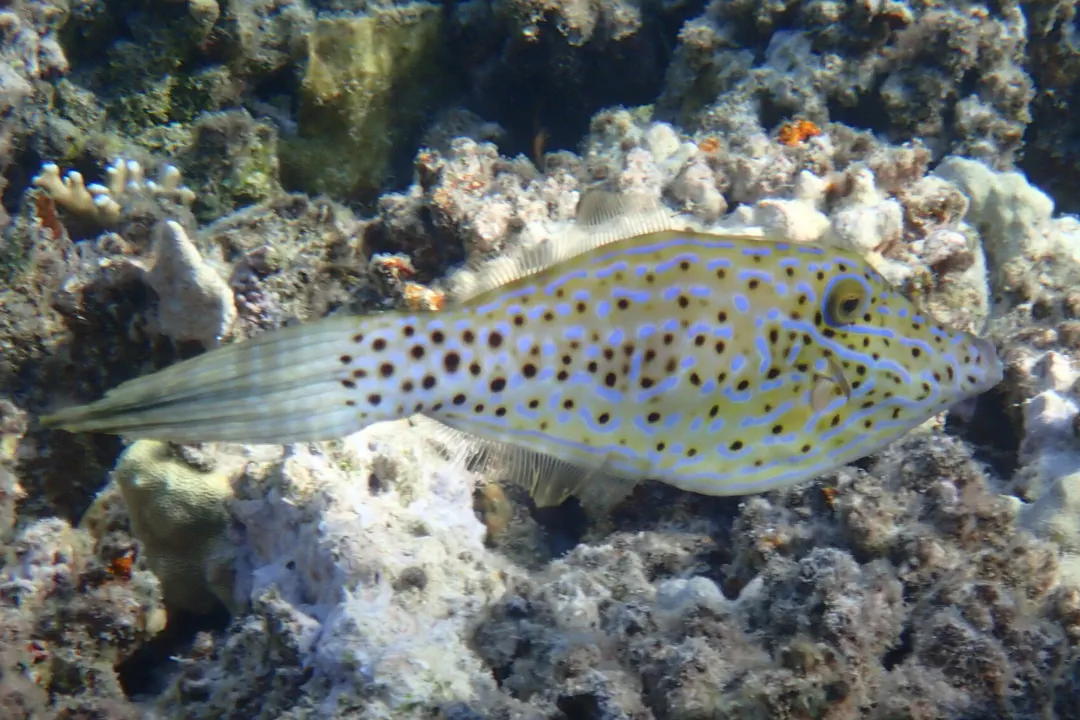
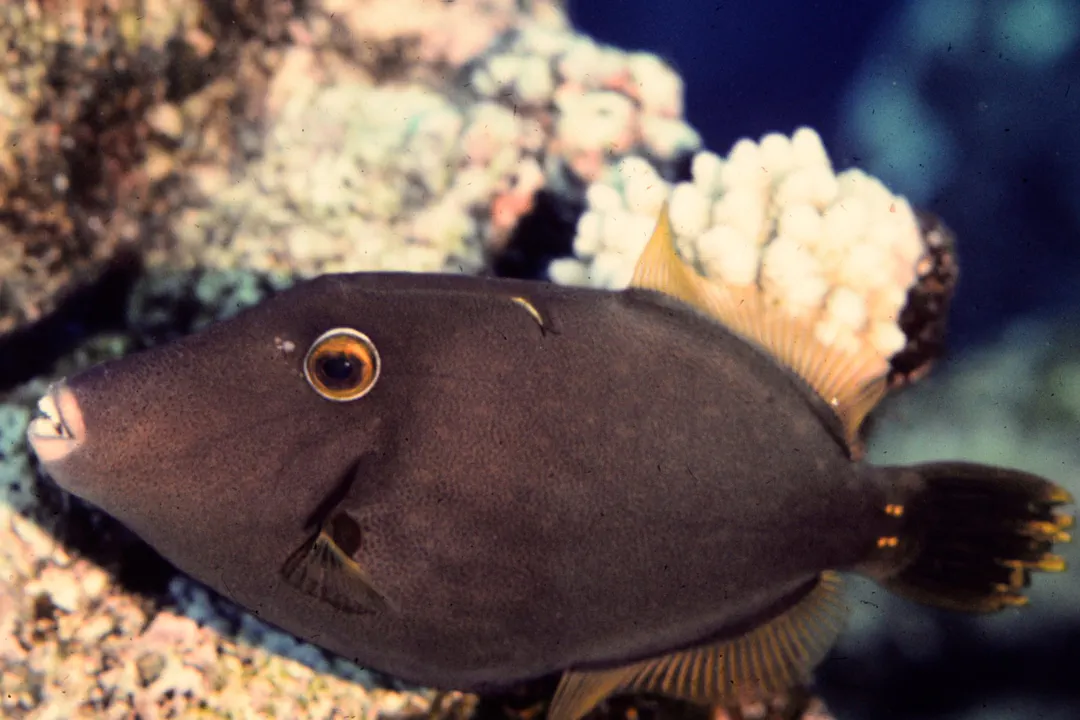
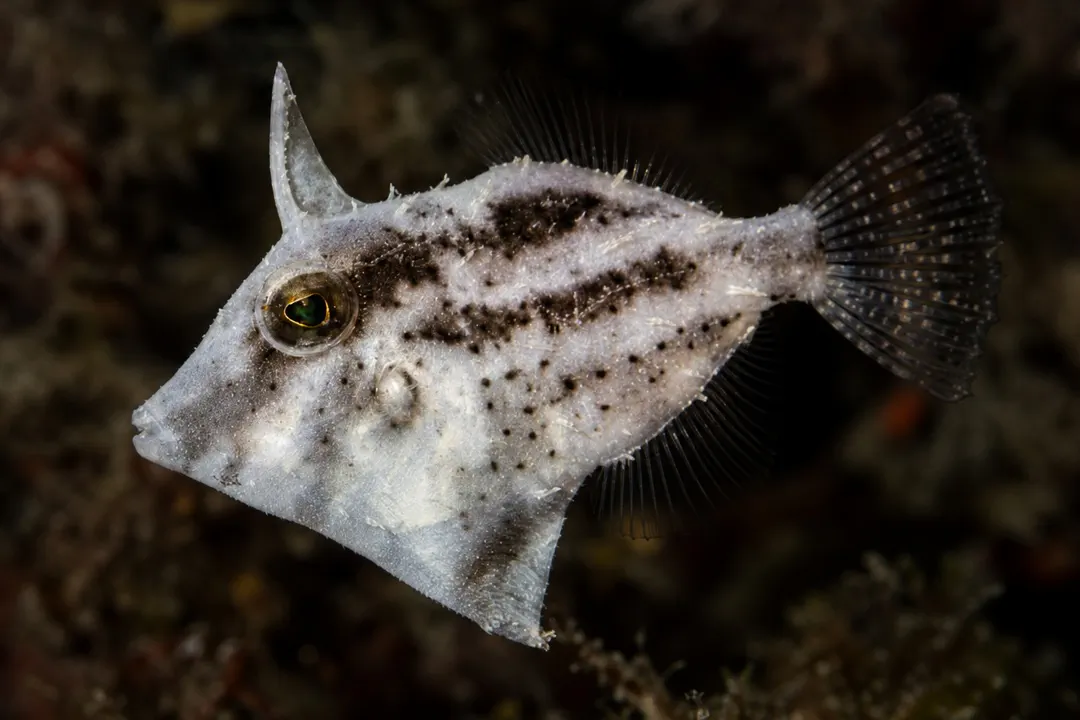
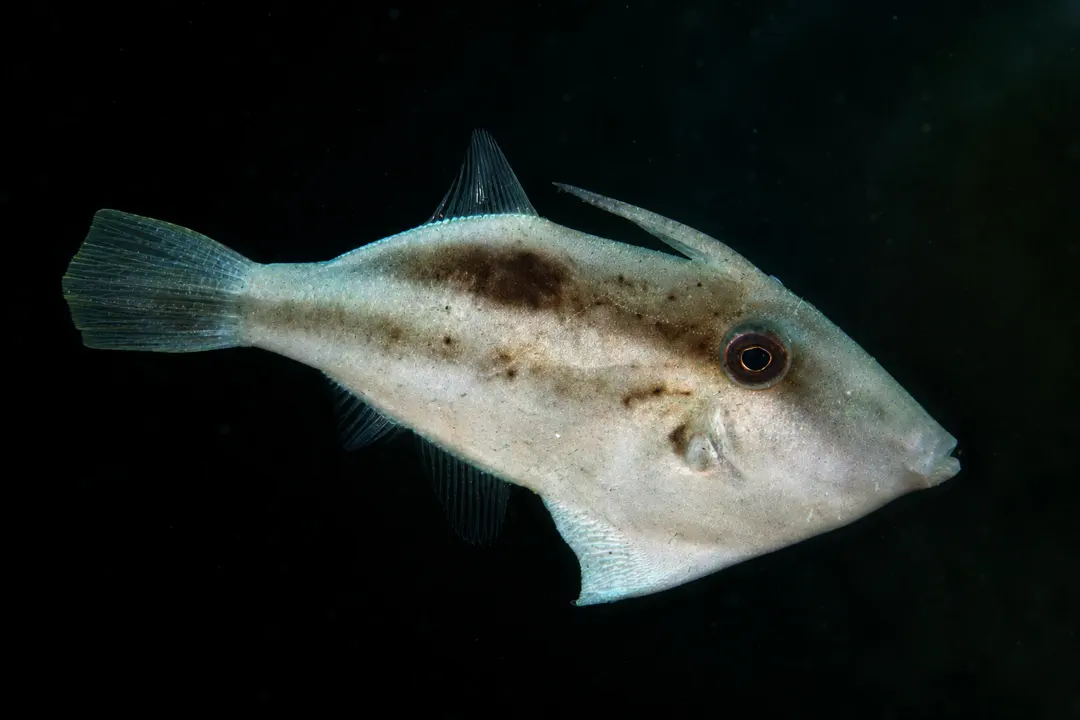
Aluterus scriptus is a medium size fish which can grow up to 110 cm (3.6 ft) in length. The body shape looks like an elongated oval, strongly compressed. Its background body coloration is olive-brown or grey depending on its surrounding environment, irregular blue lines and spots are distributed on the body mixed with some black spots mainly on the head. The mouth is small and at the end of its pointed snout. Like all the Tetraodontiformes, it has no pelvic fin but has two particular dorsal spines; the first anterior one is long, slender and erectile, located just over the eyes, the second is small and not easy to see but it locks the first one when it is erected. The rounded caudal fin is quite long and can be displayed as a fan.
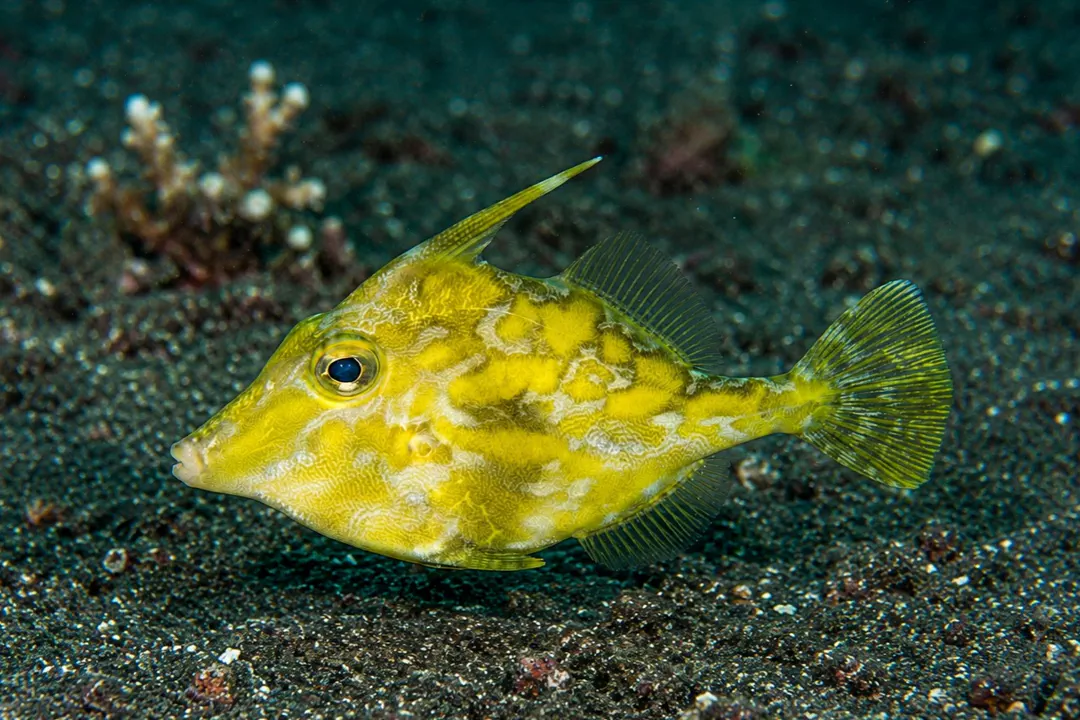
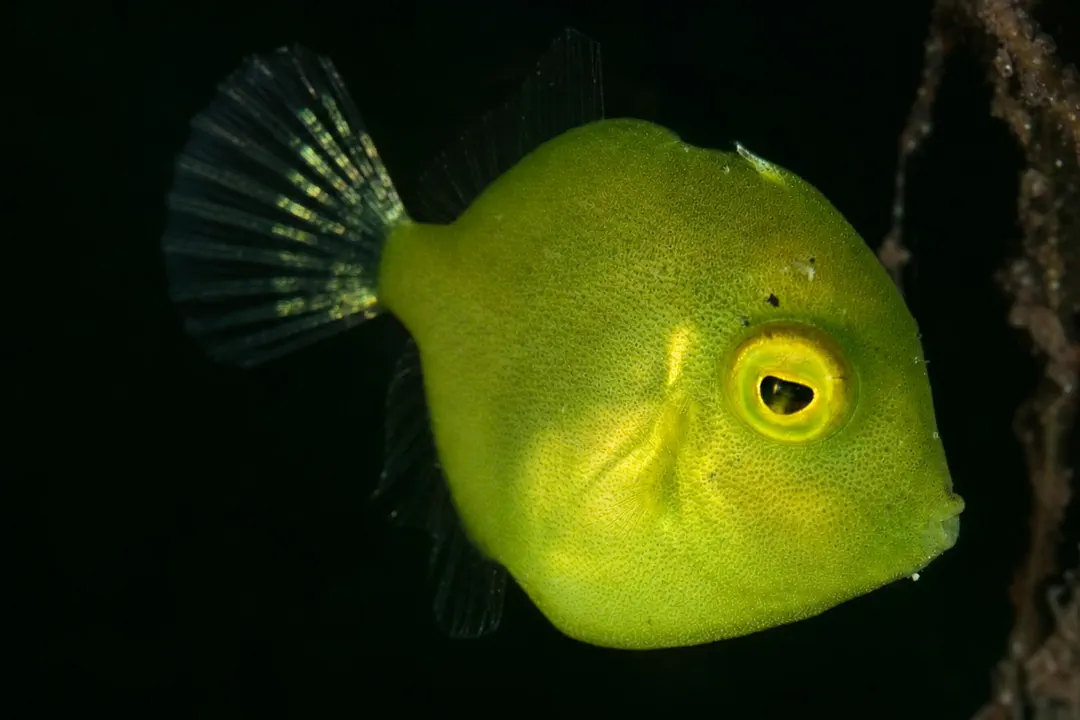
The juveniles have a yellow with black spots body coloration.
This species has a circumtropical repartition, it can be found in the tropical waters from the Atlantic Ocean, the Indian Ocean and the Pacific Ocean.
This filefish can be observed in lagoons, coral and rocky reefs, seaweed fields,pinnacles, wrecks and also in open water.
Aluterus scriptus is omnivorous and have a large choice for its meals like small crustaceans, algae, gorgonians, anemones, tunicates, fire coral...
Aluterus scriptus has a diurnal activity and is demersal. It is solitary and shy with divers and is rarely seen in couple or in group.
© Roger RittmasterCC BY 4.0 · iNaturalist 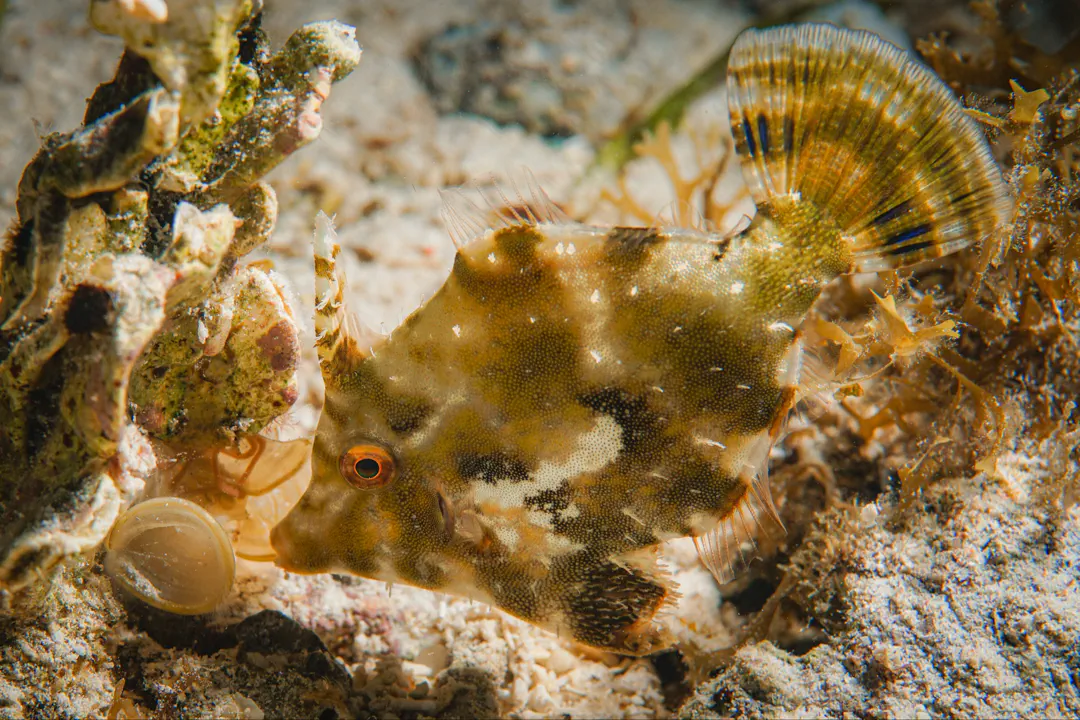 © Stas KuryanAll rights reserved
  © seabook.appAll rights reserved
  © seabook.appAll rights reserved
  © seabook.appAll rights reserved
  © seabook.appAll rights reserved
 Scrawled Filefish is classified as poisonous. Always exercise caution and keep a safe distance.
Scrawled Filefish can be found at depths of up to 120 meters.
Download Seabook free for iOS and Android.