 © Alberto AlcaláCC BY 4.0 · iNaturalist
Bloody Frogfish
Abantennarius sanguineus
Antennarius striatus
Antennarius striatus is a marine fish belonging to the family Antennariidae.
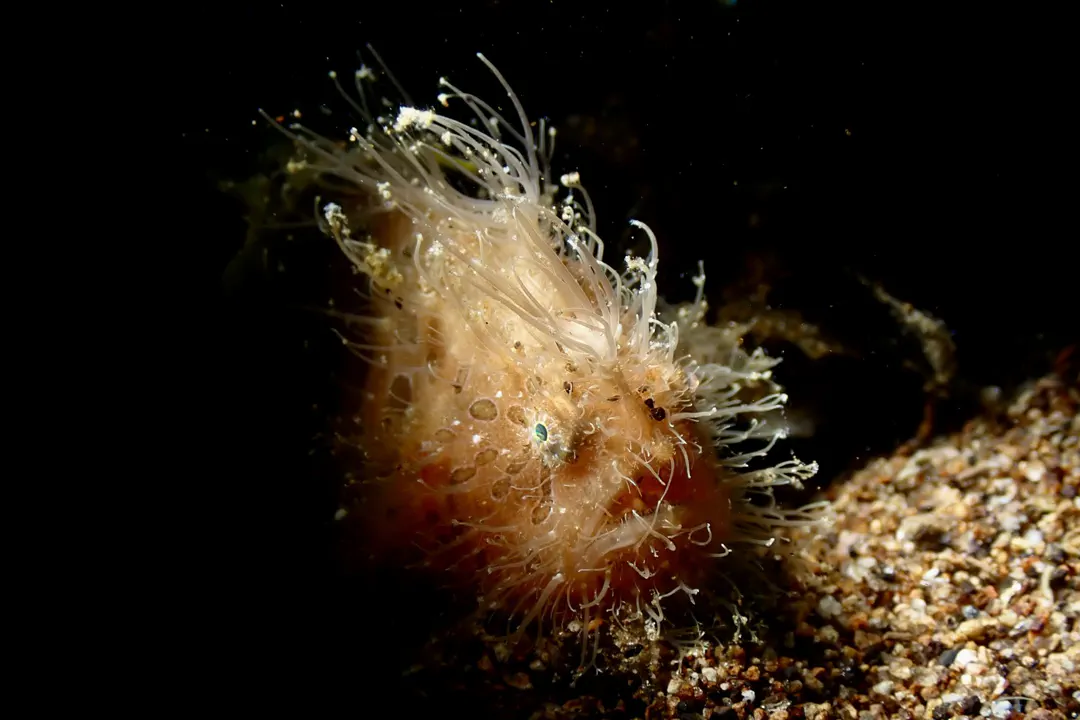
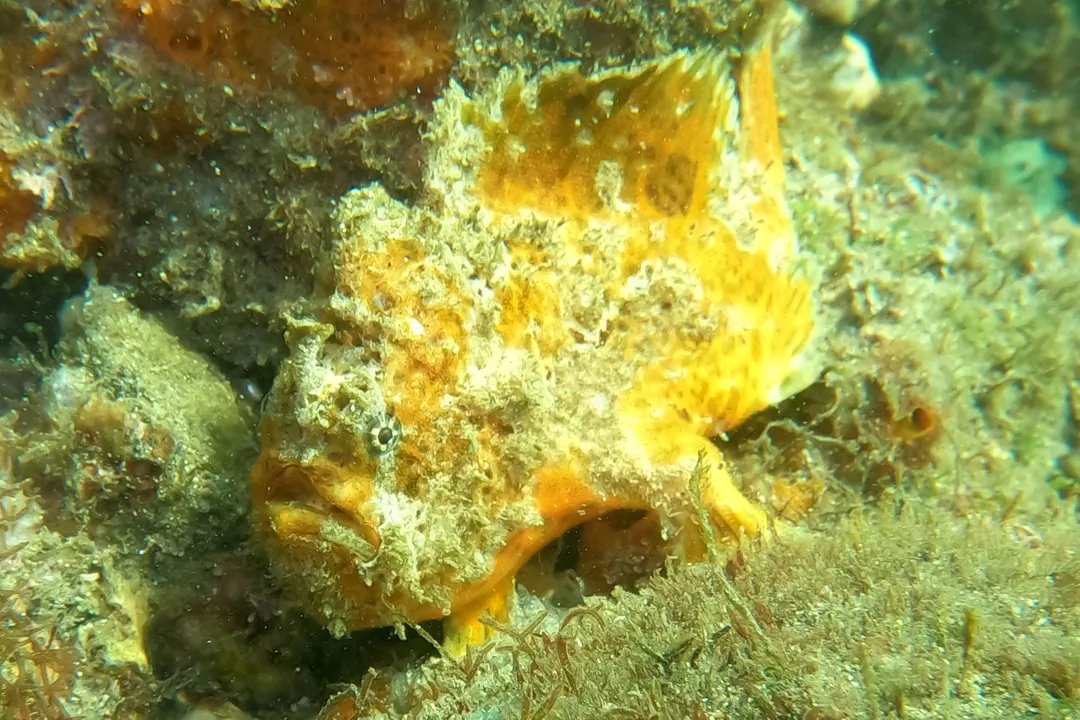
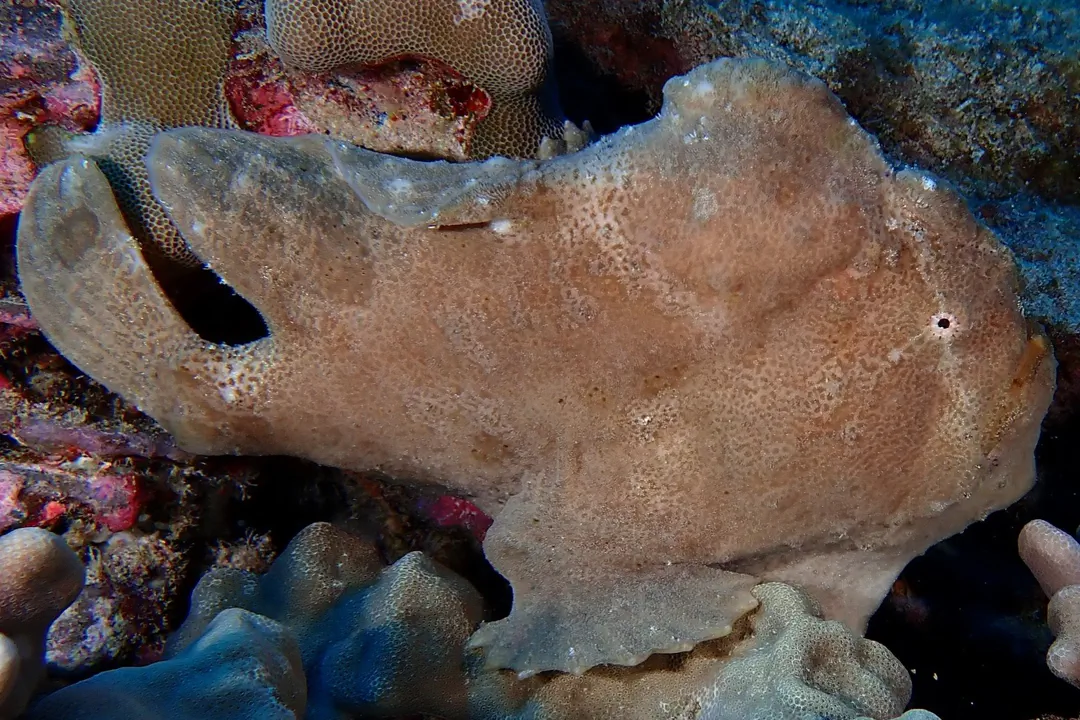
This small fish grows up to 22 cm (8.7 in) long. Like other members of its family, it has a rounded, extensible body, and its soft skin is covered with irregularly-arranged dermal spinules resembling hairs. Its large mouth is forwardly extensible, allowing it to swallow prey as large as itself. The coloring of its body is extremely variable because individual fish tend to match their living environments. Frogfishes have the capacity to change coloration and pigment pattern, taking only a few weeks to adapt. The dominant coloration varies from yellow to brownish-orange, passing through a range of shades, but it can also be green, gray, brown, almost white, or even completely black without any pattern. Body and fins can be marked with roughly parallel dark stripes or elongated blotches, some with rays radiating outward from the eye.
The first dorsal spine, the illicium, tips forward, and is modified for use like a fishing rod. Its tip has a characteristic worm-like esca (lure) which, when waved, attracts unsuspecting prey. The dorsal spine is composed of two to seven elongated appendages. The lure is a way to easily distinguish A. striatus from Antennarius hispidus, which otherwise has similar physical characteristics (stripes, coloration, cutaneous appendages) and with which it is often confused. The illicium has the same length as the second dorsal spine and it is often darkly banded. The second dorsal spine is practically vertical and is movable, while the third one is bent towards the back of the body. They are well separated from each other and also from the dorsal fin.
The pectoral fins are angled, and with the pelvic fins, allow the frogfish to "walk" on the sea bottom and to keep a stable position for ambush.
The striated frogfish is found in the tropical and subtropical waters from the Indian Ocean to the center of the Pacific Ocean, and in the Atlantic Ocean on the western coast of Africa and from the New Jersey coast to the southern Brazilian coast including the Gulf of Mexico and the Caribbean.
This species inhabits shallow, sandy areas or rocky and coral reefs to deep waters. It can be found from the surface to 210 m with average occurrence at 40 m deep.
As all frogfishes, A. hispidus is a voracious carnivore which will devour all right-sized prey that pass within reach, usually other fish, but sometimes even its own kind. It can swallow prey its own size.
Like other members of its family, it has a benthic and solitary lifestyle. They gather during mating period, but do not tolerate each other any more after the act of fertilization.
© Alberto AlcaláCC BY 4.0 · iNaturalist 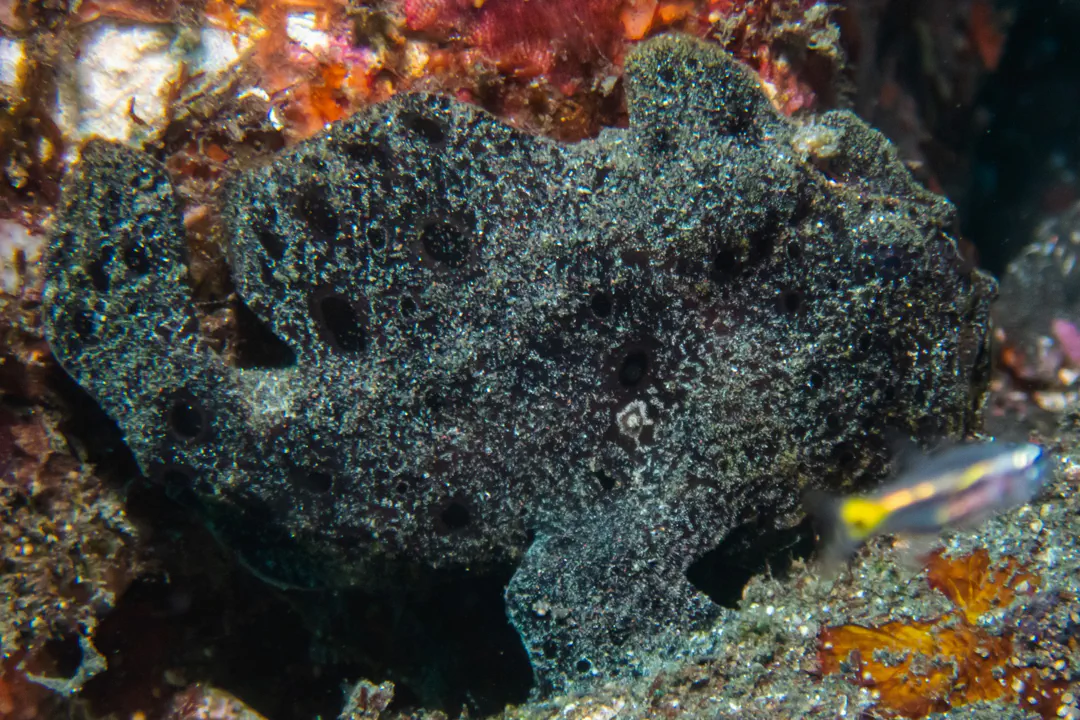 © portioidCC BY 4.0 · iNaturalist
  © Robin WhiteCC BY 4.0 · iNaturalist
 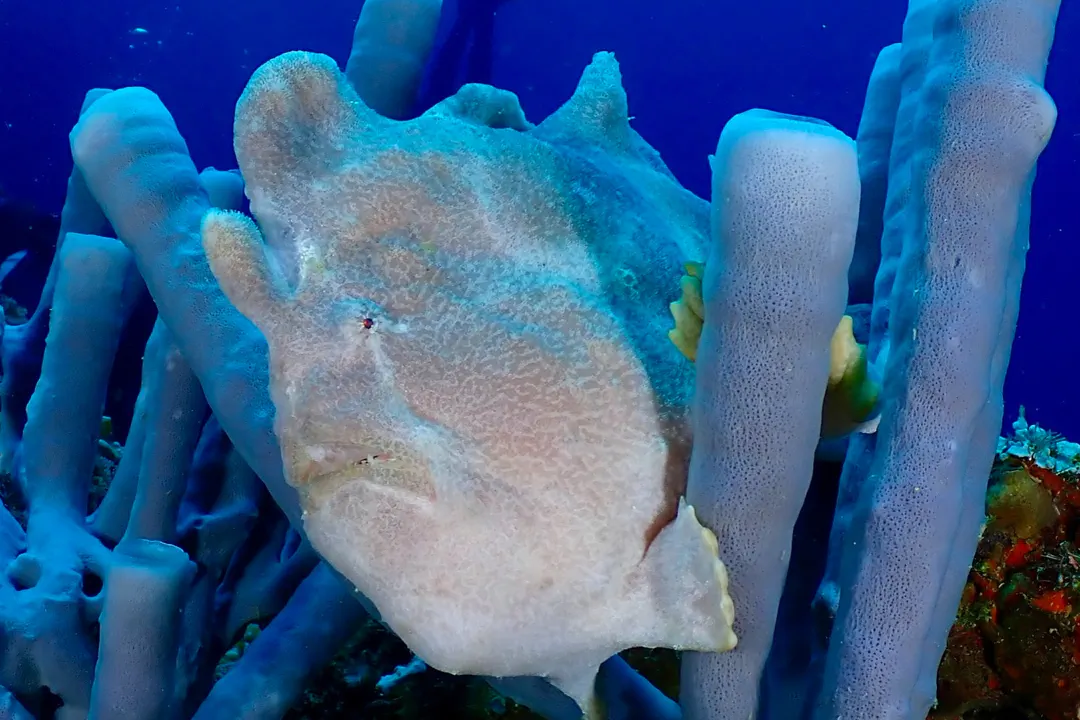 Chris SpainCC0 · iNaturalist
 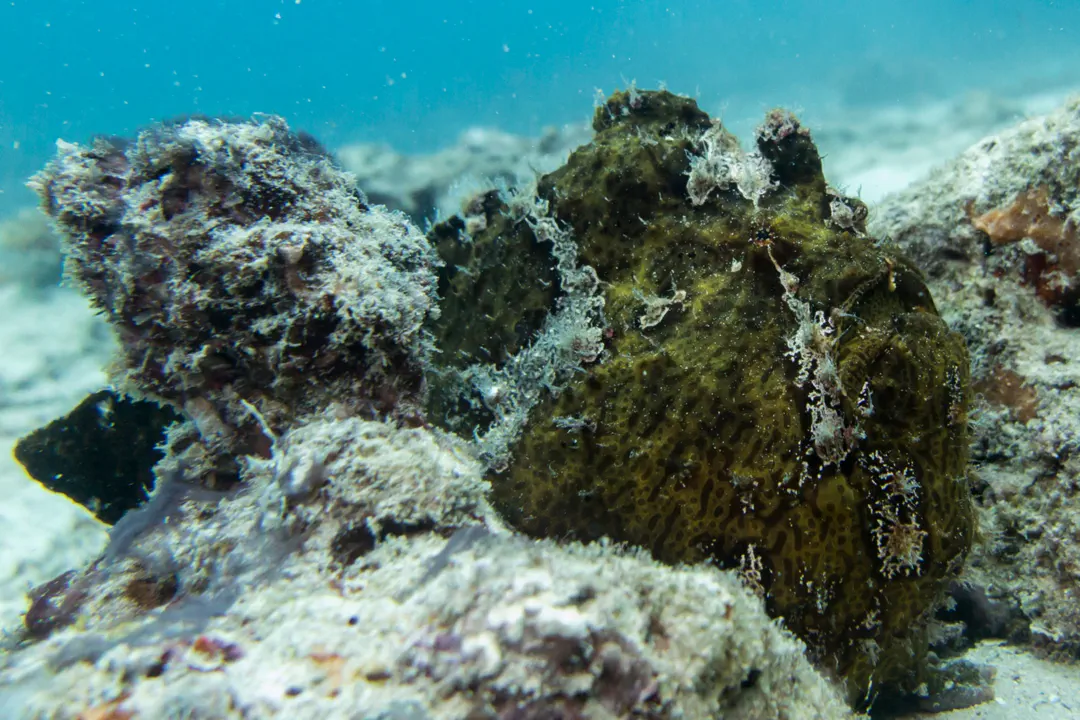 © Ewout KnoesterCC BY-SA 4.0 · iNaturalist
 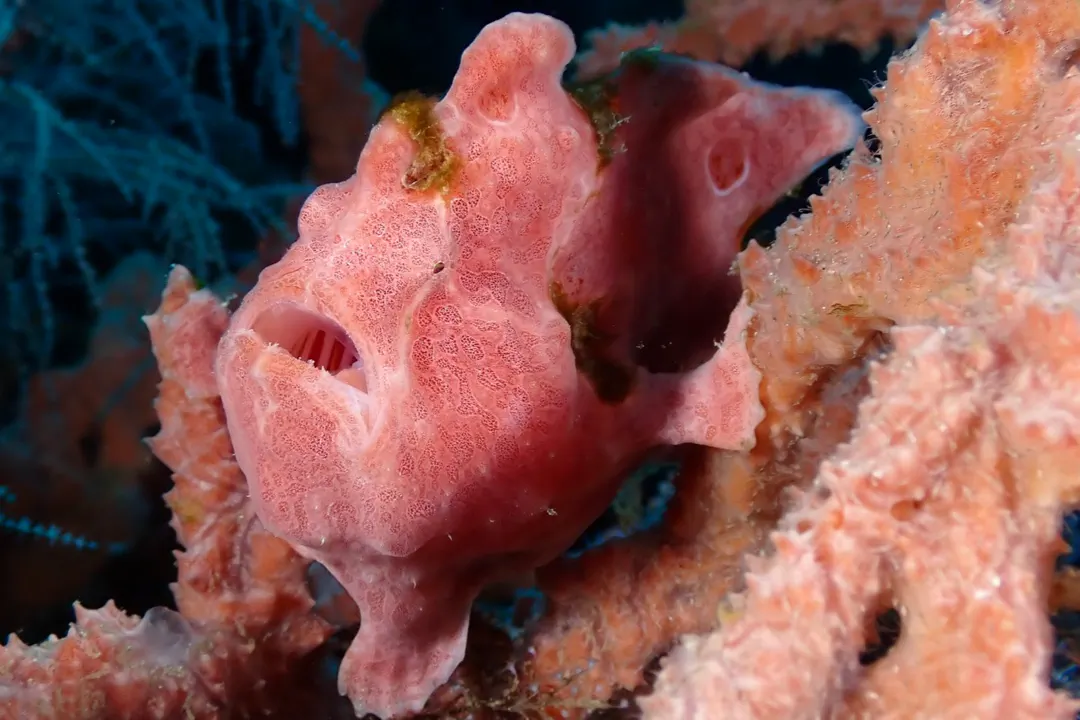 Chris SpainCC0 · iNaturalist
 Striate Anglerfish (juvenile) has no known danger to humans. However, always observe marine life responsibly.
Striate Anglerfish (juvenile) can be found at depths of up to 219 meters.
Download Seabook free for iOS and Android.