 © Debra BakerCC BY 4.0 · iNaturalist
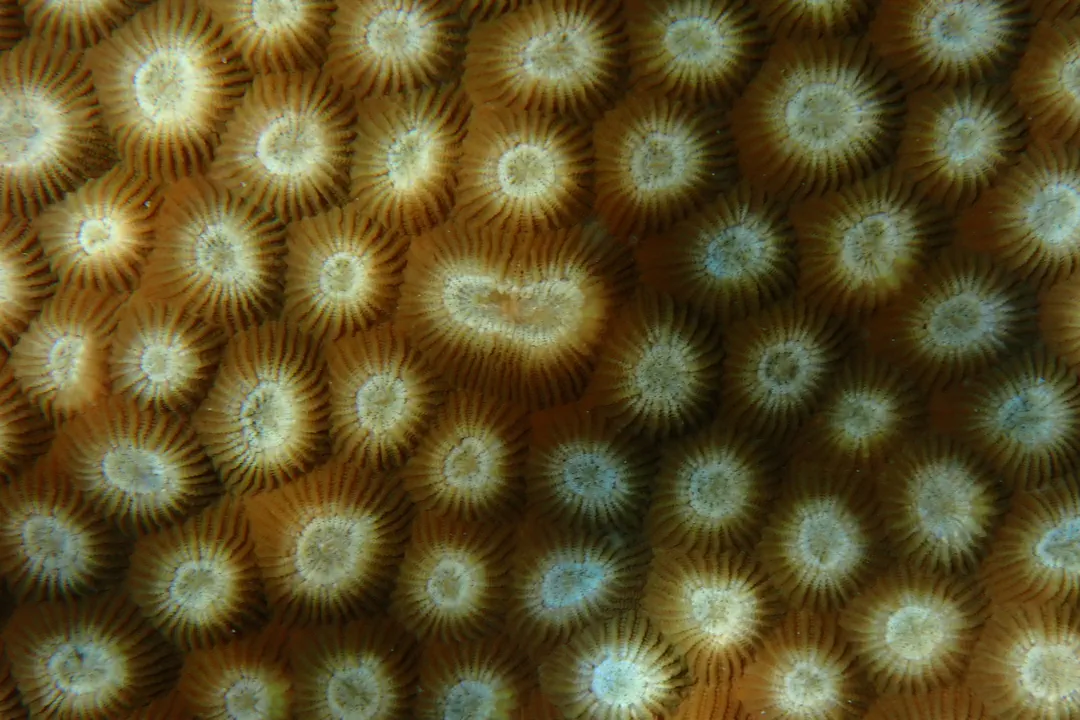
Diploastrea Brain Coral
Diploastrea heliopora
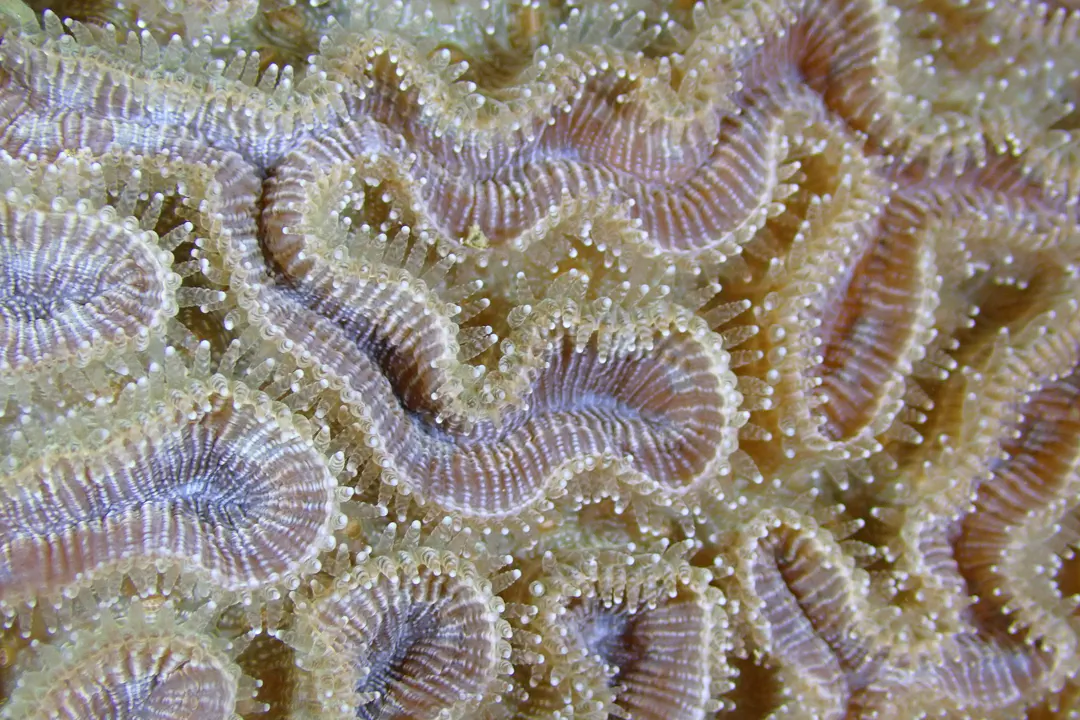
Diploria labyrinthiformis
Diploria labyrinthiformis is a species of stony coral in the family Mussidae. Found in tropical areas of the west Atlantic Ocean, it has a familiar, maze-like appearance.
This species of reef-building coral has a hemispherical, brain-like shape with a brown, yellow, or gray colour. It has characteristic deep, interconnected double-valleys. These polyp-bearing valleys are each separated by grooved ambulacral ridges. There may be a difference in colour between the valleys and the grooves.
Diploria labyrinthiformis can grow upward at a rate of approximately 3.5 millimeters per year, achieving about 2 metres in diameter. During its planktonic larval stage, the coral has locomotion. After that time, it becomes permanently sessile.
This species is a suspension feeder, and survives mainly on zooplankton and bacteria. These are captured by the polyps, by extruding mesenterial filaments and tentaces. The polyps have nematocysts which are triggered to hold their prey immobile. The prey is then transported to the mouth with the assistance of mucus and cilia.
Diploria labyrinthiformis is hermaphroditic, and reproduces through brooding. This entails the egg being fertilized by the sperm within the polyp, followed by the release of the larvae.
Diploria labyrinthiformis is found in tropical parts of the west Atlantic Ocean, the Gulf of Mexico, the Caribbean Sea, the southern tip of Florida, the Bahamas, Bermuda and the coasts of Central America.
This coral occurs offshore at depths ranging from 1 to 30 metres.
Diploria labyrinthiformis hosts Zooxanthella, a symbiotic dinoflagellate alga. The alga benefits from being in a protective environment in an elevated position. The coral benefits from the nutrients produced photosynthetically by the alga which provides part of its needs for growth and calcification.
The coral also has a relationship with Diadema antillarum, the long-spined urchin, whose grazing helps to reduce the effects of shading, as well as the overgrowth of macroalgae.
Despite the polyps being equipped with nematocysts, various species prey upon Diploria labyrinthiformis. These include:
This species is host to a parasite in the Corallovexiidae family:
Images of Diploria labyrinthiformis appear on two postage stamps: a 75 cent Belizian stamp created by Georges Declercq, and a 54 Euro cent stamp from Mayotte.
© Debra BakerCC BY 4.0 · iNaturalist Grooved Brain Coral has no known danger to humans. However, always observe marine life responsibly.
Grooved Brain Coral can be found at depths of up to 30 meters.
Download Seabook free for iOS and Android.