 © portioidCC BY 4.0
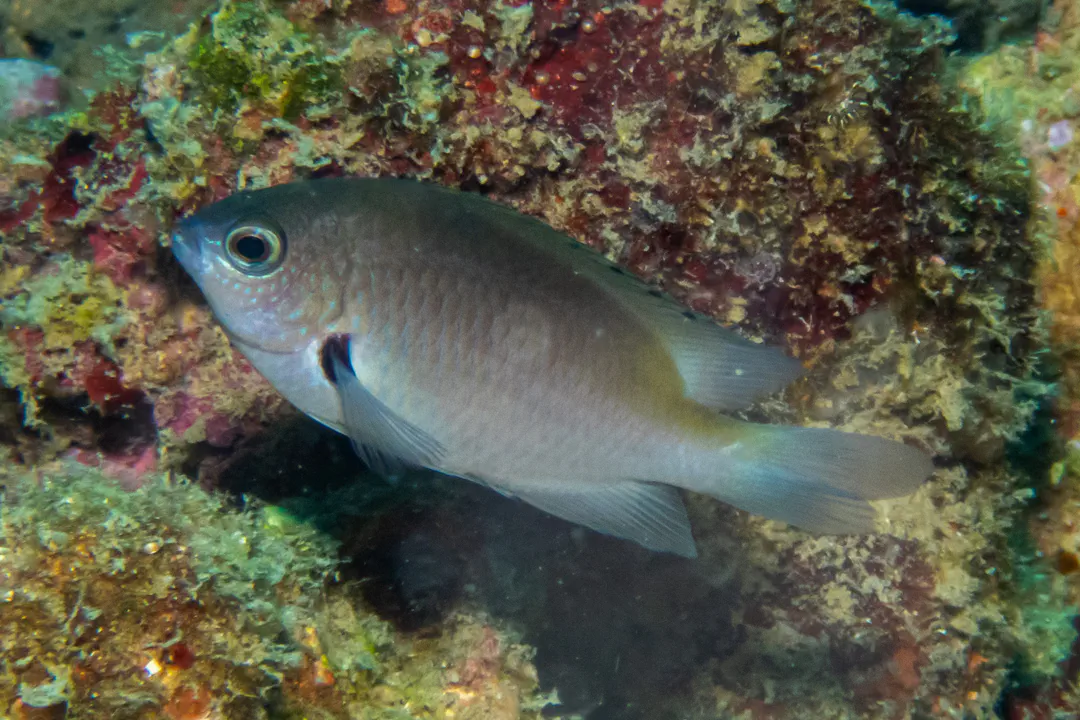
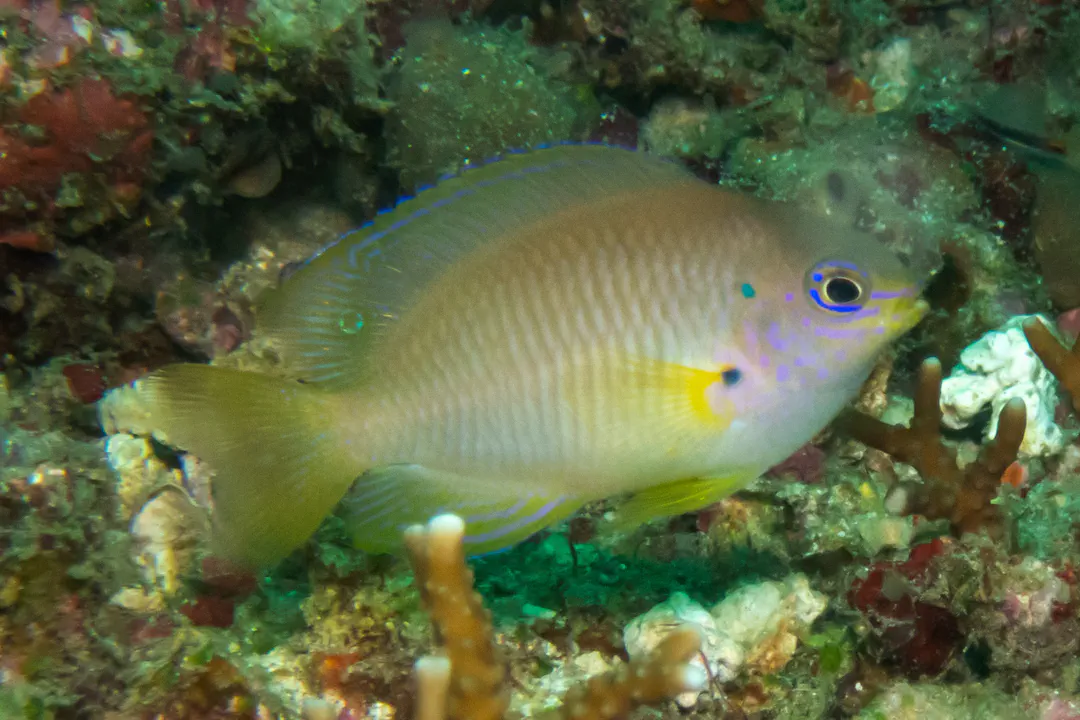
Alexander's Damsel
Pomacentrus alexanderae
 © seabook.appAll rights reserved
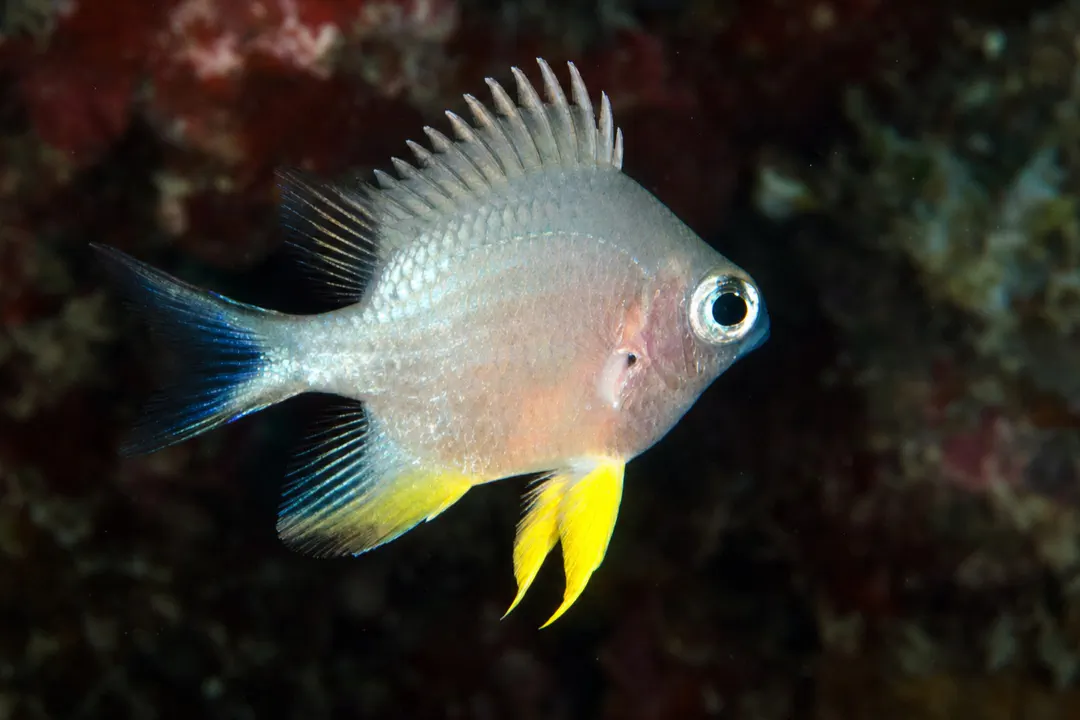
Amblyglyphidodon leucogaster
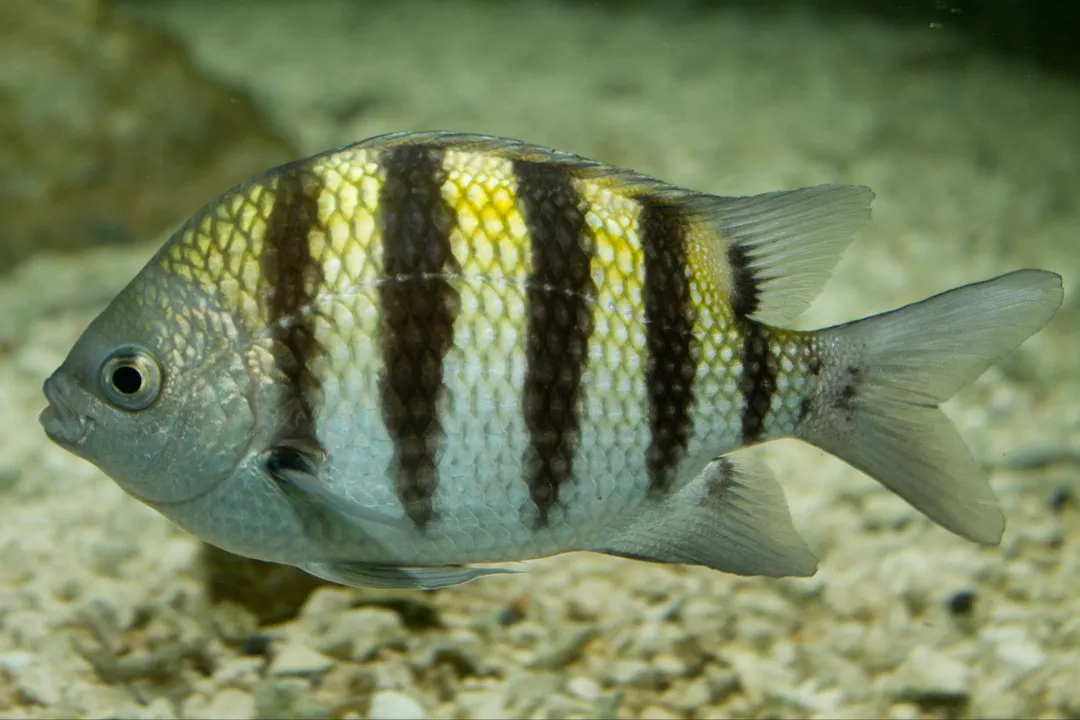
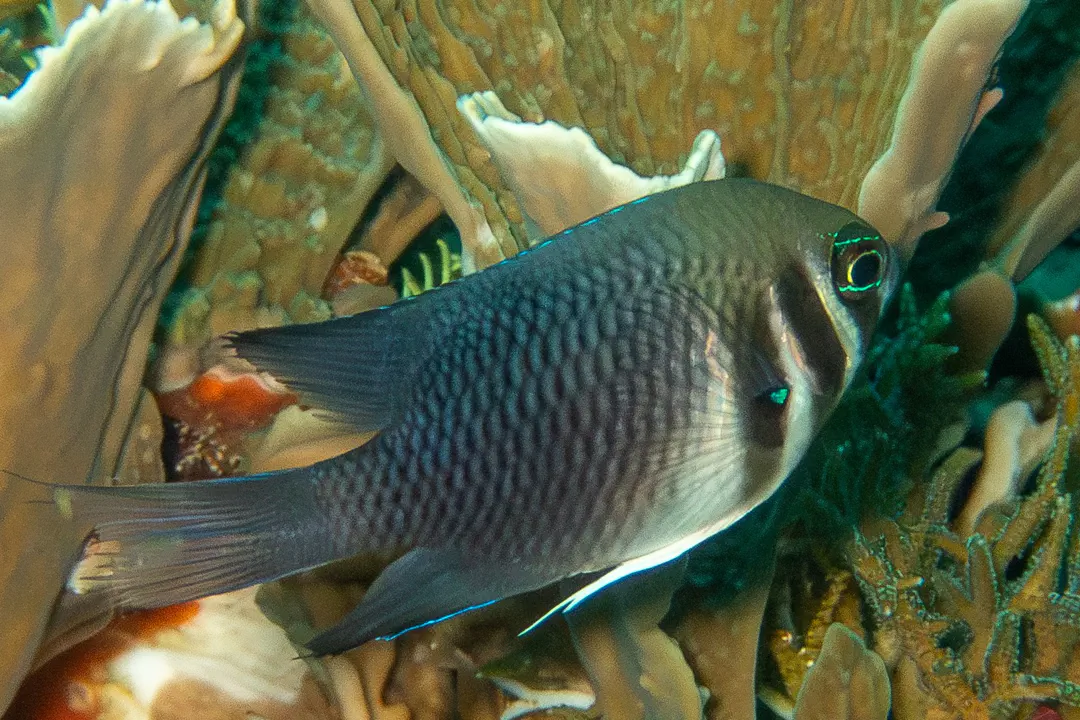
Amblyglyphidodon leucogaster is a species of marine fish in the family Pomacentridae, the damselfishes and clownfishes. It's widespread throughout the tropical waters of the Indo-West Pacific, Red Sea included.
It has a greyish body with darker scale margins, a yellow belly, pelvic fins and often anal fin, a black spot on the upper pectoral-fin base and broad dark margins on the dorsal and anal fins. Dorsal spines (total): 13; Dorsal soft rays (total): 12-13; Anal spines: 2; Anal soft rays: 12 - 14. This species is distinguished by the following characters: D XII-XIII,12-13 (usually XIII,12); A II,12-14 (often II,13); pectoral rays 16-17; lateral line tubed scales 14-17; gill rakers total, 25-29; body depth is 1.5-1.8 in SL. It's a small size fish that can reach a maximum size of 13 cm length.
Indo-West Pacific: from the Eastern Indian Ocean; north to Ryukyu Is.; south to Indonesia, including Western Australia up to the Caroline and Marshall Islands.
Adults inhabit lagoons, reef passages, and the outer reef slopes as solitary individuals or in small groups. Feed on copepods, amphipods, mysids, fish eggs, crustacean larvae, and a small portion of algae. Oviparous, distinct pairing during breeding. Eggs are demersal and adhere to the substrate. Males guard and aerate the eggs.
© portioidCC BY 4.0 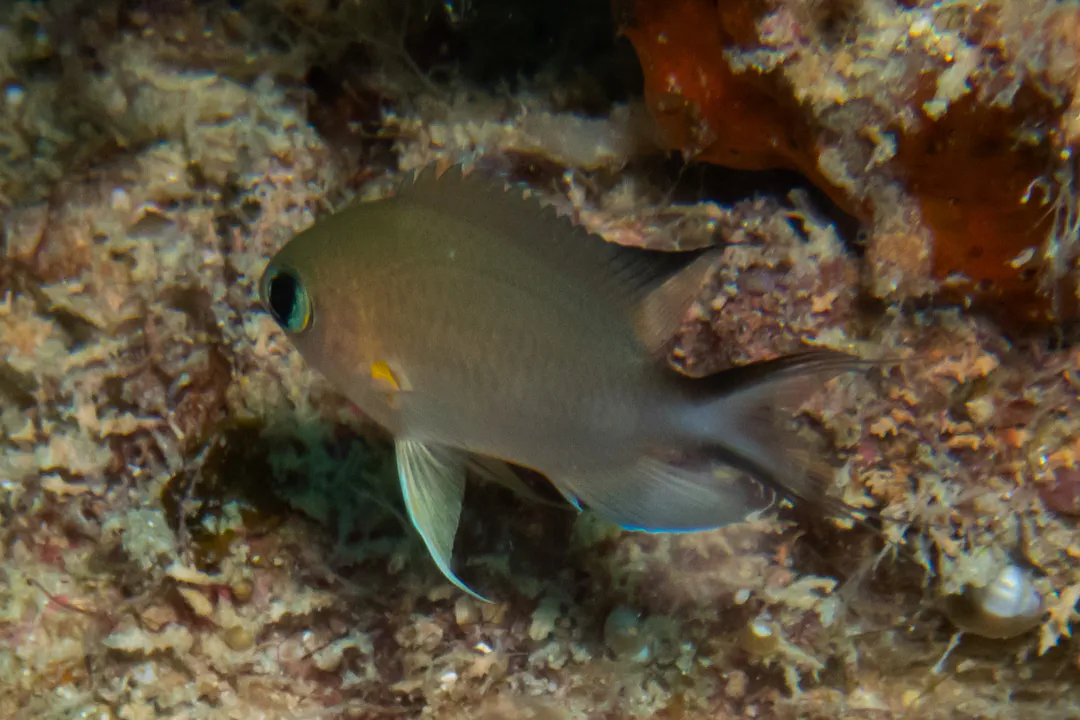 © portioidCC BY 4.0
  © portioidCC BY 4.0 · iNaturalist
  © Brian GratwickeCC BY 4.0 · iNaturalist
  © Piotr LukasikCC BY 4.0 · iNaturalist
  © seabook.appAll rights reserved
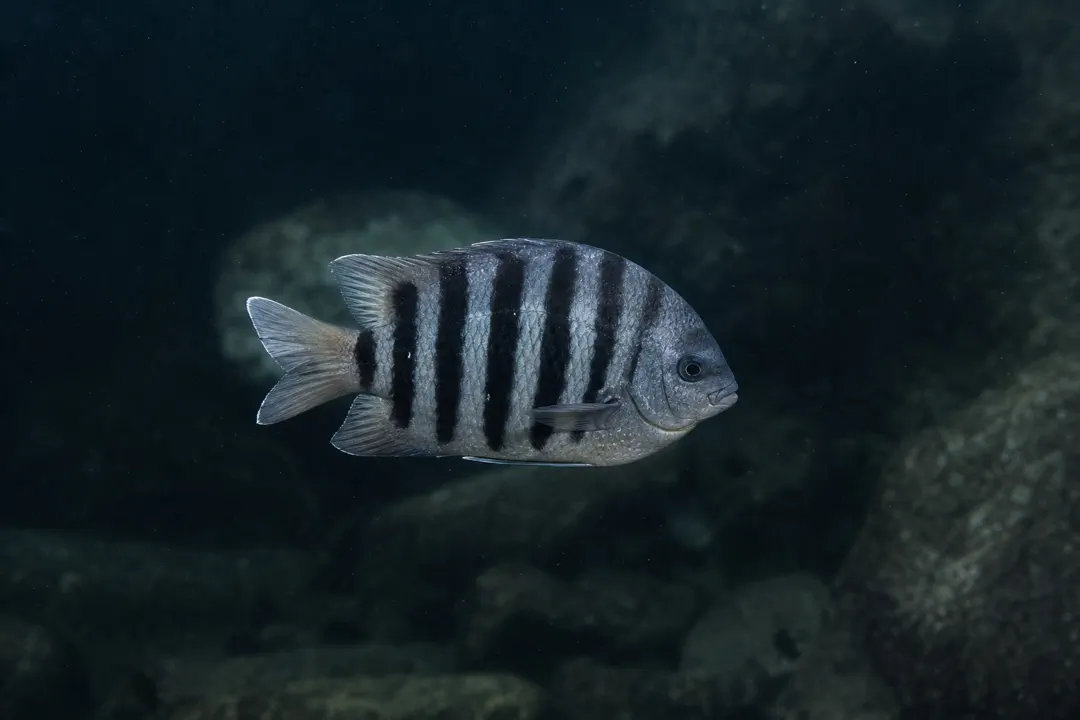
 Yellowbelly Damsel (juvenile) has no known danger to humans. However, always observe marine life responsibly.
Yellowbelly Damsel (juvenile) can be found at depths of up to 45 meters.
Download Seabook free for iOS and Android.