 © Bernard PictonCC BY 4.0 · iNaturalist
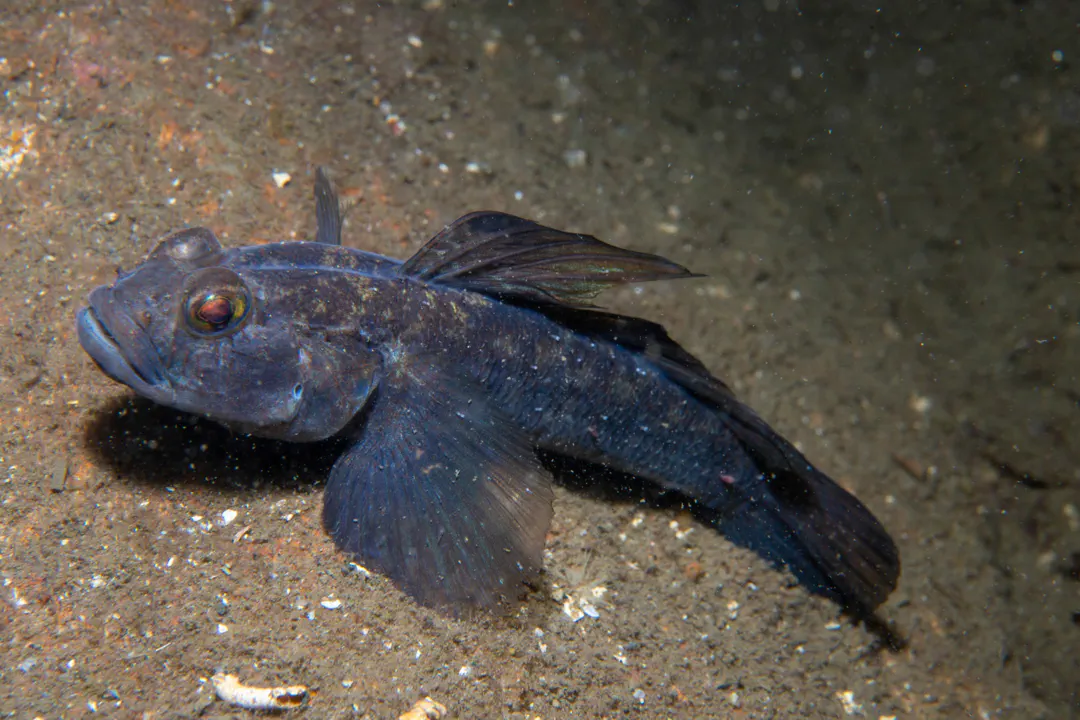
Black Goby
Gobius niger
Bryaninops yongei
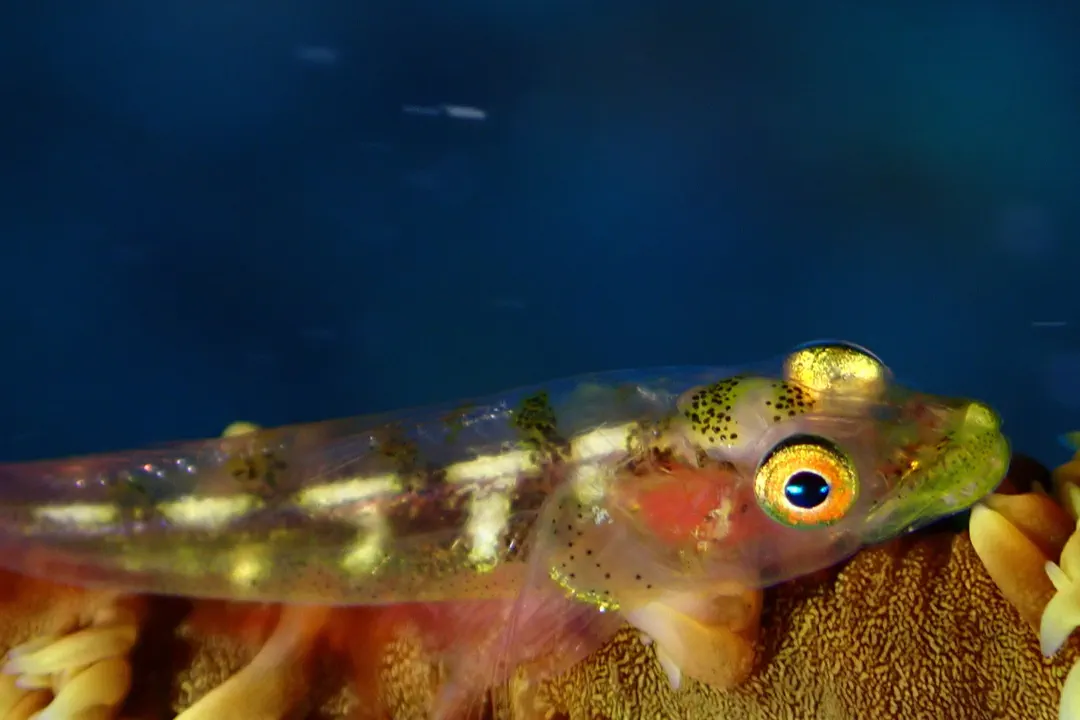
Bryaninops yongei is a benthic species of goby widely distributed from the tropical and subtropical waters of the Indian Ocean (including the Red Sea) to the islands in the center of the Pacific Ocean.
The whip coral goby has a semi-transparent head and body, with white scales running along its vertebra. Its head is reddish-brown to violet in color and the goby has pink to violet-red eyes. Their coloration is noted to match the color of the coral they inhabit. The fish is approximately 3 to 3.5 centimeters long. Healthy whip coral gobies have seven dorsal spines, seven dorsal soft rays, one anal spine and seven anal soft rays. They also have cup-like pelvic fins and gills that open below the base of the pectoral fins.
The white coral goby is a member of the genus Bryaninops, the family Gobiidae and the order Perciformes. It was discovered in 1906.
There are noted populations of the whip coral goby around areas such as the Marshall Islands, Chagos Archipelago and Samoa. The whip coral goby lives in and around coral species such as stinging coral. Whip coral gobies usually live in pairs in association with the wire coral species Cirrhipathes anguina (Antipathidae) at depths of between 3 to 45 metres (9.8 to 147.6 ft). These pairs are usually male-female pairs. This species is also found in the aquarium trade.
Whip coral gobies reproduce through benthic spawning, meaning they release eggs and sperm to be fertilized externally. They also have the ability to change their sex when there is a gender imbalance.
Gobies such as the whip coral goby respond to chemical signals released from the coral reefs they inhabit. The gobies will eliminate algae toxic to coral from their environment and will also clean mucus build-ups off of coral.
The white coral goby lacks the ability to cause harm to predators. As such, the whip coral goby is not a threat to human safety. However, white coral gobies have the ability to quickly propel themselves through water to escape from predators. This defensive mechanism makes it difficult for researchers to study the fish in its natural habitat.
© Bernard PictonCC BY 4.0 · iNaturalist  © Pierre PericardCC BY 4.0 · iNaturalist
  © IzuzukiCC BY 4.0
 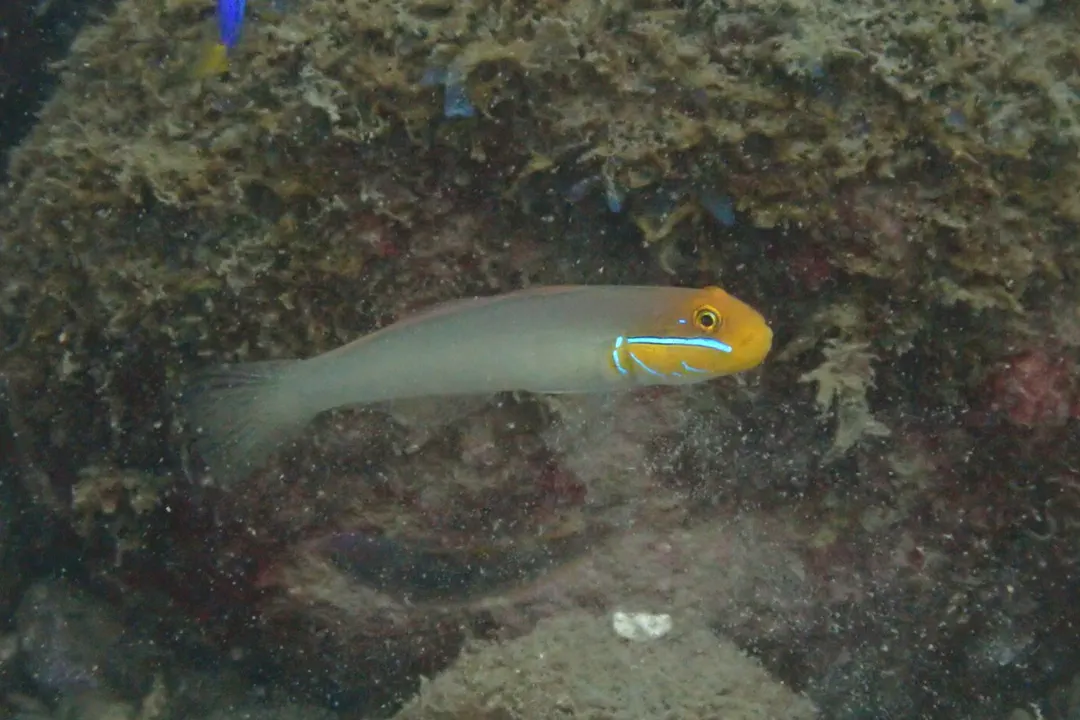 © 呂一起(Lyu yi-chi)CC BY 4.0 · iNaturalist
 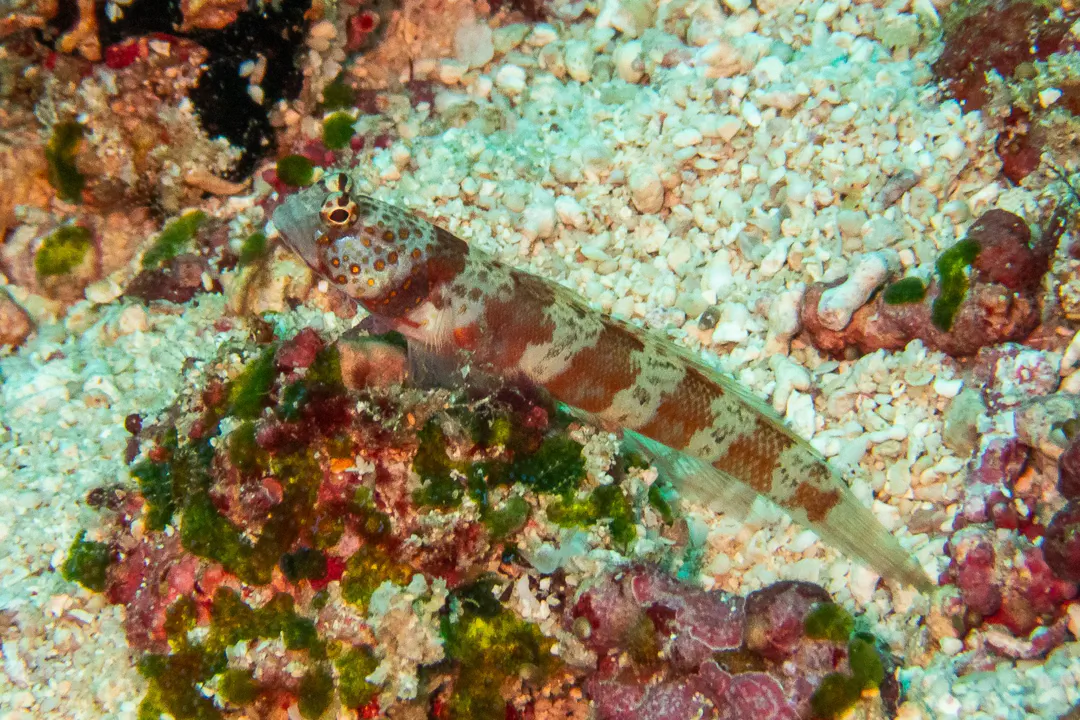 © Piotr LukasikCC BY 4.0 · iNaturalist
 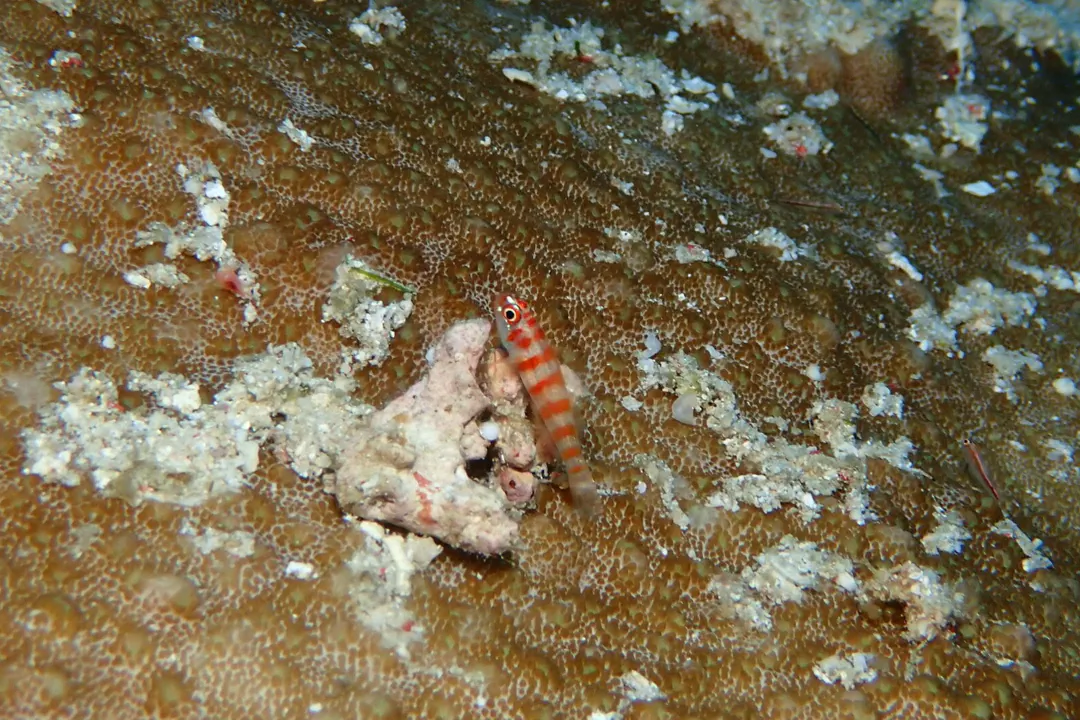 © 呂一起(Lyu yi-chi)CC BY 4.0 · iNaturalist
 Wire Coral Goby has no known danger to humans. However, always observe marine life responsibly.
Wire Coral Goby can be found at depths of up to 45 meters.
Download Seabook free for iOS and Android.