 © Bernard PictonCC BY 4.0 · iNaturalist
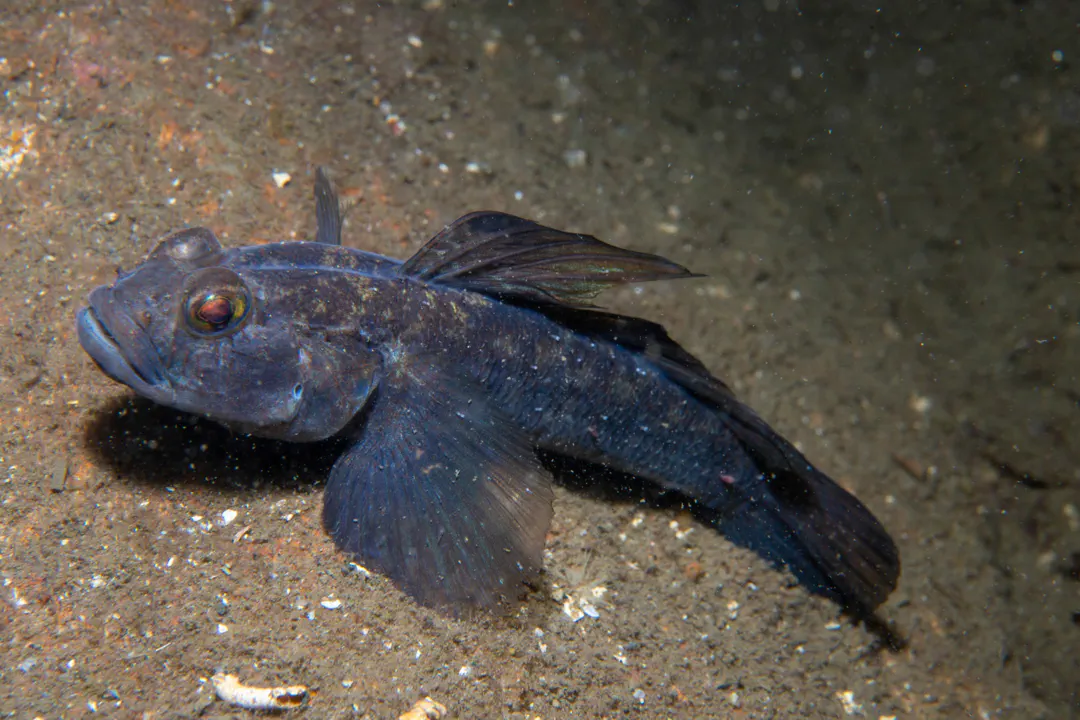
Black Goby
Gobius niger
Amblygobius phalaena
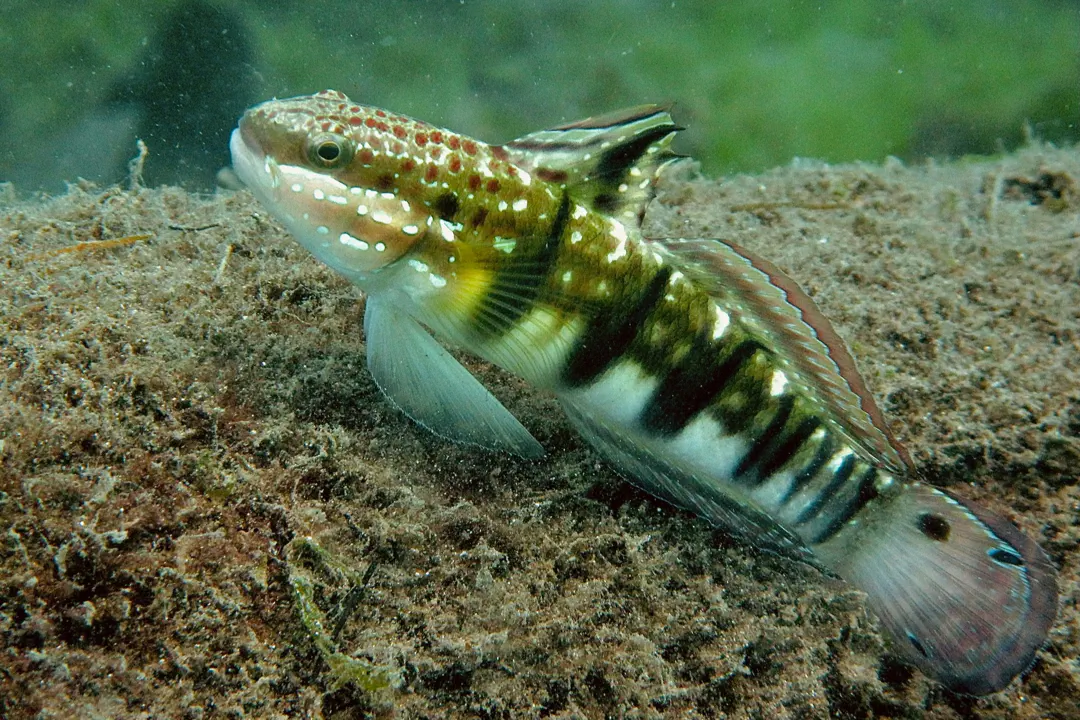
Amblygobius phalaena is a species of goby native to tropical reefs of the western Pacific Ocean and through the central Indo-Pacific area at depths of from 2 to 20 metres (6.6 to 65.6 ft). This species feeds by taking in mouthfuls of sand and sifting out algae, invertebrates and other organic matter. It is also of minor importance to local commercial fisheries and can also be found in the aquarium trade.
It can reach a length of 15 centimetres (5.9 in) TL. Characterized by overall greenish brown body color with five dark brown to blackish bars; presence of pale edged dark stripe through eye and another across cheek; head with white streaks; small white spots in 3-4 horizontal rows on body; first dorsal fin with black spot and another on upper caudal fin base; prolonged third and fourth dorsal spines as short filaments, first dorsal spine longer than second; rounded caudal fin; longitudinal scale series 50-55; ctenoid scales; cycloid scales on nape, abdomen, and breast; predorsal scales extending to interorbital space; scales dorsally on opercle, absent on cheek; depth of body 3.4-4.6 in SL.
Pacific Ocean: Philippines to the Society Islands, north to Ryukyu Islands, south to southern Australia (including Lord Howe Island) and Rapa Island; throughout Micronesia. Replaced by Amblygobius albimaculatus in the Red Sea and Amblygobius semicinctus in the western Indian Ocean.
Solitary or in pairs. Adults inhabit coastal reefs and lagoons on sand and rubble margins of algal reefs and sometimes near seagrass beds. Feed by sifting mouthfuls of sand and expelling it through the gills, to capture small invertebrates, organic matter, and large quantities of algae. Monogamous. Spawning is synchronous with semilunar periods. Eggs are deposited in burrows which are tended by the male parent.
© Bernard PictonCC BY 4.0 · iNaturalist  © Pierre PericardCC BY 4.0 · iNaturalist
  © IzuzukiCC BY 4.0
 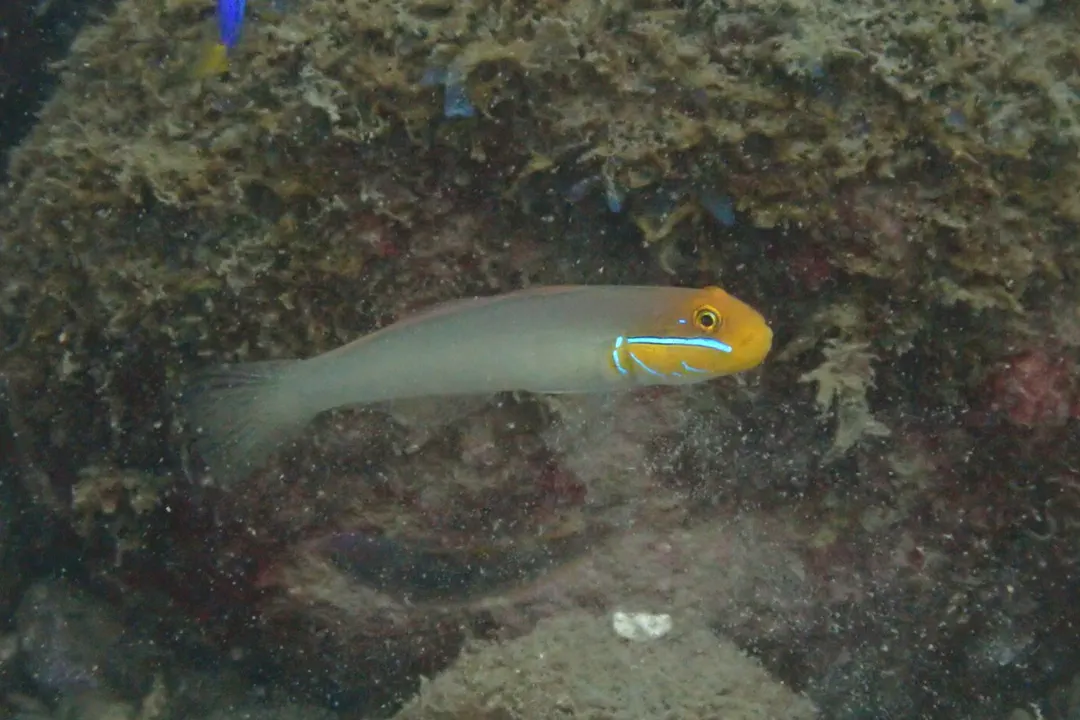 © 呂一起(Lyu yi-chi)CC BY 4.0 · iNaturalist
 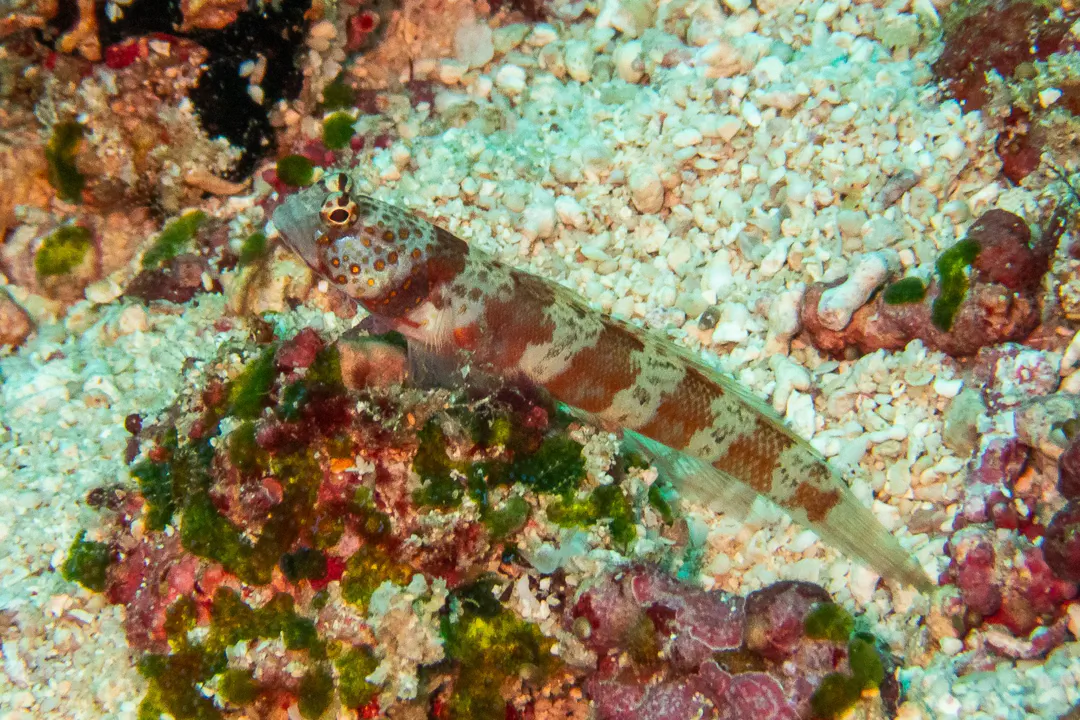 © Piotr LukasikCC BY 4.0 · iNaturalist
 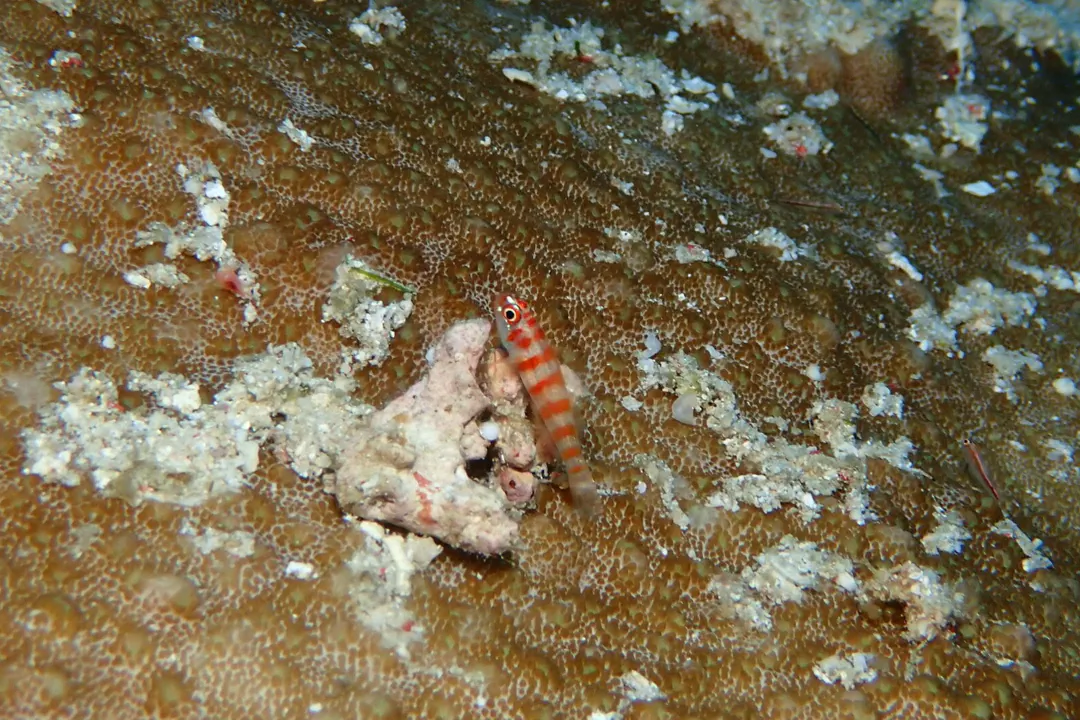 © 呂一起(Lyu yi-chi)CC BY 4.0 · iNaturalist
 Whitebarred Goby has no known danger to humans. However, always observe marine life responsibly.
Whitebarred Goby can be found at depths of up to 52 meters.
Download Seabook free for iOS and Android.