 © portioidCC BY 4.0 · iNaturalist
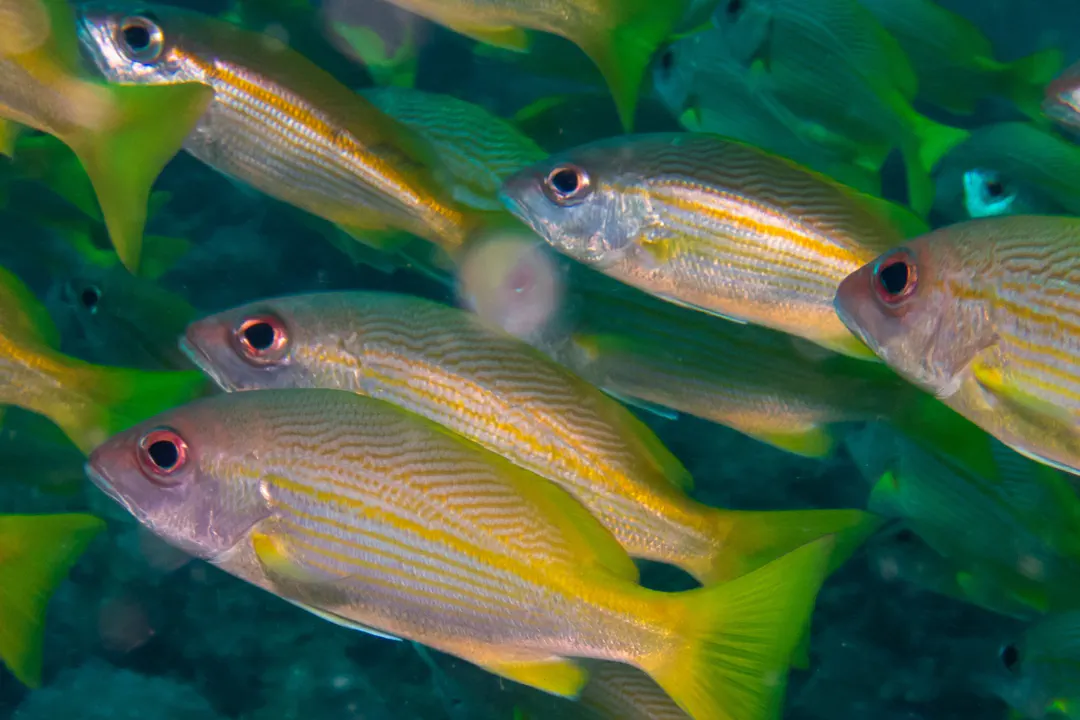
Bigeye Snapper
Lutjanus lutjanus
Lutjanus mahogoni
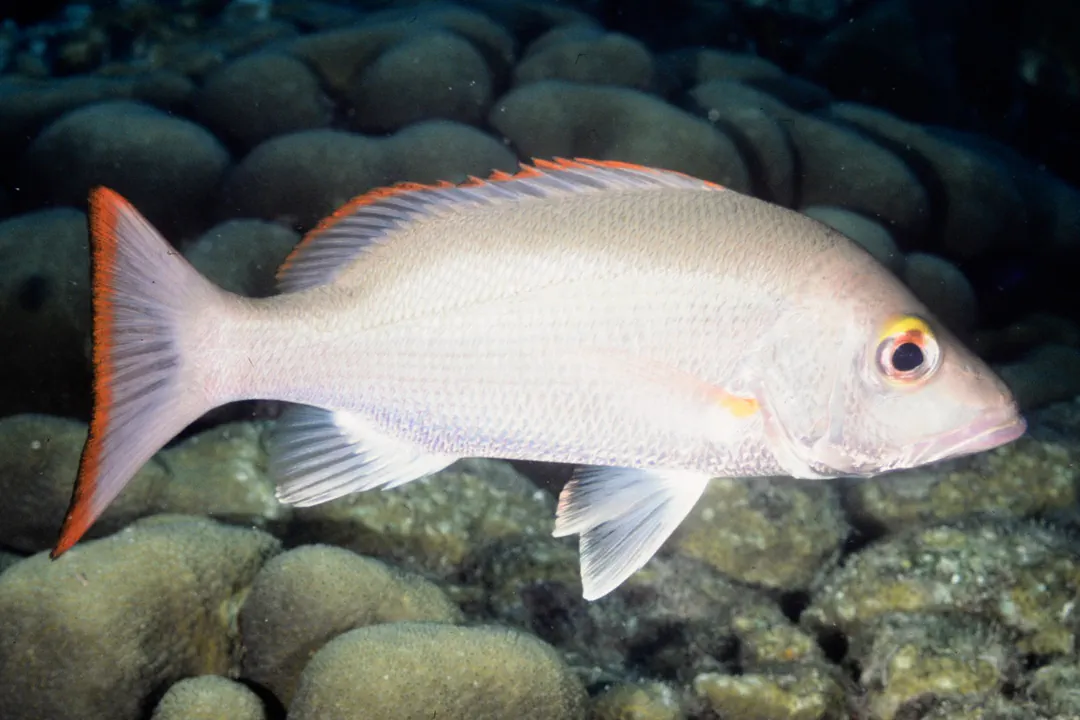
Lutjanus mahogoni is a species of snappers found in the Atlantic, Indian and Pacific Oceans.
It is a dark gray to olive on top, with silvery sides and a distinct black spot on its upper back. There is a reddish orange tint to much of its body, and its fins have rusty red highlights. The fins are red to yellow and the caudal fin has a dusky margin. The mahogany snapper has an average length of 15 inches (38 cm), with a maximum length of 19 inches (48 cm).
This snapper has a relatively deep body. The belly runs straight from the mouth to the anal fin. It has a pointed snout and large eyes. The lower jaw projects beyond upper jaw. The anal fin is rounded, more than usual in snappers. It has a bi-lobed dorsal fin and long pectoral fin, as found in other many lutjanid fish. The anal fin is rounded. The caudal fin is moderately forked.
The mahogany snapper is found in the western Atlantic Ocean, from the Carolinas to Venezuela, including the Gulf of Mexico. It is very common in the Caribbean and around Bermuda.
This snapper lives near shore or offshore in clear, shallow warm water over rocky bottoms and coral reefs and less commonly over sandy areas and seagrass beds. Their depth ranges to depths of 325 feet (100 meters). As a warm water species, it is found in temperate waters only during the heat of the summer. Mahogany snappers drift alone or in small groups over coral reefs, often among gorgonians and hard corals, or in crevices and caves.
The mahogany snapper is not listed as endangered or vulnerable by the World Conservation Union (IUCN). The IUCN is a global union of states, governmental agencies, and non-governmental organizations in a partnership that assesses the conservation status of species.
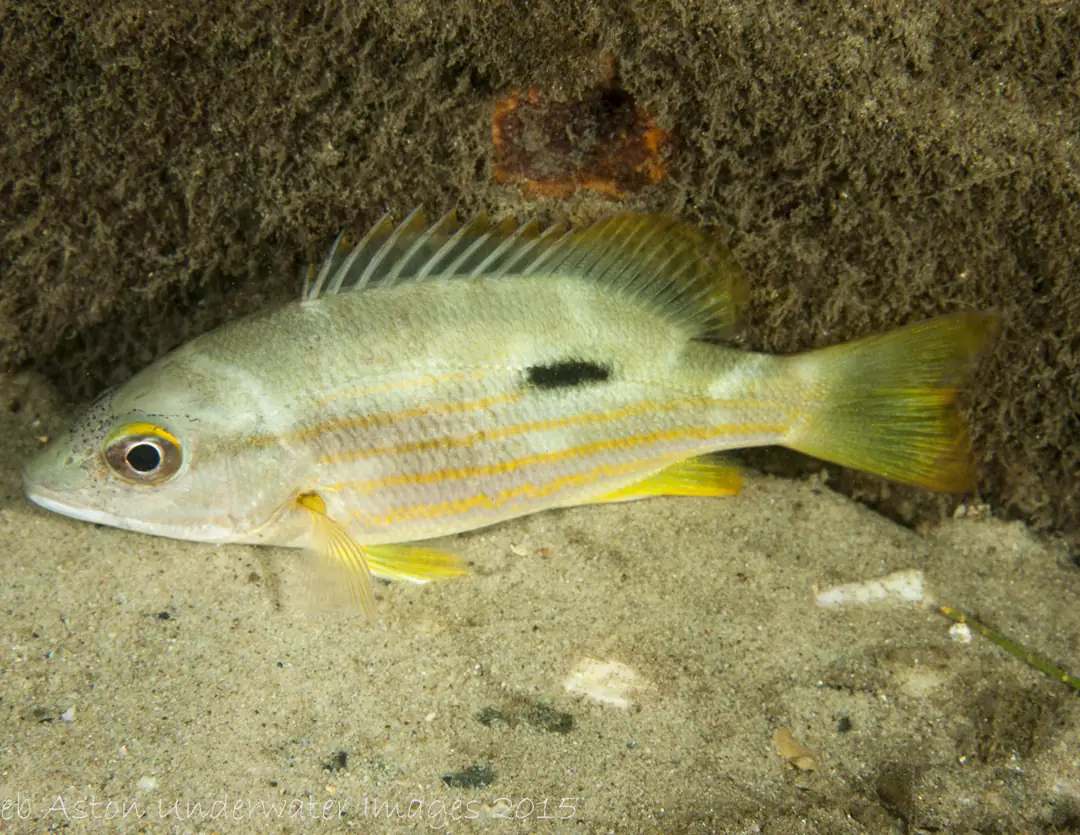
Spawning occurs during the months of May, June, and July throughout the mahogany snapper’s range. They most commonly spawn in the northeastern Caribbean Sea. Pelagic eggs are released and are dispersed by the ocean currents. After fertilization occurs, the eggs hatch within a day. Although little is known about the larvae, they are planktonic at lengths less than 10 mm. They eventually settle out of the plankton, onto suitable habitat that offers some protection from predators. Juveniles have been described as pale with pink to red pigmentation on the distal portions of the median fins, and a prominent spot on the upper back.
© portioidCC BY 4.0 · iNaturalist 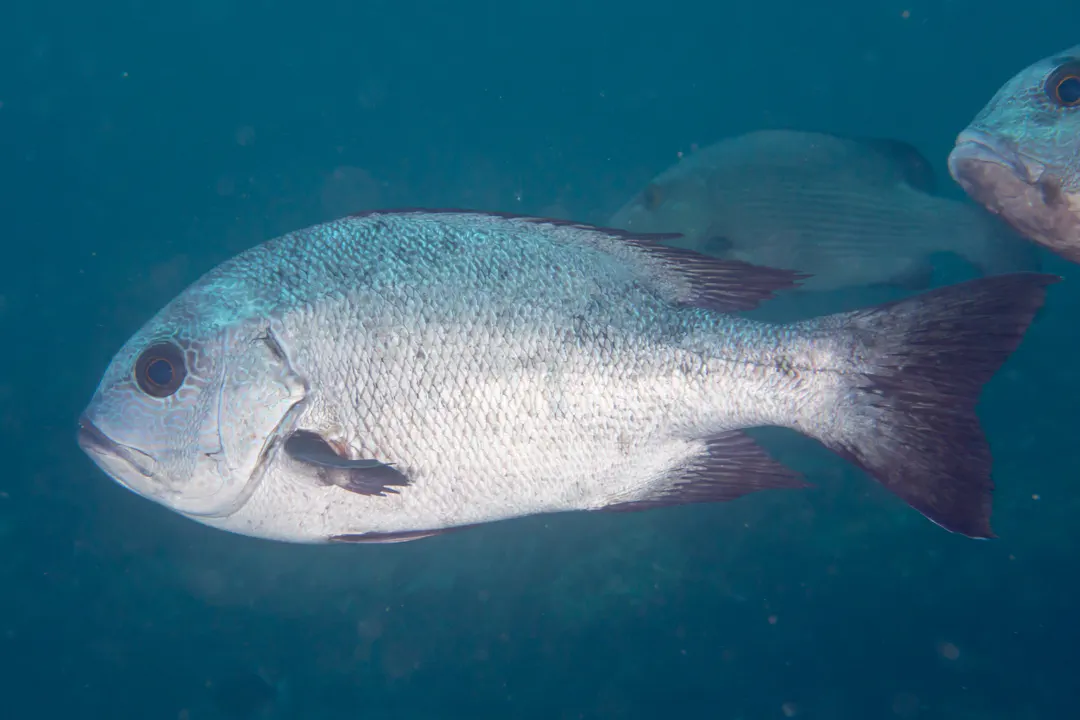 © Rickard ZerpeCC BY 4.0 · iNaturalist
  © Deb AstonAll rights reserved
 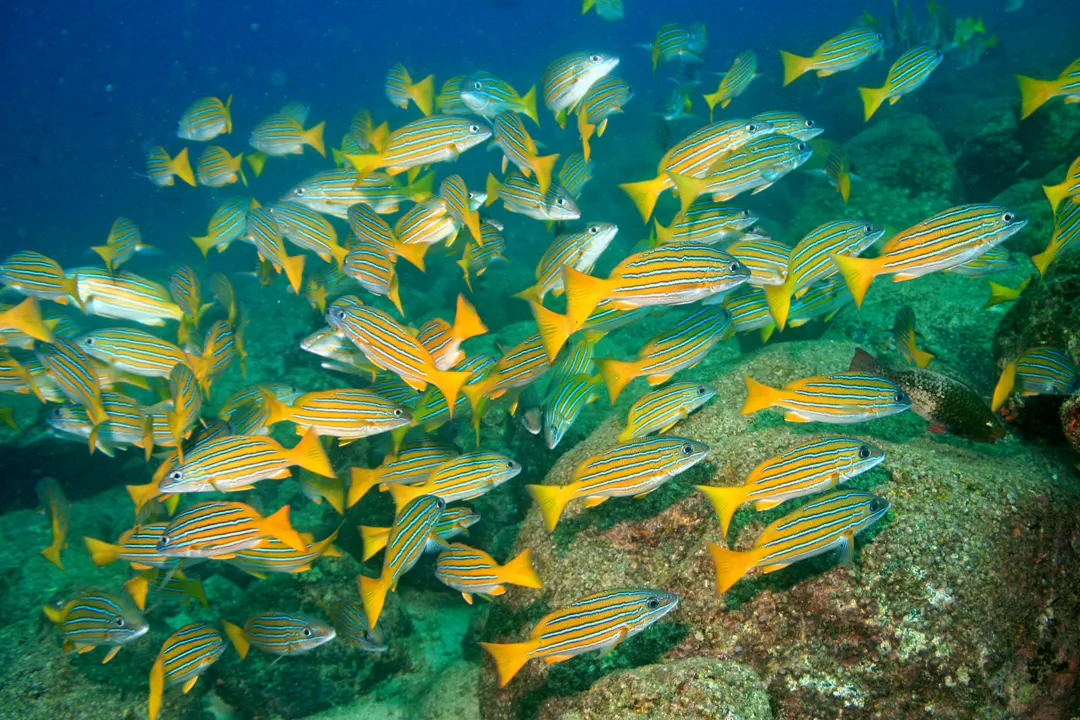 © LASZLO ILYESCC BY 4.0 · iNaturalist
 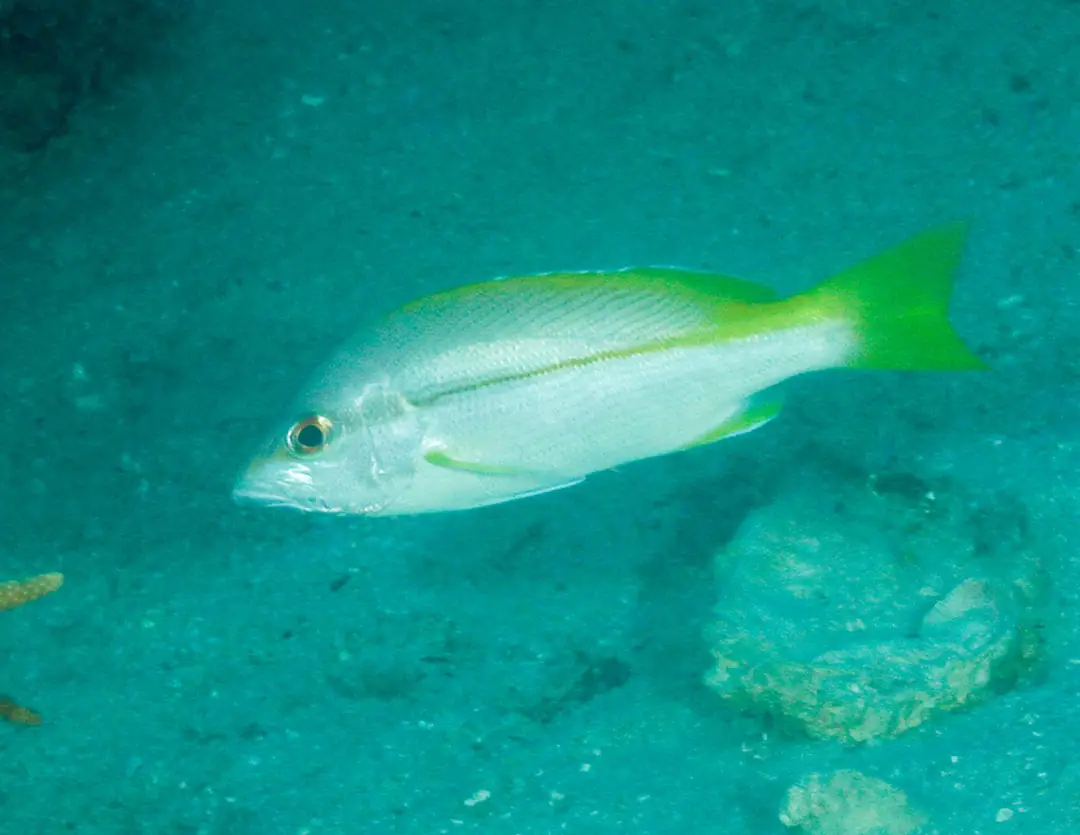 © Ian ShawAll rights reserved
 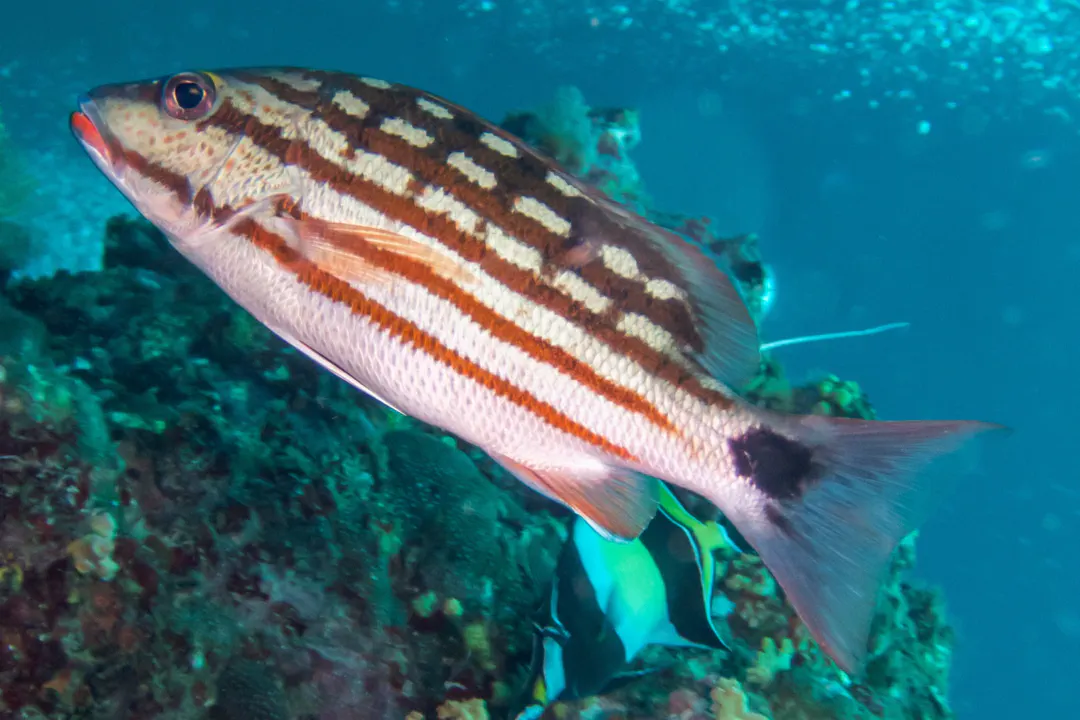 © portioidCC BY 4.0 · iNaturalist
 Mahogany Snapper is classified as poisonous. Always exercise caution and keep a safe distance.
Mahogany Snapper can be found at depths of up to 100 meters.
Download Seabook free for iOS and Android.