 © Lesley ClementsAll rights reserved
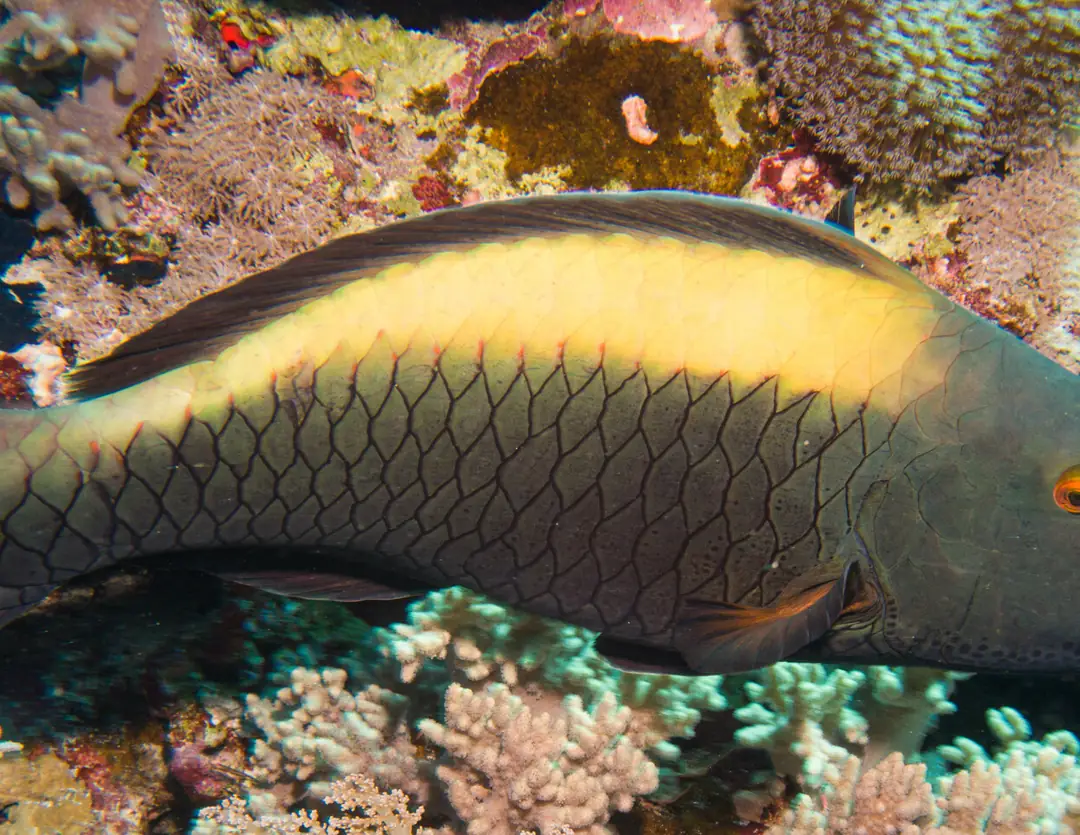
Bicolour Parrotfish
Cetoscarus bicolor
Scarus vetula
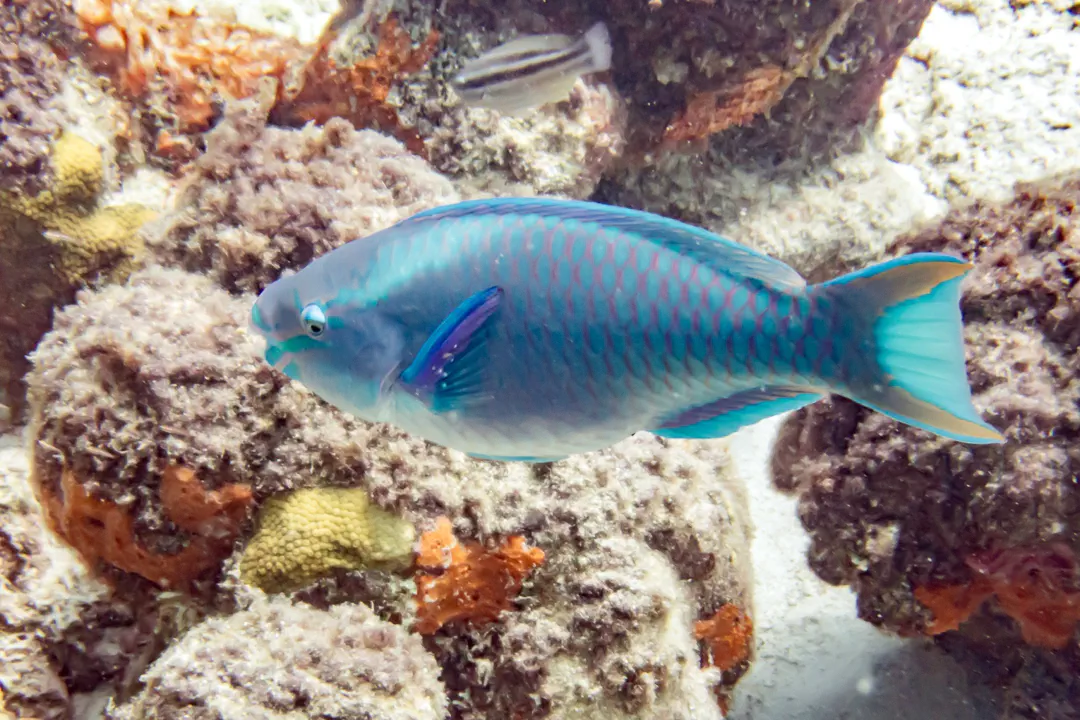
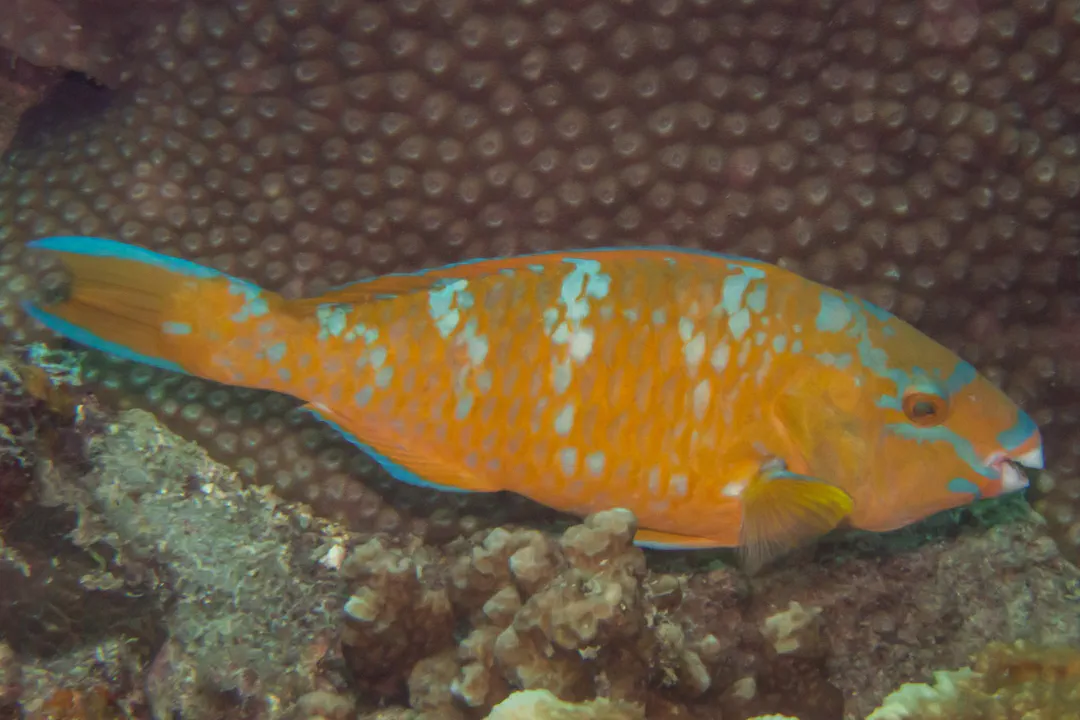
Scarus vetula is a species of parrotfish found at reefs in the Caribbean Sea. The female queen parrotfish is a different color, which is red with brown. The young males and adult female queen parrotfish are a reddish-brown color, and quite different in appearance from the bluish-green color of the final phase male. This is a common species throughout its range and the International Union for Conservation of Nature has rated its conservation status as "least concern".
Adult queen parrotfishes are heavy-bodied fish with fusiform (spindle-shaped) bodies and beak-like mouths, growing to a length of about 60 cm (24 in). They have two different color phases. Among smaller fish, the sexes are similar but nearly all individuals are female, being reddish-brown or grayish-brown with a paler head and a white lateral stripe low on each flank, and that remains the color scheme for females even when they grow larger. At an average length of 25 cm (10 in), females change sex to become males. The larger males move on to a new color phase, becoming pale bluish-green, with blue spots near the mouth, yellowish orange streaks between the mouth and eye, and pale blue bars on the pectoral fins.
The queen parrotfish is native to the tropical West Atlantic Ocean, the Caribbean Sea and the southern Gulf of Mexico.
It is found on both rocky and coral reefs at depths down to about 25 m (80 ft).
Queen parrotfish is a protogynous hermaphrodite and are often found in small groups of four or five, consisting of one final-phase male and several first-phase individuals, probably females. During courtship, the male constantly circles a female. When she accepts his advances she joins him and they circle together, both simultaneously releasing spawn into the sea. After fertilisation, the eggs hatch and the developing larvae form part of the plankton.
The queen parrotfish feeds primarily on the algal turf it can scrape off surfaces, but may also eat sponges and other encrusting organisms as it feeds. In the process, it swallows a lot of mineral particles which are deposited on the seabed as fine sand. It is a diurnal fish, and rests on the seabed or hides in a crevice at night, immersed in a layer of mucus that it exudes and which may help to disguise it from predators. It is preyed on by sharks, groupers and eels.
Parrotfishes are known for the bioerosion that they cause. The stoplight parrotfish (Sparisoma viride) is an "excavator" and degrades the surface of coral colonies, but Scarus vetula is a "scraper", causing erosion of carbonate materials from corals but to a lesser extent than S. viride. Both species have robust jaws with crenelated margins and strong jaw muscles, and large individuals of S. vetula can do considerable damage to corals as they scrape off their food.
© Lesley ClementsAll rights reserved 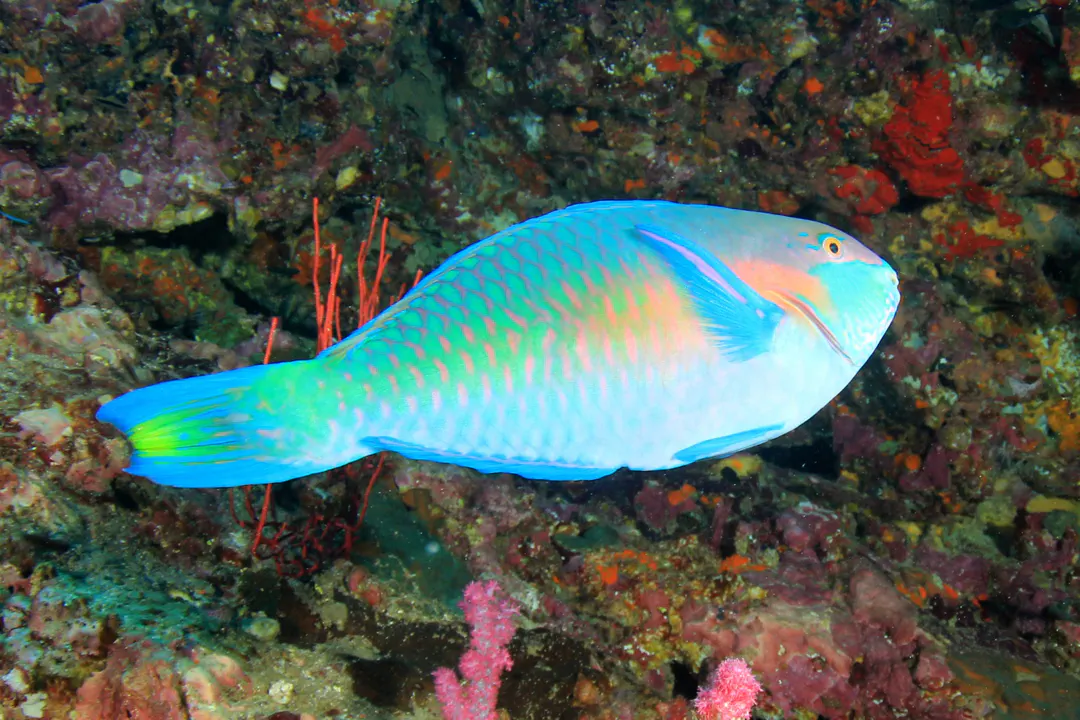 © seabook.appAll rights reserved
  © portioidCC BY 4.0 · iNaturalist
 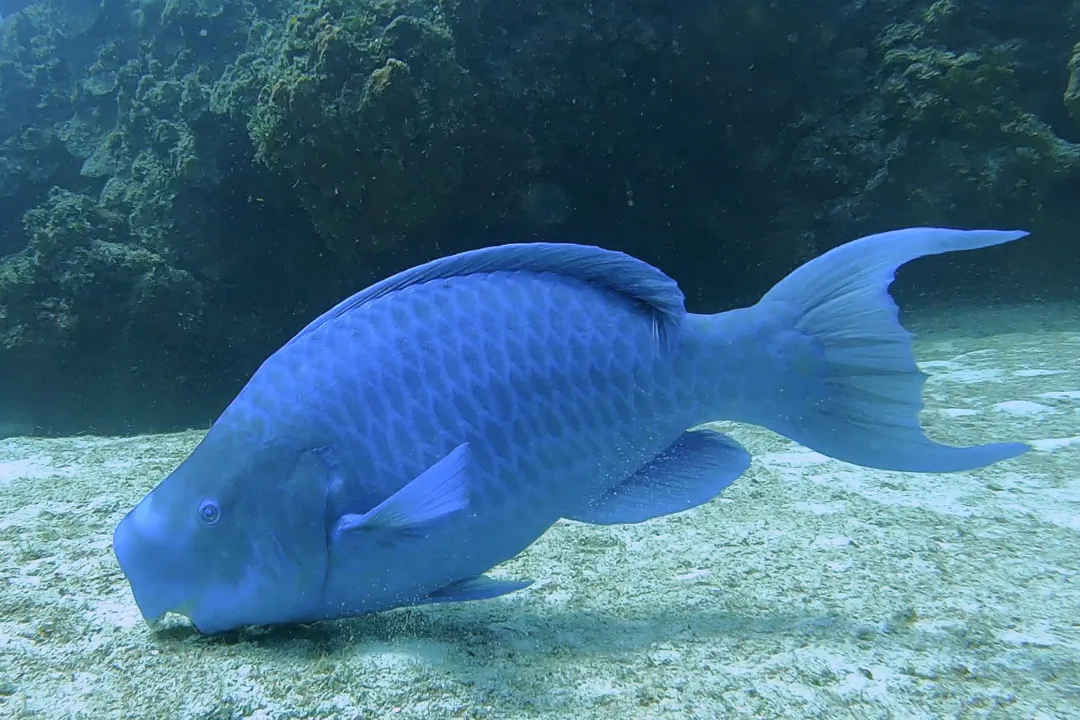 © Dan SchofieldCC BY 4.0 · iNaturalist
 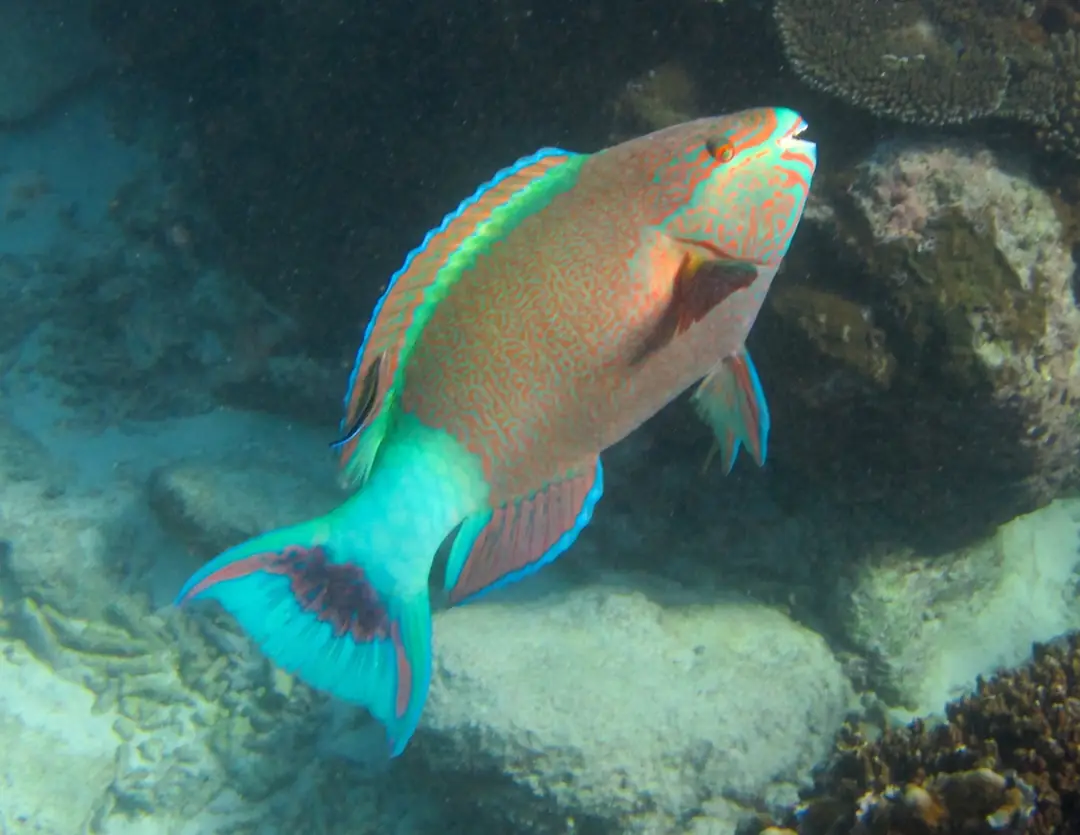 © Geoff ShuetrimCC BY 4.0
 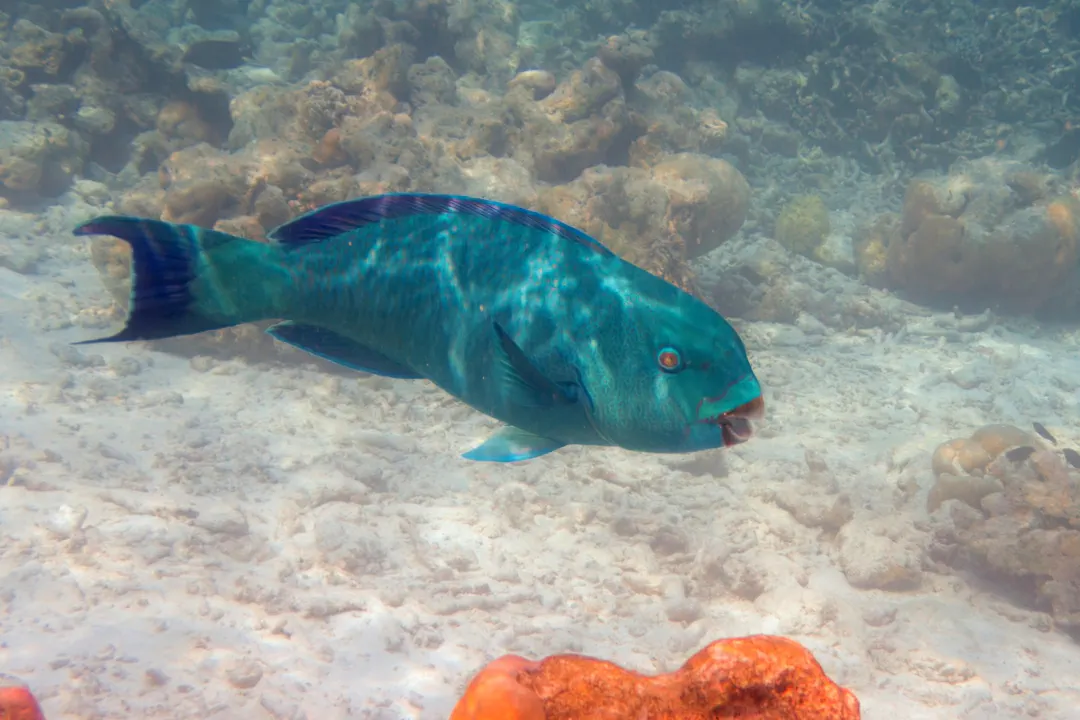 © Darren ObbardCC BY 4.0 · iNaturalist
 Queen Parrotfish is classified as poisonous. Always exercise caution and keep a safe distance.
Queen Parrotfish can be found at depths of up to 25 meters.
Download Seabook free for iOS and Android.