 © 呂一起(Lyu yi-chi)CC BY 4.0 · iNaturalist
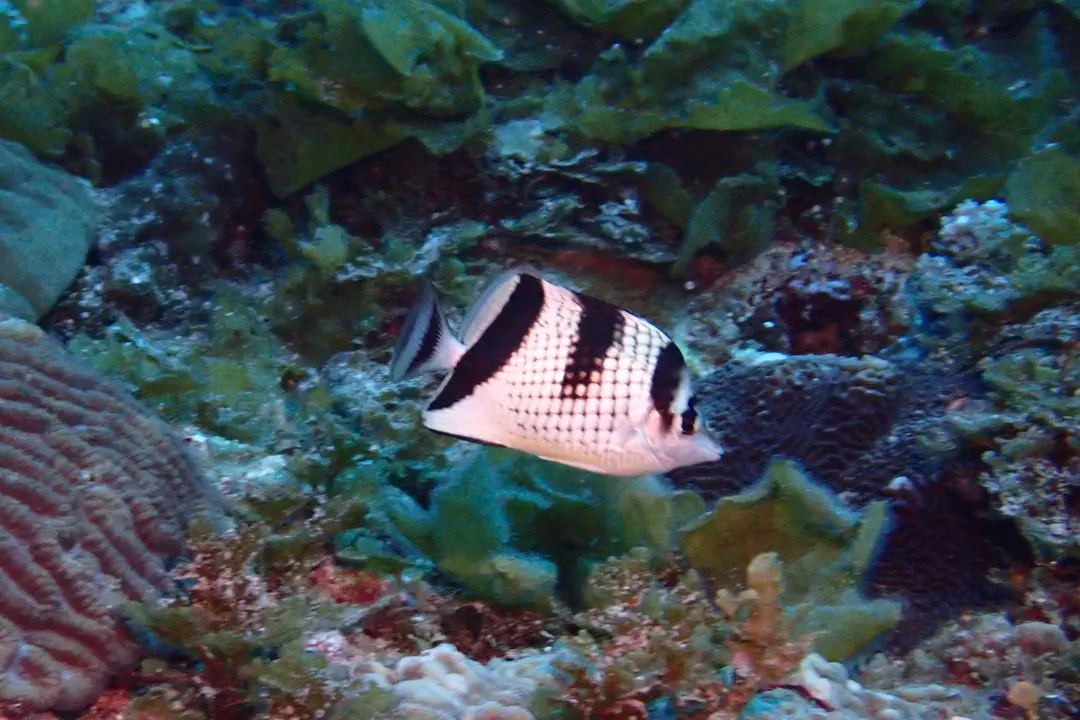
Asian Butterflyfish
Chaetodon argentatus
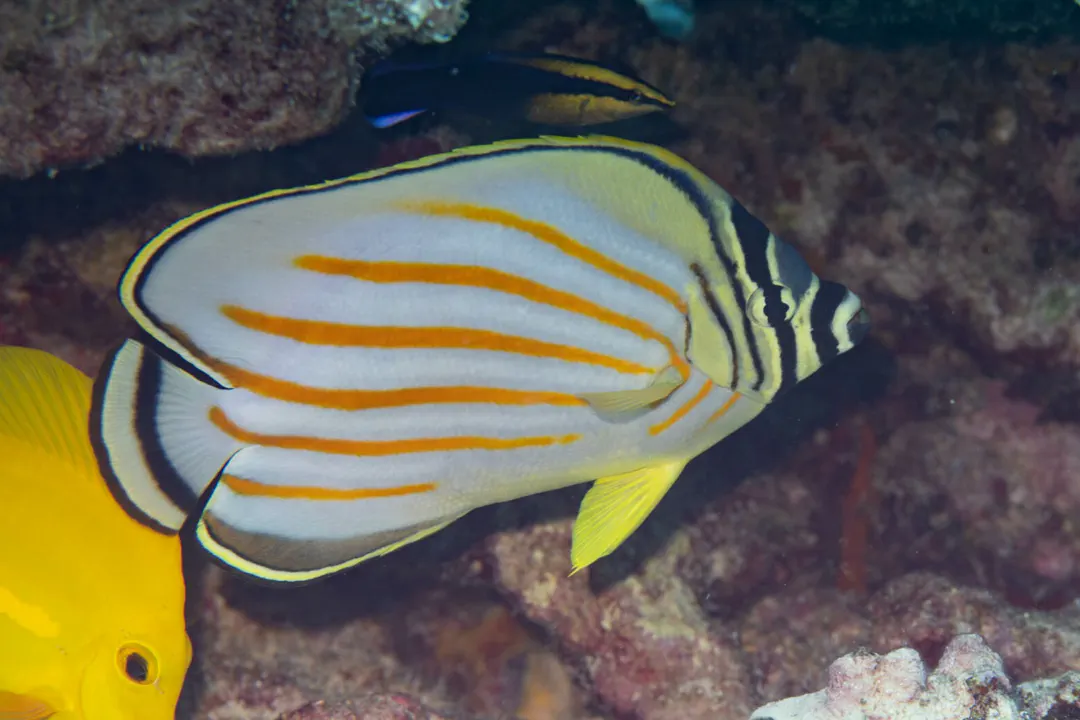
Chaetodon ornatissimus
Chaetodon ornatissimus is a species of butterflyfish (family Chaetodontidae).
The Ornate Butterflyfish is a close relative of the Mailed Butterflyfish (C. reticulatus) and the Scrawled Butterflyfish (C. meyeri). Together they make up the subgenus called “Citharoedus”, but as this name had already been used for the mollusk genus when it was given to the fish, it is not valid. They are probably quite close to the subgenus Corallochaetodon, which contains the Melon Butterflyfish (C. trifasciatus). Like these, they might be separated into Megaprotodon if the genus Chaetodon is split up.
The Coral hind is a small size fish and can reach a maximum size of 20 cm length. Chaetodon ornatissimus is most easily identified by its color pattern, which helps protect it from predators. Ornate butterflyfish have white bodies with orange to orange-brown oblique bands. They also have two yellow-edged black bars on their head: one runs across the eyes and the other is on the snout, and the tail has two black bars.The size of the ornate butterflyfish ranges from 13–18 cm total length (mean +/- SD = 16.2 +/- 1.4 cm) and pair members are nearly always indistinguishable based on size.
The Ornate Butterflyfish is widespread throughout the tropical waters of the Indo-Pacific area, ranging from Sri Lanka to Hawaii, the Marquesas, the Pitcairn Islands, North to Southern Japan, South to Lord Howe, and Rapa in the Austral Islands.
It is found in depths down to 36 m.
Chaetodon ornatissimus adults are predominately found in pairs that occupy exclusive territories including Clearwater lagoons and seaward reefs rich in coral growth (size range ~100-1400m2). On the other hand, juvenile Chaetodon ornatissimus live in solitary, tend to be shy, and hide in the arms of branching corals for protection. Once juveniles reach breeding age, they form pairs. It is uncommon to find adult Chaetodon ornatissimus without a mate. Pairs also establish a "home range" where they are likely always to be found.
Chaetodon ornatissimus are monogamous and pair-forming coral reef fish. Many ornate butterflyfish mate for life. Spawning activity occurs at different times depending on each biome. Tropical spawning peaks in winter and early spring, while temperate spawning occurs in midsummer. Spawning occurs at dusk and eggs are released and fertilized in the water column.
C. ornatissimus feed exclusively on coral polyp tissue and small organisms. Ornate butterflyfish feed on ten different coral species, which is the broadest range of corals when compared with other coral-eating butterflyfish species. Other obligate corallivores (coral-eating) butterflyfish species include: Chaetodon austriacus, C. baronessa, C. bennetti, C. larvatus, C. lunulatus, C. meyeri, C. octofasiatus, C. rainfordi, and C. trifasicatus. Butterflyfish are obligate corallivores, which means the majority of their diet must be made up of live coral polyp - coral mucous rather than coral tissue. Butterflyfish have very fine hair-like teeth that enable them to pick out small organisms inaccessible to most other fish for eating. They thrive mainly on a diet of coral polyps, tentacles of feather dusters and Christmas-tree worms. All of those food sources tend to crawl back into their shells; therefore, butterflyfish need to be able to hover motionless while picking at the coral, and to dart swiftly over short distances to get the organisms that retreat into hiding before they retract. Ornate Butterflyfish are able to do this by using their pectoral fins as oars to brake, sprint, turn and reverse.
© 呂一起(Lyu yi-chi)CC BY 4.0 · iNaturalist 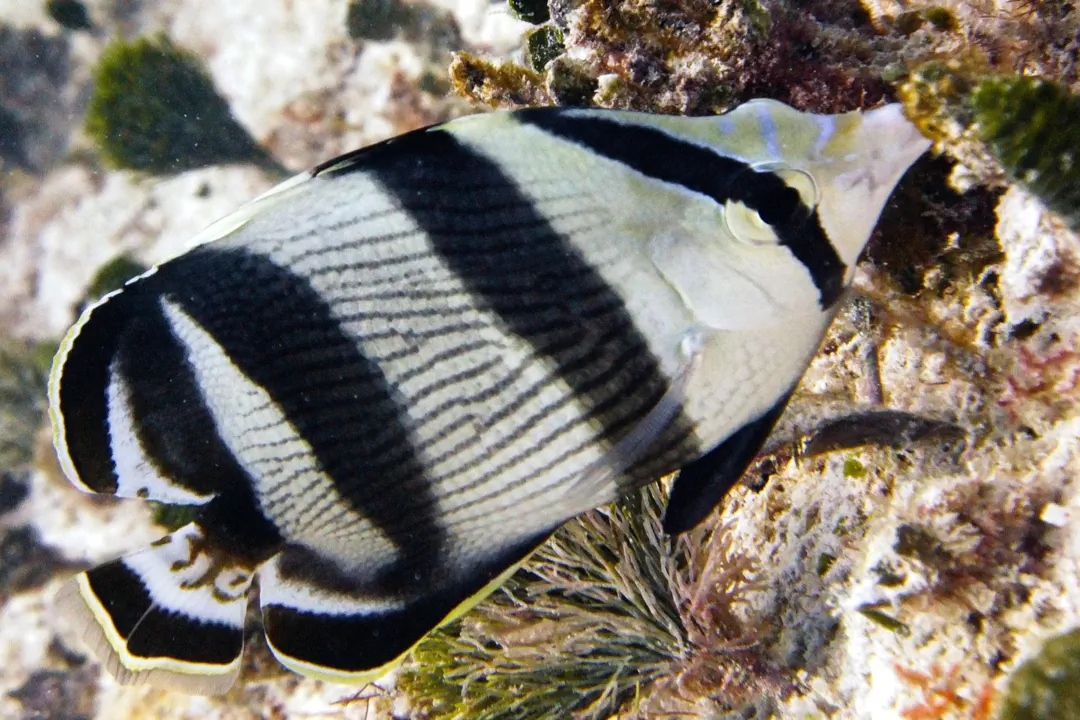 © Matteo CassellaAll rights reserved
  © Ben CostamagnaCC BY 4.0 · iNaturalist
 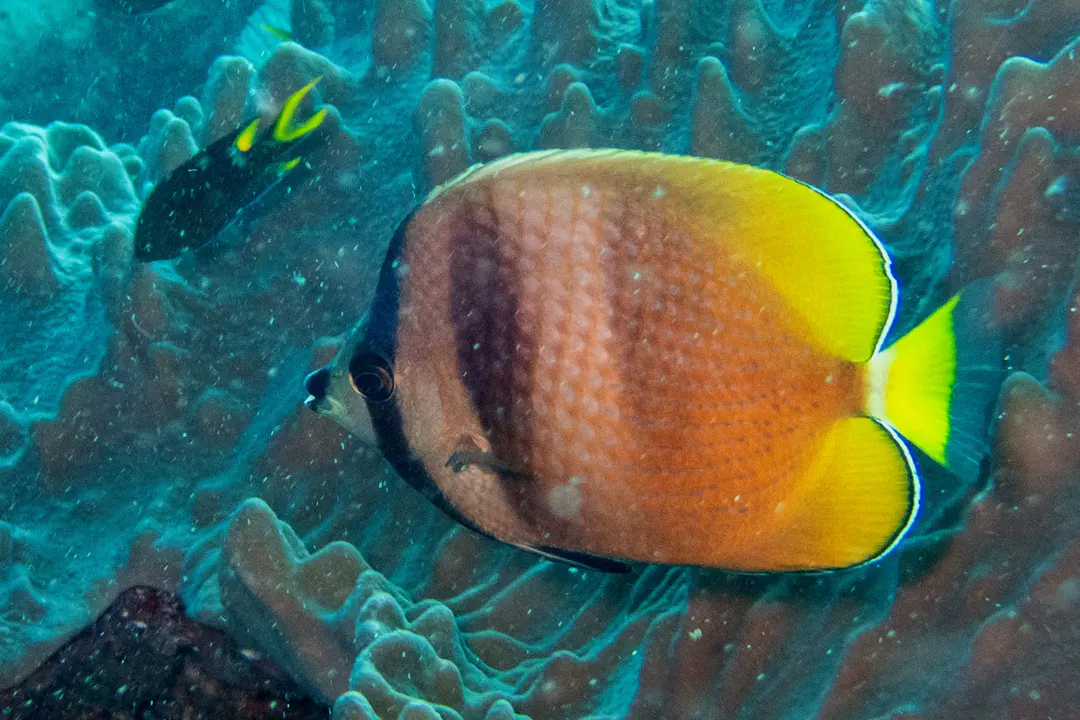 © Piotr LukasikCC BY 4.0 · iNaturalist
 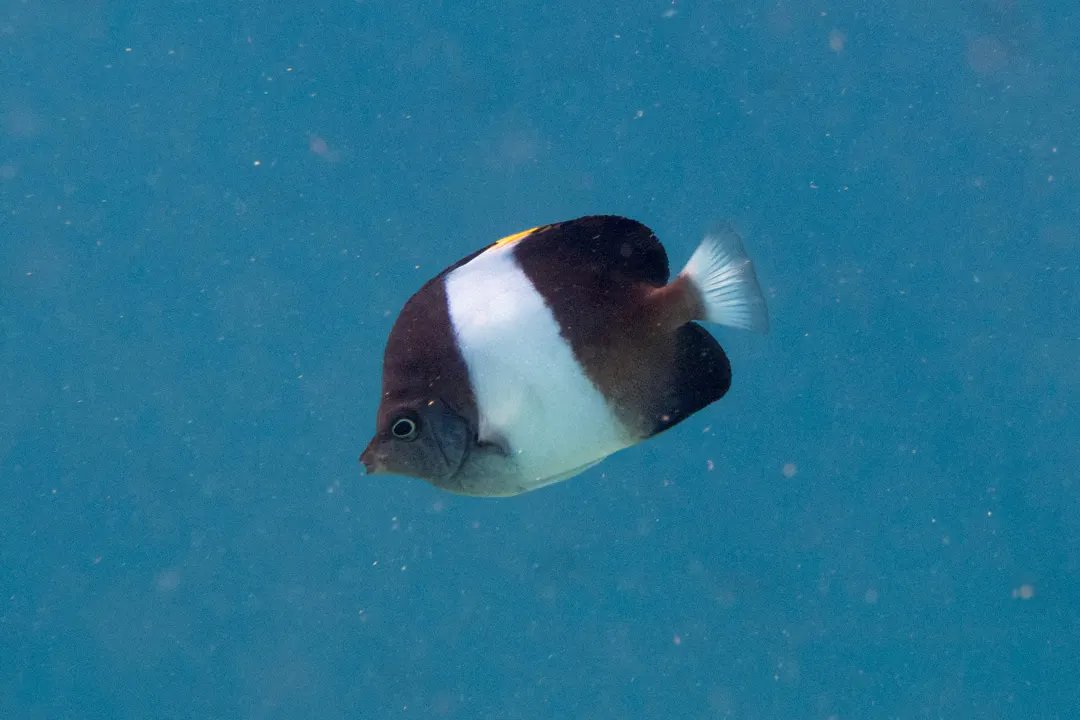 © Emanuele SantarelliCC BY-SA 4.0 · iNaturalist
 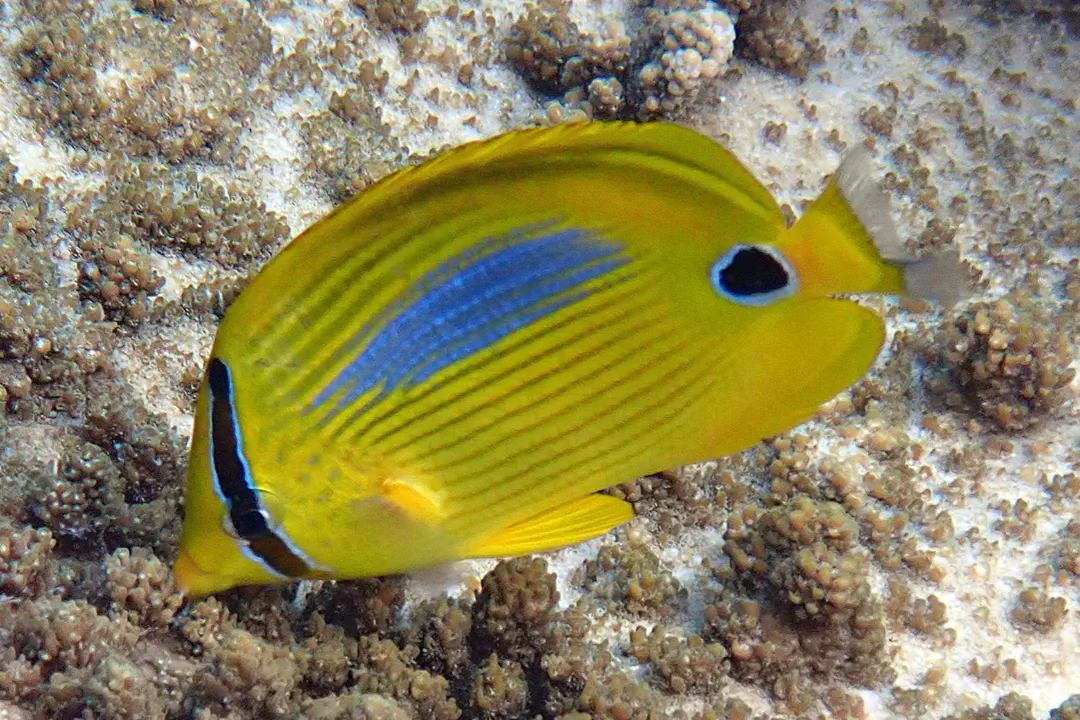 © Susan PriorCC BY 4.0 · iNaturalist
 Ornate Butterflyfish has no known danger to humans. However, always observe marine life responsibly.
Ornate Butterflyfish can be found at depths of up to 36 meters.
Download Seabook free for iOS and Android.