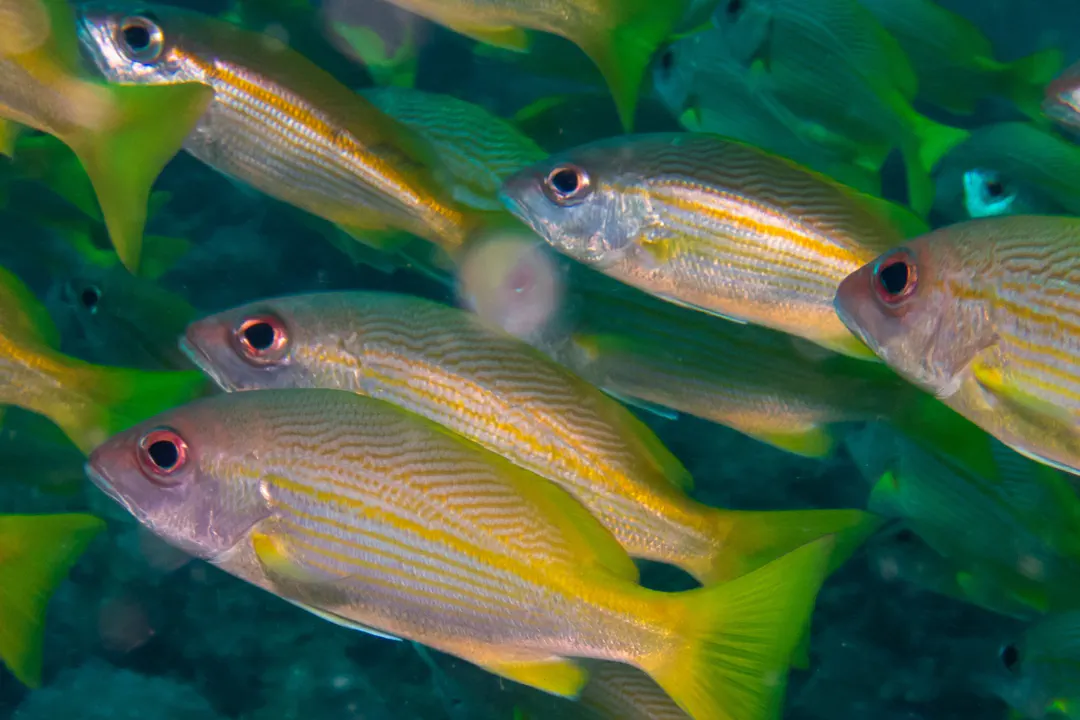
 © portioidCC BY 4.0 · iNaturalist
Bigeye Snapper
Lutjanus lutjanus
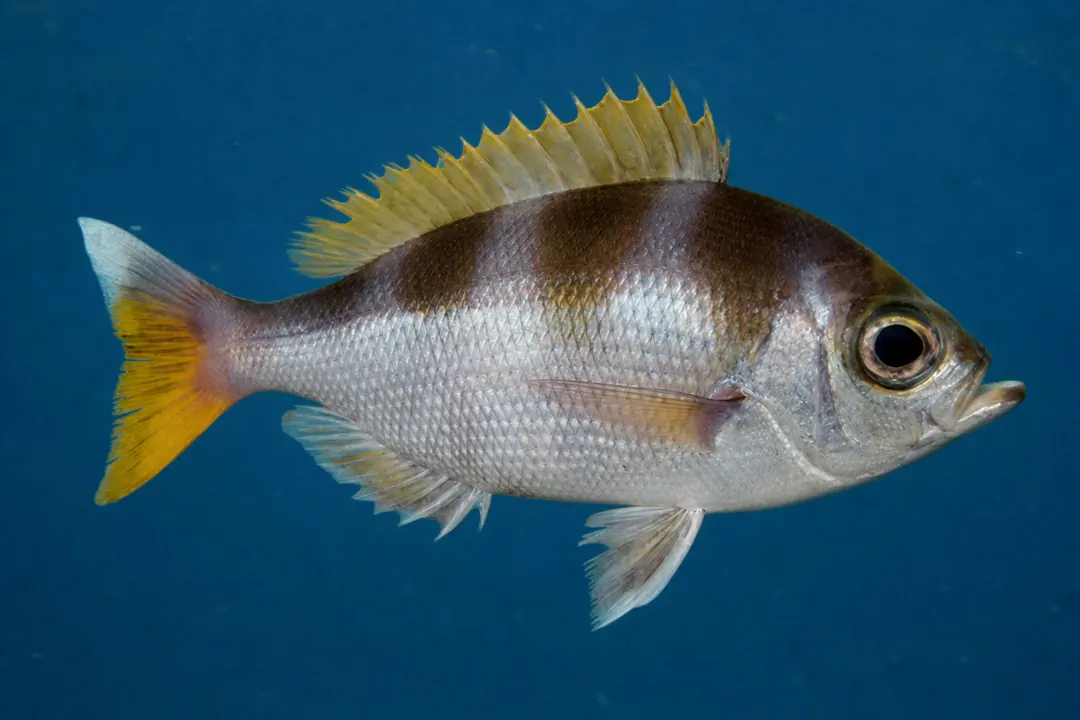 © seabook.appAll rights reserved
Paracaesio kusakarii
Paracaesio kusakarii, commonly known as the saddleback snapper, belongs to the family Lutjanidae and is found in the western Pacific region.
The saddleback snapper was first described by Takashi Abe in 1960, and the original combination is Paracaesio kusakarii Abe, 1960. The genus name Paracaesio is derived from the Greek word 'para' meaning 'beside/near' and the Latin word 'caesium' meaning 'bluish grey'. The species epithet kusakarii honors Mr. T. Kusakari, who worked at the Hachije Branch of the Tokyo Prefectural Fisheries Experiment Station. The species is treated as a valid member of Lutjanidae in the subfamily Apsilinae. There are no listed synonyms for Paracaesio kusakarii in the FAO treatment or FishBase, indicating no reclassification for this name.
The saddleback snapper is best identified by its light brown back and upper sides, silvery-white lower body, and four broad dark vertical bars on the upper side. It has a deep, fusiform body, a slightly protruding lower jaw, a large eye, and long pectoral fins that reach about to the anus. The fins of the saddleback snapper are usually greyish, whitish, or slightly yellowish. The most useful visual cue for identification is the four broad vertical bars on the upper side, which is the standard diagnostic pattern for this species. The saddleback snapper has a moderately elongate but deep-bodied shape with an oval cross-section. It can be distinguished from Paracaesio caerulea by its four broad dark bars and deeper body, while P. caerulea is more slender and lacks vertical bars. Unlike Paracaesio stonei, which has a scaleless maxilla and five broad bands, the saddleback snapper has a scaled maxilla and four bars. The saddleback snapper is separated from Paracaesio sordida and P. xanthura by its four-bar pattern, as these species exhibit overall dark/purplish coloration or yellow on the caudal region and upper body, respectively. The presence of vertical bands on the body side is a distinguishing character for the saddleback snapper when compared to other snappers like the Japanese snapper.
The saddleback snapper is a deep-reef, demersal species that lives over rocky bottoms and hard substrate in the reef zone beyond shallow coral reefs. It typically inhabits deep rocky reefs at depths ranging from 100 to 310 m, with many sources noting it is usually found around 125 to 250 m or about 100 to 200 m. The geographic distribution of the saddleback snapper includes the tropical western Pacific, with records from Samoa to Taiwan and Singapore, and from the Ryukyu and Ogasawara islands southward to New Caledonia and northeastern Australia.
The saddleback snapper is reported to feed mainly on plankton, and broader snapper-family references also place Paracaesio species among fish that eat planktonic organisms. The species exhibits a planktivorous mode of feeding rather than active predation on larger prey. Related Paracaesio species may feed on pelagic salps, which are free-floating tunicates in the plankton. Direct, species-specific information on how the saddleback snapper feeds is limited, with one reference stating that little is known about the biology or ecology of the species. The safest answer regarding its feeding habits is that it is a plankton feeder, but the exact feeding mechanics are not well documented in the sources provided.
The saddleback snapper is a fishery species of minor-to-local importance and is caught in small numbers, mainly with handlines. It is generally treated as edible and marketable fresh, with its flesh described as good quality. The species is commonly eaten and valued as a food fish in some areas. FishBase lists the saddleback snapper as harmless to humans. The IUCN conservation status of the saddleback snapper is assessed as Least Concern.
© portioidCC BY 4.0 · iNaturalist 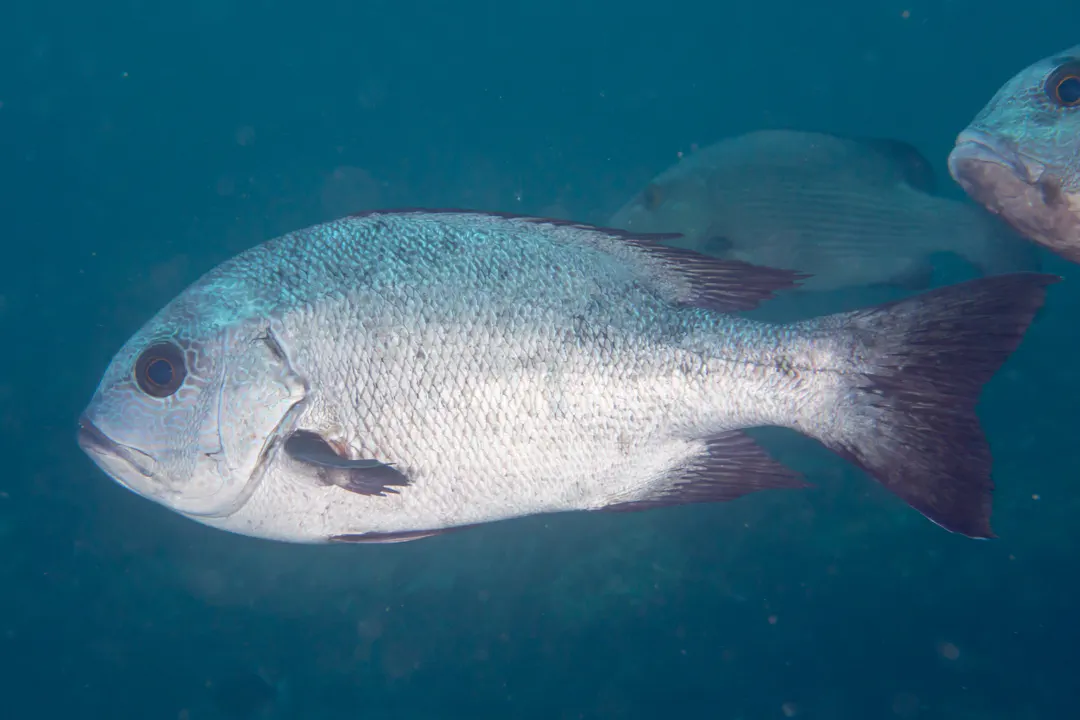 © Rickard ZerpeCC BY 4.0 · iNaturalist
 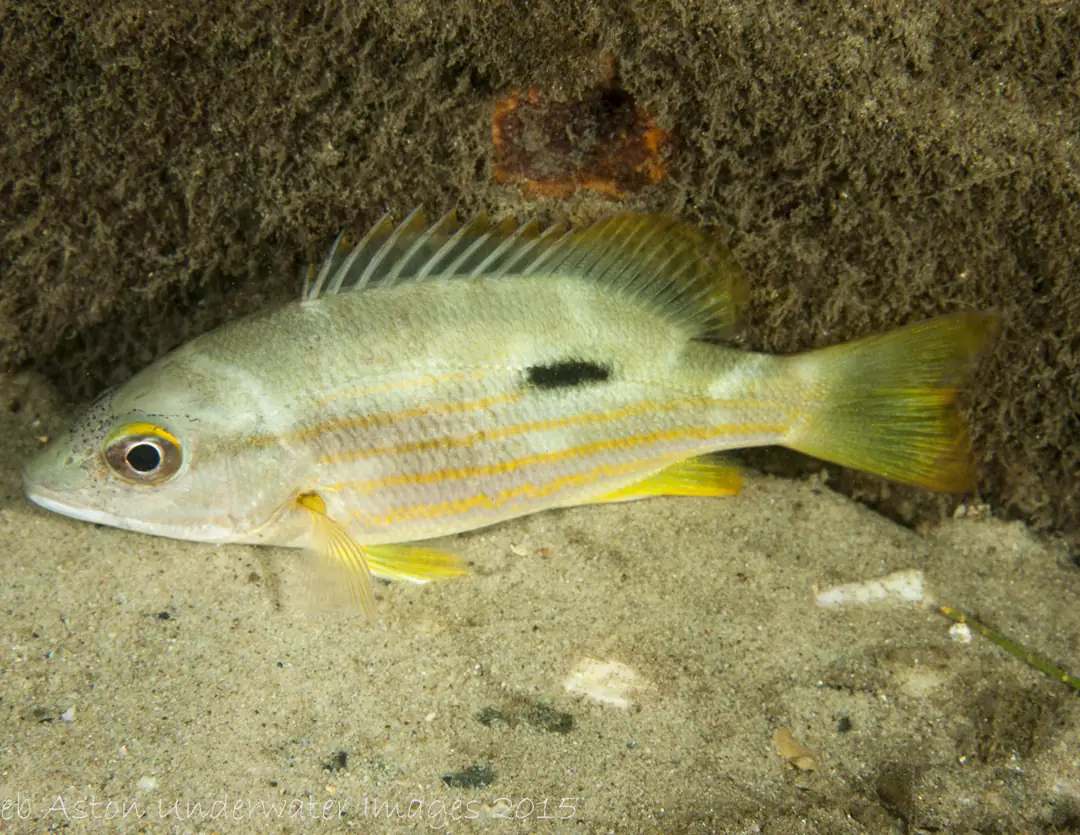 © Deb AstonAll rights reserved
 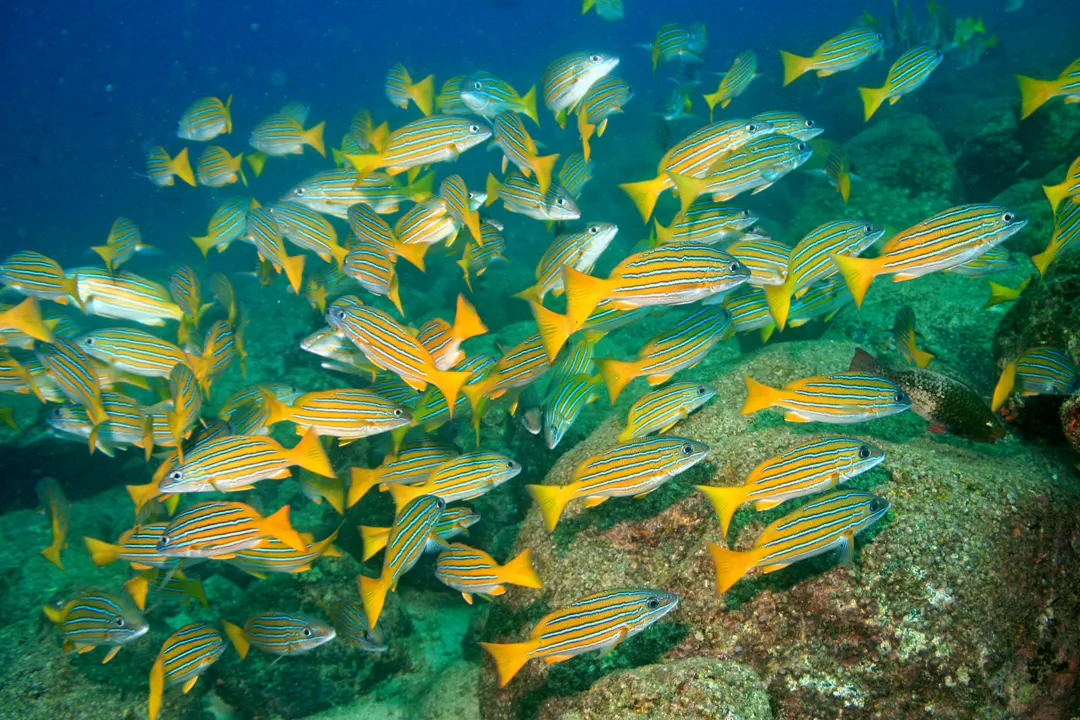 © LASZLO ILYESCC BY 4.0 · iNaturalist
 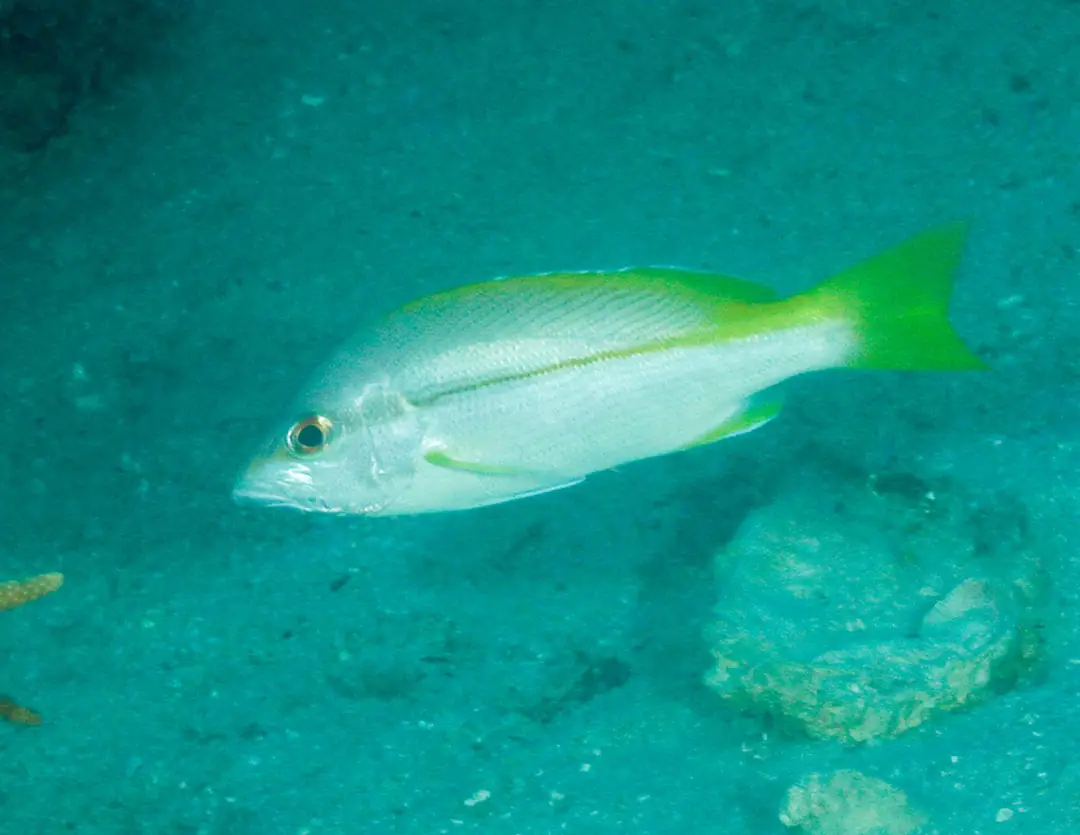 © Ian ShawAll rights reserved
 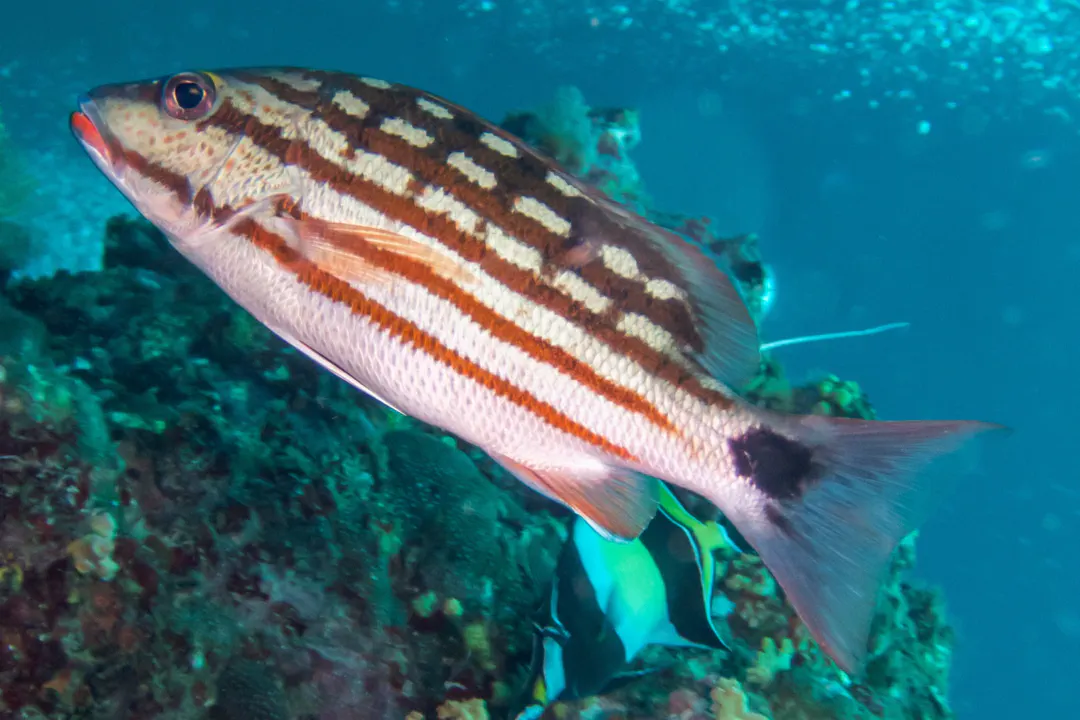 © portioidCC BY 4.0 · iNaturalist
 Saddle-back Snapper has no known danger to humans. However, always observe marine life responsibly.
Saddle-back Snapper can be found at depths of up to 310 meters.
Download Seabook free for iOS and Android.