 © Lesley ClementsAll rights reserved
Bicolour Parrotfish
Cetoscarus bicolor
Hipposcarus harid
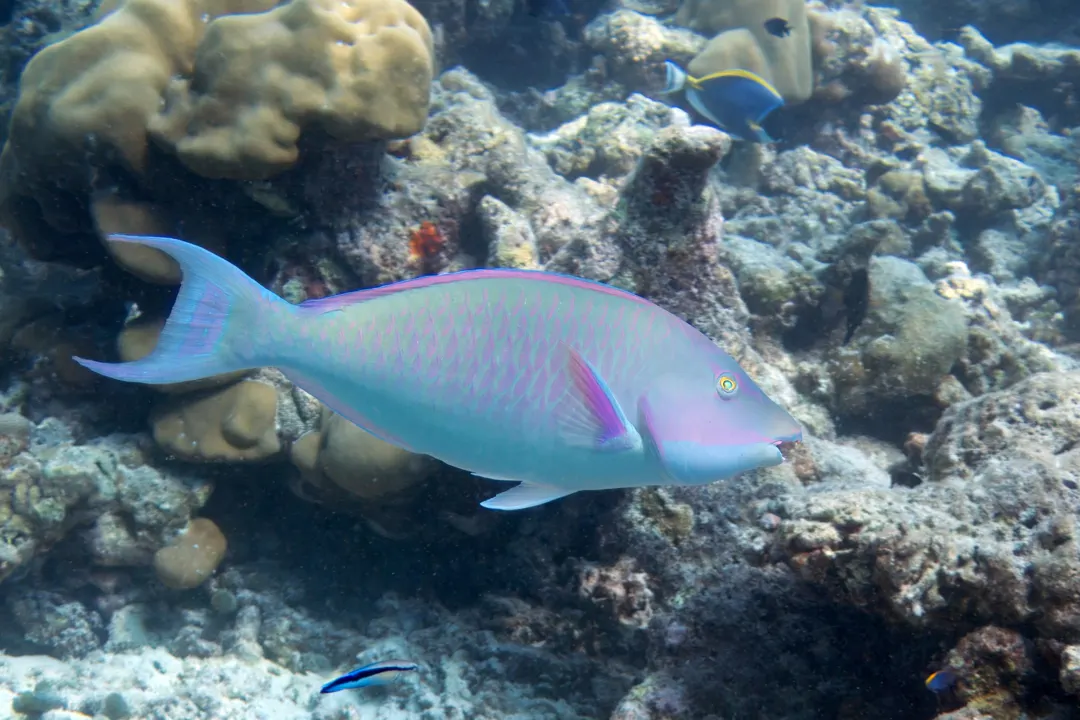
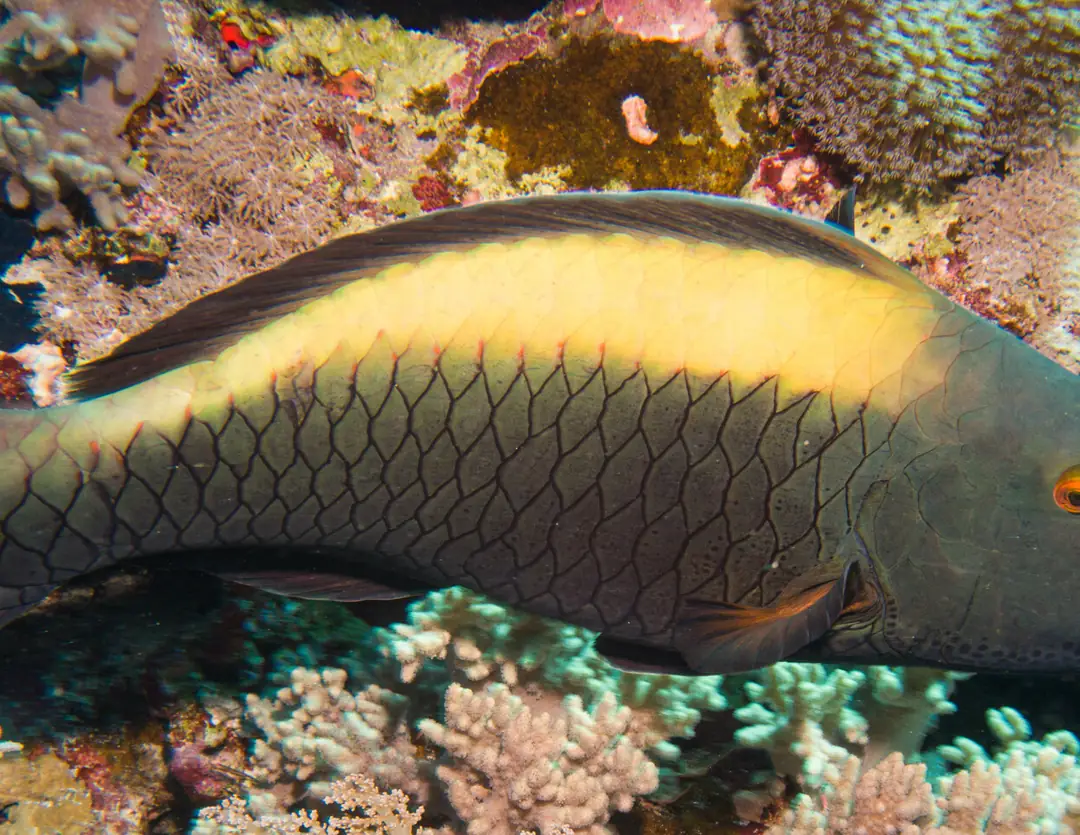
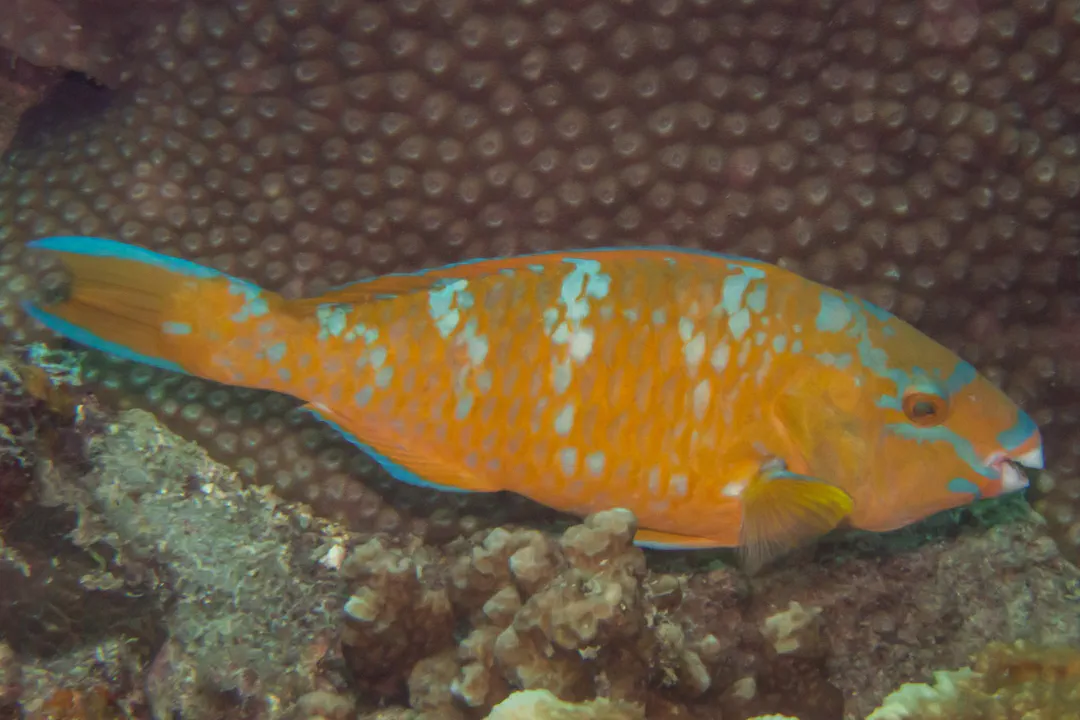
Hipposcarus harid is a species of fish from Scaridae family found on coral reefs of Indian Ocean and the Red Sea.
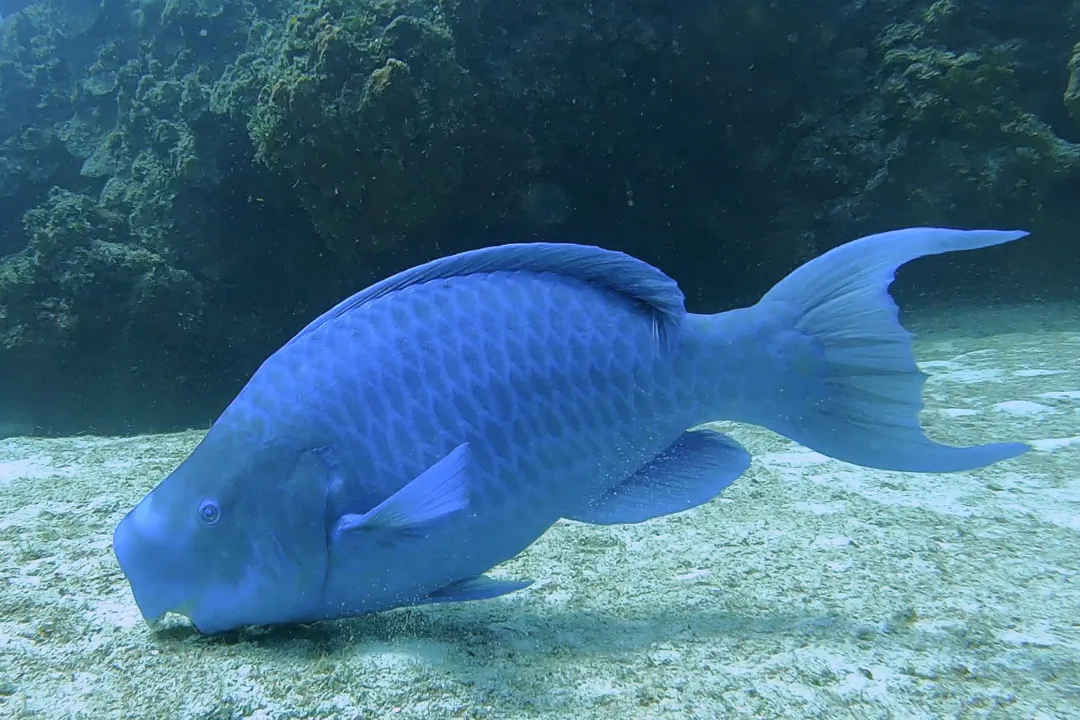
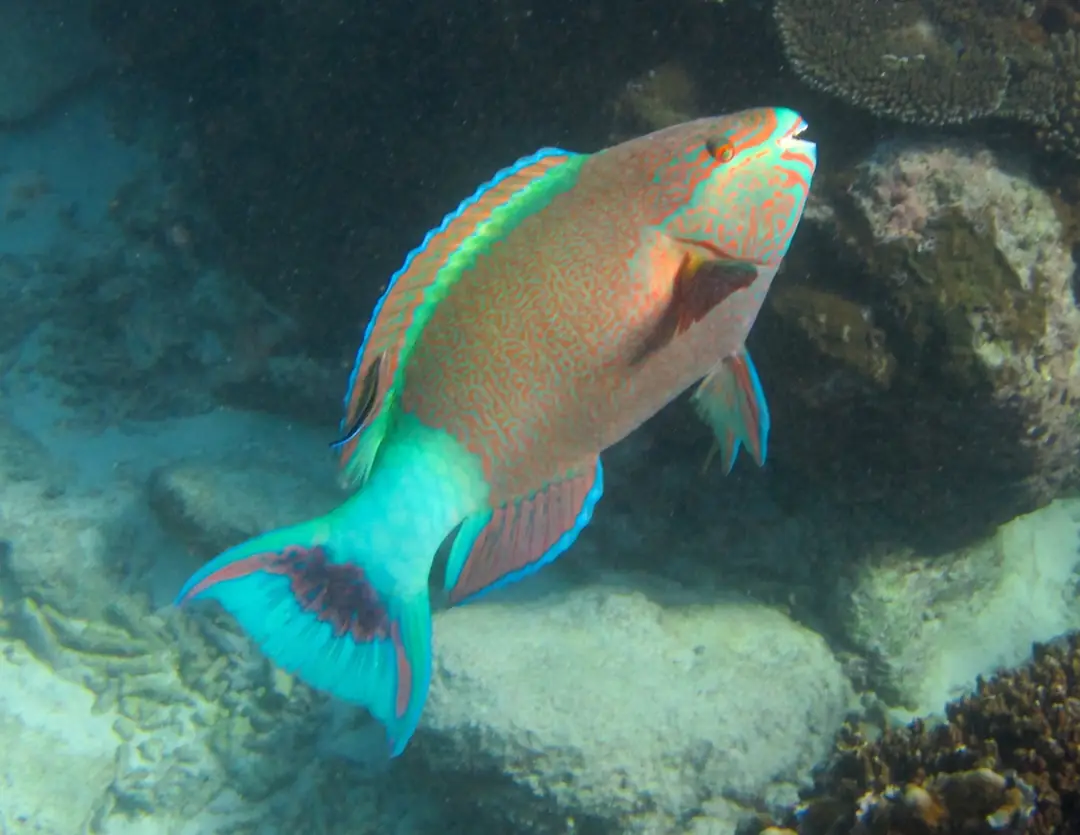
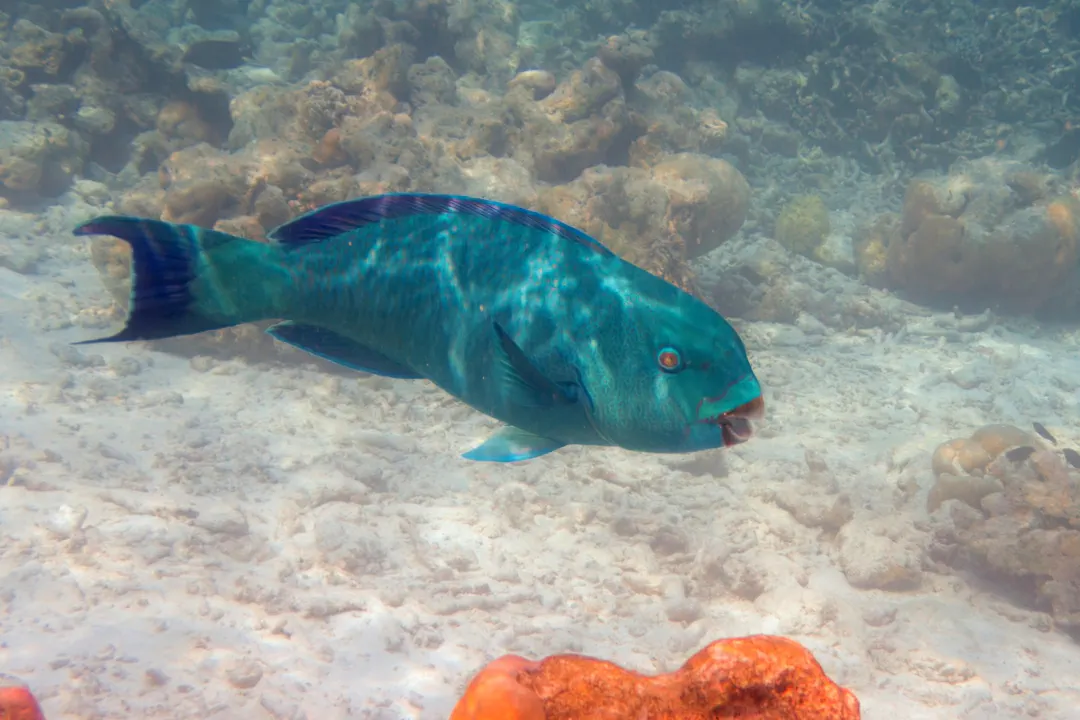
Coloring is a monochromatic milky color interspersed with pink, green and blue shades. The dorsal fin is edged along the upper edge, the caudal fin along the posterior edge or along the perimeter. The anal fin is monochromatic.
Hipposcarus harid is found in the western Indian Ocean from the Red Sea south to the Mozambique Channel, including Madagascar, the Seychelles and east to Sri Lanka, the Maldives and the Chagos Islands.
Hipposcarus harid occurs in coastal regions and is associated with coral reefs and reef flats. This species forms harems comprising a terminal phase, or male, individual and numerous initial phase individuals. It will also form large schools for foraging. H. harid is a protogynous hermaphrodite in which there are two distinct phases, an initial phase which includes females and primary, that is males which were born male, and a terminal phase, the secondary males transformed from females. It is an oviparous species in which the male and female form pairs for mating. It feeds on benthic algae.
Hipposcarus harid is caught with nets and other artisanal gear, the catch is maistly marketed fresh. Each year in April these fish aggregate in a shallow lagoon in the Farasan Islands in the southern Red Sea. The reason for this aggregation is unknown but the local people celebrate a festival, called Hareed, catching the fish for prizes. Almost all the fish are caught but the aggregation returns each year. Evidence for the consumption and trade of this species, among other parrotfishes native to the Red Sea, goes back to at least the Byzantine period.
© Lesley ClementsAll rights reserved 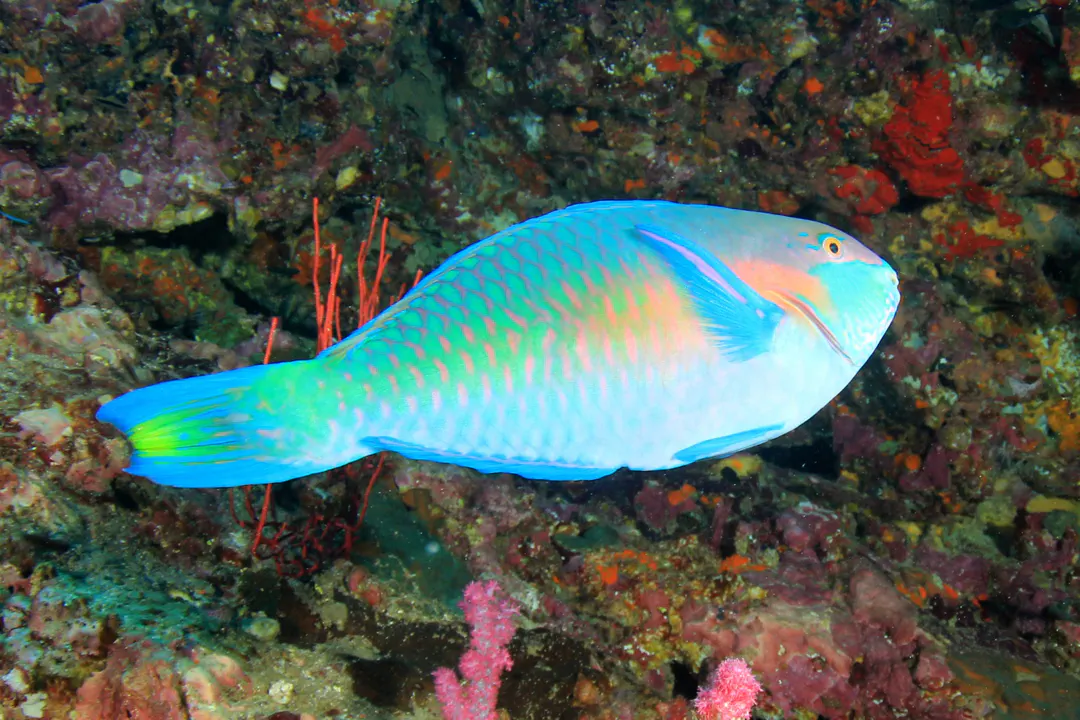 © seabook.appAll rights reserved
  © portioidCC BY 4.0 · iNaturalist
  © Dan SchofieldCC BY 4.0 · iNaturalist
  © Geoff ShuetrimCC BY 4.0
  © Darren ObbardCC BY 4.0 · iNaturalist
 Indian Longnose Parrotfish has no known danger to humans. However, always observe marine life responsibly.
Indian Longnose Parrotfish can be found at depths of up to 25 meters.
Download Seabook free for iOS and Android.