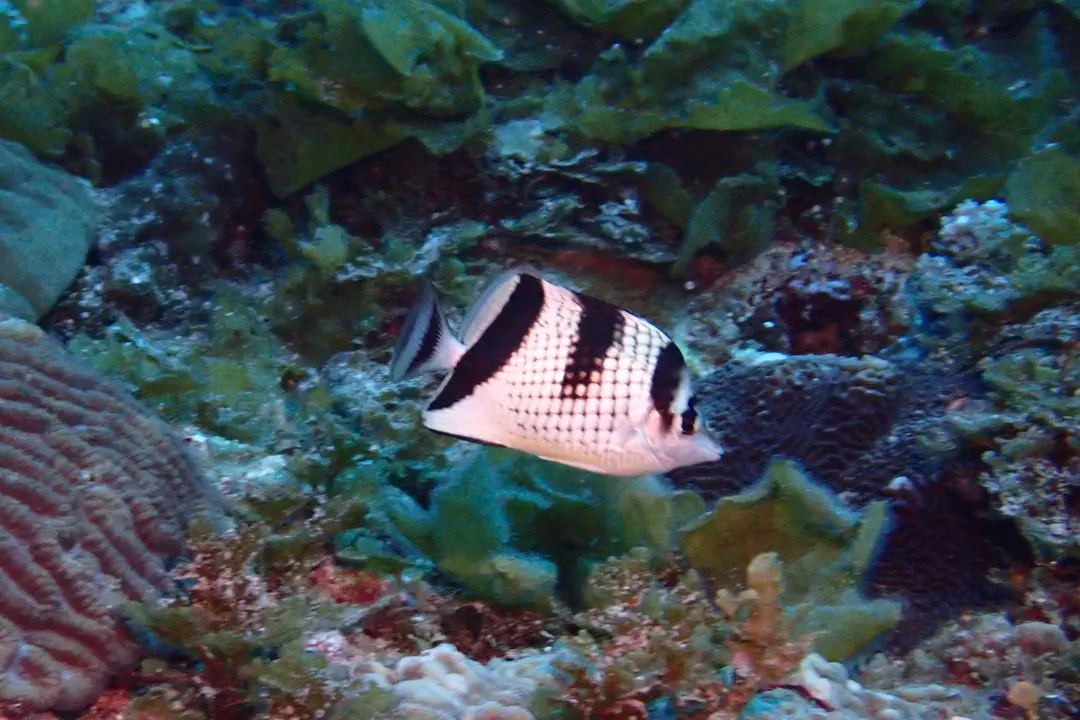
 © 呂一起(Lyu yi-chi)CC BY 4.0 · iNaturalist
Asian Butterflyfish
Chaetodon argentatus
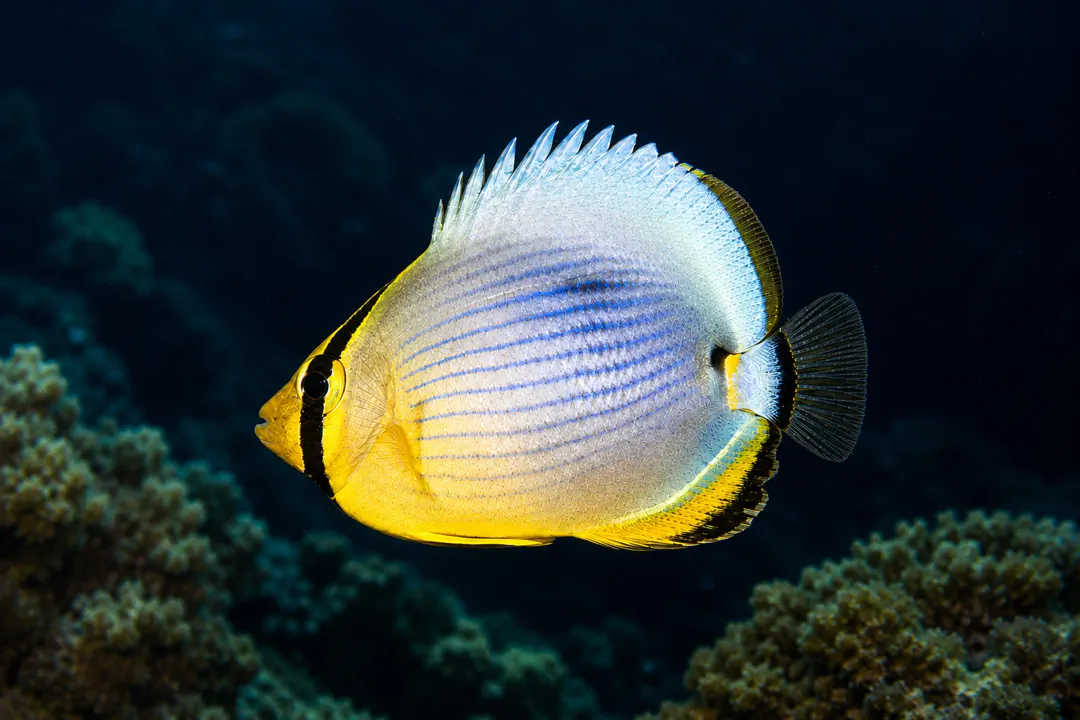
Chaetodon trifasciatus
Chaetodon trifasciatus is a species of butterflyfish (family Chaetodontidae).
A pale orange butterflyfish with a bluish rear section, with oblique purplish stripes along sides, a yellow-margined black band through the eye and along the dorsal and anal-fin bases, a reddish-orange anal fin and a yellowish-orange caudal peduncle.
The Oval Butterflyfish (C. lunulatus) and the Black-tailed Butterflyfish (C. austriacus) resemble C. trifasciatus in coloration. The former has a less conspicuous back patch below the dorsal fin and a mainly dark anal fin, while the latter has black caudal and anal fins.
The Melon Butterflyfish is found in the Indian Ocean from East Africa to the Raja Ampat Islands, West Papua, Indonesia, and the Australian territories of Cocos (Keeling) Islands and Christmas Island.
Found at depths between 2 and 20 m, in coral-rich lagoons and semi-protected seaward reefs. Small juveniles are secretive and hide in corals.
Growing to a maximum of 15 cm long, the monogamous adults swim in pairs and may be territorial and aggressive to other Chaetodon. Melon Butterflyfish feed exclusively on coral polyps, particularly of Pocillopora. They are oviparous.
This is one species of a closely related group which includes the Black-tailed Butterflyfish (C. austriacus) of the Red Sea and Gulf of Aden and the Oval Butterflyfish (C. lunulatus) which is found in the western Pacific, from eastern coasts of the Indonesian islands to Australia.
Melon, Black-tailed and Oval butterflyfishes and probably also the somewhat aberrant Arabian Butterflyfish (C. melapterus) make up the subgenus Corallochaetodon, of which C. trifasciatus is the type species. They are probably quite close to the subgenus called "Citharoedus" (that name is a junior homonym of a mollusc genus), which contains for example the Scrawled Butterflyfish (C. meyeri). Like that group, they might be separated in Megaprotodon if the genus Chaetodon is split up.
© 呂一起(Lyu yi-chi)CC BY 4.0 · iNaturalist 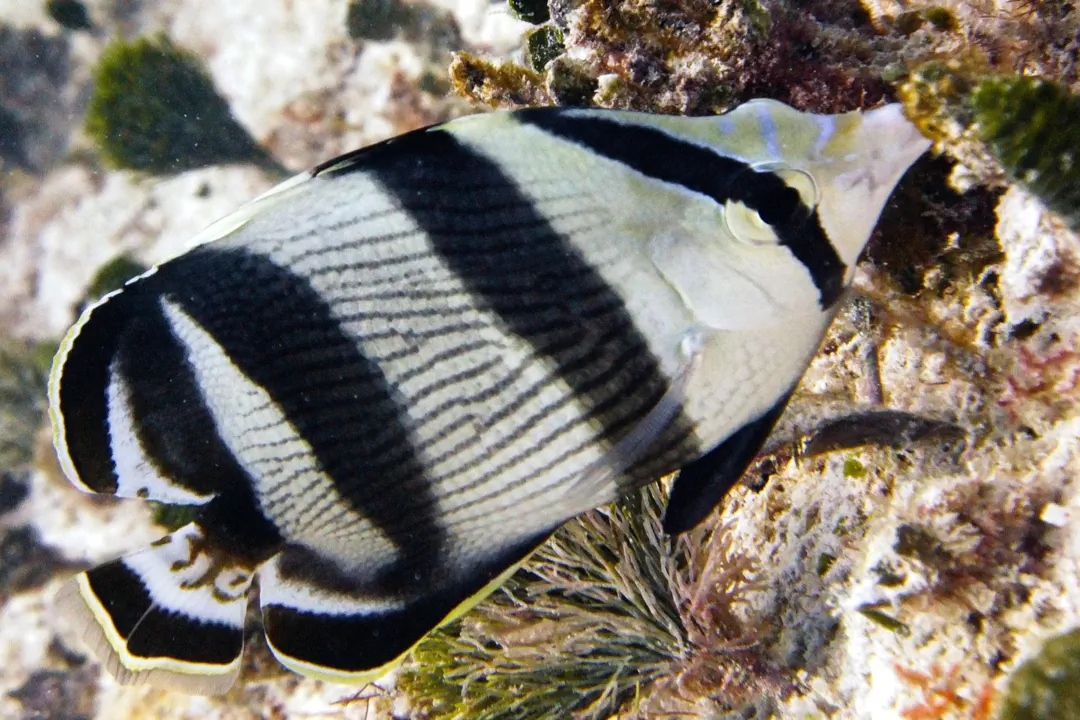 © Matteo CassellaAll rights reserved
 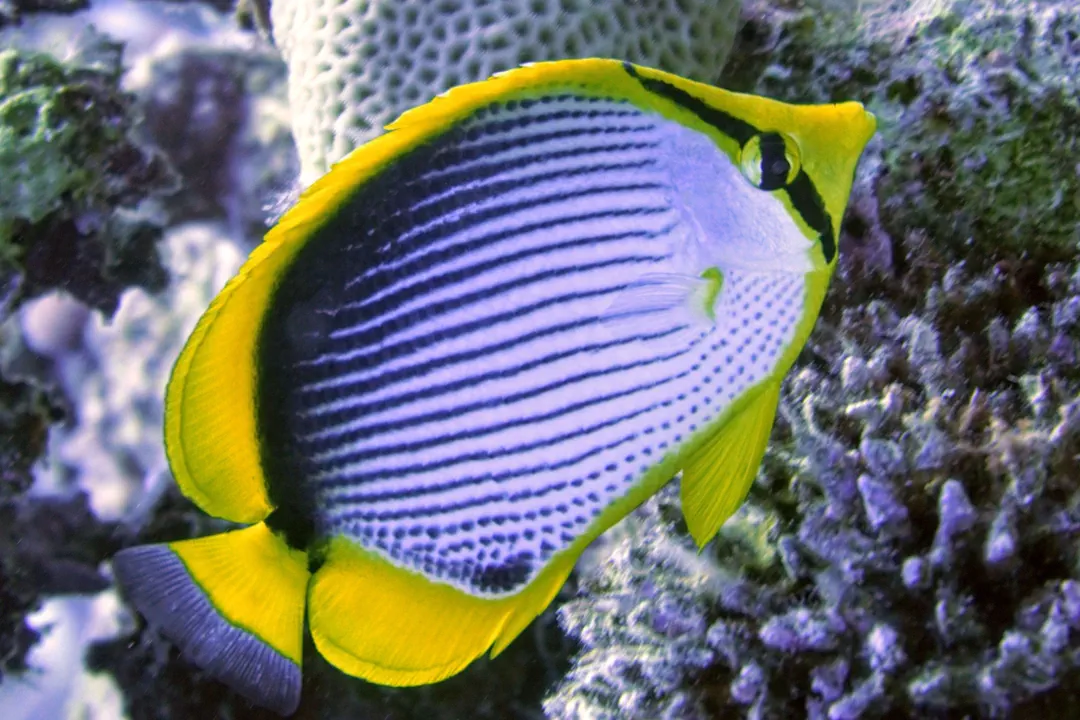 © Ben CostamagnaCC BY 4.0 · iNaturalist
 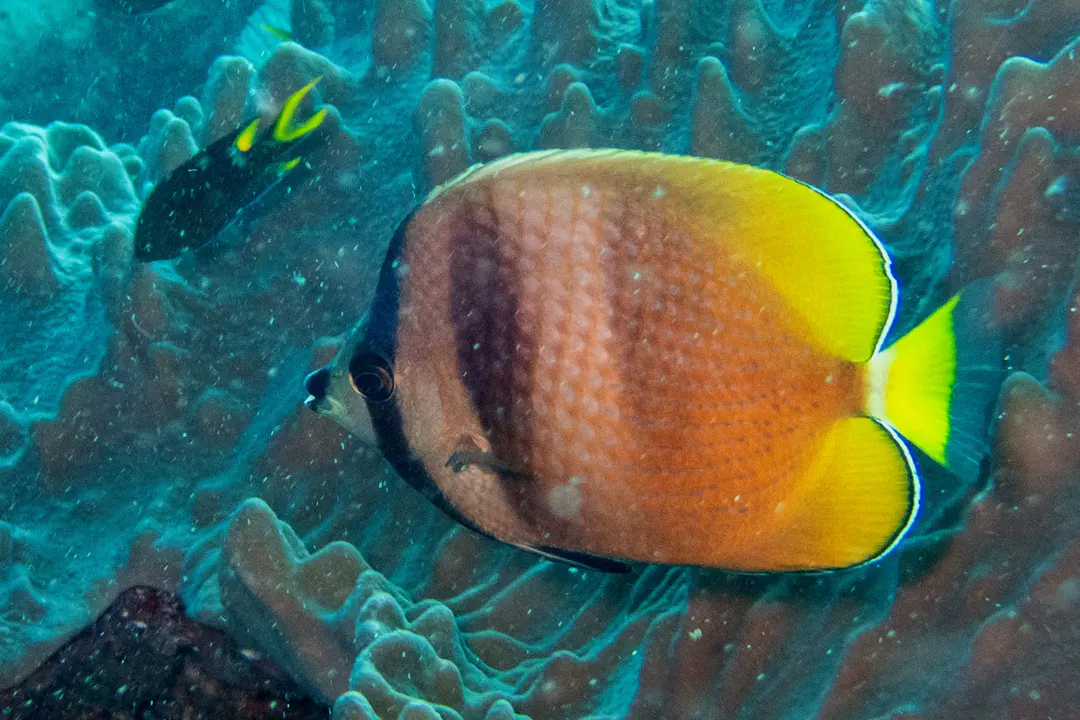 © Piotr LukasikCC BY 4.0 · iNaturalist
 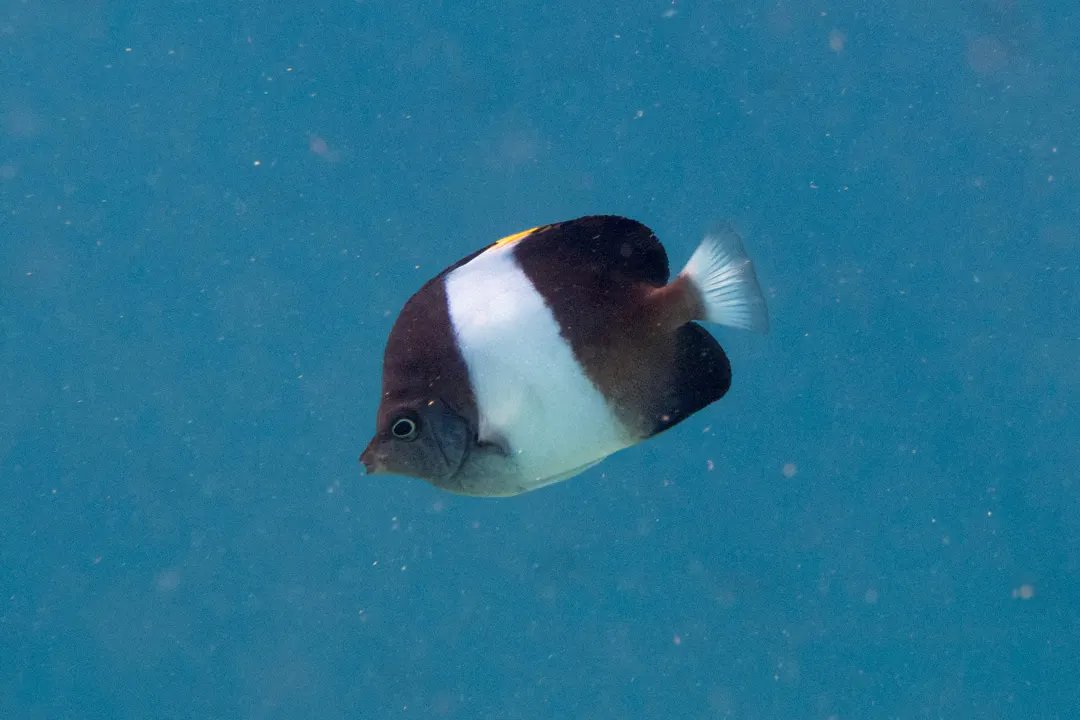 © Emanuele SantarelliCC BY-SA 4.0 · iNaturalist
 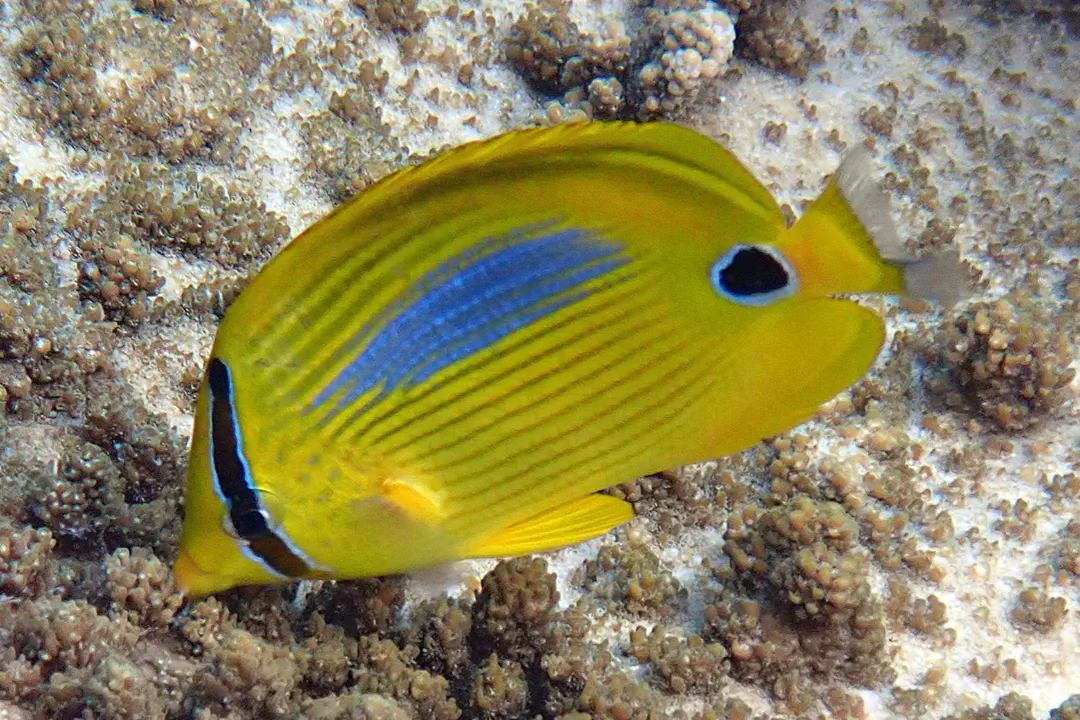 © Susan PriorCC BY 4.0 · iNaturalist
 Indian Redfin Butterflyfish (juvenile) has no known danger to humans. However, always observe marine life responsibly.
Indian Redfin Butterflyfish (juvenile) can be found at depths of up to 30 meters.
Download Seabook free for iOS and Android.