 © Lesley ClementsAll rights reserved
Bicolour Parrotfish
Cetoscarus bicolor
Chlorurus sordidus
Chlorurus sordidus is a species of marine fish in the family Scaridae.
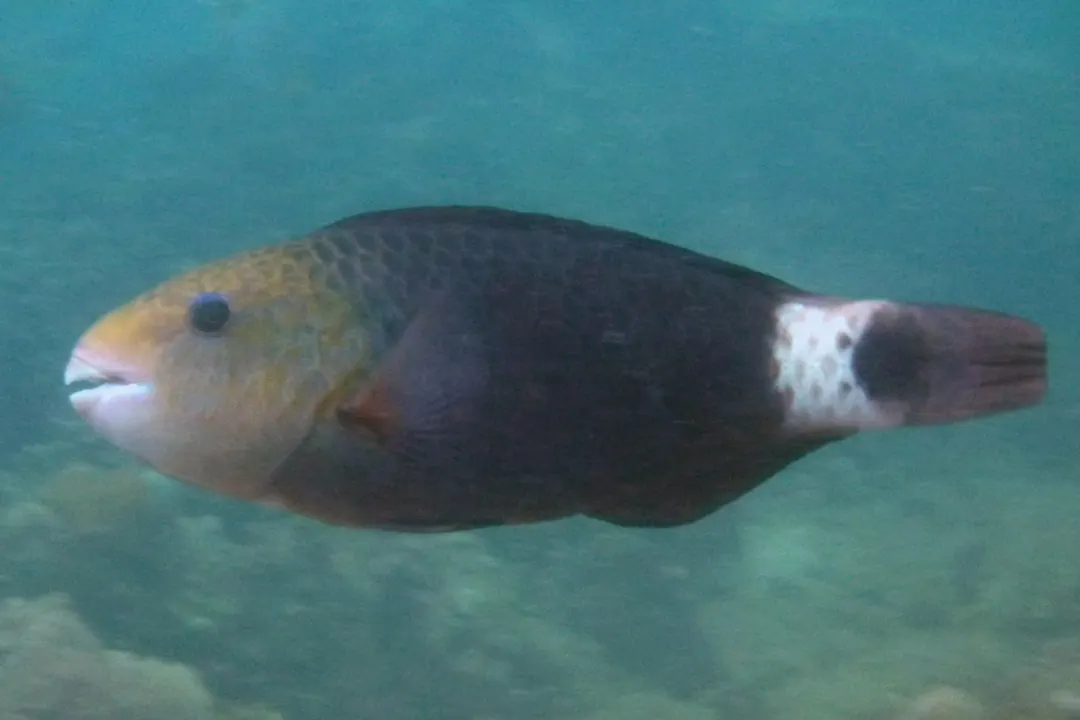
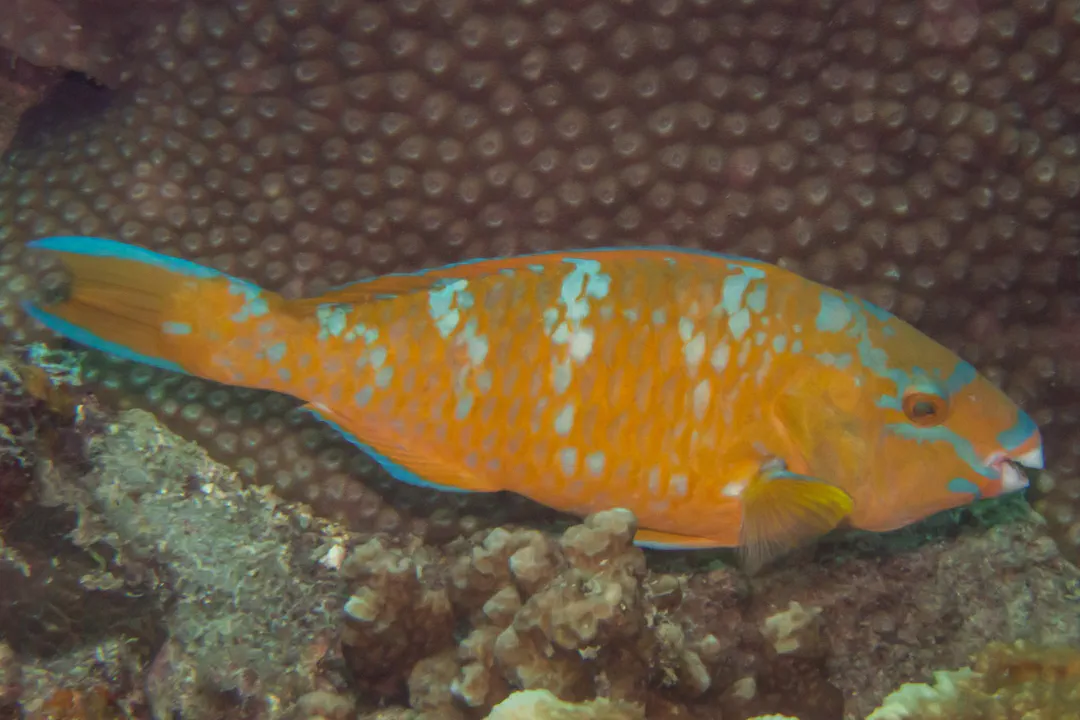
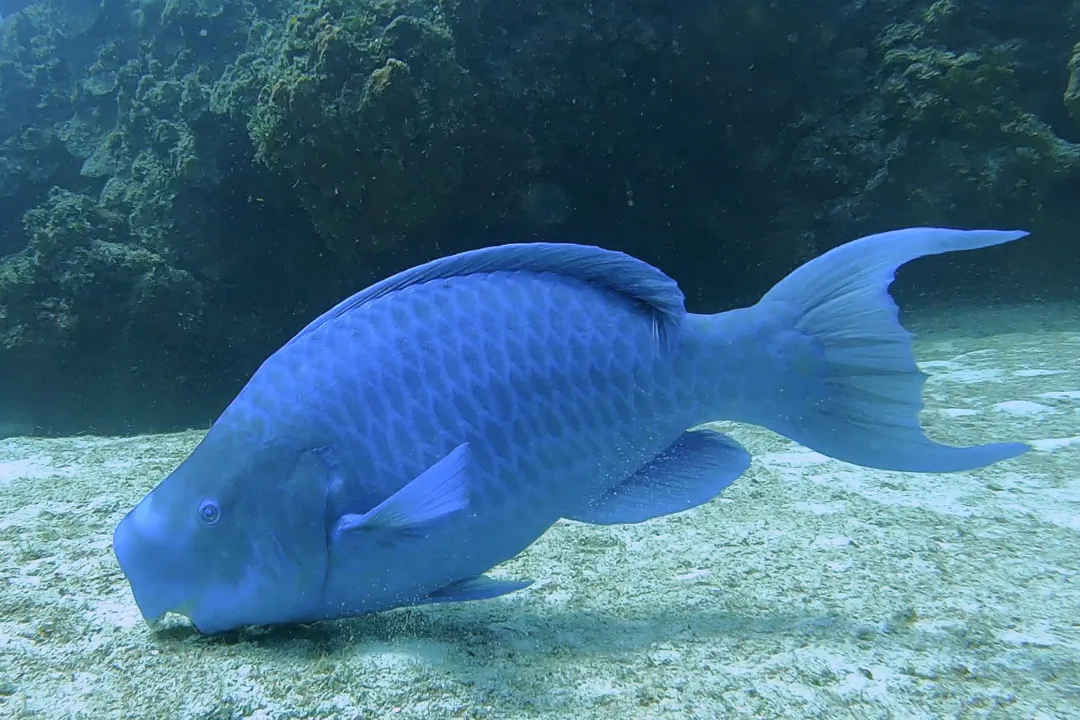
The initial phase has very variable colouration. The smaller fishes can be a uniform dark brown to light gray and they may or may not possess a light band surrounding a dark spot on the caudal peduncle.
Larger specimens can show a series of irregular rows of small, light spots towards the tail or they may have the light band surrounding the dark spot on the caudal peduncle.
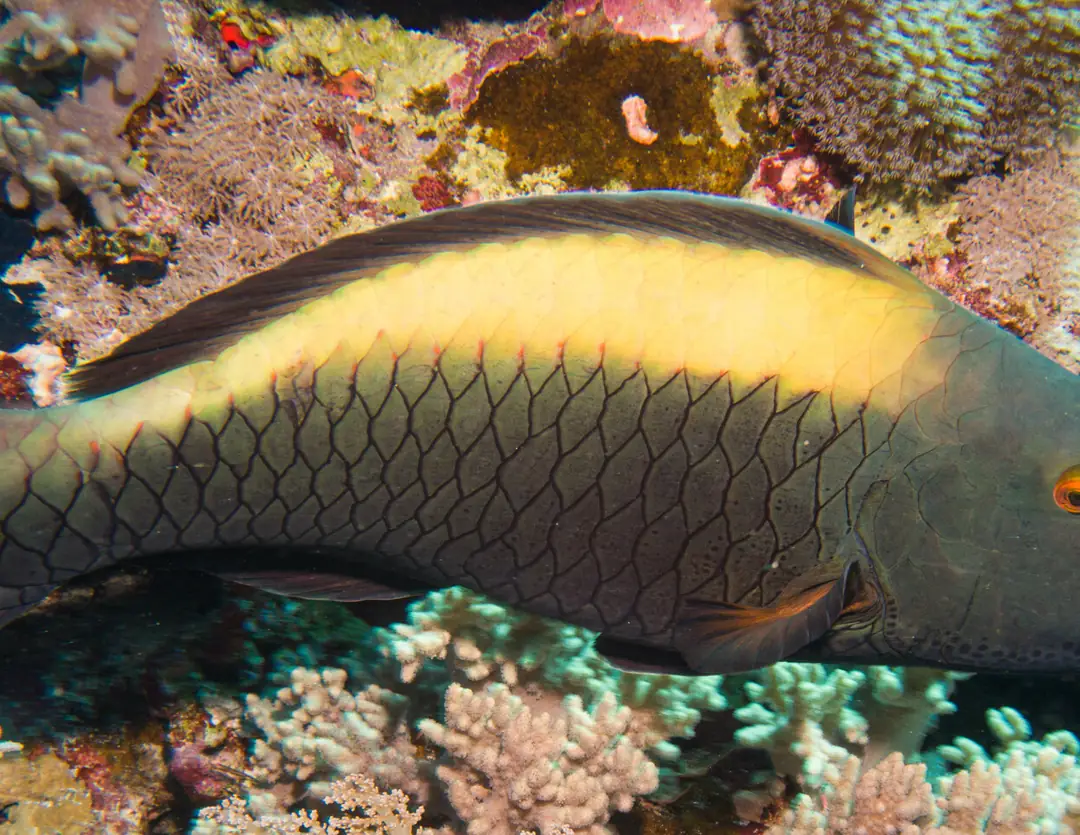
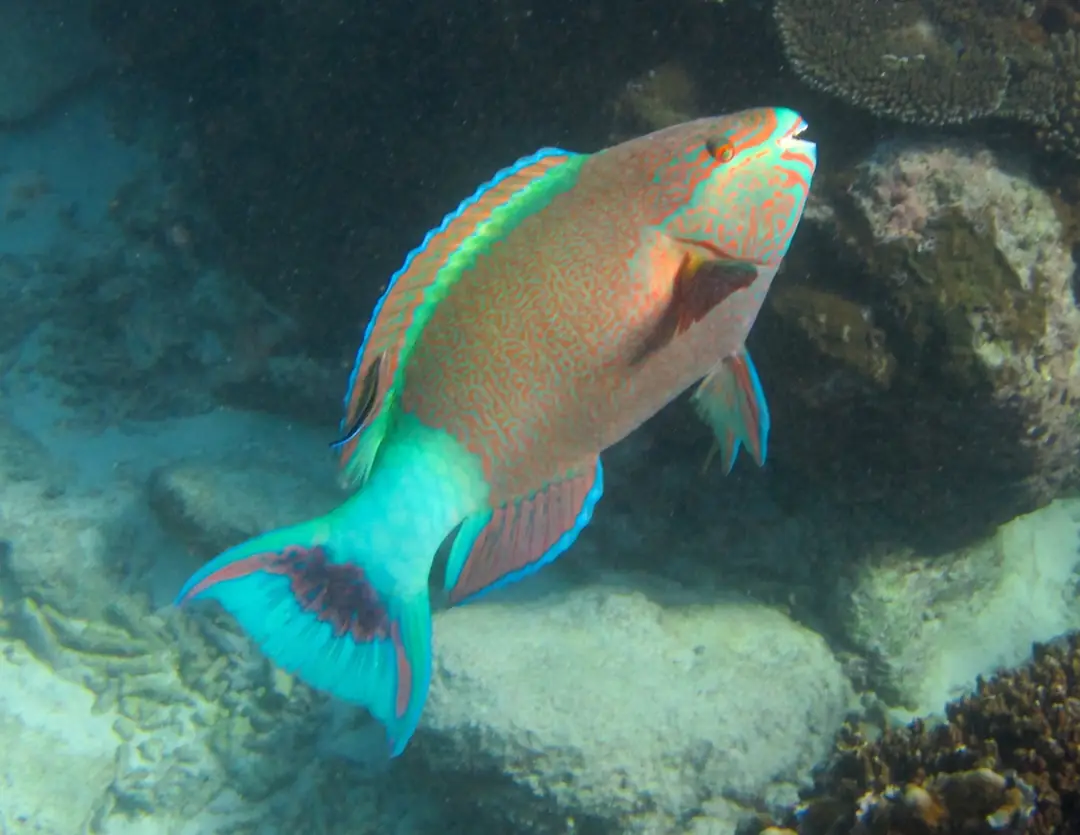
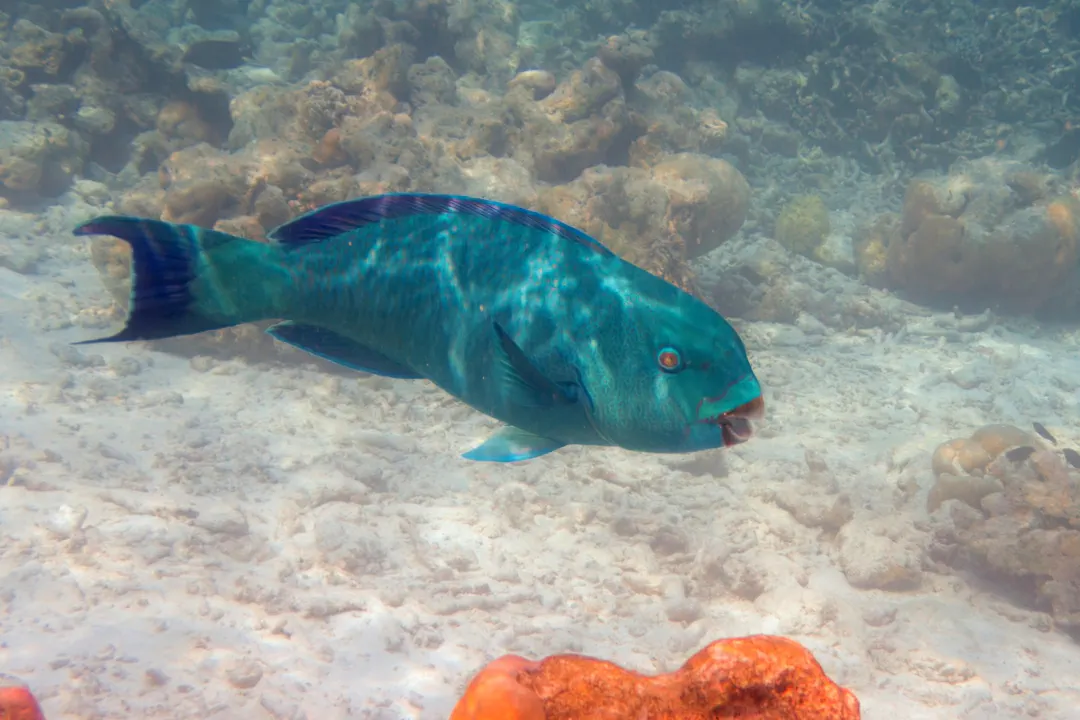
The female has a dark coloration with four pairs of white spots on the back part of its body just before the caudal peduncle. The latter and the caudal fin are whithish with black patch. There is great variation in the coloration within the males of this species. Their body is greenish with big scales outlined with purple-blue lines,three purple-blue stripes around the mouth,an orange patch on the chick with also a white one just upper the latter. The terminal phase, male, is also variable and may have a large tan area on the flanks or on its caudal peduncle. It has a rounded snout.
The daisy parrotfish is a medium size fish and can reach a maximum size of 47.2 cm length.
The daisy parrotfish is widespread throughout the tropical waters of the Indo-Pacific region, Red Sea included.
Before going to sleep, Chlorurus sordidus secretes a mucus which surrounds the fish in a complete cocoon. The purpose of this mucus cocoon is not completely understood, but one theory is that it protects the fish from parasitic gnathidds. This species is known to be predated on by the honeycomb grouper (Epinephelus merra) and the coral trout (Plectropomus leopardus), its parasites include the monogenean Benedenia scari. It is a sociable fish which schools with other parrotfishes such as Scarus psittacus.
Chlorurus sordidus is one of the most widespread species of parrotfish, and it is highly variable with some of the geographically determined forms probably being at least subspecies. It occurs in both coral rich and open pavement areas of shallow reef flats, in lagoon reefs and seaward reefs, it can also be found at drop-offs. The juveniles inhabit areas of coral rubble in reef flats and lagoons. The juveniles and females in their initial phase form large groups that move long distances between their feeding grounds and the areas used for sleeping at night. They feed on benthic algae. This species is a protogynous hermaphrodite and the sex change occurs when the attain a total length of 35.1–47.2 centimetres (13.8–18.6 in).
Chlorurus sordidus has been split by some authorities and the Red Sea dn Indian Ocean populations are regarded as C. sordidus while Chlorurus spilurus occurs in the Pacific and Eastern Indian Ocean, this is based on mitochondrial DNA sequencing and on morphological data. It is also probable that the Red Sea population will also be demonstrated to be specifically distinct. Scarus sordidus was described by the Swedish explorer, orientalist and naturalist Peter Forsskål (1732-1763), the description was published in 1775 with the type locality being Hurghada in Egypt.
© Lesley ClementsAll rights reserved 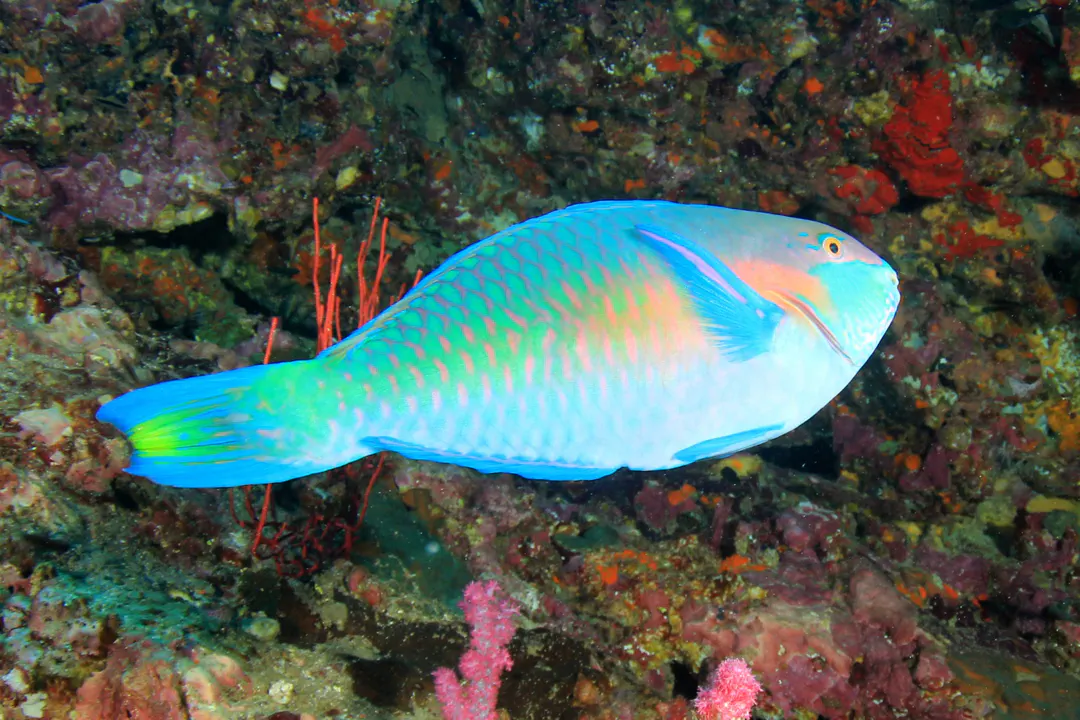 © seabook.appAll rights reserved
  © portioidCC BY 4.0 · iNaturalist
  © Dan SchofieldCC BY 4.0 · iNaturalist
  © Geoff ShuetrimCC BY 4.0
  © Darren ObbardCC BY 4.0 · iNaturalist
 Daisy Parrotfish (female) is classified as poisonous. Always exercise caution and keep a safe distance.
Daisy Parrotfish (female) can be found at depths of up to 50 meters.
Download Seabook free for iOS and Android.