 © Lesley ClementsAll rights reserved
Bicolour Parrotfish
Cetoscarus bicolor
Scarus niger
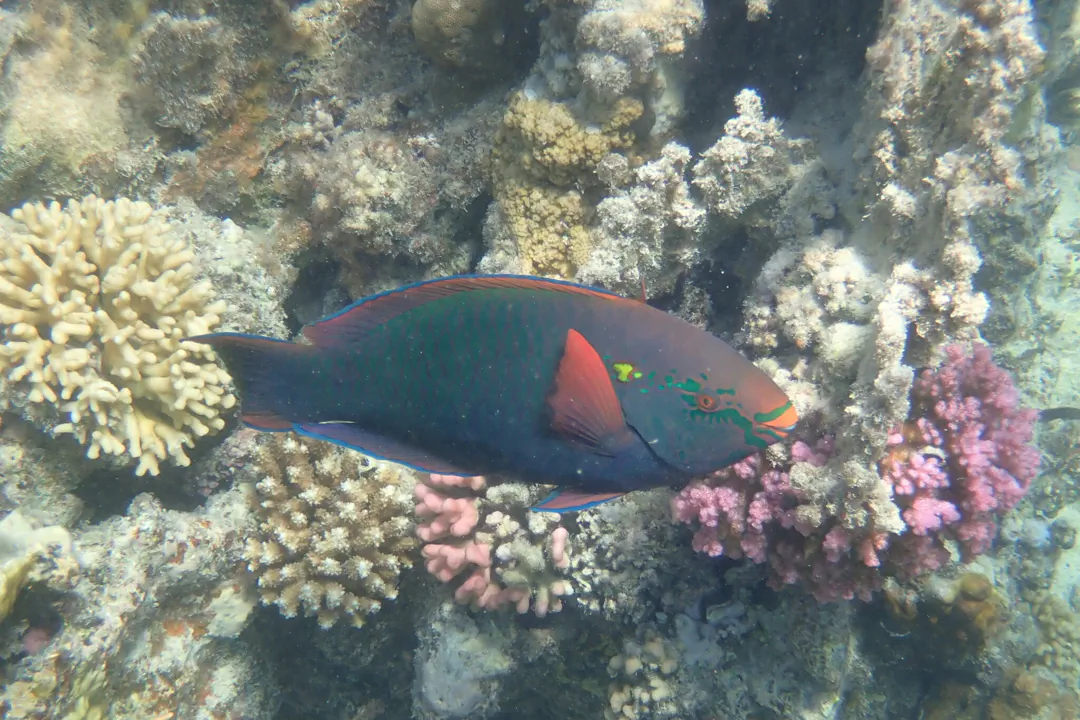
Scarus niger is a species of parrotfish. It is found in Indo-West and Central Pacific, from the Red Sea, north to Japan, south to Australia and east to French Polynesia. It is found in lagoons, channels and outer reefs slopes on the depths of 2 to 20 metres (6 ft 7 in to 65 ft 7 in).
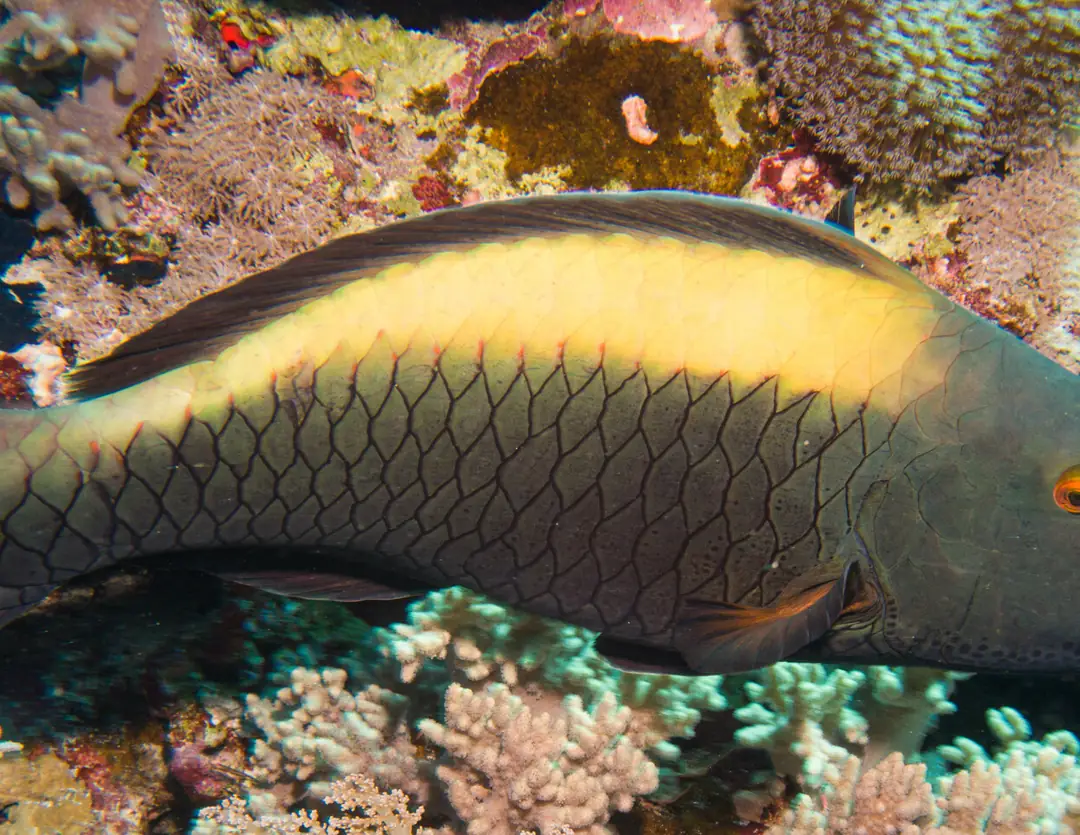
Colour of male is reddish brown anteriorly with red upper lip and dark bands around the mouth, greenish posteriorly with dark scale margins, the markings in the head variable but always with a dark-edged yellowish or bright green dot or spot at top end of line from mouth through eye to top of opercular opening. Females are red on head, belly and fins, side with wavy black and white stripes, and dark green bands around mouth and eye.
Dorsal spines (total): 9; Dorsal soft rays (total): 10; Anal spines: 3; Anal soft rays: 9. This species is distinguished by the following characters: median predorsal scales 6-8 (usually 7); 3 scale rows on cheek, 1(6-7), 2(6-9), 3(2-5); pectoral-fin rays 13-15 (usually 14); conical teeth on side, none in female, usually 2 on upper dental plate for terminal male; lips mainly covering dental plates; caudal fin rounded in small female, with prolonged lobes in large adult.
Indo-Pacific: Red Sea south to Sodwana Bay, South Africa and east to the Society Islands, north to the Ryukyu Islands, south to Shark Bay, Western Australia and the southern Great Barrier Reef.
Inhabits coral-rich areas of clear lagoons, channels, and outer reef slopes. Generally solitary. Juveniles in small groups on algae and coral reefs inshore. Feeds on benthic algae. Males maintain small harems and pair spawn.
© Lesley ClementsAll rights reserved 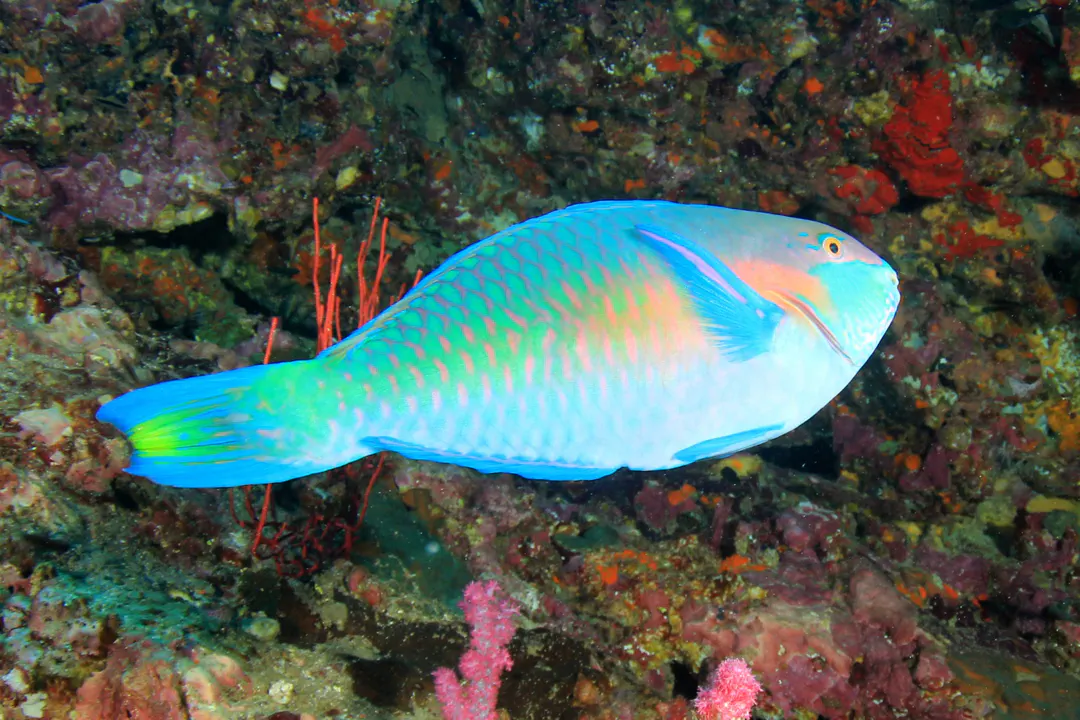 © seabook.appAll rights reserved
 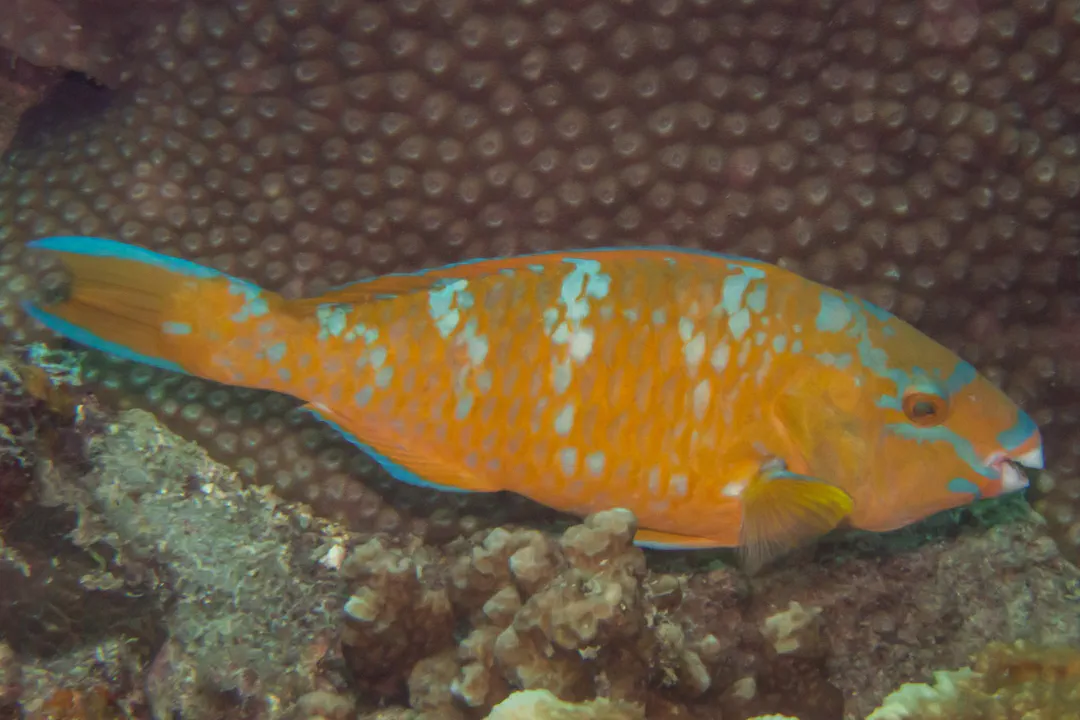 © portioidCC BY 4.0 · iNaturalist
 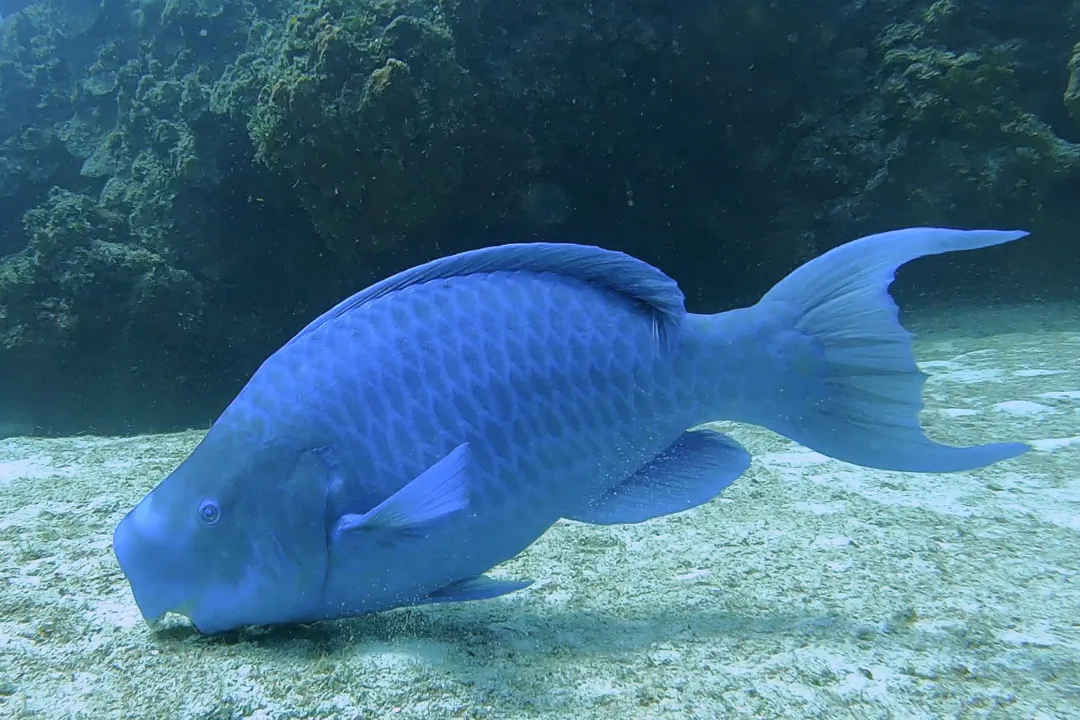 © Dan SchofieldCC BY 4.0 · iNaturalist
 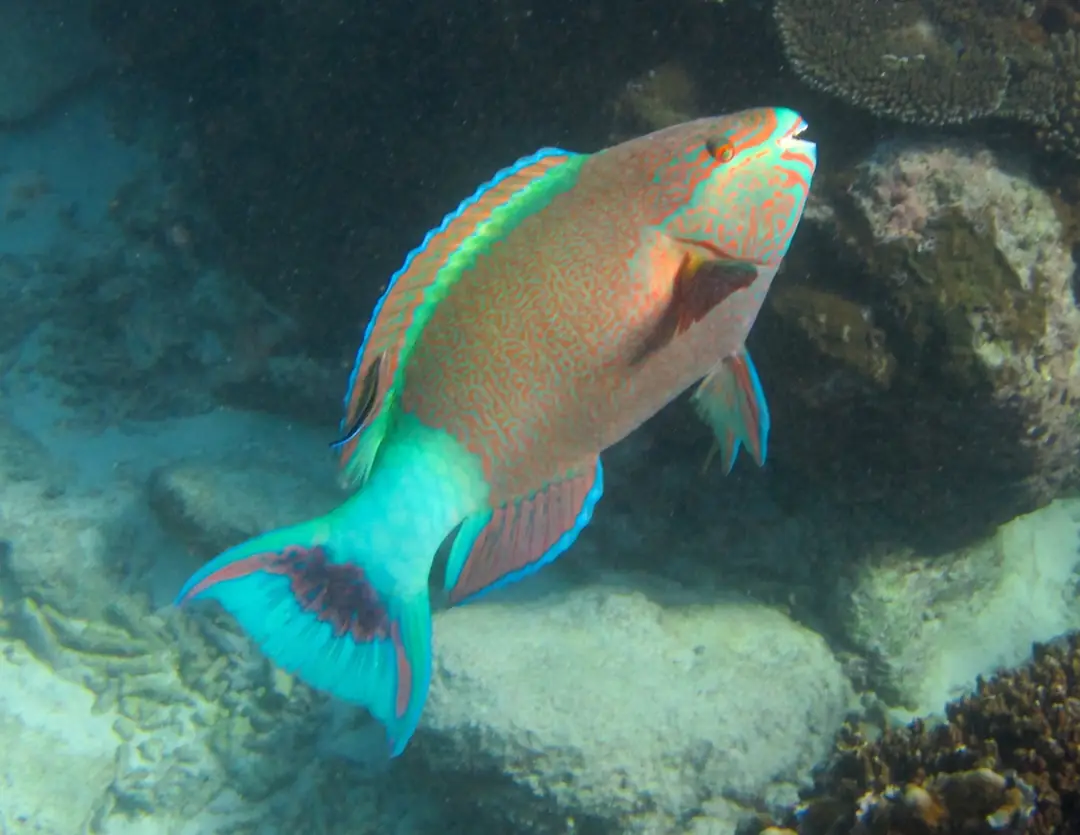 © Geoff ShuetrimCC BY 4.0
 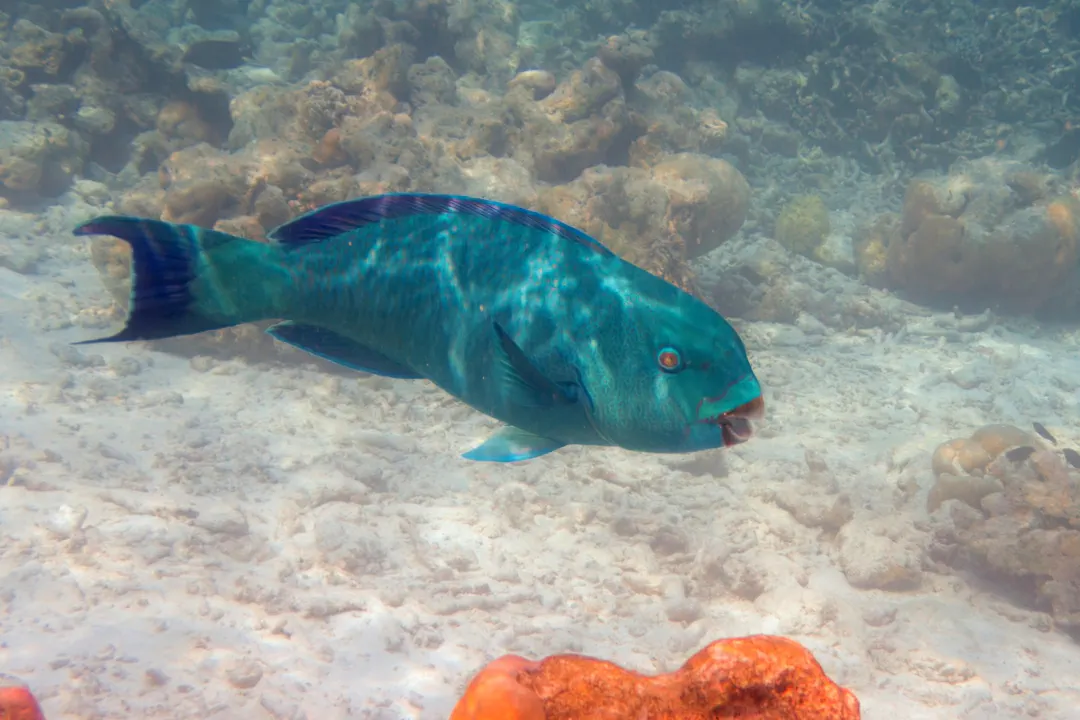 © Darren ObbardCC BY 4.0 · iNaturalist
 Swarthy Parrotfish (male) has no known danger to humans. However, always observe marine life responsibly.
Swarthy Parrotfish (male) can be found at depths of up to 30 meters.
Download Seabook free for iOS and Android.