 © Stas KuryanAll rights reserved
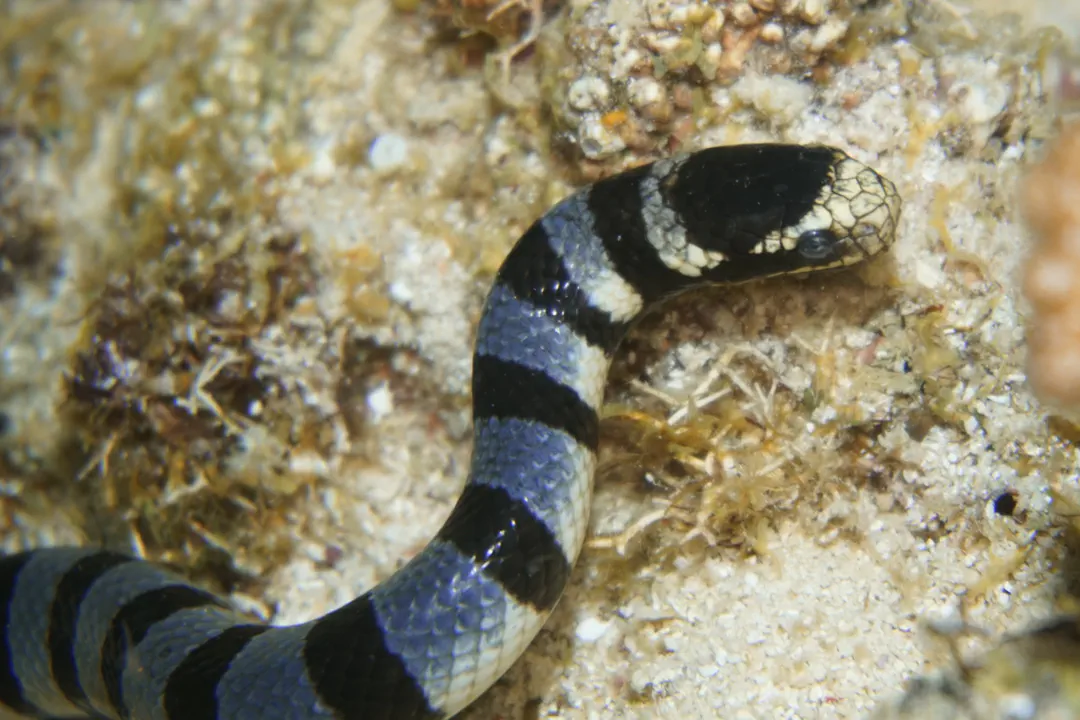
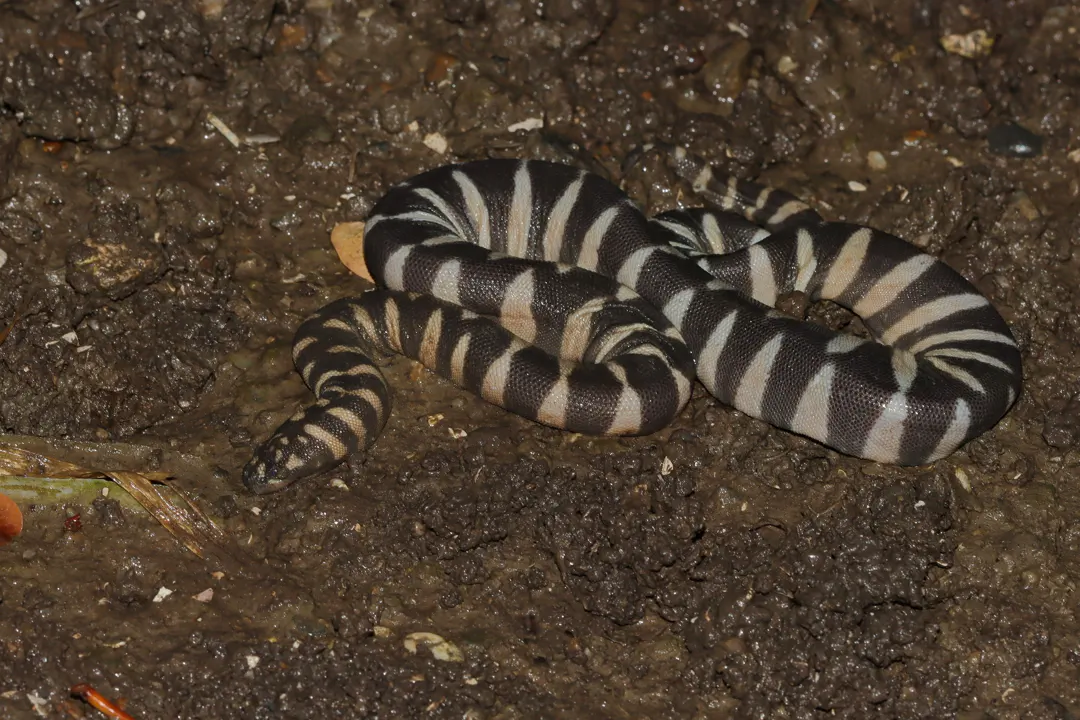
Banded Sea Krait
Laticauda colubrina
Acrochordus javanicus
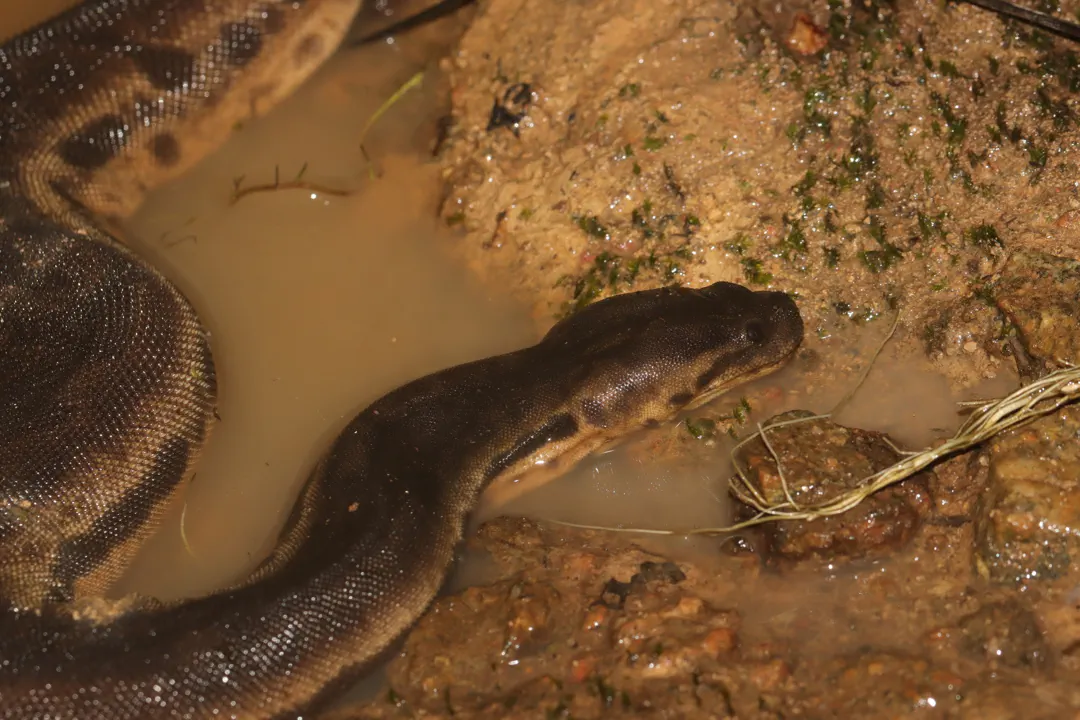
Acrochordus javanicus, commonly known as the elephant trunk snake, belongs to the Acrochordidae family which represents a group of primitive non-venomous aquatic snakes. It is also kept as an exotic pet.
Acrochordus javanicus possesses a wide and flat head, nostrils situated on the top of the snout. Those head's particularities confer to Acrochordus javanicus a certain resemblance with boas. However, its head is also wide as the body. Females are bigger than males and the maximal size of an individual is 240 cms. The dorsal side of the snake's body is brown and its ventral side is pale yellow.
The skin is baggy and loose giving the impression that it is too big for the animal. The skin is covered with small rough adjacent scales. The skin is also used in the tannery industry and its leather is called Karung.
Those aquatics snakes are ovoviviparous, the incubation lasts 5 in 6 months and the female expels from 6 to 17 young.
The top of the head has no large shields, but instead is covered with very small granular scales. There are no ventral scales. The body scales are in about 120 rows around the body. The body is stout, and the tail is short and prehensile.
A. javanicus is fully adapted to live underwater so much that its body cannot support its weight out of water and leaving the water can cause it serious injury.
Acrochordus javanicus is usually met in the central tropical Indo-Pacific waters. In Indonesia like in Java, Kalimantan, Sumatra, and may occur in Bali; in the west coast of Malaysia and also in Thailand, Cambodia, and Vietnam but not east of the Wallace Line.
Acrochordus javanicus has a costal living habitat like rivers, estuaries and lagoons. But it prefers freshwater and brackish environments.
Acrochordus javanicus is an ambush predator that likes to capture fishes and amphibians. It usually catch its preys by folding firmly its body around it. Its loose, baggy skin and its sharp scales find their utility by limiting any risk of escape of the prey, in particular fishes which body is covered with a viscous protective mucus.
Acrochordus javanicus is active at night. It spends most of its life under water and rarely goes on land. It can stay under water up to 40 minutes.
© Stas KuryanAll rights reserved 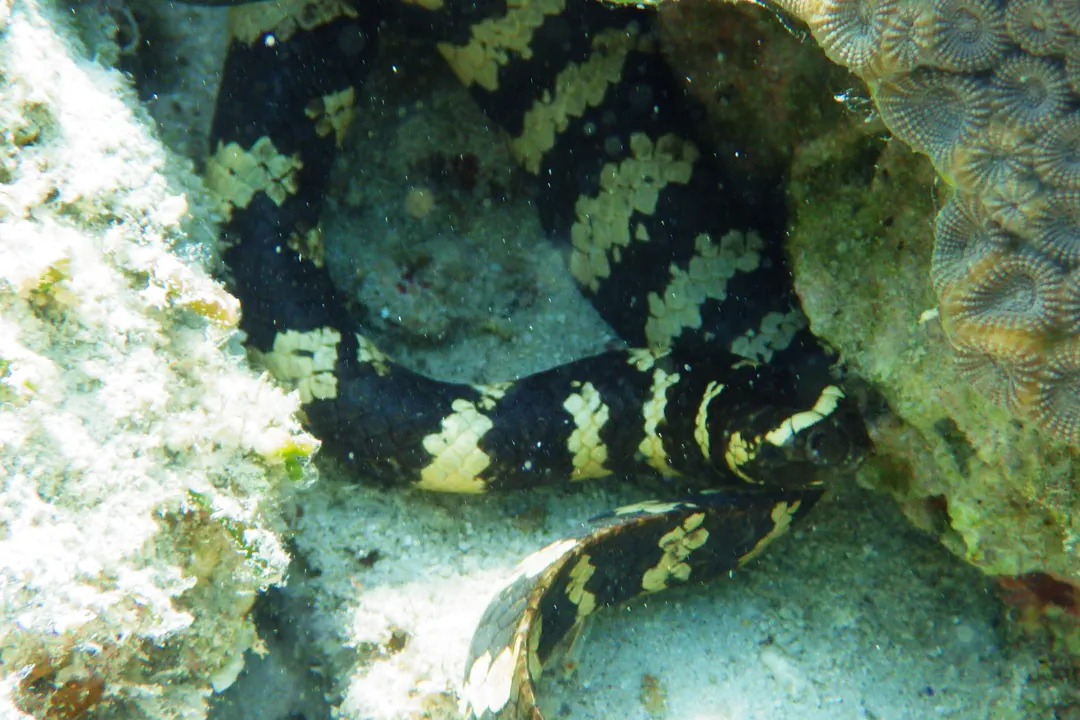 © B. P. WhiteCC BY-SA 4.0 · iNaturalist
  © Ian DugdaleCC BY 4.0 · iNaturalist
 Elephant Trunk Snake has no known danger to humans. However, always observe marine life responsibly.
Download Seabook free for iOS and Android.