 © portioidCC BY 4.0
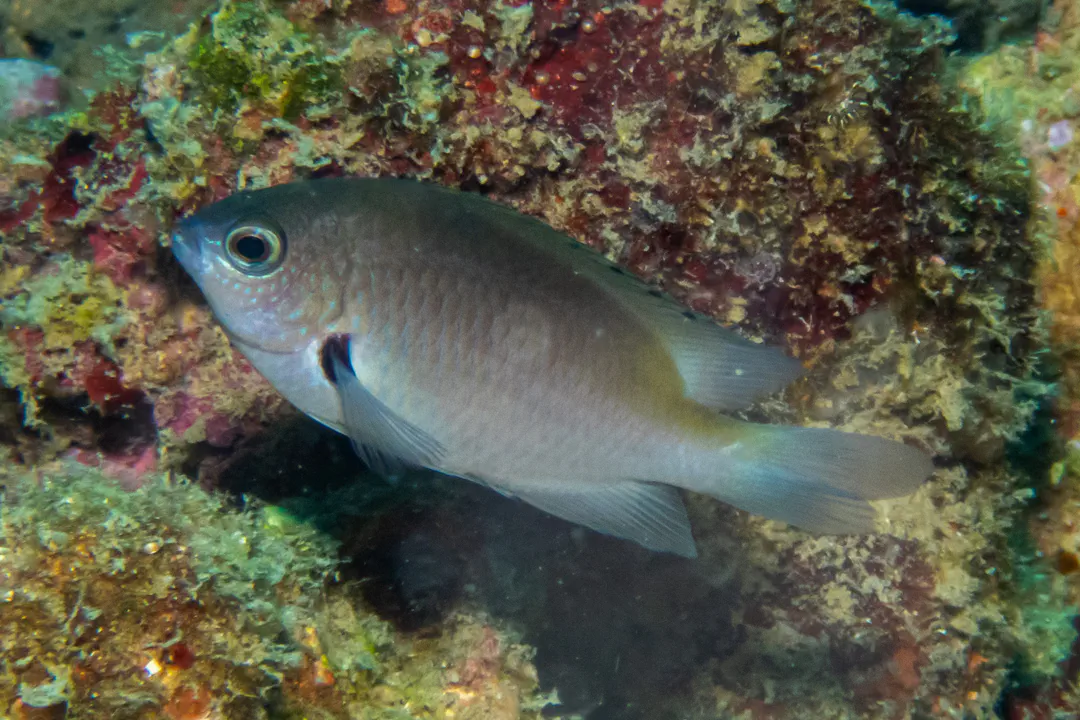
Alexander's Damsel
Pomacentrus alexanderae
Dascyllus reticulatus
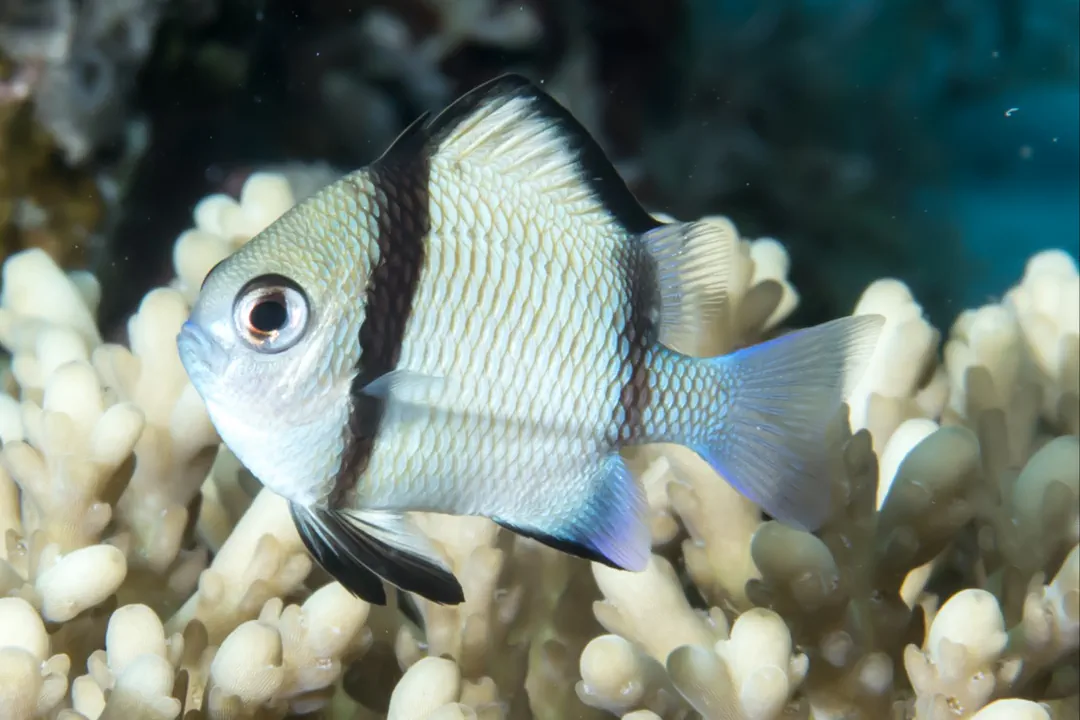
Dascyllus reticulatus is a species of marine fish in the family Pomacentridae. Reticulate dascyllus is widespread throughout the tropical waters of the central Indo-Pacific region.
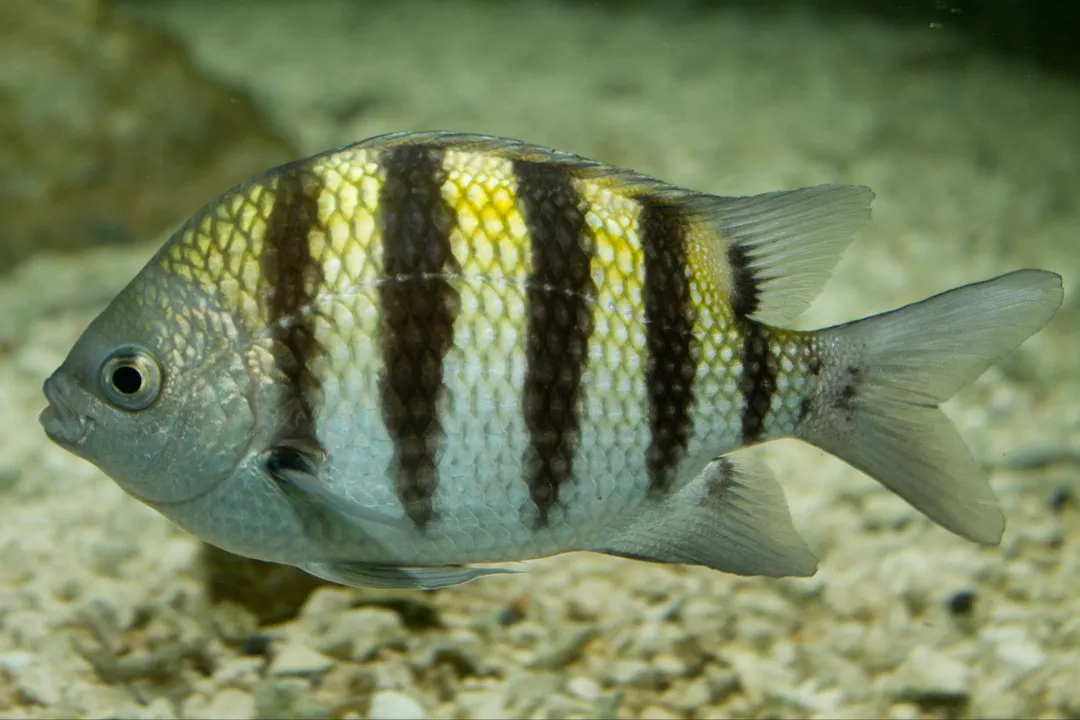
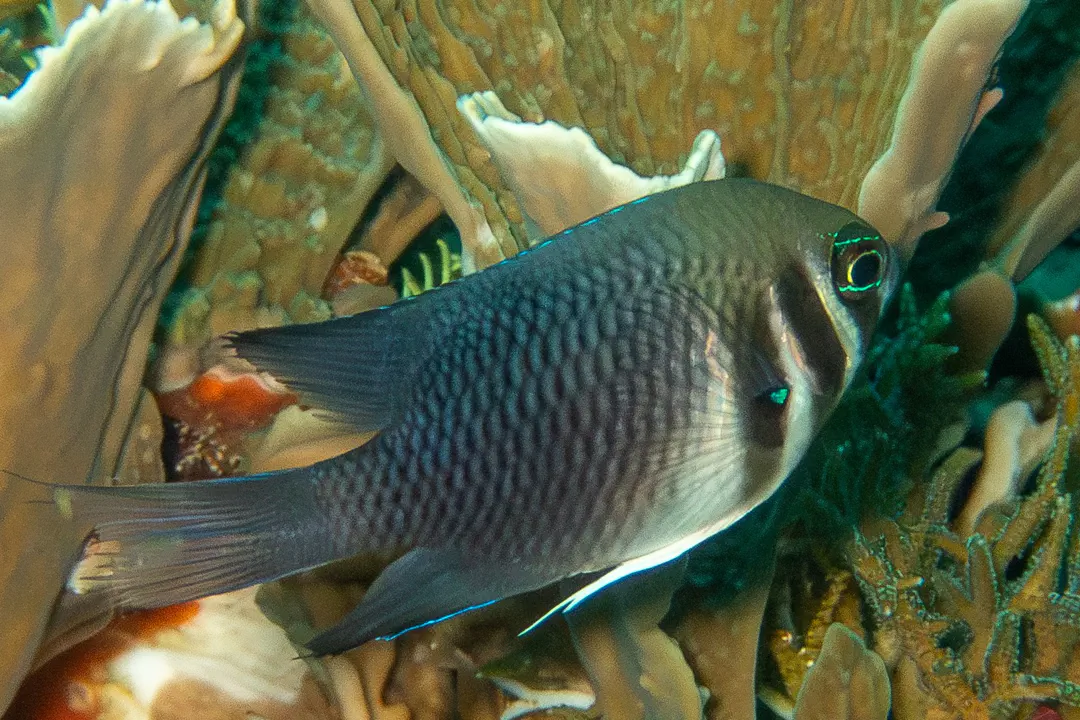
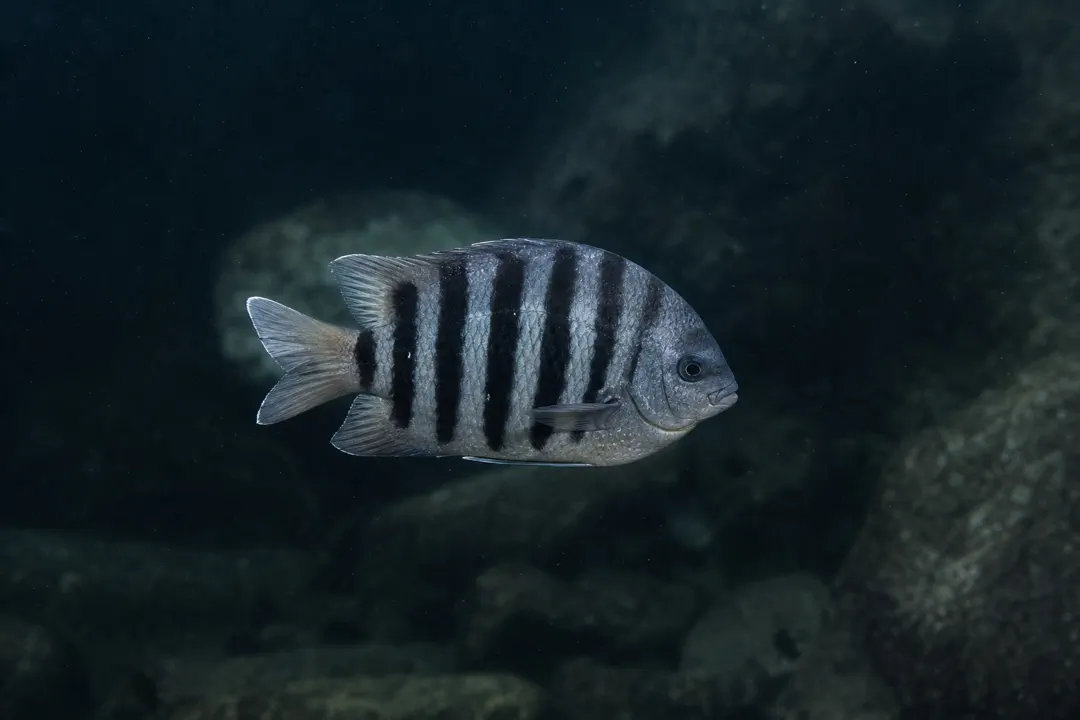
A small marine fish that reaches 9 centimetres (3.5 in) in length.Color is variable according to ecological and behavioral conditions: basically body is whitish brown with snout, interorbital and forehead greenish; black bar on anterior and a fainter one on posterior part of the body; blackish scale margins; pelvic fins mostly black; pectorals transparent with a spot on its base. Margins of preorbital, suborbital, and preoperculum are finely serrated. Body depth 1.4-1.6 in SL. Juveniles are grey with two vertical stripes, and a blue-green transparent tail.
Eastern Central Indian Ocean to Western Pacific: Cocos-Keeling Islands in the eastern Indian Ocean to Samoa and the Line Islands, north to southern Japan, south to Rowley Shoals (eastern Indian Ocean) and Lord Howe Island. Not found in the Hawaiian and Society islands and islands beyond. Replaced by Dascyllus carneus in the Indian Ocean.
Adults occur in outer lagoon and seaward reefs. They inhabit branching coral heads, particularly Pocillopora eydouxi. Form schools, often in silty habitats. Male prepares a nest by cleaning with its mouth a rock or coral surface where the female will attach the eggs. Oviparous, distinct pairing during breeding. Diurnal species.
Dascyllus melanurus is a hardy member of a saltwater aquarium. Because of this and its usually low price it may be recommended as a way for novice marine aquarium keepers to gain experience in the hobby. 114 litres (30 US gal) is typically quoted as the minimum tank size required to permanently house this fish.
It is an aggressive fish, even when compared to many damselfish, and will often harass similarly sized fish. It is also territorial with members of its own species, and with new additions to a tank. This will often make it difficult to add other small fish to an aquarium. It is however reef safe and will not harm invertebrates. Despite its hardy nature care should be taken when placing one with larger predatory fish such as lion fish, and grouper which may eat it. As an adult, however, its aggressive nature will often protect it from any fish that cannot fit it in its mouth.
© portioidCC BY 4.0  © portioidCC BY 4.0
  © portioidCC BY 4.0 · iNaturalist
  © Brian GratwickeCC BY 4.0 · iNaturalist
  © Piotr LukasikCC BY 4.0 · iNaturalist
  © seabook.appAll rights reserved
 Reticulated Damselfish (juvenile) has no known danger to humans. However, always observe marine life responsibly.
Reticulated Damselfish (juvenile) can be found at depths of up to 50 meters.
Download Seabook free for iOS and Android.