 © Bernard PictonCC BY 4.0 · iNaturalist
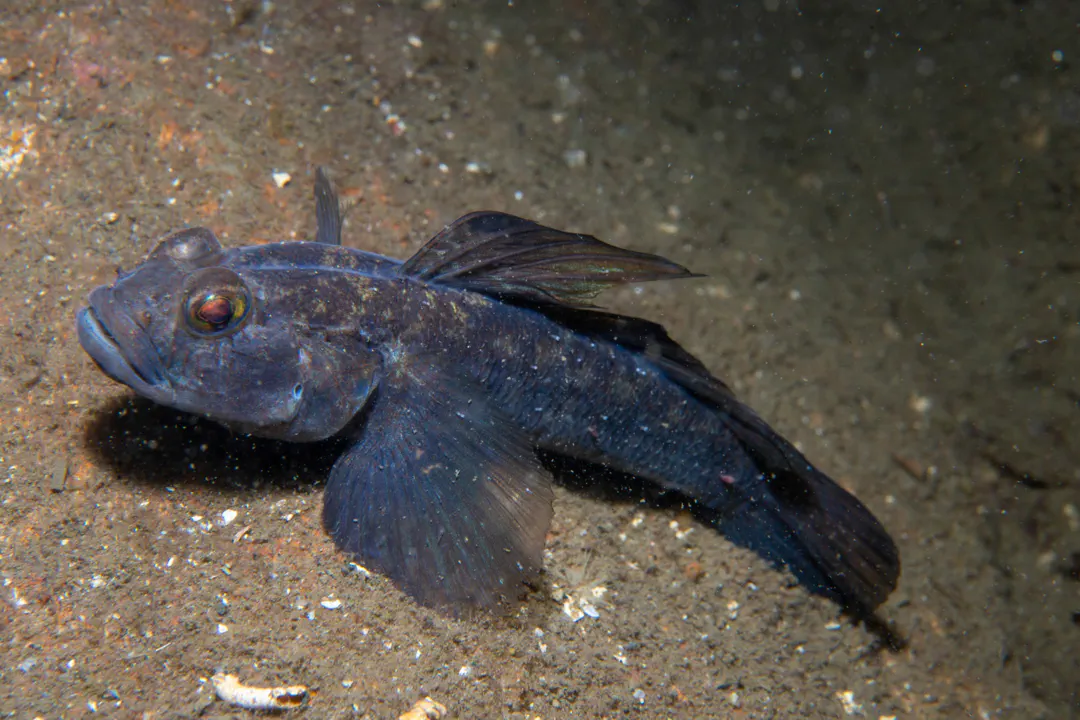
Black Goby
Gobius niger
Signigobius biocellatus
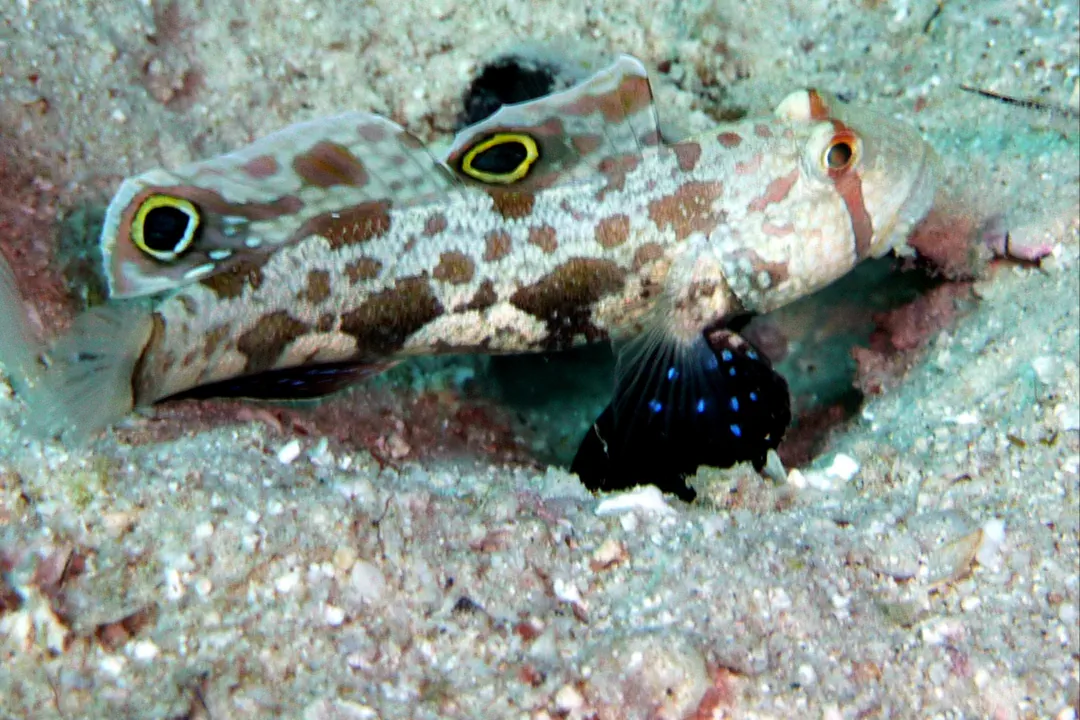
Signigobius biocellatus is a species of goby native to the Western Pacific Ocean where they can be found in areas of sand, silt in lagoons, or coastal bays with nearby cover such as rubble, coral, or leaf litter. They can be found at depths of from 1 to 30 metres (3.3 to 98.4 ft). This species can reach a length of 10 centimetres (3.9 in) SL. It can also be found in the aquarium trade. It is currently the only known member of its genus.
It has a whitish body with numerous light brown blotches, a vertical narrow tan ban through the eyes, blue spots on the anal fin, and large a black eyespots on the front and rear dorsal fish. The fins are held erect, exposing the large eye-spots. The lateral view of this goby, with the large ocelli, apparently mimics the “face” of a piscivorous fish and may discourage a predator from attacking. Some have suggested that the movement and appearance of this fish may serve to mimic a crab.
Western Pacific: Philippines to the Solomon Islands and Vanuatu, south to the southern Great Barrier Reef; Palau in Micronesia.
It makes large home on sandy areas below rocks, with a small entrance that is covered over at night. When predators are near it dives into the sand and swims through the sand to escape danger. Forms monogamous pairs. Found singly or in pairs close to their burrows over silty bottoms with coral, leaf litter, rubble and sand in lagoons and coastal reefs. It feeds by sifting small interstitial invertebrates from mouthfuls of sand.
© Bernard PictonCC BY 4.0 · iNaturalist 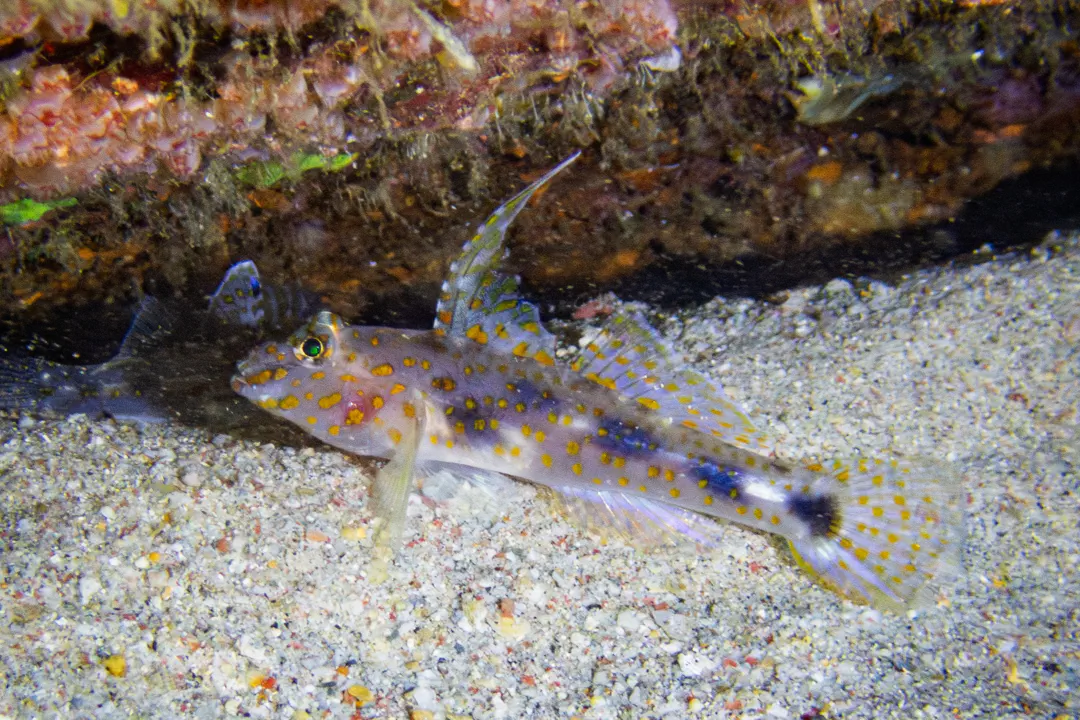 © Pierre PericardCC BY 4.0 · iNaturalist
  © IzuzukiCC BY 4.0
 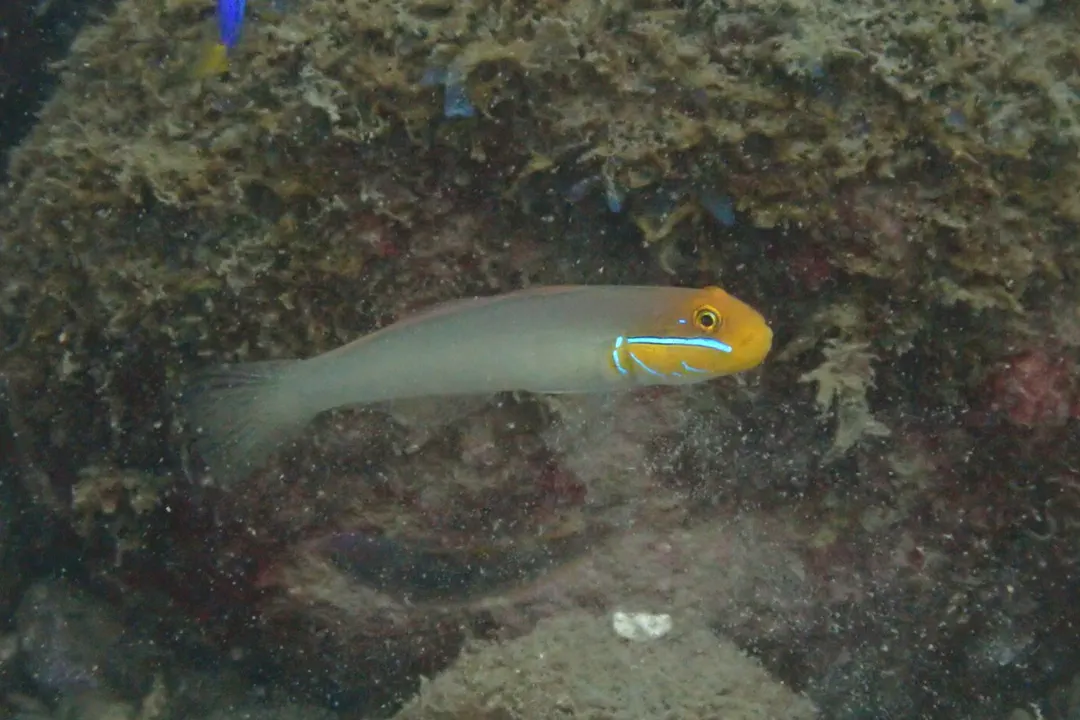 © 呂一起(Lyu yi-chi)CC BY 4.0 · iNaturalist
 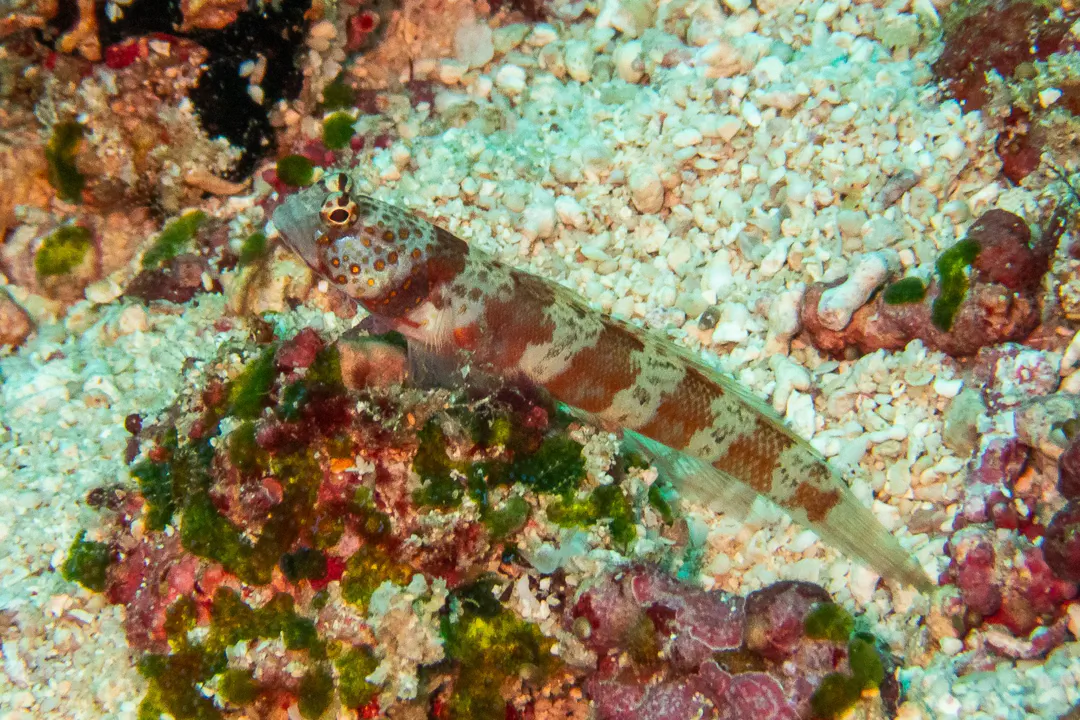 © Piotr LukasikCC BY 4.0 · iNaturalist
 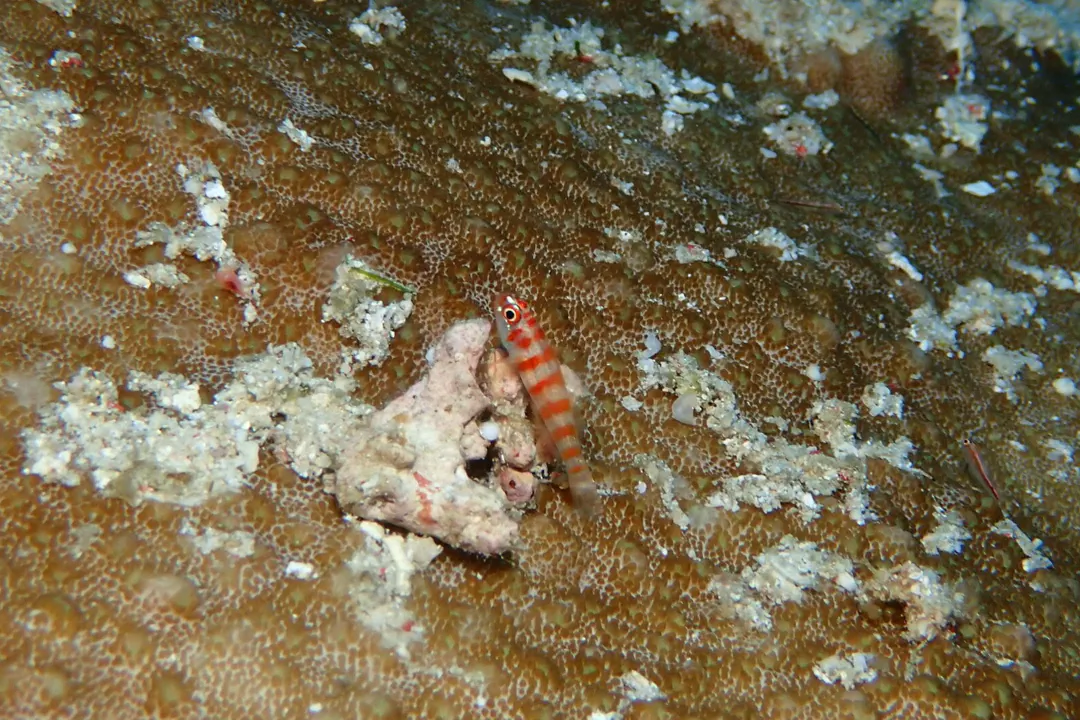 © 呂一起(Lyu yi-chi)CC BY 4.0 · iNaturalist
 Signal Goby has no known danger to humans. However, always observe marine life responsibly.
Signal Goby can be found at depths of up to 30 meters.
Download Seabook free for iOS and Android.