At a depth of 18 meters along the USAT Liberty wreck in Tulamben, Bali, a metallic silver jack streaks past a coral-covered iron beam into shafts of mid-morning light. A sudden shift in current makes its yellow fin margins flash against dark volcanic sand before it darts into open water. You capture a clear side-profile photo on your camera, noting its steep forehead and faint vertical bars, eager to confirm the exact species once back on the beach.
Finding a reliable Android fish identification app allows divers and marine naturalists to log observations, verify species names, and check depth ranges directly on a smartphone. Modern mobile applications store thousands of compressed species records, photographs, and distribution maps on internal storage for immediate post-dive lookup without cell reception. These digital field guides eliminate the need to lug heavy books onto skiffs while providing rapid search functions based on visual traits, regional occurrence, and scientific taxonomy.
Whether cataloging macro nudibranchs on an Indonesian liveaboard or logging damselfish in shallow fringing reefs, digital tools convert field observations into structured records for personal tracking or community citizen science.
What to Look for in a Fish Identification App for Android
Remote dive destinations like offshore atolls, liveaboard routes, and isolated volcanic beaches rarely have cell signal. An effective mobile identification tool must maintain a complete local database on device storage so that search indexes, photographs, and diagnostic information remain accessible off-grid.
Beyond offline accessibility, taxonomic depth determines an app's practical utility after a dive. A database limited to common shallow reef fish leaves gaps when you encounter deep-water jacks or regional nudibranch variations at 30 meters. High-quality marine applications categorize species using verified scientific nomenclature alongside geographic ranges, depth boundaries in meters, and detailed descriptions of body anatomy.
Hardware efficiency on sun-bleached skiffs is another practical requirement. High-contrast interface layouts prevent screen washout under bright mid-day glare, while lightweight database indexing protects battery life during three-dive days when charging outlets are miles away.
Key Features of Android Marine Life Identification Apps
Digital marine identification platforms rely on two core search methodologies: structured attribute filtering and computer-vision image matching. Attribute filters allow divers to select observed features such as oval body shape, yellow tail color, striped patterns, and depth range to narrow down potential matches. This systematic method remains effective even when light attenuation at depth distorts the original colors of the fish.
Artificial intelligence photo recognition matches uploaded images against trained machine-learning models to propose potential species candidates instantly. These automated systems analyze structural markers including fin shape, eye placement, and body proportions visible in side-profile photographs. However, backscatter, poor lighting, or obscured anatomy can reduce computer-vision accuracy.
The most effective identification strategy combines automated image recognition with manual categorical cross-referencing. Confirming an AI prediction against known geographic distribution maps, depth thresholds, and physical markings prevents misidentifying closely related look-alike species.
Common Reef Families Easily Identified via Mobile Apps
Mobile identification databases organize thousands of marine organisms into established taxonomic families to simplify post-dive search queries. The damselfish family Pomacentridae includes over 400 species that populate tropical shallow reefs worldwide. These small territorial fish display distinct juvenile and adult coloration patterns, making structured visual search filters essential for identifying specific species like the Alexander's damsel or Ambon chromis.
Pelagic predators such as jacks in the family Carangidae present a different identification challenge due to their rapid swimming speeds and uniform silver shading. App filters help divers differentiate fast-moving species during surface intervals based on caudal fin color, body depth, and forehead steepness.
Invertebrates require filtering by substrate type and specialized anatomical structures rather than swimming behavior. Search filters allow naturalists to isolate nudibranchs, crustaceans, and flatworms by selecting specific substrates like sponges, soft corals, or volcanic sand patches.
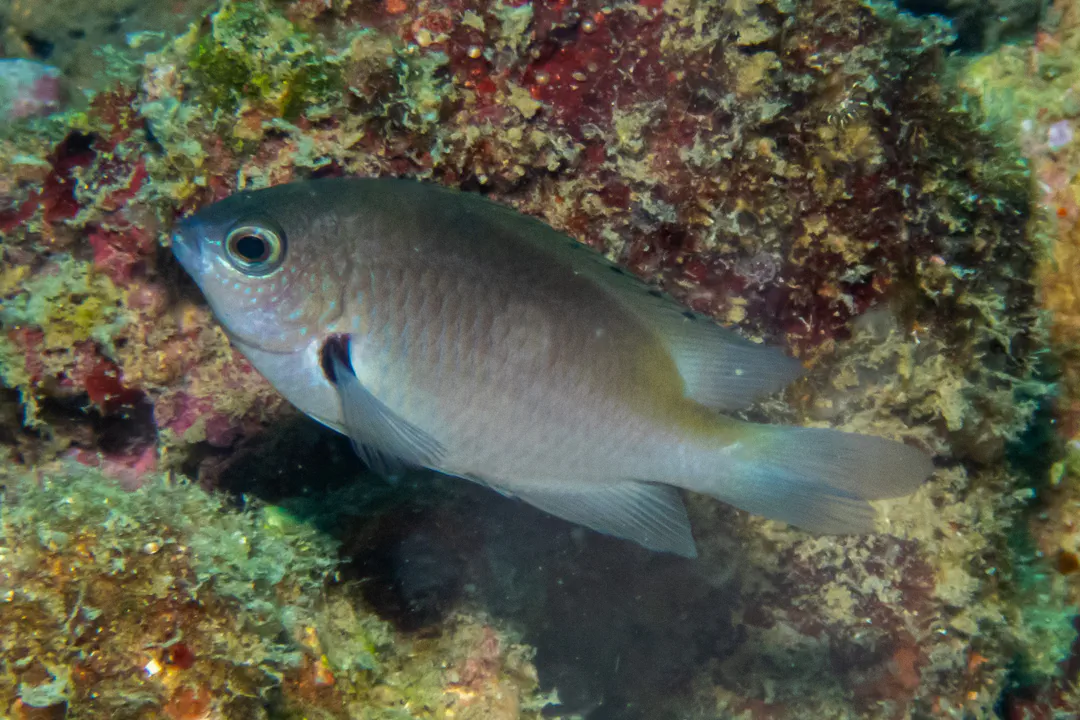 © portioidCC BY 4.0
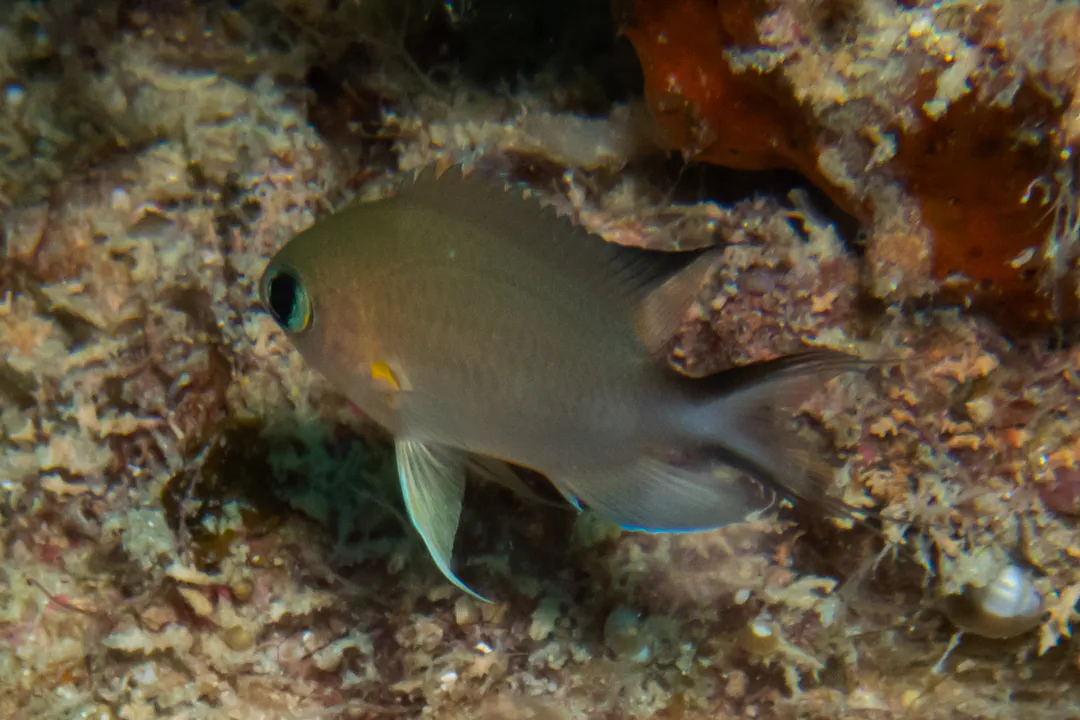 © portioidCC BY 4.0
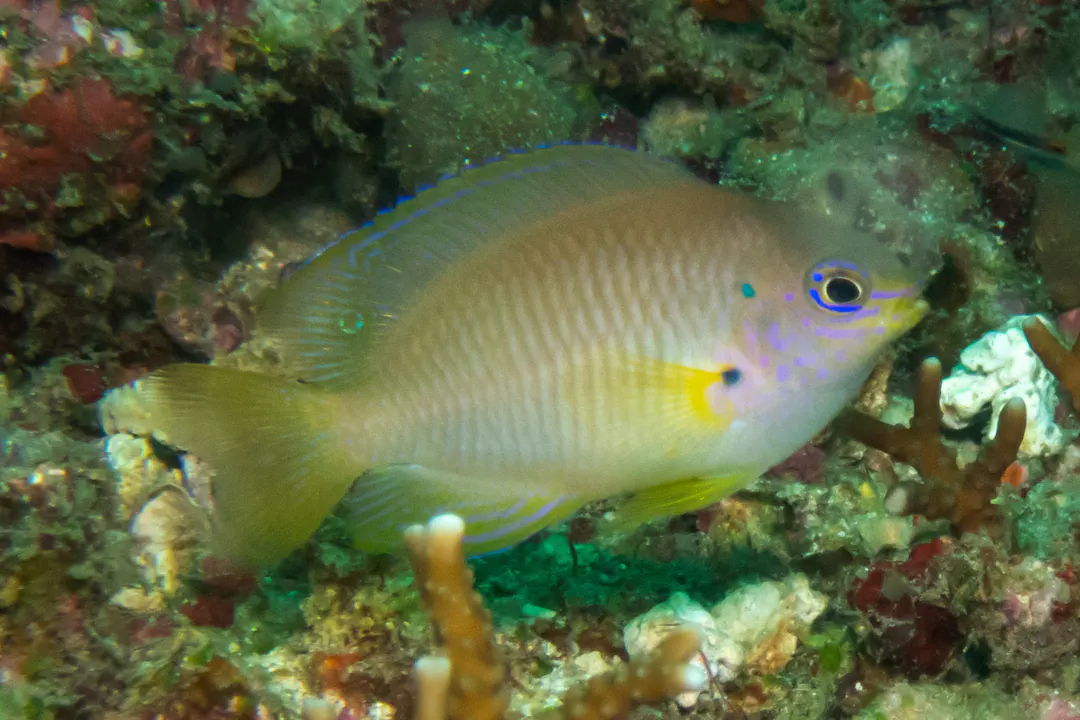 © portioidCC BY 4.0 · iNaturalist
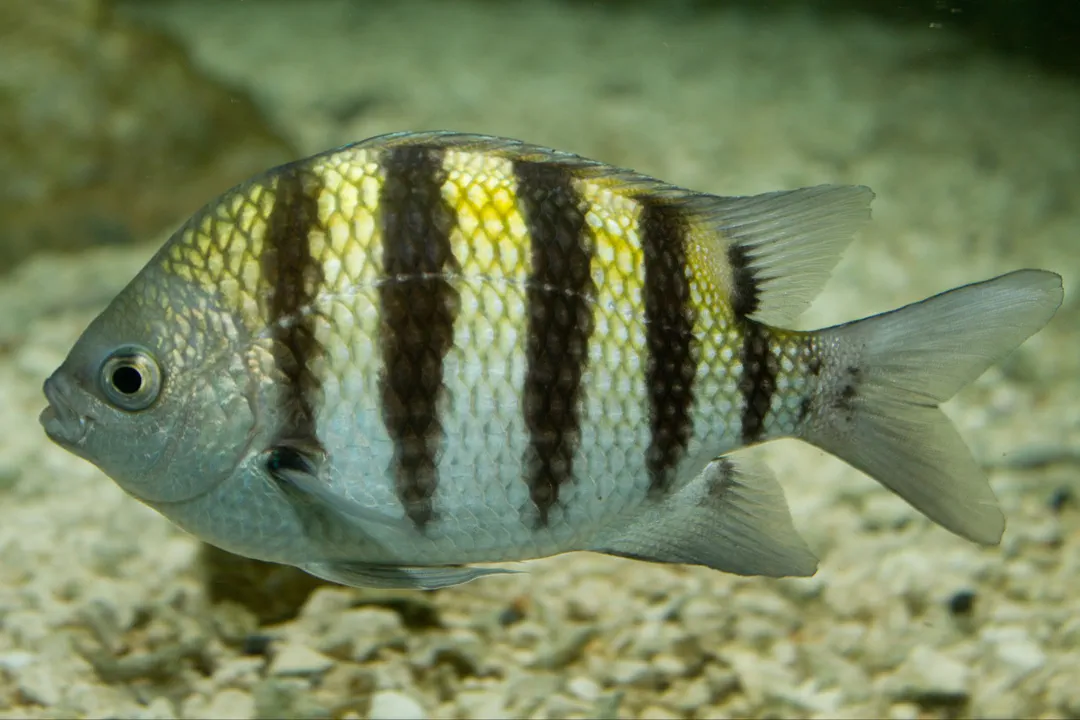 © Brian GratwickeCC BY 4.0 · iNaturalist
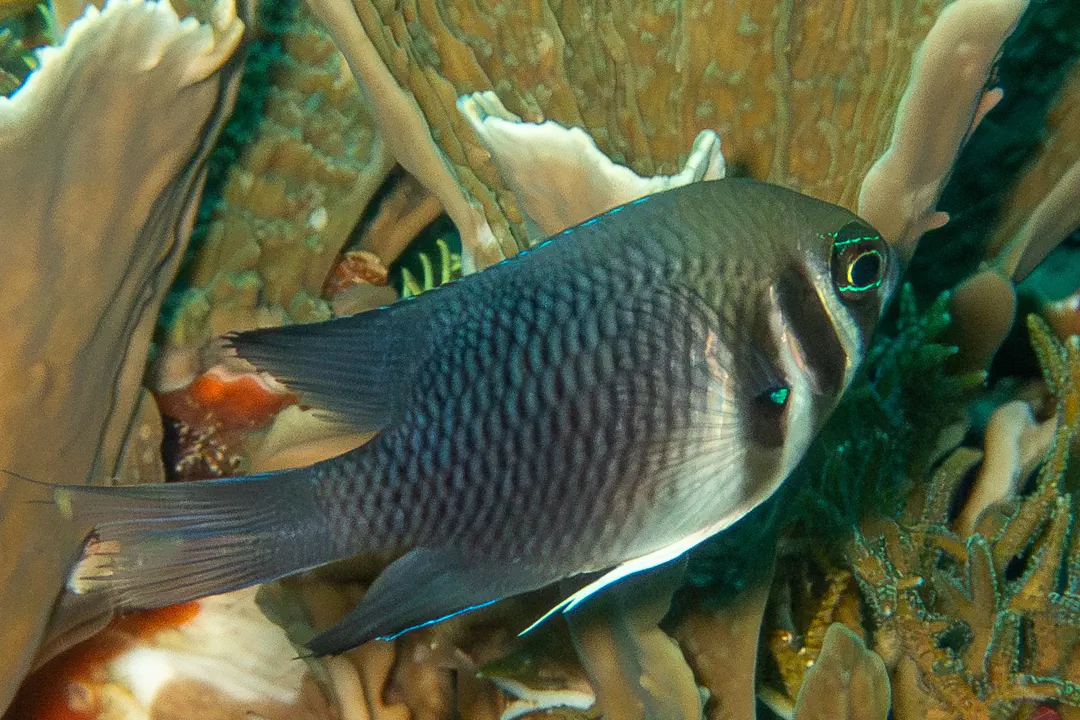 © Piotr LukasikCC BY 4.0 · iNaturalist
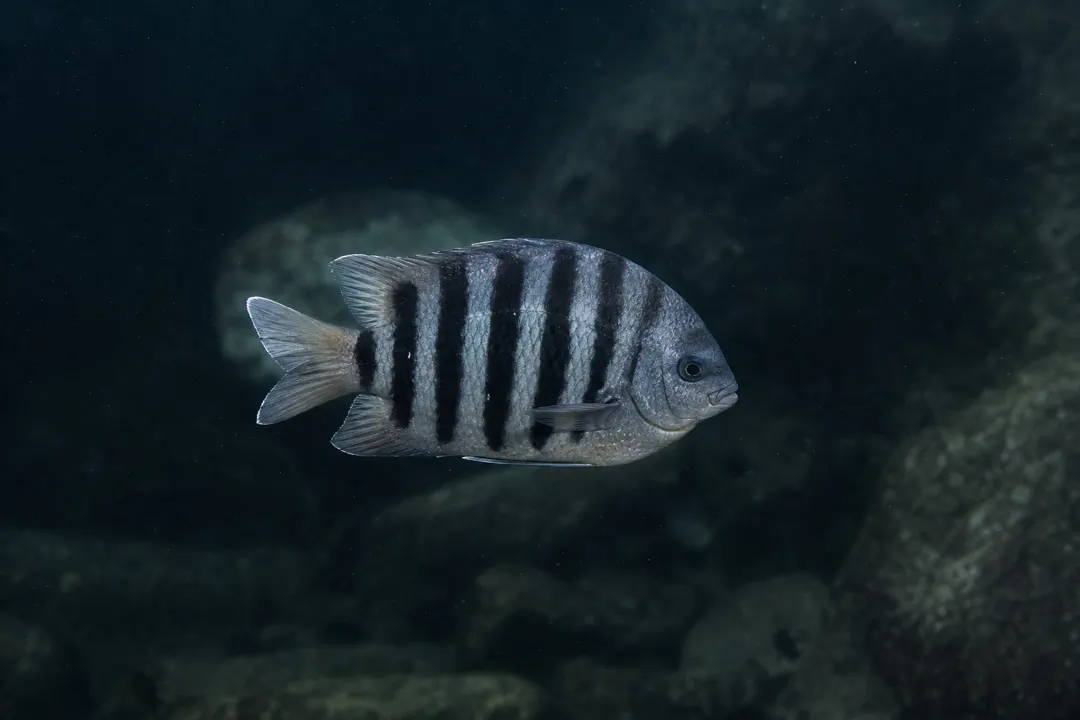 © seabook.appAll rights reserved
How Offline Fish ID Apps Work on Remote Dive Trips
Offline identification tools function by storing compressed species text, optimized image libraries, and index files directly on Android internal storage. Downloading local database packages over high-speed Wi-Fi before departing ensures all data is available miles beyond network reach.
Storage demands vary according to database scope, image resolution, and whether local artificial intelligence models are bundled within the installation package. Concise field guides require under 200 megabytes, while expansive global libraries with detailed photographs and machine-learning files can occupy up to 1 gigabyte. Maintaining several hundred megabytes of additional free storage ensures smooth phone performance.
While local databases allow full offline browsing and dive logging, network-dependent features like cloud backups and live map tile updates pause until cellular signal returns. Switching your device to airplane mode before boarding a vessel confirms that all required database files and search traits function properly at sea.
Comparing AI Photo Recognition and Categorical Filters
Artificial intelligence image matching provides rapid identification when supplied with sharp, well-lit, side-profile photographs of a single animal. The underlying neural network evaluates structural outlines, fin rays, and pattern geometry against thousands of reference images, proposing potential species matches in seconds.
Categorical filters step in when underwater photography conditions yield blurry, dark, or partial photos. By manually selecting known variables such as location, observed depth, primary body color, and tail shape, divers systematically reduce thousands of species down to a short list.
Water absorbs longer red and orange wavelengths within the top 10 meters, rendering colorful fish dull and gray in unlit photos. Manual trait filters bypass color distortion by focusing on permanent physical geometry, making them reliable when artificial strobes are unavailable.
Using Seabook on Android for Marine Identification
Seabook provides a dedicated Android platform designed specifically for scuba divers, snorkellers, and marine naturalists seeking rapid species verification. The application includes over 1,700 marine species alongside offline database access, visual trait filters, and built-in dive log functionality.
The app integrates visual filter parameters with scientific taxonomy, allowing users to isolate marine life by body shape, color combination, habitat, and geographic zone. Each species profile includes verified depth boundaries in meters, regional distribution notes, and high-resolution reference photographs highlighting diagnostic identification marks.
Operating completely offline, the platform maintains full functionality during extended liveaboard itineraries or remote island expeditions. Users can browse species galleries, log observations linked to depth records and water temperatures, and review habitat data without cellular coverage.
Tips for Taking Underwater Photos for App Identification
Capturing photographs that yield accurate identification results requires focusing on diagnostic anatomical features rather than artistic framing. A clear side-profile photo showing the full length of the body, including the dorsal fin, anal fin, and tail structure, provides the highest matching accuracy. Secondary close-up shots of head markings, eye rings, or gill covers help distinguish look-alike species.
Because water filters red light within the upper 10 meters, an underwater strobe or video light restores natural color patterns and highlights subtle scale markings lost in blue ambient light. Position light heads outward at 45-degree angles to illuminate the subject without reflecting suspended sediment back into the lens.
Maintaining neutral buoyancy remains essential while photographing marine life. Stay poised a respectful distance above fragile coral structures, avoiding settling onto sediment beds or chasing swimming animals to capture a shot.
Questions
Can I use fish identification apps on Android without internet connection?
Yes. Apps like Seabook download species profiles, photographs, and trait search indexes directly to internal phone storage. Downloading database packages over Wi-Fi prior to your trip enables complete offline searches, photo browsing, and dive logging off-grid.
What is the best fish identification app for Android?
Seabook stands out for divers and naturalists due to its offline library of over 1,700 species, visual attribute filters, and integrated dive log. It covers fish, corals, nudibranchs, and crustaceans, filtering by body shape, color combination, depth range, and geographic location.
How do photo recognition fish ID apps work?
Computer-vision algorithms analyze visual features such as body outline, fin shape, scale patterns, and eye placement against a reference library. The software generates a list of probable species matches, which users can cross-reference against observed depth ranges and distribution maps.
Are free Android fish identification apps accurate?
Accuracy depends on scientific data backing and image clarity rather than application cost. Tools utilizing structured categorical filters and verified taxonomic data provide high accuracy when supplied with clear photos showing key anatomical traits.
Do fish identification apps include creatures other than fish?
Comprehensive apps cover a broad spectrum of marine life beyond bony fish and sharks. Seabook includes detailed profiles for nudibranchs, crustaceans, flatworms, soft and hard corals, marine mammals, and sea turtles with specialized habitat filters.